Graeme Thomson

What a remarkably bad electric guitar player Bob Dylan is

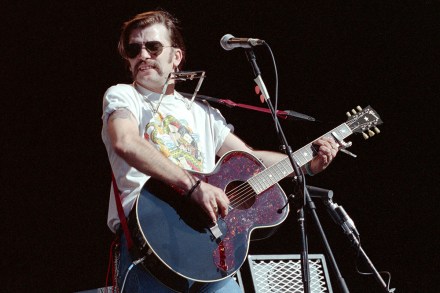
Finally, a taste of the authentic Bob Dylan live experience. On the two previous occasions that I’ve seen Dylan, in the early 2000s and again two years ago, he was disappointingly well-behaved for a man with a reputation for operating a scorched-earth policy towards his catalogue. Once upon a time, seeing Dylan live was a high-wire activity. Those days are long gone, but on the second night of two shows in Edinburgh, some little wildness crept back in. During the opening pair of songs, which were gradually revealed to be on nodding terms with ‘All Along the Watchtower’ and ‘It Ain’t Me, Babe’, it was like watching an old bar band warming up after a long break from the trenches. There were missed notes, dropped beats, rogue chords, halting rhythms.

Terrifically good value: Nick Cave & the Bad Seeds reviewed

A few years ago, I received an early morning phone call from Nick Cave’s former PR, berating me for not crediting his band the Bad Seeds in an album review. She was quite right. As Cave says, with a hint of paternal pride, during this powerhouse Glasgow show: ‘This band can do anything.’ It’s not just that the Bad Seeds’s task ranges from delicately enhancing the most nakedly exposed ballads to unleashing a raging firestorm of noise. It’s that supporting a performer as mercurial as Cave takes oodles of nous and empathy. He’s a wild thing, but they never once lose him.

Chrissie Hynde remains outstanding: the Pretenders, at Usher Hall, reviewed

A few hours before the doors opened for the Pretenders’ Edinburgh concert, Chrissie Hynde posted a message on her social media channels. The gist being that, while she appreciated the support of the band’s most devoted fans – the ones who travel from city to city and country to country to attend multiple concerts – she was, to be frank, getting sick of seeing the usual suspects plonked six feet in front of her at every damn gig. She was therefore formally asking her hardy but apparently increasingly tiresome acolytes to cede the front row to ‘local faces’. This would, she said, help keep ‘it new’ for the band each night. Hynde has always been pretty punchy, but this seemed a bit much, even by her standards; not so much biting the hand that feeds as gnawing it clean off.

I agree with pop’s war on iPhones – but King Canute might want a word

Before each show on the recent The The tour – reviewed in these pages last week – the pre-recorded voice of singer Matt Johnson politely asked the audience to refrain from using mobile phones when the band was performing. In Edinburgh, while Johnson was speaking, the chap next to me was preoccupied filming an empty stage. A sea of screens can be priceless in a genuine emergency but that’s about it As it happens, most of the crowd complied most of the time, but proscribing phone use at concerts is increasingly challenging. A few artists are up for the fight.

Rachel Johnson, James Heale, Paul Wood, Rowan Pelling and Graeme Thomson

34 min listen

On this week’s Spectator Out Loud: Rachel Johnson reads her diary for the week (1:19); James Heale analyses the true value of Labour peer Lord Alli (6:58); Paul Wood questions if Israel is trying to drag America into a war with Iran (11:59); Rowan Pelling reviews Want: Sexual Fantasies, collated by Gillian Anderson (19:47); and Graeme Thomson explores the ethics of the posthumous publication of new music (28:00).  Produced and presented by Patrick Gibbons.

The ethics of posthumous pop albums

‘At the record company meeting/ On their hands – at last! – a dead star!’ Back when Morrissey was more concerned with writing a decent lyric than sour internet tirades, ‘Paint a Vulgar Picture’ by the Smiths summed it all up rather neatly: a living pop star is all well and good, but a dead one is far less troublesome – and considerably more profitable. Some artists only really get going once they’re dead. Commercially speaking, Eva Cassidy’s entire career has been posthumous; the Van Gogh of the lustreless Radio 2 ballad. The motive feels pure: a family’s wish to keep their sibling alive through her art Death has been a boon to the pop industry since the year dot.

Elvis Costello remains the most fascinating songwriter Britain has produced in the past 50 years

Song for song, line by line, blow for blow, Elvis Costello remains the most consistently fascinating songwriter Britain has produced in the past 50 years – an opinion which seems these days to be mostly confined to a smallish section of an ageing demographic. Certainly, Costello’s music has, as far as I can tell, proved largely resistant to TikTokification, even if Olivia Rodrigo did ‘pay homage’ (nicked, with the author’s approval) to the riff to ‘Pump It Up’ for her song ‘Brutal’.

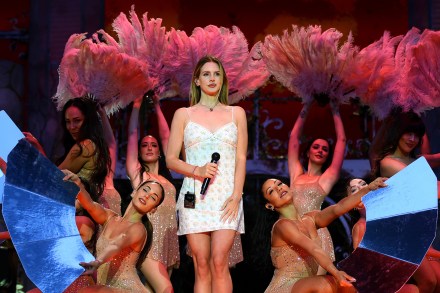
The Ava Gardner of the ketamine age: Lana Del Rey, at Leeds Festival, reviewed

As the American superstar starts singing another slow, sad, rather beautiful song, my mind begins to drift. I’m thinking that our appreciation of music is so much about the who, the when and perhaps most crucially the where; the significance of place is an under-examined element in our relationship with what we’re hearing at any given moment. I’m also thinking that a massive over-reliance on concert revenue to sustain artists’ livelihoods means that nowadays bigger is almost always seen as better – even when ‘bigger’ comes at the obvious detriment of the music. And I’m thinking that an act’s popularity – and indeed their excellence – isn’t necessarily proportionate to their ability to successfully perform at the top end of the bill at a major music festival.

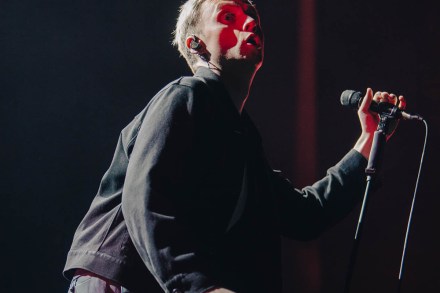
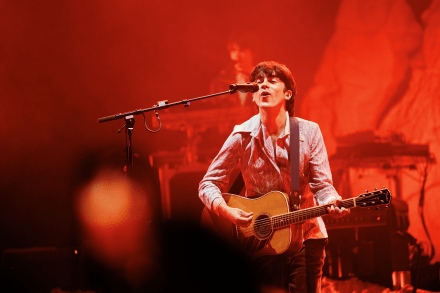
Fun, frenetic and only a little gauche: Declan McKenna, at the Edinburgh Playhouse, reviewed

Towards the end of Declan McKenna’s snappy, enjoyable 90-minute set at the Edinburgh International Festival, something quite powerful occurs. The English singer-songwriter returns alone to the stage for the encore and proceeds to play a version of ABBA’s ‘Slipping Through My Fingers’ with only his electric guitar as accompaniment. It becomes a strange, emotionally layered moment. A young musician singing from the perspective of a parent ruefully reflecting on their child growing up, away and beyond reach; a predominantly teenage crowd singing those words back to him; and the older members of the audience, many attending with their own kids, staring blurrily into the middle distance.

Jack White’s new album will be of close interest to Led Zeppelin’s legal team

The ploy of releasing an album without any advance warning comes into play when an artist feels they are being paid either too much or too little attention. The stealth arrival of Jack White’s new solo album falls firmly into the second category. Putting out music in this way ensures additional media coverage and a certain level of intrigue I didn’t love White’s old band, the White Stripes, back when they were a garage-rock/blues revival phenomenon in the early 2000s. Since their demise in 2011, the world seems to be coming around to this way of thinking. Their most successful albums, Elephant and White Blood Cells, hold little cultural currency these days.

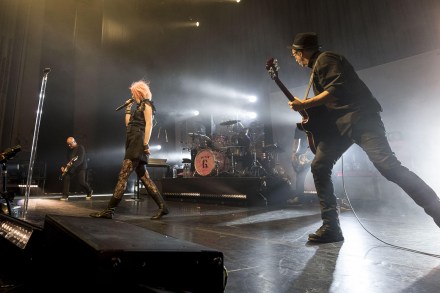
Hard to love – but Shirley Manson is terrific: Garbage, at Usher Hall, reviewed

There’s nothing quite like the drama of a prodigal’s return. ‘I’ve been singing in this venue since I was ten years old,’ announces Shirley Manson, staring down nearly half a century of personal history at Edinburgh’s ornate Usher Hall. The fact that Garbage’s lead singer made the United States her primary residence many years ago lends this homecoming concert added potency. There are shout-outs to her dad, a ‘Happy Birthday’ serenade for her sister and what looks like a tear or two at the start of the encore. A ‘badass’ attitude is so sleekly applied it seems like a Che Guevara T-shirt in the racks at M&S For all the sentiment, it was obvious that Manson was right to leave not just Edinburgh, but the UK.

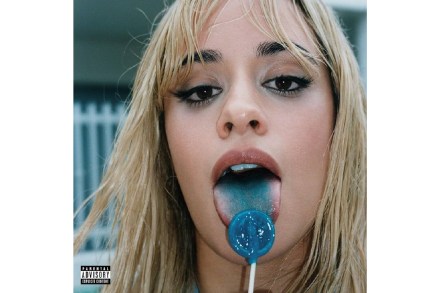
Camila Cabello’s new album presents an existential threat to songwriting

It is always interesting to observe the ways in which pop stars try to negotiate first growing up, and then growing old. From teen scream to respected mainstay to elder states(wo)man is not an easy path to walk without a few stumbles. At certain times, it requires making some blatantly strategic moves. Cabello wants so badly to grow up that she evolves from a past incarnation practically into thin air Few readers will remember that the first solo single George Michael released after dissolving Wham! was called ‘I Want Your Sex’, a forgettable bump-and-grind with a steamy video designed purely to shift audience expectations away from all things teenybopper and towards a more adult-orientated market. The song was banned by the BBC during daylight hours.

Does it matter how posh pop stars are?

‘A working class hero is something to be.’ Rishi Sunak and Keir Starmer must have missed the conflicted, sardonic edge to John Lennon’s lyric, from his 1970 song ‘Working Class Hero’, given their rush to scrub away the whiff of privilege in the crudest manner imaginable. Sunak, desperately, by means of bemoaning a childhood forever blighted by lack of access to satellite TV; Starmer by dully hammering home that he is the son of a toolmaker. A country pile, a double-barrelled girlfriend and a mock-regal drawl were valued plunder in 1960s pop As in politics, so in music. In both fields, class anxiety has become inverted. The fear now is to appear too privileged. It wasn’t always thus.

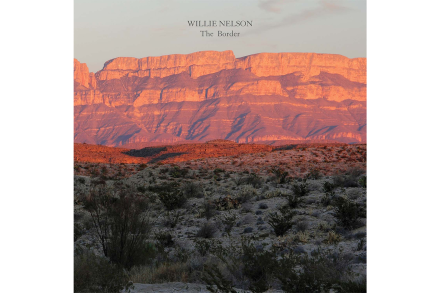
The weird, hypnotic world of Willie Nelson

Many years ago, I wrote a book about Willie Nelson. At its conclusion, I reached for an elegiac, valedictory tone. In 2006, when The Outlaw was published, Nelson was already 73, and it seemed plausible to suggest that one of the great American lives might be winding down. I pictured Nelson rolling off the road and into the sunset, his work on Earth more or less complete. Nelson embodies both sides of an increasingly divided nation; hippie and redneck, patriot and agitator Well, scratch that ending. Having recently turned 91, Nelson is still going strong.

Dense, melancholic, hypnotic: Brighde Chaimbeul, at Summerhall, reviewed

The hip end of the folk spectrum is in rude health right now. Dublin’s mighty Lankum lead the way, but plenty of other interesting artists are following in their wake, Brighde Chaimbeul among them. If a Gaelic-speaking trad musician from Skye reinterpreting Philip Glass for the small pipes sounds like your thing – and why on earth wouldn’t it? – then Chaimbeul is worthy of exploration. At 17 she won the BBC Radio 2 Young Folk Award. Her 2019 debut, The Reeling, released via Rough Trade, cross-pollinated traditional with experimental electronic music. More recently, and still in her early twenties, she has collaborated with American avant-garde saxophonist Colin Stetson on the album Carry Them With Us.

Douglas Murray, Lionel Shriver, Mark Mason and Graeme Thomson

29 min listen

On this week’s Spectator Out Loud: reporting from St Helena, Douglas Murray reflects on the inhabitants he has met and the history of the British Overseas Territory (1:12); Lionel Shriver opines on the debate around transgender care (9:08); following a boyhood dream to visit the country to watch cricket, Mark Mason reads his letter from India as he travels with his son (17:54); and, Graeme Thomson reviews Taylor Swift’s new album (22:41). Produced and presented by Patrick Gibbons.

Taylor Swift’s new album is exhausting

How to explain the supercharged star power of Taylor Swift? An undeniably gifted artist, Swift’s albums 1989, Folklore and Evermore, in particular, are excellent. She has written a battery of terrific pop songs. She is a generous and skilled performer. To suggest she is overrated is not an insult, therefore, but simply a comment on the absurd critical mass of her popularity, in which every lyric, scrap of artwork, cultural reference and personal tit-bit is weighted with a monumental significance which, it is becoming apparent, does her work few favours. Anybody listening to Swift’s new album without prior knowledge of the layers of gossipy context surrounding it might well wonder what all the fuss was about.

The mayhem ‘Born Slippy’ provoked felt both poignant and cathartic: Underworld, at Usher Hall, reviewed

On the same night Underworld played the second of two shows at the Usher Hall, next door at the Traverse Theatre, This is Memorial Device was midway through a short run. Seeing both within a matter of hours, I felt an exchange of currents, a renewed awareness of the short distance we travel between euphoria and sorrow when we start mixing music and memory. The short play, adapted and directed by Graham Eatough from the novel by David Keenan, concerns the brief, wayward life of a (fictional) 1980s cult band from Airdrie. We see how the group’s complicated yet charismatic personal dynamic, intense improvised music and quasi-occult power was once revered by a handful of diehards.

Why Easter is the most rock and roll religious holiday 

Easter is by far the most rock and roll religious holiday. Christmas might be the time when the pop vultures circle, plucking from the bones of garish sentiment, but the wham-bam narrative mic-drops of Holy Week are of a different order. Easter has provided a dramatic template for every rock opera, concept album, heroic comeback and combustible band dynamic this side of the Chatterley trial and the first Beatles LP. ‘Jesus died for somebody’s sins, but not mine,’ runs the opening line on Patti Smith’s debut album, Horses. Maybe so, but she understood the innate power of this stuff. Smith’s second LP is called Easter, and it is replete with overtly Christian imagery.

Richard Madeley, Kate Andrews, Lloyd Evans, Sam McPhail and Graeme Thomson

35 min listen

This week: Richard Madeley reads his diary (01:06), Kate Andrews describes how Kate-gate gripped America (06:18), Lloyd Evans warns against meddling with Shakespeare (11:38), Sam McPhail details how Cruyff changed modern football (18:17), and Graeme Thomson reads his interview with Roxy Music's Phil Manzanera (25:23).  Produced and presented by Oscar Edmondson.