Graeme Thomson

Joy and melancholy from Tame Impala

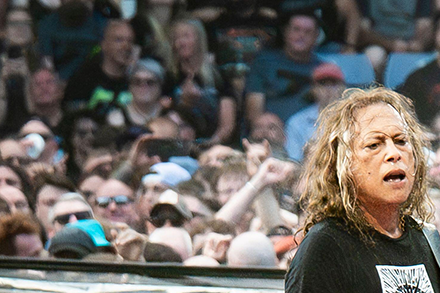
About 15 years ago, I spoke to a relatively unknown neo-psychedelic musician from Western Australia called Kevin Parker. It was shortly before the release of Lonerism, the second album by his one-man-band bedroom project, Tame Impala. Their previous album, Innerspeaker, had been acclaimed in Australia but had made relatively few inroads anywhere else. Parker seemed sanguine about it all. ‘In Perth being a muso is part of a whole lifestyle,’ he told me. ‘It’s a symptom of a directionless existence.’ Lonerism and its follow-up, Currents, shifted the coordinates. Parker’s (clearly very ambitious) dedication to turning an apparent lack of focus into genre-busting psych-rock grooves and sugar-sweet pop ensured that Tame Impala have become a very big deal indeed.

Compelling: Cowboy Junkies at Queen’s Hall, Edinburgh, reviewed

Anyone who was listening to independent music back in the 1980s and 1990s might find it surprising to learn which determinedly non-mainstream bands from that era resonate with the youth of 2026. My Bloody Valentine are selling out arenas. Cocteau Twins have influenced everyone from Chappell Roan to Wolf Alice. Mazzy Star’s dolorous ‘Fade Into You’ has now amassed more than one billion streams on Spotify. Cowboy Junkies divine better than most some dark heart of North American loneliness Cowboy Junkies could be forgiven for feeling aggrieved not to have picked up a little more of that kind of traction. Before Mazzy Star emerged with a somewhat more acid-fried take on hushed, spectral quietude, in 1988 Cowboy Junkies released the record which remains their Ur-text.

How good are the Rolling Stones’ alter egos, the Cockroaches?

Would you pay a tenner on the door to see the Cockroaches, the Fireman, Patchwork, the Network and Bingo Hand Job play your local pub? This unpromising line-up becomes a little more appealing (perhaps) upon learning that these are pseudonyms used by, respectively, the Rolling Stones, Paul McCartney, Pulp, Green Day and R.E.M. over the years. Pop stars spend the first part of their careers trampling over their grandmothers in the unseemly rush to demand the world take notice of who they are, and the second part whining about being pigeonholed. The only thing harder to escape in the music industry than your name is your original haircut. Hence, the pseudonymous offshoot, offering a degree of separation with very little sense of jeopardy.

Unrelentingly entertaining: Basement Jaxx reviewed

How would you like your nostalgia served, sir (and it is usually ‘sir’): in mist-shrouded monochrome or crazed lysergic Technicolor? Last week I saw two bands in the same venue, a few days apart. Neither having released any new material for more than a decade, both duly crammed their sets with their greatest hits. And yet one felt like the future, and the other like the past. Felix Buxton and Simon Ratcliffe, aka turn-of-the-millennium electronic duo Basement Jaxx, should be credited for having great sport with that in-built characteristic of almost all electronic outfits. Namely, that two or three blokes pushing a bunch of keys and buttons cannot hope to ever forge the kind of compelling visual identity so crucial to rock groups.

Anthemic angst from The Twilight Sad

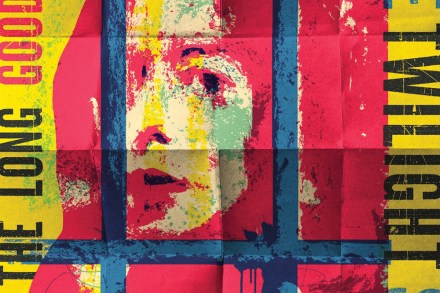
The only thing misery loves more than company is a backbeat. While capturing pure happiness surely remains the Holy Grail of any artistic endeavour, the blues is the bedrock of popular music for a reason. Sure enough, as we ready for the clocks to go forward, two albums arrive which could hardly be said to be full of the joys of spring, although they approach personal crisis – and catharsis – in very different ways. It’s The Long Goodbye, the sixth album by Scottish indie-rock band the Twilight Sad, is their first in seven years. During that hiatus lead singer and lyricist James Graham was dealing with his mother’s decline and eventual demise from early onset dementia, while also becoming a father.

David Byrne has done it again

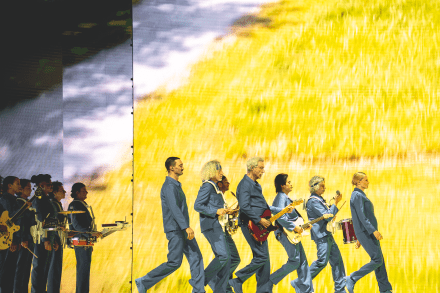
The title of David Byrne’s most recent album and current tour is Who Is The Sky?. The phrase works two ways. Read literally, it has the playful 1960s feel of a Yoko Ono film or some absurdist Fluxus piece; firmly on brand, in other words, for someone as steeped as Byrne in New York’s downtown art lore. Read it aloud, however, and it becomes ‘Who Is This Guy?’, a more pointed title for an artist who has always seemed – to reference an old Talking Heads song – one of rock’s more slippery people. At the second of two recent Glasgow dates, both interpretations seem to fit. In Talking Heads, Byrne was a jerky, remote presence, aloof to the point of alien.

U2’s childlike response to world affairs

Whither the protest song in 2026? In January 1970, John Lennon wrote and recorded ‘Instant Karma!’ in a single day and had it in the shops a little over a week later – no mean feat given the mechanics of physical record production at the time. Nowadays, when the practicalities of releasing music are infinitely more streamlined, it has never been easier for artists to react to current events within moments of them occurring. And with the febrile news churn packing a year’s worth of drama into each week, there is certainly no shortage of material.

Mumford & Sons are trolling themselves: Prizefighter reviewed

It is axiomatic that most artists spend the first few years of their career trying to achieve some level of success; the next few years building and maintaining it; and the following period trying to dismantle all the bothersome preconceptions such success creates. After the passing of a further period of time – and by now, perhaps, a little chastened – most artists desire only one thing: to return to that happy, uncomplicated first stage where, they now realise, they had never had it so good. Often, this tactical retreat proves to be significantly harder than they imagined. You get the sense that everybody involved desperately wants it to be 2012 again On Mumford & Sons’ sixth album, you get the sense that everybody involved desperately wants it to be 2012 again.

Who stuck the great Emmylou Harris in a sports hall?

Somebody obviously thought it a good idea that Emmylou Harris play her last ever Scottish show in a soulless sports hall in the east end of Glasgow. Built for the 2014 Commonwealth Games, the feel of the Emirates Arena on a chilly January night was less Sweet Home Alabama, more Home Counties Ikea. As well as kicking off this year’s Celtic Connections, the city’s annual festival of roots music, Harris was also kickstarting her farewell tour of Europe. She plays her final UK shows in May, including one at the Royal Albert Hall, which seems a more fitting setting for a regal adieu than a pimped-up cycling track. Presumably, the choice of venue was a numbers game. Whatever the reason, it was a poor one.

Zach Bryan is no Springsteen

There would, on the surface, appear to be little common ground between the wife of stuffy old Malcolm Muggeridge and the latest bard of blue-collar America. Yet the unlikely ascendancy of Zach Bryan brings to mind Kitty Muggeridge’s killer putdown of David Frost as the superstar who ‘rose without a trace’. You may be surprised to learn that Bryan, a 29-year-old US Navy veteran from Oklahoma, will headline two concerts later this year at Tottenham Hotspur’s stadium, as well as perform to 60,000 people each night in Edinburgh and Liverpool. He now ranks alongside Bon Jovi and Bruno Mars as a gold-star draw on the 2026 summer show circuit.

What’s the greatest artwork of the century so far?

15 min listen

For this week's Spectator Out Loud, we include a compilation of submissions by our writers for their greatest artwork of the 21st century so far. Following our arts editor Igor Toronyi-Lalic, you can hear from: Graeme Thomson, Lloyd Evans, Slavoj Zizek, Damian Thompson, Richard Bratby, Liz Anderson, Deborah Ross, Calvin Po, Tanjil Rashid, James Walton, Rupert Christiansen and Christopher Howse. Produced and presented by Patrick Gibbons.

The tedium of softboi rap

A male British rapper who is unafraid to show tenderness and vulnerability is not a particularly new phenomenon: Dave, Stormzy, Headie One and Kano have all walked this path in recent times. None, however, has made emotional fragility his USP to quite the same extent as Loyle Carner, who writes about his children, his masculine role models, mental health, race and inherited trauma in an unthreatening sing-song style which has made him both a pop star and a bit of a poster boy for Feeling Things. His tour is named after his fourth and most recent album, hopefully!. To his credit, he has put his money where his rhymes are. Carner has preached about knife crime from the stage at Glastonbury. He was talking about his ADHD before it became the topic du jour for celebrity over-sharers.

Fionn Regan has gone method Worzel Gummidge

Watching the Mercury Music Prize on television last week, I remembered that Fionn Regan’s debut album, The End Of History, was nominated for the award back in 2007. Proof were it needed that the prize is rarely a shortcut to superstardom for most of those it spotlights. The Irish singer-songwriter has never quite replicated the mainstream acclaim he gained for his debut – when, for a solid five minutes, he was the latest in a long line of ‘new Bob Dylans’. He has, however, carved out an interesting and worthwhile career across five further albums, expanding his core skill set of folk guitar and knottily poetic wordplay with experimental touches of electronica and orchestration.

Has Taylor Swift been reading The Spectator?

The Last Dinner Party received quite the critical backlash when they arrived amid much fanfare in 2023. Posh, precocious and theatrical, armed with lofty ideas that matched their station as four young women who had benefited from very expensive educations, the band encountered widespread suspicion that they were industry ‘plants’, or had somehow bought their way to instant recognition. Happily, their debut album, Prelude To Ecstasy, proved sufficiently accomplished to repel these waves of hostility (strange how the success of privileged young women tends to attract far greater opprobrium than that of privileged young men). In any case, the excellence of the follow-up should settle the matter.

Uplift from an odd couple: James Yorkston & Nina Persson reviewed

Let’s hear it for the odd couples of popular music: Bowie and Bing. Shaggy and Sting. Metallica and Lou Reed. Nick Cave and Kylie. U2 and Pavarotti. The ongoing collaboration between James Yorkston and Nina Persson isn’t quite so wildly unlikely as any of these but still seems intrinsically counter-intuitive; until, that is, the realisation dawns that each has a stakehold in the other’s natural territory. Yorkston is a fifty-something Scottish folkie with the honed melodic instincts of a pop aficionada. Persson is a former rock star from Sweden whose voice has the controlled command found in the best traditional singers. Which perhaps explains why a pairing that makes little sense on paper makes perfectly imperfect sense in the flesh.

The problem with Chappell Roan

There is a downside to being fast-tracked into the position of this season’s newest pop sensation, and it became more and more obvious the longer Chappell Roan’s self-proclaimed ‘biggest ever show’ went on. A freshly risen pop star promoting their debut album should, by law, be performing a 40-minute hit-and-run set in a sweaty club, showcasing the absolute cream of their catalogue. Bang, bang, bang. Over and out. But the fast-track these days moves at positively breakneck speed. Barely a year after her first hit, Roan found herself playing to an audience of some 100,000 fans, convening over two nights on an ugly plot of land adjacent to an airport as part of the Edinburgh Summer Sessions series, whose fervour demanded the full event experience.

Shambolic, spontaneously chaotic and combustible: the Lemonheads at SWG3 Galvanizers reviewed

I enjoyed watching the Lemonheads fall apart on stage more than perhaps I should have Nowadays, when the default setting for live music is ruthlessly choreographed efficiency, there is a queasy kind of thrill in watching a performance forever teetering on the edge of pure unprofessional pandemonium. Which is to say, I enjoyed watching the Lemonheads fall apart on stage more than perhaps I should have.  The Lemonheads are and always were Evan Dando fronting whatever revolving cast of associates are willing to put up with him. This is both the band’s great superpower and its eternal Achilles’ heel. Dando is a fine and heartful singer, songwriter and interpreter. He is also the loosest of loose cannons.

Ultimately hard to resist: Elbow reviewed

Our relationships with bands are often very like our relationships with people. Some are pure and lasting love. Some start promisingly but spoil. Some are quick, thrilling flings, others a more meaningful yet distant connection. Elbow are the kind of band you enjoy having a pint with every few months. Not always the most exciting company, perhaps, but smart, convivial and good hearted. Thoughtful. Reliable. They might arrive – bang on time – for your latest rendezvous armed with a funny story about a beleaguered colleague, but they’re unlikely to announce they’re running off to Brazzaville with the intern. You know where you are with Elbow – in this instance, a shallow concrete amphitheatre in Glasgow’s leafy west end.

Why I don’t get the blues

The Louisiana bluesman Buddy Guy is releasing a new album this week. It is called Ain’t Done With The Blues – a statement which one might argue seems redundant considering Guy, who is 89, has been releasing albums with the word ‘blues’ in the title since 1967’s Left My Blues In San Francisco. Since then, we’ve had A Man And The Blues (1968), The Blues Giant (1979), DJ Play My Blues (1982), Damn Right, I’ve Got The Blues (1991), Rhythm & Blues (2013), The Blues Is Alive And Well (2018) and The Blues Don’t Lie (2022). This is a man who isn’t ever going to give David Bowie a run for his money in the shapeshifter stakes; Guy’s listeners can have their music any colour they want, as long as it’s blue, blue, electric blue. This is how it has to be.