Gavin Mortimer

Gavin Mortimer

Gavin Mortimer is a British author who lives in Burgundy after many years in Paris. He writes about French politics, terrorism and sport.

Ukraine and a short history of dogs in war

In his own inimitable way, Ukrainian president Volodymyr Zelensky has unleashed his dogs of war on Vladimir Putin and once again he’s pulled off a propaganda coup. The Russian President has in the past not been averse to using animals to his advantage; he posed topless on horseback, making the pulse race of every red-blooded Russian woman, and in 2007 he famously brought his pet labrador, Konni, to a meeting with Angela Merkel, fully aware that the then German chancellor had a fear of dogs. Zelensky is more a Jack Russell guy and earlier this month he decorated one of Ukraine’s bravest of the breed – Patron, which means ‘ammo’ in Ukrainian.

Macron’s Renaissance rocked by sex abuse claims

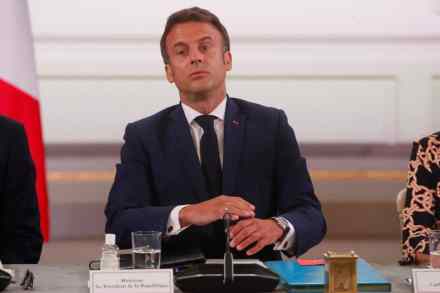
Emmanuel Macron recently changed the name of his party from En Marche to Renaissance but so far all that has been revived are sordid accusations concerning some of his party members. Last week, Jérôme Peyrat withdrew his candidature in the fourth district of the Dordogne from next month’s legislative elections after the media had made much of his conviction in 2020 for domestic violence against his wife. That Peyrat was nominated in the first place could be considered a stunning misjudgement, particularly from a president who famously declared in 2016 that he is ‘profoundly feminist’.

Will France’s PM offend Britain like her predecessor?

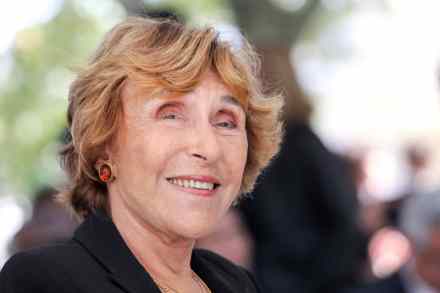
Élisabeth Borne was unveiled as the new prime minister of France last night and in her acceptance speech she paid tribute to her only female predecessor. She kept her compliment short, which was fitting, as Edith Cresson didn’t last long as PM. Appointed by Socialist president François Mitterrand in May 1991, Cresson was gone by the following April, but not before she had outraged much of the world. All of this has been conveniently forgotten by the French press, and indeed the global media, in saluting the achievement of Cresson the trailblazer. The Guardian quoted Cresson telling a French broadcaster that ‘it’s more than time’ that there was another woman leading the government.

Does Macron dream of the Nobel Peace Prize?

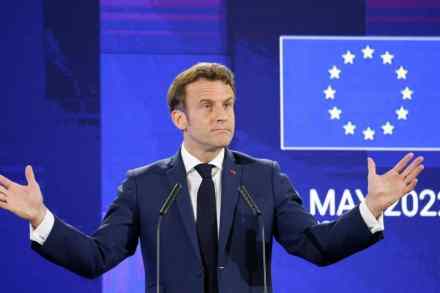
Emmanuel Macron has taken it upon himself to tackle the delicate diplomatic situation of the war in Ukraine with fresh vigour following his victory last month. This week he addressed the EU parliament on the question of the future of Europe. France has the rotating presidency of the EU Council until June 30 and Macron therefore is the de facto head of the 27 member nations, a role for which his gargantuan ego is well suited. The main takeaway from Macron’s address was the question of Ukraine’s application to join the EU. They began the process in February, days after Russia invaded, but any hope that president Volodymyr Zelensky had of his country being fast-tracked was quashed by Macron.

Macron’s new enemy is the French Nigel Farage

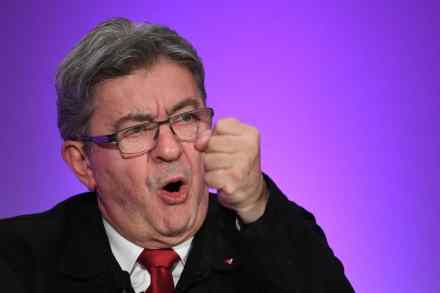
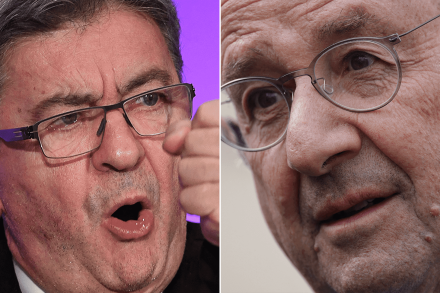
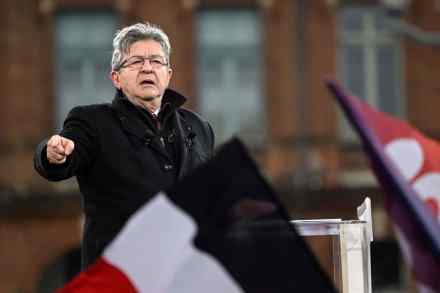
First it was the Greens, then the Communists and on Wednesday Jean-Luc Mélenchon bagged the big one, the Socialist party. In announcing an ‘agreement in principle’ between his La France Insoumise (LFI) and the Socialists, Mélenchon became the most powerful figure on the French left and, according to the electorate, the principal adversary of Emmanuel Macron in next month’s legislative elections. The Socialist party’s National Committee will meet in Paris this evening to examine the fine print of the agreement, but they are expected to endorse what is officially called the New Social and Ecological People’s Union. Not that everyone within the party is happy with the alliance.

How Eurosceptics seized power over the French left

In Britain it was the Tories who tore themselves apart over Europe, but in France it is the left for whom Brussels has long been a battleground. Jean-Luc Mélenchon, the de facto leader of the French left following his impressive performance in last month’s presidential election, is an unabashed Eurosceptic, as are most in his La France Insoumise (LFI). The Socialist Party, on the other hand, share Emmanuel Macron’s view that Europe is the future and if France must sacrifice some of its sovereignty in the pursuit of closer integration then so be it.

Can Mélenchon unite the French left?

Paris Shortly before the first round of the French presidential election I was handed a campaign flyer by one of Jean-Luc Mélenchon’s activists. On one side was his photo and on the reverse the headline: ‘With Jean-Luc Mélenchon another world is possible.’ What sort of world? A leftist utopia in which the minimum wage would be raised from its current €1,302 to €1,400 net per month, new hospitals would be built, the retirement age would be lowered to 60, and there would be a fixed price for petrol, food and energy prices. Oh, and there would also be a Sixth Republic.

Forget Le Pen 2027

If Emmanuel Macron has any sense he will be back in the office this morning. Sunday night’s celebratory shindig was good while it lasted but the Fifth Republic has never faced such a parlous future, either socially or economically. One can only hope that the attack on a priest in a Nice church on Sunday morning, barely mentioned by the media, is not a harbinger of things to come for Macron’s second term. Of more general concern for France is the economic situation. Everything is rising, from the cost of petrol to the price of a baguette, and the war in Ukraine will only deepen the crisis in the months ahead.

Privilege vs poverty in the French election

In a few hours France will know who has won the presidential election. Macron, predict the polls – though Marine Le Pen’s National Rally remain convinced that the ‘voice of the street’ will sweep them to power. The truth, however, is that there will be no winner from this election. Macron told Le Pen during Wednesday’s live television debate that her wish to ban the headscarf would precipitate a ‘civil war’, but France is already at war with itself. Macron vs Le Pen is how it has manifested itself this month but the battle lines were first drawn a decade or more ago as the effects of globalisation began to bite in what is called la France Périphérique.

The gloves are off for Macron and Le Pen

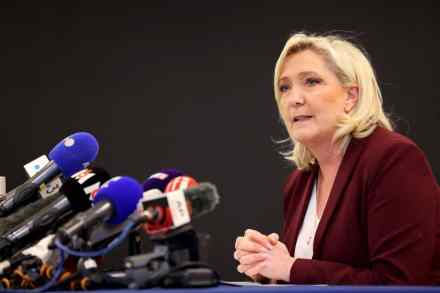
Emmanuel Macron and Marine Le Pen clash tomorrow evening in an eagerly anticipated live television debate. The president has been accused of dodging the presidential campaign but it doesn’t seem to have harmed his chances of re-election, with the latest poll giving him a handsome ten point lead over his rival. If Le Pen is to pull off a shock victory in Sunday’s second round she will need to debate with far more finesse than she did in 2017. On that occasion she was given the run-around by Macron as 16.5 million viewers looked on. The pressure on her is immense but her campaign team say she is upbeat and relishing the prospect of a rematch with her nemesis.

Who would want to lead such an angry France?

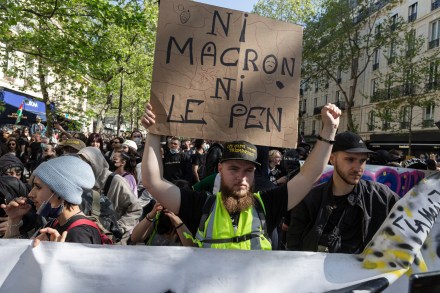
It was a day of protest in Paris on Saturday and I made it to four of the five demonstrations. I missed Extinction Rebellion’s morning outing to the boulevard Strasbourg Saint-Denis in the centre of the city. Once there hundreds staged a sit-in and blocked traffic with bales of hay for most of the day. Like their Anglo-Saxon brethren in Britain, the protesters in Paris believe the end of the world is nigh and they are aggrieved that neither Marine Le Pen or Emmanuel Macron appear to share their pessimism. There was little optimism on show at the Place de la Nation in the east of the capital where two rallies were being staged simultaneously.

The French elite are playing into Le Pen’s hands

The cry of ‘aux barricades’ is reverberating around France as the country’s political elite rush to form a Republican Front. There is diversity in the ranks of those lining up to prevent Marine Le Pen reaching the Élysée. Communists, Capitalists and past presidents and prime ministers have mobilised for Emmanuel Macron ahead of the second round on Sunday week. Who would have thought France would see the day when Nicolas Sarkozy, President ‘Bling Bling’ as he was nicknamed during his time in office, would find common ground with Fabien Roussel, the Communist leader, or for that matter a pair of Socialists in former president François Hollande and his PM Manuel Valls?

France is set for serious social unrest

So it’s Emmanuel Macron and Marine Le Pen once again, and for many millions of French that is a deeply depressing prospect. There were violent protests in the Brittany city of Rennes shortly after the result of the first round of voting was announced, as an estimated 500 people vented their anger against ‘fascism’ and ‘capitalism’. Around the same time I received a call from my sister-in-law in the south of France. She was in despair, this working-class socialist, at once more being forced to choose between Macron and Le Pen. But it’s her ilk who will decide the outcome of the second round on 24 April. Jean-Luc Mélenchon received 21.9 per cent of the vote – approximately 7.

The strange revival of France’s Jean-Luc Mélenchon

Jean-Luc Mélenchon is on the march once more, rising up the polls and laying bare the ineptitude of the Socialist party. While their candidate in the presidential election, Anne Hidalgo, is stuck on two points, Mélenchon is on 17, behind only Marine Le Pen, on 23, and Emmanuel Macron on 26. It was a similar story in the 2017 election when the veteran left-winger received 19.6 per cent of votes in the first round, while the Socialist party’s Benoît Hamon mustered a risible 6 per cent. There’s a contradiction to Mélenchon in that while at 70 he is the oldest candidate in the race, he is the most technical savvy in getting his message across.

The politics of war crimes

42 min listen

In this week’s episode: Is Putin guilty of war crimes?For this week’s cover piece, The Spectator’s Editor Fraser Nelson looks at the risks and rewards of labelling Vladimir Putin and Russian soldiers war criminals. He joins the podcast, followed by Michael Bryant, the author of A World History of War Crimes, who writes in the Spectator this week about what the limits put on acts of war in the past can teach us about atrocities committed today. (00:52)Also this week: Is Europe facing a political stand-off between progressives and populists? This week Hungarian Prime Minister Viktor Orban was elected for a fourth term in office with a large majority. While in France, Emmanuel Macron faces a much harder fight from Marine Le Pen than many expected.

Progressives vs populists: Macron, Orban and Europe’s faultline

As soon as Emmanuel Macron was sure that Joe Biden had won the American election, he tweeted: ‘We have a lot to do to overcome today’s challenges. Let’s work together!’ There was no effusive tweet this week from the Élysée when 54 per cent of Hungarian voters re-elected Viktor Orban as Prime Minister for a fourth term. The silence from Macron was deafening. Not so his principal rival in France’s impending election. On Sunday evening Marine Le Pen tweeted an old photo of the happy couple shaking hands with the declaration: ‘When the people vote, the people win!

Macron has taken this election for granted

Things are going from bad to worse for Emmanuel Macron, and for the first time political commentators in France are considering the possibility that he might not win a second term. The latest poll, carried out for Le Figaro, has him one point ahead of Marine Le Pen in the voting intentions of the people canvassed. Brexit and Trump have taught us not to put all our trust in polls but there’s no denying that Macron’s election campaign is in trouble. As I wrote yesterday, this time last month he was 18 points clear of Le Pen and a racing certainty for a second term. Where has it gone so wrong? Macron has only himself to blame.

Could Marine Le Pen actually win?

Emmanuel Macron is worried. This wasn’t how he had envisaged the election. A month ago the president of France held a staggering 18 point lead in the polls and, as he looked over his shoulder in the home straight, he could barely make out Marine Le Pen in the distance. Now the gap is four points and she is breathing down his neck as the finish line approaches. Le Pen is one of Europe’s more interesting politicians. The daughter of Jean-Marie, the founder of her National Front party – which she rebranded National Rally in 2018 – and the aunt of Marion Maréchal, she has always been considered something of a political second-rater.

Was another tragic Jewish death covered up in France?

Not for the first time in France the death of a Jew is dominating the news, and not for the first time there are whispers of an attempted cover-up. Several candidates in Sunday’s election have paused from their campaigning to air their views on the death of Jeremy Cohen, a 31-year-old who was struck by a tram in Seine-Saint-Denis, north of Paris. The candidates portrayed by the commentariat as ‘extreme right’ were the most direct. ‘Did he die because he was a Jew?’ tweeted Eric Zemmour, himself a Jew. ‘Why is this case hushed up?’ Marine Le Pen also wondered on social media if ‘what was presented as an accident could be an anti-Semitic murder’.

Macron is the Messiah for French millennials

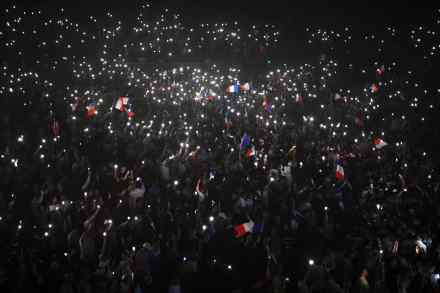
Emmanuel Macron welcomed the faithful to Paris on Saturday at a rally in the west of the capital. I know the venue well; it is the home of the Racing 92 rugby club and many a time I’ve sat in the indoor arena, roaring my approval at a bone-crunching tackle. The hollering on Saturday was for the president as he held his first and only significant campaign event before next Sunday’s election. It wasn’t quite a full house, with a few untaken seats in the 30,000 capacity arena, but the fervour reverberated around the arena as Macron made his grand entrance. It was like a boxer approaching the ring in a title fight. A warm-up act had whipped the crowd into a frenzy and as Macron emerged from his dressing room, music blasted and fireworks exploded.