Gavin Mortimer

Gavin Mortimer

Gavin Mortimer is a British author who lives in Burgundy after many years in Paris. He writes about French politics, terrorism and sport.

Europe’s leaders are failing in their duty to keep people safe

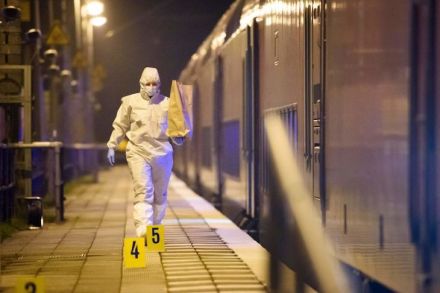
Life in Europe is becoming increasingly precarious; a case of hoping it’s not your turn to be in the wrong place at the wrong time. In a Salisbury court on Monday a 21-year-old Afghan with a long history of violence was convicted of the brutal murder of Thomas Roberts; on Wednesday, a Palestinian allegedly stabbed two people to death on a German train. That same day in Spain a Moroccan under a deportation order was arrested after a verger was killed with a machete and a priest badly wounded in two related attacks in the city of Algeciras. Meanwhile in France an Algerian and a Kosovan are in custody after two incidents earlier in the month, one in Paris and the other in Strasbourg, where knives were used to inflict terrible injuries on bystanders.

How did this killer asylum seeker hoodwink the authorities?

In 2018, a 16-year-old boy called Lawangeen Abdulrahimzai shot dead two men in Serbia with a burst of eighteen bullets from a Kalashnikov automatic rifle. Four years later he murdered again – inflicting a fatal stab wound on 21-year-old Thomas Roberts. Roberts, whose ambition was to join the Royal Marines, was killed because he had tried to break up an argument between Abdulrahimzai and another man on a street in Bournemouth.  Abdulrahimzai was yesterday found guilty of murder. During the trial, consultant forensic psychiatrist Dr Gauruv Malhan said the defendant exhibited characteristics consistent with borderline personality disorder. After the verdict, Abdulrahimzai was described by the Crown Prosecution Service as a ‘violent and dangerous man’.

France’s protestors are just getting started

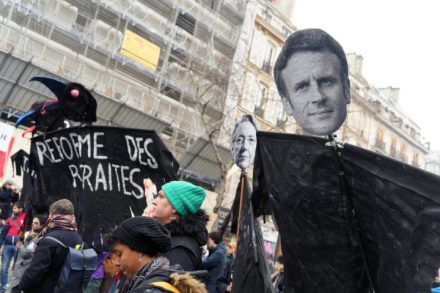
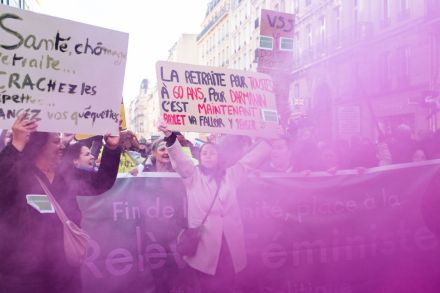
There was another protest in Paris on Saturday. According to the organisers, Jean-Luc Melenchon’s La France Insoumise, 150,000 turned out on a crisp winter’s afternoon to opposeEmmanuel Macron’s pension reform. The French President wants to lower the retirement age from 64 to 62. But independent analysis put the numer at the protest at 14,045. It was the latter. I was there. I’m now something of a seasoned observer of the French street protest. From Yellow Vests to Covid Passports, and from the far right to the far left, I’ve rubbed shoulder with all manner of disgruntled French citizen. Yesterday’s protest was one of the jollier.

How Marine Le Pen became the voice of France’s red wall

It sums ups the sorry state of the Socialist party in France that they can’t even elect a new leader. After yesterday’s vote by members, the two contenders are this morning both claiming victory.  To be frank, whether it is the pretender Nicolas Mayer-Rossignol, or the incumbent Olivier Faure, who emerges victorious is immaterial; the decline of the Socialists will continue, as I’ve been documenting on Coffee House for a number of years.   Put simply, Le Pen won the vote of men and women for whom identity still matters In 2006 the Socialists boasted a membership of 280,000, a figure that today stands at 41,000. Last week the party’s activists spurned the opportunity to initiate real change by eliminating Hélène Geoffroy in the first round of voting.

Macron is committing to nuclear energy while Britain dithers

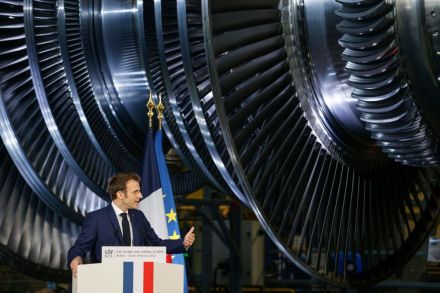
The French are falling back in love with nuclear energy, and so is their president. In 2019, only 34 per cent of people polled expressed a positive view of France’s nuclear programme, a figure that had increased to 51 per cent two years later. The most recent survey revealed it to be 60 per cent. If Emmanuel Macron had been polled he would have given nuclear energy the thumbs up, a reversal of his position when he was first elected president in 2017. He came to office promising to reduce the share of nuclear power in the energy mix to 50 per cent by 2025.

What Suella Braverman should have said to Joan Salter

Last week the Home Secretary, Suella Braverman, was confronted at a constituency meeting by a Holocaust survivor called Joan Salter. The 83-year-old courteously took Braverman to task for what she described as her inflammatory comments concerning the 45,000 people who arrived illegally in Britain last year, people Ms Salter called ‘refugees’. She said that words such as ‘invasion’, reminded her of the language ‘used to dehumanise and justify the murder of my family and millions of others.’ Salter, who was awarded an MBE for her work in educating people about the horrors of the Holocaust, arrived in Britain from Belgium, via the United States, in 1947.

Terror has become banal in Macron’s France

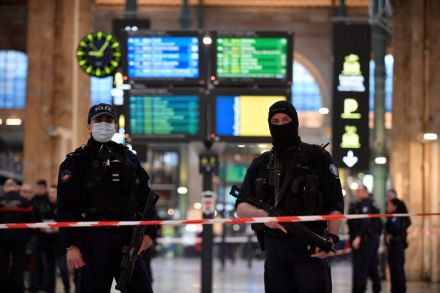
The mother of my daughter was at the Gare du Nord on Wednesday morning when a man ran amok with a knife. Six people were stabbed but she was not one of them. I have a friend who wasn’t so fortunate. In July 2016, three members of his family were enjoying the Bastille Day celebrations in Nice when a Tunisian drove a 19-ton lorry along the Promenade des Anglais. They died, along with 83 others, who had the bad luck to be in the wrong place at the wrong time.  This has been the fate of the French since 2015: fingers crossed and hope for the best, a philosophy encouraged by the people whose duty it is to protect them. 'Times have changed, and we should learn to live with terrorism,' said the then prime minister, Manuel Valls, the day after the Nice attack.

France is losing patience with Macron

When the Sunday newspaper, Le Journal Du Dimanche, recently published its annual list of France’s fifty most popular personalities, politicians barely got a look in. Only two made the cut: Emmanuel Macron, at number 35, and Marine Le Pen, at 48. When the list was first published in 1988 the president of France was François Mitterrand, ranked third, one of fifteen political figures that year.  Frédéric Dabi, the head of IFOP, the polling company responsible for the annual list, explained that its changing composition was telling. 'It is a reflection of the society’s mistrust towards its politicians,' he said, noting that conversely admiration for scientists, sports stars and comedians had increased over the years.

Rishi Sunak will fail his migrant mission – but it’s not his fault

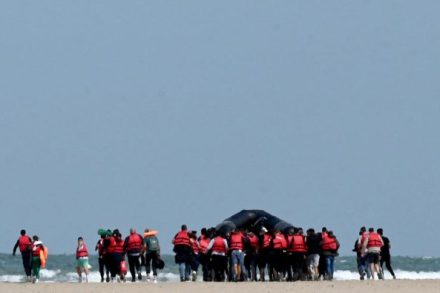
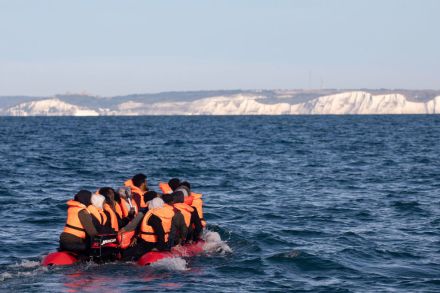
Suella Braverman sparked a backlash last November when she described the number of small boats crossing the Channel as an ‘invasion’. The chattering classes objected to the ‘inflammatory language’ of the Home Secretary rather than the fact that 45,756 people entered Britain illegally in 2022.  The provocative word this month is ‘infinite’, used by a government source in admitting that even if Britain did stem the flow of Albanians crossing the Channel there are many thousands more migrants desperate to make it to Britain. ‘Their places on the boats would be filled by Somalis, Eritreans or Afghans who can’t afford to pay as much as the Albanians,’ they explained. The source is not wrong.

Might Michel Houellebecq become the next Salman Rushdie?

In August this year Salman Rushdie was stabbed multiple times. The novelist survived the attack, to the outward relief of the West. Prominent figures from the world of religion, politics and the arts offered their unqualified support to Rushdie as he lay in a New York hospital, recovering from the 12 knife wounds to his body.    The mayor of Paris, Anne Hidalgo, whose city in recent years has been targeted on several occasions by Islamist extremists, tweeted her support for Rushdie, a writer she described as ‘inspiring and a free man’.

Hopeless and downbeat, Britain is the new France

‘Tis the season to be jolly, unless you live in Britain. An Ipsos poll last week suggested there is widespread pessimism in the UK about the year ahead. Six out of ten Brits expect food shortages in 2023, 57 per cent believe it unlikely their personal finances will improve, and two-thirds fear a general strike. British doom and gloom has been growing in recent years. According to data released last month by the Organisation for Economic Cooperation and Development (OECD), the use of antidepressants in Britain has rocketed, with only Iceland and Portugal among 18 European nations having a higher consumption. In 2010, 54 people per 1,000 in Britain were taking antidepressants, a figure that doubled to 108 in 2020; in contrast, France’s consumption has remained stable at 53 per 1,000.

Macron’s World Cup loss is nothing compared with the problems he faces in France 

One can only feel for Kylian Mbappé. If scoring a hat-trick in a World Cup final but ending up on the losing side wasn’t enough, the Frenchman then had to endure a public display of affection from Emmanuel Macron.   Understandably, given that Mbappé and his teammates were still numb with the misery of losing the penalty shootout to Argentina, the PSG striker didn’t appear that receptive to being pawed by President Macron on the pitch at the Lusail stadium.

Rogues Heroes: What Prince Harry has in common with the SAS’s founder

I’ve enjoyed the recent BBC blockbuster Rogue Heroes, a drama that is mercifully free from the moralising that Auntie often inflicts on viewers. All the same, as I told the Daily Telegraph this week, one should take the Boys’ Own interpretation of the formation of the SAS in world war two with a pinch of salt. Eight out of ten for entertainment but five for historical accuracy.   The main problem with Rogue Heroes is that it is true to David Stirling’s version of how the SAS was born. But as I make clear in my recent biography of Stirling, The Phoney Major, based on two decades of research, he was a master at twisting the truth to suit his own ends. Sound familiar? Harry and Meghan are not the first to put their truth before the truth.

Hooligans aren’t alone in exploiting Morocco’s World Cup run

'Let's all get behind Les Bleus for victory!' tweeted Emmanuel Macron shortly before France and Morocco met last night in Qatar in the semi-final of the World Cup. 'Without ever forgetting that sport brings us together above all in the respect and friendship between our two nations.' A worthy sentiment from the president but not everyone listened: certainly not some of the Moroccan fans in the Al Bayt Stadium, who greeted the playing of the La Marseillaise with a cacophony of whistling.   As for the match itself, the French did to Morocco what they had done to England in the quarter-final, punishing the profligacy of their opponents with two clinical strikes in a pulsating contest.

Football won’t save France or Britain from decline

Rishi Sunak and Emmanuel Macron rekindled their bromance on Saturday, swapping tweets prior to England’s World Cup quarter-final clash with France. It was a bit of fun, diplomatic joshing, but Sunday morning will have felt a whole lot sweeter for the president of France.  He is a genuine football fan, not something that can be said of the Prime Minister, but Macron also knows how important this World Cup is for a France mired in economic and social woe. The same was true for England, and Sunak must have cursed Harry Kane more than most as he ballooned the ball over the bar from the penalty spot.   The World Cup was the last chance to end a disastrous year for the Conservative party on a positive note.

Why the French don’t all love Mbappé like Macron

Emmanuel Macron is confident France will beat England in Saturday’s World Cup quarter-final. In an interview with a radio station, the president of the Republic declared that he doesn’t ‘really have any doubts about the fact that we're going to win’. Macron is not known for his lack of self-belief but for once his bravado is justified: France are the reigning world champions, and in Kylian Mbappé they have the best player in the world.   The Parisian is a phenomenon, the scorer of five goals in four games so far at this tournament, and in netting twice in the last 16 win over Poland Mbappé surpassed the great Pele for the number of goals scored in World Cups by a 23-year-old. He scored four in 2018 as he inspired France to the title.

Why can’t we call Moroccan football thugs hooligans?

One of my most delightful sporting experiences was watching the 2018 World Cup match between England and Tunisia in a Parisian bar. My English friend and I were heavily outnumbered by Tunisians but we were made to feel welcome in a festival of dancing and singing. Even when Harry Kane scored a late winner it didn’t dampen the spirits of the young Tunisians, many of whom were beer-drinking women.  I imagine they celebrated long into the night last week when Tunisia beat France in the World Cup, a shock victory that was greeted with good-natured joy by Tunisians across France.  Another North African nation has also been making its mark in Qatar, and Morocco’s defeat of Spain on Tuesday took them into the quarter-final of the World Cup for the first time.

Unlike Britain, France is far from finished with Covid

Twelve months ago Britain rebelled against Covid hysteria. As Boris Johnson and his Sage modelling committee prepared to lockdown the country for Christmas, they lost control of the narrative.   First 100 Tory backbenchers MPs voted against the PM’s vaccine passport scheme, and a few days later Lord Frost resigned as Brexit Minister. In his resignation letter he expressed his concern about the government’s handling of the pandemic. Urging Johnson to ‘learn to live with Covid’, Frost warned against giving into the sect of the worst-case scenario. ‘I hope we can get back on track soon and not be tempted by the kind of coercive measures we have seen elsewhere.

How Generation X turned Britain barking mad

What have the following got in common? David Cameron, Nick Clegg, Liz Truss, Nicola Sturgeon, Matt Hancock, Sadiq Khan, Angela Rayner, Rishi Sunak, Jeremy Hunt, Professor Neil Ferguson, Extinction Rebellion founder Roger Hallam, NHS chief executive Amanda Pritchard and Admiral Sir Tony Radakin, the Chief of the Defence Staff.    The answer is that they were all born between 1965 and 1980, making them Generation Xers, and they have all turned Britain barking mad. I say this with a heavy heart, for to my eternal shame I also belong to Generation X.    The names I listed above are only the tip of the iceberg, a very large iceberg into which the Good Ship Britain has sailed and, as a result, is now listing badly and in danger of sinking.

How Qatar uses its wealth to challenge western values

The French have adopted a ‘when in Rome’ approach to the World Cup in Qatar, refraining from virtue-signalling their disapproval of their host's beliefs. As their captain, Hugo Lloris,  put it last week: ‘When we are in France, when we welcome foreigners, we often want them to follow our rules, to respect our culture, and I will do the same when I go to Qatar, quite simply. I can agree or disagree with their ideas, but I have to show respect.’ Of all western countries, France expects those who settle from different cultures to adhere to Republican values, particularly that of laïcité (secularism). This is in contrast to the multiculturalism of the Anglosphere where the prevalent philosophy is one of cheerful tolerance.