Gavin Mortimer

Gavin Mortimer

Gavin Mortimer is a British author who lives in Burgundy after many years in Paris. He writes about French politics, terrorism and sport.

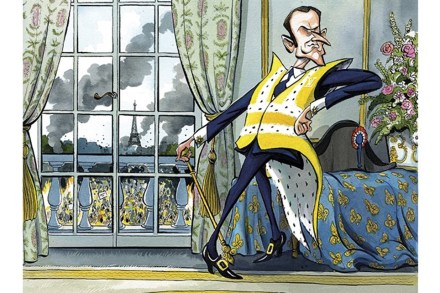
China’s nickname for Macron is perfect

Alexei Navalny is being laid to rest in Moscow today, a fortnight after the Russian opposition leader was found dead in a gulag in the Arctic circle. His death prompted an outpouring of grief but also anger among Western leaders. Joe Biden, Rishi Sunak and Emmanuel Macron expressed their sadness at the news and their indignation, pointing the finger of blame for Navalny’s death at Vladimir Putin. Navalny was a courageous man who paid a heavy price for his dissidence. So, too, did Jamal Khashoggi. The Saudi journalist was a fierce critic of Crown Prince Mohammed bin Salman, using a monthly column in the Washington Post to denounce the de facto ruler of the kingdom.

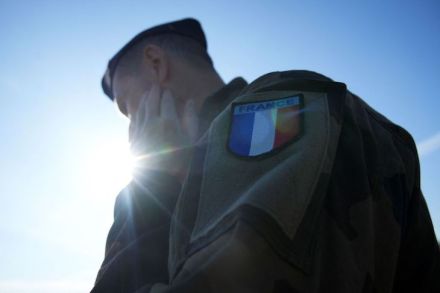
Macron has embarrassed and embittered his military

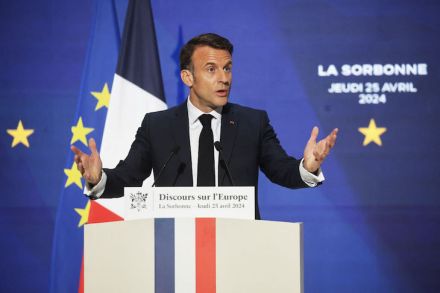
Emmanuel Macron is the first president of the Fifth Republic to have never served in the military, and it shows. His bellicose declaration on Monday that the West might deploy ground troops to Ukraine has been roundly rejected by France’s allies. No chance, was the retort of Germany, Britain, Poland and others. Russia also warned that such a deployment would be very unwise. Macron has never recovered the confidence of his armed forces As a result, Macron has been left looking foolish and inexperienced, accused of war-mongering in order to boost his self-esteem after a bruising few weeks domestically.

Why is Macron acting like a ‘warlord’?

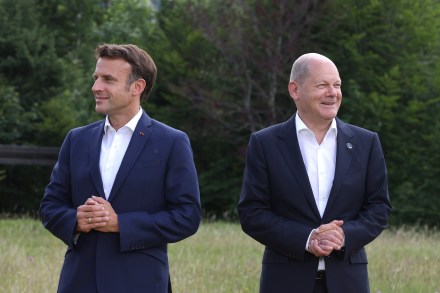
Emmanuel Macron has said that the West may have to send ground troops to Ukraine to support their war against Russia. The president of France made his comments on Monday as he hosted a conference at the Elysée palace about how best to support Ukraine. In attendance were more than 20 European heads of state and government, including German Chancellor Olaf Scholz, as well as representatives from the USA and Canada. The cynic might wonder if Macron’s grandstanding isn’t a last desperate attempt to claw back some authority before June’s European elections Macron admitted that there was not a consensus on deploying ground troops to Ukraine but ‘no option should be discarded. We will spare no effort to ensure that Russia does not emerge victorious in this conflict’.

France expels Islamists while Britain appeases them

France last week deported an imam after footage emerged of him appearing to preach hate. Mahjoub Mahjoubi, who has lived in France since 1986 and has fathered five children, was put on a plane to his native Tunisia less than 12 hours after he was arrested in his home town of Bagnols-sur-Ceze in the south of France. ‘We will not let people get away with anything,’ declared Gerald Darmanin. The consequence of Britain’s institutional appeasement is now being seen on streets, in parliament and in council meetings across the country The Interior Minister attributed the imam’s expulsion to the recent immigration law, proof in other words, that this is a government that will not tolerate Islamic extremism.

Europe’s elitist politicians have lost touch with the working classes

What links Rishi Sunak to Elly Schlein, the leader of the Italian left, and Raphaël Glucksmann, the great hope of the French Socialist party? America. The British Prime Minister lived in the US for a number of years, first as a student at Stanford University before working for a hedge fund in California. Schlein, born and educated in Switzerland, is the daughter of an American academic who cut her political teeth as a staffer on both of Barack Obama’s presidential campaigns. The 44-year-old Glucksmann, born in the posh part of Paris to a prominent philosopher, has never lived in the States but he’s been a frequent visitor over the years.

Macron’s latest adversary might be his most dangerous yet

It’s been a terrible start to the year for Emmanuel Macron and his new government. Aside from the well-publicised farmers’ protest, there has also been industrial action by teachers, train workers and staff at the Eiffel Tower. Cases of violent crime are at a record high, and the drugs trade is flourishing as never before with an annual turnover of €3 billion (£2.6 billion). Sunday was arguably the worst day of the year so far for the president, who likes to convey an image of a man in complete control. The glum-faced Minister of the Economy, Bruno Le Maire, appeared on television to announce that he has revised the Republic’s growth forecasts for 2024 downwards, from 1.4 per cent to 1 per cent of GDP. This means the state will need to make €10 billion (£8.

It’s stalemate in Ukraine but Putin is defeating the West in Africa

In the early hours of Saturday morning, police in Paris shot dead a Sudanese man who had threatened them with a meat cleaver. The motive for his actions has yet to be revealed but the incident happened a day after Italy’s prime minister Giorgia Meloni warned her government that Europe faces a new migrant crisis because of the brutal war in Sudan that has displaced millions of people. Among the 157,00 migrants who arrived in Italy in 2023, 6,000 came from Sudan but Meloni believes that number will increase significantly this year. The repercussions of last summer’s coup d’etat in Niger are also starting to be felt in Europe.

France’s anti-democratic streak

For the past week the airwaves in France have eulogised Robert Badinter, a name unfamiliar to many outside the Republic. He was the Justice Minister under François Mitterrand and the man who oversaw the abolition of the death penalty in 1981. On Wednesday Emmanuel Macron presided over what was billed as a national act of remembrance. Badinter, who died aged 95 last week, will be laid to rest in the Panthéon alongside the other heroes of the Republic. What most of the eulogies omitted was the fact that Badinter – universally respected as a man of conviction and humanity – abolished the death penalty against the wishes of the majority.

Will the Tories be wiped out like the French Republicans?

Vote for me or you’ll end up with Keir Starmer. That was the threat from Rishi Sunak on Monday evening when in front of the GB News cameras he addressed voters in Country Durham. The Prime Minister warned that the general election will be a straightforward choice between the Conservatives and Labour. He then listed what was at stake: controlling spending, cutting taxes, boosting the economy, protecting borders and policing the streets. ‘All of those things that you care about, who is more likely to deliver them?’ Not the Tories, if the polls are to be believed. One poll last month predicted the party will be ‘wiped out’ in the next election, on a scale not seen since 1997.

The sinister transformation of Greta Thunberg

Greta Thunberg spent her weekend in France supporting two environmental campaigns. On Sunday she appeared at a rally in Bordeaux against an oil drilling project; 24 hours earlier the 21-year-old Swede was further east, adding her voice to those activists opposed to the construction of a new stretch of motorway between Toulouse and Castres. ‘We are here in solidarity with those who are resisting this project and this madness’, said Thunberg in English, her now familiar keffiyeh round her neck. Some French media described Thunberg as an ‘anti-global warming icon’ and the ‘figurehead in the fight to protect the planet’. She might have been once.

Greta Thunberg

The left can’t stand France’s new culture minister

France’s new minister of culture has promised to put an end to the creeping cancel culture that is threatening the country. ‘Today wokeism has become a policy of censorship,’ said Rachida Dati, who was appointed to her post last month. ‘I am in favour of the freedom of art, the freedom of creation, and I am not in favour of censorship’. She explained that she will launch her campaign next week, summoning the great and the good of the cultural world to ‘ensure that we support creative freedom and do not support these new censors.’ Dati might have had in mind the 1,200 poets, editors, publishers, booksellers and actors, who recently signed a petition demanding the head of Sylvain Tesson, a celebrated travel writer.

Taylor Swift can’t save the EU

The EU hopes that Taylor Swift and other pop starlets will come to its rescue in June’s European elections. With pollsters predicting significant gains for the right, Brussels’ ruling elite is preparing to turn to ‘famous artists, actors, athletes and other stars for help’. Their ambition is to persuade these personalities to encourage their young fans to vote in the elections – and to vote for them, the ruling centrist elite.   ‘No one can mobilise young people better than young people, that's how it works,’ said Margaritis Schinas, the EU Commissioner for Promoting the European Way of Life, recently. ‘That works better than commissioners speaking from the press room.

Russia isn’t the biggest worry in Macron’s crime-ridden France

February has not started well for the European Union. On the first day of the month, furious farmers surrounded the parliament in Brussels, chanting defiance and throwing eggs at the people they blame for demeaning their industry. On Saturday, a man stabbed three people at the Gare de Lyon in Paris. The suspect in custody is from Mali but had lived legally in Italy since arriving in 2016. During questioning, the 32-year said his actions were motivated not by religion but by historical grievance, for what France ‘had imposed on his grandfather’. As has become the custom in these type of attacks, the initial explanation for the man’s rampage was attributed to ‘psychiatric problems’.

France’s farmers will be back on Paris’s doorstep before long

In a week full of symbolism in France, the most striking image was the sight of armoured cars blocking the path of tractors outside Paris. The city’s first great wall was constructed at the end of the 12th century on the orders of Philip Augustus, but here was a new wall, of armour, erected at the command of Emmanuel Macron. They shall not pass. And so they didn’t. A few tractors made it as far as the international market at Rungis, five miles south of Paris; their drivers were arrested and held overnight. They were released a short time before Prime Gabriel Attal announced a new set of measures to placate the farmers: stacks of cash and a promise to put the pride back into farming.

Why European farmers are revolting

Dixmont, Yonne I am writing these words from my house in Burgundy. If I look over my shoulder out of the window I can see the house of my neighbour, a cereal farmer. If I look out to my right, across the fields, I can see the buildings of a cattle farmer. There is a third farm in my village where they produce cereal and vegetables. Every two days in France a farmer commits suicide. Others walk away from the industry Patricia, the wife of this third farmer, dropped by last night with a crate of potatoes. Her husband has been on the front line of the growing agricultural protest movement that began a fortnight ago in Toulouse. It has spread across the country.

France’s furious farmers are marching on Paris

Paris will be under siege from 2 p.m. today as farmers intensify their protest action and attempt to cut off the capital from the rest of France. They have announced plans to blockade all roads leading to Paris with their tractors, a threat that prompted interior minister Gérald Darmanin to summon police chiefs to his office on Sunday. Darmanin ordered them to ‘deploy a major defensive operation’ to ensure the farmers are not successful, particularly in their ambition to prevent access to airports and the international food market at Rungis. Prime minister Gabriel Attal had hoped he’d defused the anger of the agricultural industry on Friday when he travelled to the Haute-Garonne region in the south, where the protests began ten days ago, with a list of concessions.

European voters are rebelling against the elites

A friend of mine intends to vote for the National Rally in June’s European Elections. That in itself is nothing unusual – 13.2 million people voted for Marine Le Pen in the 2022 presidential election and 88 of her MPs were then elected to parliament in the legislative elections.  What’s more unusual about my friend is that she is a French Algerian.   She tells me that she is not an exception among her milieu. It’s the lawlessness, she explains, and the indifference of Emmanuel Macron and his government to thugs, extremists and drug dealers, who make life so miserable for the hard-working and law-abiding in the less fashionable districts of French cities.

France’s new PM Gabriel Attal is already fighting fires

Gabriel Attal has only been in his job for two weeks but the youngest prime minister in the history of the Fifth Republic is already facing a series of crises. The most pressing issue for the 34-year-old premier is the farmers’ protest, which began last Friday when a blockade was erected on the A64 motorway west of Toulouse.   Early yesterday morning a car drove into the blockade, killing a farmer and her 12-year-old daughter. Details of the crash emerged throughout the day: it was not a deliberate act, the driver and the occupants were foreign and were confused by the protest. Then it was revealed that the three people in the car were Armenians, in the country illegally, after their application for asylum had been rejected last year.

France’s protesting farmers have spooked Emmanuel Macron

The farmers of France are mobilising. Their anger will be an early test for Gabriel Attal; the countryside is unknown territory for the new prime minister, a young man raised in the affluent suburbs of Paris, like the majority of Emmanuel Macron’s government.  The first dissent was on Friday in the south-west of France, in and around Toulouse. On the motorway linking the city to the Atlantic coast, the farmers erected a barricade with bales of hay that is still in place three days later. Their largest union, the FNSEA, has warned this is likely to be the first of many such actions. Their president, Arnaud Rousseau told the government: 'What interests me isn’t the performance, but the answers that will be given to farmers over the next few days to long-standing demands.

Katharine Birbalsingh and France’s own secularism battle

The row that has erupted at Katharine Birbalsingh’s Michaela school in north London highlights the difference in how Britain and France confront Islamic conservatism in education and wider society.   Birbalsingh has displayed courage in imposing a blanket ban on all ritual prayer in the school, but nonetheless in France such displays of religiosity have been outlawed for more than a century.   Initially this was to curb the influence of the Catholic church, but in recent decades it has been Islam attempting to undermine the secularism of French schools. It began in the autumn of 1989 when three teenage girls arrived at their school in a suburb of northern Paris wearing headscarves. They were sent home.