Gareth Roberts

Gareth Roberts

Gareth Roberts is a TV scriptwriter and novelist who has worked on Doctor Who and Coronation Street. He is the author of The Age of Stupid substack.

We don’t need a ‘diverse’ coronation

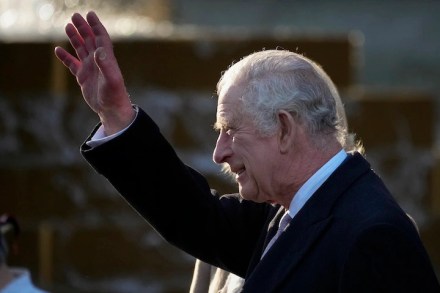
Refugees and the NHS, we are told, will be at the heart of King Charles’s ‘diverse’ coronation in May. You’d think that a thousand-year-old institution tasked with steering clear of controversy might seek to avoid such hot potatoes. But there is nothing unexpected about this royal foray into politics. LGBTQ+ groups will perform at ‘a star-studded concert at Windsor Castle’ as part of the celebrations marking His Majesty’s accession to the throne. A royal source told the Daily Telegraph the coronation ‘needed to be “majestic” but “inclusive” to reflect a diverse modern Britain’.  Unfortunately, this sounds like another example of the utterly banal EDI (equality, diversity, inclusion) events we’ve become used to in Britain.

The great Tory delusion

Spare us from feeble, timid Tories. At times, the party's MPs are so afraid of what the Guardian or their daft teenage kids might say they forget they are supposed to be conservative. Take the party's laggard attitude to months of protests; or the total disaster of the Channel migrant boats crisis; or mimsying about with the universities freedom of speech bill. Do they really think this approach is going to win them the next election? Remarkably, there’s something even worse than mere squirming incompetence and conflict avoidance: the airy nonchalance of a certain strain of Tory MP. Even MPs touted as future leadership hopefuls are guilty.

What Howards’ Way taught me about Margaret Thatcher

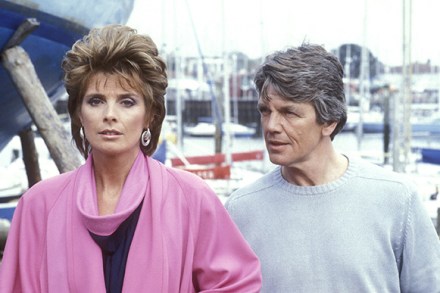
Splice the mainbrace! Howards’ Way, the BBC’s Sunday night sailing and sex 80s soap, is back, courtesy of UKTV Play, with the whole first series now available to stream free with ads. Nearly 40 years on, I’ve found myself caught in its swell all over again. The combination of corporate chicanery (Fry and Laurie’s ‘Damn you, Marjorie!’ sketches owe a lot to this) and sizzling sex on satin sheets is made all the more glorious because the backdrop isn’t the sun-drenched skyscrapers and rodeo ranches of Texas or Colorado but the village of Bursledon on the Hampshire coast, renamed Tarrant for the fiction. The sailing, and there’s a lot of sailing, all takes place on the river Hamble.

An ode to Mrs Brown’s Boys

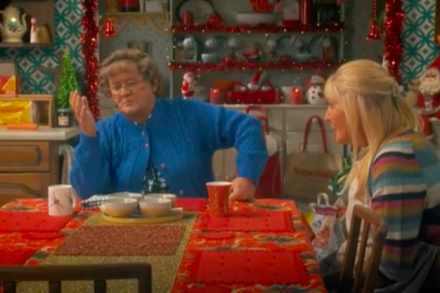
‘A mother hen watching all her chicks, a sassy old lady full of tricks’. Mrs Brown’s Boys recently returned to BBC One for yet more festive specials. Astonishingly the last actual full series of non-seasonal episodes was transmitted ten years ago, though a new one is imminent. This Christmas's were, reassuringly, exactly the same as they always have been. In this case, ‘always’ goes back a long way. Although it only surfaced on the BBC in 2011, the ‘franchise’ – as we are now expected to call TV programmes, as if they were concessions for burger vans – originated in the mind of Brendan O’Caroll in 1992. But I think Mrs Brown and her incredibly unfashionable and incredibly popular brand of humour goes back a lot, lot further even than that.

Twixmas and the truth about why people liked lockdown

We don’t have a standardised name for the little clutch of strange days between Christmas and New Year. There is an aesthetic to Boxing Day – hearty walks, reheated leftovers, scraps of wrapping paper – but from then till New Years Eve we enter an in between time. I’ve heard several informal and colloquial references to it, things like The Lull, The Interregnum, The Aftermath – but the lack of a recognised term seems fitting. There is the merest echo of the pre-modern twelve days of Christmas, or Twelvetide, though nowadays we are all back at work long before the drummers drumming make their appearance.  No name means no rules, no rituals, nothing in particular that you should or should not be doing.

What Christianity teaches us about the transgender wars

It’s Christmas – again. For old timers like me, the familiarity of this time of year can blunt the strangeness of what we celebrate: the birth of Christ. The basic moral Christian precepts that Jesus embodied are also easy to take for granted. Do as you would be done by, love your neighbour, think of the poor; we accept these Christian attitudes, mistake them for innate human qualities, and rarely stop to think about them. The concepts go unexamined, embedded in our culture after centuries, though now minus any superhuman authority.  What we’ve forgotten is that these are peculiar, counterintuitive ideas that literally set the world on fire. They established themselves so deeply that they’ve survived the religion that instituted them.

Why is Elton John so pompous?

'All my life,’ Elton John told the Twittersphere last Friday afternoon, ‘I've tried to use music to bring people together. Yet it saddens me to see how misinformation is now being used to divide our world. I've decided to no longer use Twitter, given their recent change in policy which will allow misinformation to flourish unchecked.’  The first things to grab your attention about this utterance are its strangely stilted syntax and grim grammar. That ‘yet’ is an attempt to cover a leap of a non-sequitur. ‘I’ve decided to no longer use Twitter’ feels like an auto-translation from a tongue where subject and object come the other way around, and verbs flit about like birds.

King Charles should ignore Ngozi Fulani

If a visitor to my house suggested they had been abused and verbally attacked when they came to tea, I probably wouldn’t be in a particular hurry to invite them round again for nibbles. If that person had subsequently caused a very public stink and embarrassed and humiliated a valued family friend of extremely long standing, I would most definitely give them up as a bad idea. I certainly wouldn’t invite them for ‘talks’.  But this is pretty much the approach taken by the King and Queen Consort to Ngozi Fulani, the domestic abuse campaigner who says she was asked repeatedly where she was 'really' from when she visited Buckingham Palace last week.

Matt Hancock showed how Conservatives can win

It’s somehow appropriate that Matt Hancock finished third in the 2022 series of I’m A Celebrity … Get Me Out Of Here! Third is a word that fits him neatly. Third choice. Third wheel. Third rate. Third is the ‘and you did great, too!’ of victories. The day before, Hancock had donned the brass hot pants of ‘the Bronze Bronco’ for the annual Cyclone challenge, as if bottom rung on the podium already belonged to him.  His continued presence in the jungle – as straightforward, likeable contestants such as Charlene White and Mike Tindall, and less affable ‘characters’ like Boy George and Chris Moyles fell by the wayside – had started to rattle some of the commentariat. To be fair, these people are already fairly rattled on a good day.

How did contemporary culture become so dismal?

Watching the Christmas John Lewis ad, over and over, I’m struck by how much British life has changed – and not for the better. We’ve all become so tastefully downbeat, introspectively sentimental and utterly lacking in brightness.   In the early 1980s, the big TV advertisement of the Christmas season was for Woolworths. I should explain for any younger readers that Woolworths was a kind of Amazon depot, except that you were required to go there yourself on your legs and search for what you wanted with your arms.  The 1981 Woolworths advert was bright, gaudy and carnivalesque.

Who is Boy George to look down on Matt Hancock?

Matt Hancock’s ongoing humiliation in the I’m a Celebrity, Get Me Out of Here! jungle is bad news for lots of people, not least his long-suffering family and his mortally embarrassed children. His constituents in West Suffolk, who can watch their right honourable representative eat kangaroo penis (but probably not expect a reply to their letters), are also missing out. Hancock’s decision to head Down Under has also put paid to his dreams of a return to the cabinet. But there is one winner in all this: Boy George. Hancock’s appearance on the ITV show has allowed his fellow jungle celebrities to take a moral high ground. None of us are perfect, of course. Few of us are without things to be rightly guilty about.

Eco-loonyism is an upper-middle-class rite of passage

Greta Thunberg, the Shirley Temple of the apocalypse, let the cat out of the bag last week. She told the audience at her book launch that her environmental focus is merely part of her bigger secret plan to overthrow society. Apparently there’s a lot of ‘colonialism, imperialism, oppression and genocide by the so-called global North’ that has to be stopped. Gosh. Some have framed this as millenarianism’s Bonnie Langford saying the quiet part out loud, but surely it was always obvious?

Does Elon Musk have the stomach for this fight?

Appropriately for Twitter, the arrival of Elon Musk has been regarded by some as the coming of the antichrist and by others as the apotheosis of the messiah. I think both sides may be getting a little overexcited. This is not a person whose movements can be anticipated with any accuracy. Musk’s defining characteristic is that he is erratic, as his hokey cokey-style acquisition of the social media platform itself displayed. This added to previous oddities such as insinuating that a cave rescuer in Thailand was a paedophile. There’s ample evidence that ‘Chief Twit’ Musk has the social skills, interests and humour of a 14-year-old boy. His sink gag as he entered the Twitter building was a Beano-level pun worthy of The Fast Show’s ker-raaazy Colin Hunt.

What we’ll miss about Liz Truss

As Liz Truss prepares to leave Downing Street after 47 days in power, the PM’s reputation is in tatters. Seeing out the reigning monarch after seventy years, spooking the financial markets like a distant hyena terrifies a family of meerkats, and, incredibly, tanking the Tories’ poll rating to its lowest ever level at the same time as paying everybody’s gas bill. But listen, Liz. I wouldn’t worry. Because it doesn’t take very long before people start pining for and eulogising former prime ministers that drove them potty when they actually were in office. Just this weekend gone, singer Tanita Tikaram sent a much-liked tweet saying she would like Gordon Brown back.

Why does anyone bother making political predictions?

The Christian Roman Emperor Theodosius had the Delphic Oracle smashed up in 390 AD, but the gifts of the old gods were already well on the way out. The Sibylline Books were burned shortly after. Scrying glasses across the ancient world had misted over. The prophets fell silent. Well, they hadn’t seen that coming. It was now impossible to foresee what was going to happen next, let alone any further down the line. You can see where I’m going with this. Who will be prime minister at the end of the week? What brave new policies, set in stone days ago, will be forgotten like waking dreams?

Liz Truss has a language problem

‘Grow the pie’. Somebody thought ‘grow the pie’ was The Thing, that ‘grow the pie’ was it. That this knockout phrase would silence the army of doubters and bring millions of voters back on side. They were proud of ‘grow the pie’. They thought ‘grow the pie’ was a great idea that people can really relate to and get behind. The same kind of person who thought reviving The Generation Game with Mel and Sue, or that Crown paint advert with the dead-eyed cult singing about ‘Hannah and Dave’ were notions of genius. Grow the pie – biff bang pow, now what’s your comeback to that, eh? Did they test it out on anyone else before Liz Truss’s speech at Tory party conference?

Why can’t MPs let Truss be Truss?

Our common culture – the huge audiences that tv, film and pop music used to attract – has evaporated. Politics is about the only thing remaining where we are all on the same page. It’s perhaps inevitable then that public reaction has become ever more febrile and volatile. Poll percentages now go crashing and soaring with a regularity that’s disturbing to those of us who can remember the prelapsarian age when we were the only people who gave a stuff about politics and that we were considered odd because of it. The marked outlandishness of British party politics has been evident since that day in September 2015 when Jeremy Corbyn became leader of the Labour party.

The British Social Attitudes survey misunderstands social attitudes

‘I'm not sure I even know what woke means,’ tweeted barrister Chris Daw at the weekend, ‘but if it's just treating all people fairly, and with kindness and dignity, it doesn't seem so bad.’ This is the perfect example of the faux-naïf, head shaking sadly, cosy boast – well, when you get right down to it, isn’t my political ideology just being nice? No, Chris. Let me clear this up for you right now. No. You are thinking of the mixture of residual Christianity and social liberalism that, for better or worse depending on taste (and I was quite fond of it generally) dominated Western discourse for much of the previous century. Woke is very much not that.

Why ordinary people cannot enter the arts world

Recent sad events have seen everybody behaving exactly as you would expect. There’s nothing wrong about that. A certain continuity of conduct is reassuring, a truism that the late Queen herself exemplified better than anyone. Her job was to be regal. Similarly, it’s the job of chippy academics to spill their thoughts, of the New York Times to froth at length, and, of course, of mad actors to be mad. It might be argued that the job of an actor is to act, but such an objection belongs to a vanished world and certainly does not apply to the actors who have moved beyond simply saying other people’s words for a living. We were blessed by two fine examples this week.

David Bowie was not authentic

The death of the Queen has led to a host of peculiar postponements. Perhaps the strangest was the announcement that the launch of ‘Bowie On The Blockchain’, a sale of NFT artworks inspired by the deceased pop star, has been delayed ‘out of respect for the people of the UK and Queen Elizabeth II’. It’s hard to picture anybody particularly noticing or caring about this strange event at the best of times, harder still to imagine British people shaking their heads and tutting if it had gone ahead on schedule: ‘Dashed bad show, Bowie estate selling non-fungible tokens, and Her Majesty not even in her grave’.