Gareth Roberts

Gareth Roberts

Gareth Roberts is a TV scriptwriter and novelist who has worked on Doctor Who and Coronation Street. He is the author of The Age of Stupid substack.

Why are we so obsessed with TV presenters?

The mucky allegations about a 'household name' BBC star – who is said to have paid thousands of pounds to a teenager for sexually explicit pictures – has exposed our obsession with TV presenters. We invite these people into our homes every day. Stars we never meet become familiar, a part of our lives and daily routines. Now, for one of these presenters, their world has come crashing down, and we can't get enough of it. There are plenty of questions hanging over this story: we still don’t know the identity of the presenter concerned, even if social media is awash with a list of suspects. And we don't know whether the allegations are true. But there's no doubt that we find presenters caught up in scandals fascinating. There is also something deliciously exciting about such stories.

The worst excesses of the Saintly Reading Cult 

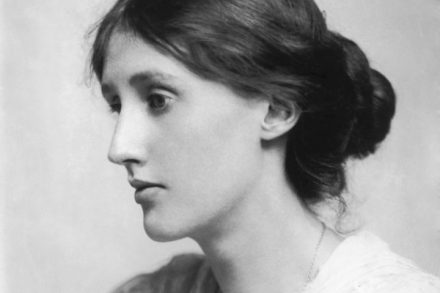
I read a lot of fiction. I always have. It’s not unusual for me to have three of four books on the go at the same time, which I read in rotation, a chapter at a time. I say this not as a brag. It just is. I do it because I really enjoy doing it. The fact that it might seem like a brag leads me to my point: there is nowadays an air of saintliness about reading, particularly reading fiction, that is very irritating.  A publisher has just slapped a trigger warning on, of all things, Virginia Woolf’s To The Lighthouse – and not for any specific reason, but just because it’s old so there’s probably something ‘wrong’ in it, somewhere.

Boris Johnson’s peculiar conservative conversion

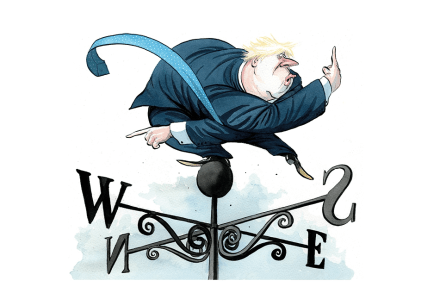
In his most recent column for the Mail, Boris Johnson fires a shot at, among other things, ‘the leftie twittersphere’. Lest we forget, that would be the same Boris Johnson that, during his time as prime minister, told us there was ‘nothing wrong with being woke’; who seemed remarkably unbothered about mass illegal immigration; who blithely nodded through the Bank of England printing funny money like there was no tomorrow (you’ll never guess, but it turned out there was, and we are now living in that tomorrow). He even, bizarrely, described the invasion of Ukraine as ‘a perfect example of toxic masculinity’.

Harry and Meghan may still have a bright podcasting future

After Spotify sacked/let go/‘mutually agreed to part ways’ with, in the words of one of its executives, those ‘f-ing grifters’ Harry and Meghan, there have much discussion about where it all went wrong for the podcasting pair. The general consensus is that the Sussexes may have overestimated public interest in anything they have to say beyond self-pitying tittle-tattle. Their recent statement that they’re not even going to do that any more makes you wonder what else they have stocked up in their ideas cupboard, and why the world would want to pay it their attention. The duff duo haven’t even been paid the full $20 million (£16 million) they signed up for back in 2020.

We are far stranger than aliens

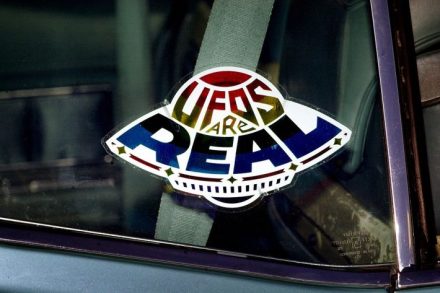
You may have missed it amid all the other news of the last few days, but the aliens have apparently landed. In fact, they’ve been landing – or more commonly crashing, the clumsy green scatterbrains – for decades. And just like in the movies, secret military departments around the world have been scooping up the bits of their super advanced technology, figuring out what makes it go, and using it to improve our earthly weapons and gadgets.  How do we know this? Because David Grusch, formerly of the US UAP (Unidentified Aerial Phenomena) task force, has blown the whistle on it to Congress and to the media. Look a little bit harder though (the details are buried in a very long read in tech news site The Debrief).

What the Smiths’ critics don’t get

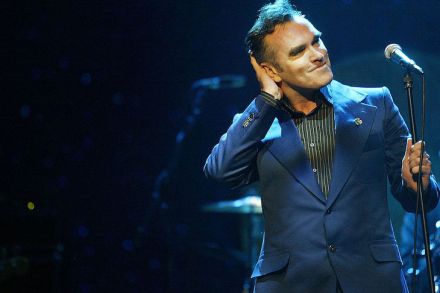
It’s forty years since the Smiths released their first single ‘Hand In Glove’. We’ve already seen a slew of articles on the anniversary, and the clichés about this most singular, most wonderful pop group are doing their weary rounds yet again. The Guardian tells us that the Smiths are incredibly influential. But this is sadly not so. I don’t hear any influence, not a note, in anything that’s followed. ‘Over the past 40 years, you can see their aesthetic and spiritual influence in everyone from the Stone Roses to Oasis and the 1975,’ they tell us. If only! Those bands are derivative, certainly, but of the Smiths? Guitars and the North of England aside, it’s hard to imagine greater artistic gulfs.

The Tories need to get serious about the Blob

The government has paid a whacking out-of-court settlement of £100,000 to Anna Thomas, a whistleblower sacked after she tried to warn them about the infiltration of the DWP by political activists. Baroness Falkner, chair of the equality watchdog, was placed under investigation after a spurious ‘dossier’ of complaints was compiled by staff, which just so happened to coincide with her steering the ship in a political direction some staff members didn’t approve of. The RAF despairs of ‘useless white men’; a civil service ‘diversity adviser’ describes women’s rights groups as ‘far-right’ and ‘genocidal’. Home Office staff are threatening to strike rather than implement the government’s Rwanda policy. These are merely the stories from the past week alone.

Succession’s only real flaw

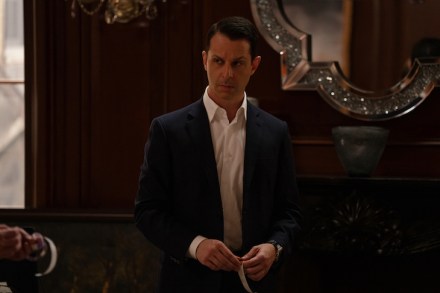
It’s strange to reach the end of something you’ve relished with a sense of relief. HBO’s Succession has given me and many others lashings of pleasure, but I was glad as the credits rolled on the final episode. Fascinating though they were, it was satisfying to wave goodbye to the Roys, every one of them both great viewing and utterly repulsive. One of the many great things about Succession, which makes it almost unique in our stultifying didactic age, is that it didn’t tell the viewer what to think Like The Iliad, which stops when its stated theme, the anger of Achilles, is over, and never gets to the fall of Troy, Succession ended when the matter of the succession was resolved.

The fascinating obsession with Phillip Schofield’s downfall

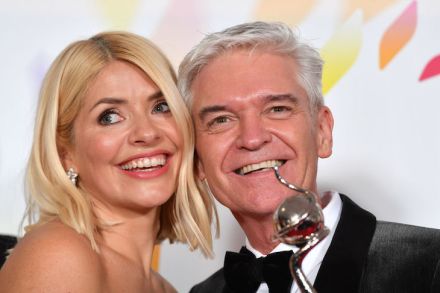
The rift between Holly Willoughby and Phillip Schofield, long-standing sobbing/giggling presenters of This Morning, has been one of the big talking points of recent weeks. A torrent of Holly 'n' Phil headlines has covered every twist and turn: Holly’s shock This Morning departure! (She clocked off ten minutes early to attend a function.) Shock This Morning farewell from Holly and Phil! (They’re taking a summer holiday like they do every year.) These headlines were all false tempters, but I'm only slightly ashamed to say I found myself clicking on every single one.

The shameful decline of BBC Radio 4

Radio 4 is in trouble. Listening figures for the station have dipped to their lowest level since 2007. The Today programme, Radio 4's flagship morning show, is doing particularly badly: its audience fell 12 per cent year on year, from 6.5 million to 5.7 million, according to Rajar. For anyone who has tuned in to Radio 4 recently, this decline won't come as a surprise. ‘I’ll just stick Radio 4 on’ was the default habit of my life when bored, from about the age of ten in 1978 to fifty in 2018. It felt like the still, reliable centre of the nation. It was also handy as a blood pressure reducing device. But, in the last few years, something changed.

A Lib-Lab coalition would be hilarious

Talk of a new Labour-Lib Dem coalition is in the air. This is piquantly nostalgic to those of us whose earliest political memories were forged in the fire of the red-hot excitement of David Steel and Jim Callaghan’s short-lived Lib-Lab pact of 1977-78. My initial reaction, along with many others I’m sure, was a guttural ‘oh God no’. But a moment later a different aspect of it occurred to me, in a fine example of what the young people call ‘cope’. My banter senses started to tingle. Because, yes, it would drag out and exacerbate the country’s current despairing decline. But it would also be hilarious. PR might very well remake British politics, but not in the way that the progressives intend There is something inherently funny about coalitions.

Could AI save the human race?

Two things are buzzing about in the air at the moment: decline and artificial intelligence. Douglas Murray and Louise Perry have written recently in these pages about social desuetude: Murray on the five million or so Britons who seem to have opted out altogether of economic activity; Perry on the worrying lack of new humans being born. Could AI get us out of these holes?  It’s tempting to scoff at new tech and the alternating warnings and promises about what’s coming down the line. Many of us in the demographic bulge of older citizens will recall the heated clamour of the early 80s. We remember how the auguries about the microchip revolution turned sour when we found that toilets still had to be cleaned and bins still had to be emptied.

Monarchy and celebrities should not mix

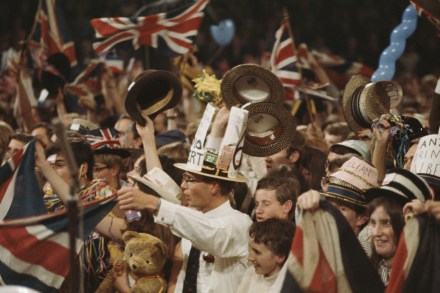
This weekend’s coronation will be an historic moment, a milestone in the mass memory. Just think how many dreary British films will be set against the backdrop of the coronation. (At least it will make a change from things being set against the backdrop of the miners’ strike – a mate of mine invented a game where you take turns adding that to the synopses of other famous films, e.g. ‘Jack Nicholson is possessed by the spirit of a murderous caretaker, set against the poignant backdrop of the miners’ strike’.)  But there is already a sense of a rather odd, half-in half-out, uncertain tone to the affair. This is meant to be a spectacle of majesty and splendour, but oh no, we can’t have the Speaker’s gold coach.

Jolyon Maugham’s opening sentence might be the worst of all time

In the first sentence of his book, Jolyon Maugham – the anti-Brexit KC best known for clubbing a fox to death – achieves a mean feat. In 22 words, he conveys his trademark self-pity, self-aggrandisement and capacity for tying himself into pompous knots: 'The life I have is hard, but I got to choose it, and the road that brought me here I did not,' Maugham writes in Bringing Down Goliath. It certainly acts as a tantaliser. If this is only the first sentence, what other jewels are contained in the remaining 318 pages? After we’ve picked ourselves up from the floor, it’s worth unpacking – or trying to unpack – this remarkable string of words. ‘But’ and ‘and’ seem to be in each other’s places.

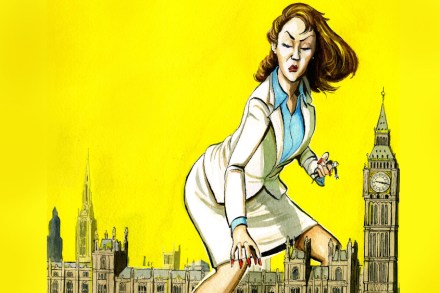
Angela Rayner is the odd one out in Starmer’s top team

Who are Labour? Focus groups regularly report a lack of familiarity on the part of voters with His Majesty’s Most Loyal Opposition, even with their leader. ‘Don’t know’ looms quite loudly on Keir Starmer’s focus word cloud, though dwarfed by ‘Boring’. Despite this – maybe because of it – Labour are still a good stretch ahead in the polls. A recent slight crumbliness in that lead has sparked Labour to produce attack ads which use a formulation I hadn’t seen since reading the walls at my primary school, i.e. – ‘Do you think people should wash under their arms? Janet Figgis doesn't’ – but even these flavourful communications are all about Rishi Sunak and the Tories.  Labour might be running the country pretty soon.

The rise of rowdy theatre audiences isn’t a surprise

The incident at Manchester’s Palace Theatre last Friday night at the close of a performance of the musical version of The Bodyguard – audience members singing loudly over the showstopping final number ‘I Will Always Love You’, being manhandled out by security, the show actually being stopped, and police called – has led to lots of chat about etiquette in auditoriums. We are told that rowdy audiences are becoming more of a problem, with a similar incident the week before at Bat Out Of Hell in London, and a new campaign from the theatre union Bectu against anti-social behaviour in theatres.

Paul O’Grady represented a bygone era of TV

The tragically early death of the magnificent Paul O’Grady struck a blow at the national heart that’s unusual for a celebrity death. After all, this is, for most of us, the death of a stranger.  This was a man who spent much of his professional life portraying a markedly waspish and unsentimental character, and even when he became more of what we used to call a ‘family entertainer’ he was never either sugary or oily. He reflected the British, or how we’d like to see ourselves, very well – unshowy, animal-loving, regularly quite angry, but most of all not fake.

The very British Kinks

It’s been 60 years since Muswell Hill brothers Ray and Dave Davies – then 19 and 15 respectively – formed The Kinks. What is now known as the ‘catalogue’ division of record companies love an anniversary, particularly when fans of the band are likely to be edging into pensionable disposable-income territory. And so, a new compilation titled The Journey has arrived, with 36 tracks curated by the brothers from across The Kinks’ 30 years of active service, which have been scrubbed up to sound better than ever. It’s fitting that a band which sang a lot about heritage and preservation – very unusually for the young men that they were at the time – should, in turn, be added to that heritage and preserved.

The last thing we need is more TV adaptations of Dickens

Allow me to introduce you to a fun game you can play in your own parlour. You take it in turns for someone to shout out the title of a pre-21st century literary classic. The other player responds by giving the blurb of a 21st century television adaptation. It might go, for example; ‘Middlemarch!’ ’ A searing, never-more-relevant exposé of the rural chemsex scene starring Sophie Okonedo’. Or possibly; ‘Mapp and Lucia!’ ‘Benedict Cumberbatch and Eddie Izzard are locked in combat with the county lines gangs of the Sussex coast’. Or even: ‘Jane Eyre!’ ‘Lesley Manville and Cush Jumbo star in this accessible tale of the devastating mental health impacts of Tik-Tok addiction’.

Gary Lineker has exposed the truth about television

The Gary Lineker debacle has exposed the breathtaking historical and political ignorance of the supposedly educated. Lineker's suspension – and subsequent return – has also demonstrated (as if we didn't know it) the power of the managerial class establishment. But the transmission of Match of the Day last Saturday sans Gary and his co-mutineers revealed something else. The truth about much modern television is that the percentage of actual content is dwarfed by the amount of waffle. As the row rumbled on, the BBC was contractually obliged to run the day’s football highlights package. Without the banter, chat and flimflam Lineker is paid £1.3 million a year for, this clocked in at a mere 20 minutes.