Gareth Roberts

Gareth Roberts

Gareth Roberts is a TV scriptwriter and novelist who has worked on Doctor Who and Coronation Street. He is the author of The Age of Stupid substack.

Why aren’t we more afraid of China?

From our UK edition

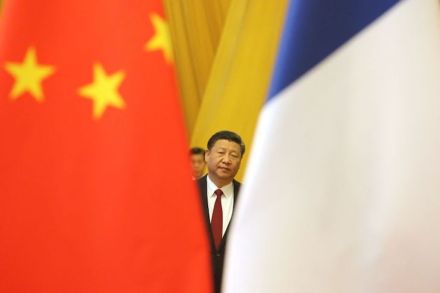
Electric cars made in China could be turned off remotely, immobilising them instantly and crippling the West. That terrifying prospect was highlighted by Professor Jim Saker, president of the Institute of the Motor Industry. ‘The car manufacturer may be in Shanghai and could stop 100,000 to 300,000 cars across Europe thus paralysing a country,’ Saker warned. Yet few people seem bothered. Nor was there much reaction to Tory MP Iain Duncan Smith’s claim on LBC this week that Beijing may have used a hidden device in Rishi Sunak’s car to track the PM’s movements. If this allegation involved another country it would likely have lead the headlines for days. But, because it’s China, nobody is alarmed.
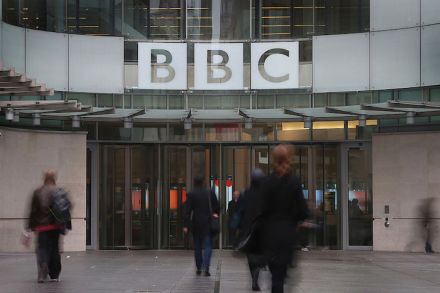
The BBC deserves its declining audience figures

From our UK edition

So, the figures are in. The total weekly audience for BBC Radio 2 has dropped by a million in the last three months. Those are the three months, significantly, since the somewhat rushed and awkward departure of its biggest draw, the immaculate and imperturbable Ken Bruce. Radio 4 has likewise managed to lose 1.3 million more listeners in the last year. And television? The BBC’s terrestrial audience is heading down the pan too, with BBC1 losing 12 per cent of viewers in the last five years, and ‘sales volumes’ of the TV licence, according to the recent statement from the Television Licence Fee Trust, falling by about two million over roughly the same period. Destruction of a brand takes determination, and time.

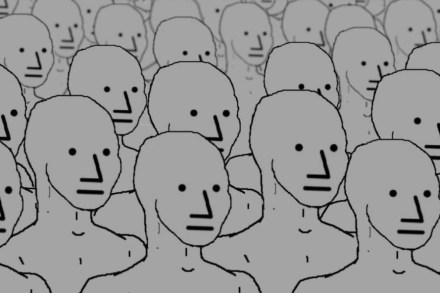
Bring back normies!

From our UK edition

The Cambridge Dictionary defines ‘normie’ as ‘a normal person, who behaves in the same way as most other people in society’.  Merriam-Webster tells us it refers ‘to one whose tastes, lifestyle, habits, and attitude are mainstream and far from the cutting edge, or a person who is otherwise not notable or remarkable’. Oh, how I miss normies. Flicking through the streaming channels recently, I took a swerve from Domina and The White Lotus – both excellent – and found myself rewatching two old British sitcoms, Sykes and Duty Free, for the first time since their original transmissions.

Just Stop Oil have finally met their match

From our UK edition

Have Just Stop Oil finally met their match? The splendidly named counter-organisation 'Just Stop Pissing People Off' have pulled off two bracing publicity coups in the last week. First, in Elephant & Castle in south London last Wednesday JSPPO ‘kettled’ JSO activists who were planning one of their slow marches down the public highway, forming a human ring around them (for a whole thirty minutes). Then at the weekend, and rather more spectacularly, JSPPO infiltrated JSO and spoiled their lovely lunch at the Heritage Centre in Bow in east London, releasing balloons up to the very high vaulted roof of the building and then switching on the ear splitting panic alarms they had attached to them.

Freddy Gray, Mary Wakefield, Gareth Roberts and Rachel Johnson

From our UK edition

28 min listen

This week (01.13) Freddy Gray, on why Ron De Santis is no longer ‘de future’ in the race for the Presidency, (09.50) Mary Wakefield recounts the train journey from hell,(16.10) we hear from Gareth Roberts about the screenwriters and actors striking over AI potentially taking their jobs and (22.24) Rachel Johnson shares her diary of SAS adventures and mishaps in New Zealand.

Road rage: the great motorist rebellion has begun

From our UK edition

38 min listen

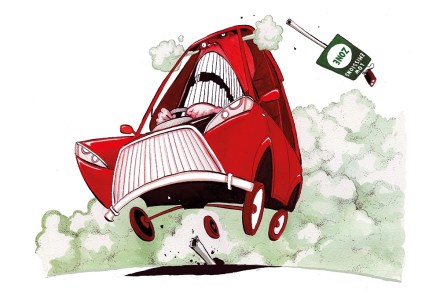
This week:In his cover piece for the magazine Ross Clark writes about ‘the war on motorists'. He argues that the backlash against London Mayor Sadiq Khan’s expansion of Ulez is just the beginning, as motorists – and Labour MPs – prepare to revolt. He joins the podcast alongside Ben Clatworthy, transport correspondent at the Times, to discuss whether the Ulez expansion is just a money-grab. (01:11).  Also this week: In his piece for The Spectator, journalist Ian Williams compares both Labour and Conservative policy on China. He says that Labour is gearing up to take a much more hawkish stance on China. He is joined by Charles Parton, senior associate fellow at RUSI, who worked as a diplomat in China for over two decades.

Will we even notice if AI replaces screenwriters?

From our UK edition

We are edging into the third month of the strike by the Writers Guild of America, called because of shrivelling residual royalty payments from streaming movies and TV, as well as concern about AI such as ChatGPT being used to generate story ideas – and indeed to write scripts. Hollywood’s screenwriters have now been joined by the 150,000 members of the Screen Actors Guild, which was demonstrated very visibly by the cast of Oppenheimer walking out of its UK premiere last week. ‘We are all going to be in jeopardy of being replaced by machines,’ said union president Fran Drescher. Susan Sarandon has said of AI: ‘I would hope that in the future people understand the difference between real people making real choices and something that’s basically animation.

Stop trying to make high culture funky

From our UK edition

Clive Myrie, now probably the top face of the BBC, and host of their television coverage of the Proms, had a strange one on Twitter this weekend. A fan gushed at him that ‘[the Proms are] completely accessible – no formal dress code and you can buy a Prom ticket on the day for the price of a pint! To hear some of the world’s best performers. What’s not to love?’ To which Myrie replied, ‘We’ve to keep pushing on that. This is music for everyone, not a select few who know their crotchets from their quavers!! That’s boring and naff!!’ The people who take these ‘vital’ and ‘important’ stands against phantoms enjoy the cost-free thrill of demanding an immediate end to something that nobody is actually doing What a strange exchange.

Why are we so obsessed with TV presenters?

From our UK edition

The mucky allegations about a 'household name' BBC star – who is said to have paid thousands of pounds to a teenager for sexually explicit pictures – has exposed our obsession with TV presenters. We invite these people into our homes every day. Stars we never meet become familiar, a part of our lives and daily routines. Now, for one of these presenters, their world has come crashing down, and we can't get enough of it. There are plenty of questions hanging over this story: we still don’t know the identity of the presenter concerned, even if social media is awash with a list of suspects. And we don't know whether the allegations are true. But there's no doubt that we find presenters caught up in scandals fascinating. There is also something deliciously exciting about such stories.

The worst excesses of the Saintly Reading Cult 

From our UK edition

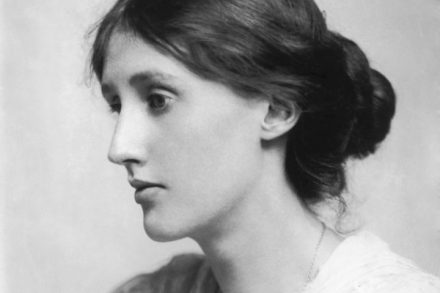
I read a lot of fiction. I always have. It’s not unusual for me to have three of four books on the go at the same time, which I read in rotation, a chapter at a time. I say this not as a brag. It just is. I do it because I really enjoy doing it. The fact that it might seem like a brag leads me to my point: there is nowadays an air of saintliness about reading, particularly reading fiction, that is very irritating.  A publisher has just slapped a trigger warning on, of all things, Virginia Woolf’s To The Lighthouse – and not for any specific reason, but just because it’s old so there’s probably something ‘wrong’ in it, somewhere.

Boris Johnson’s peculiar conservative conversion

From our UK edition

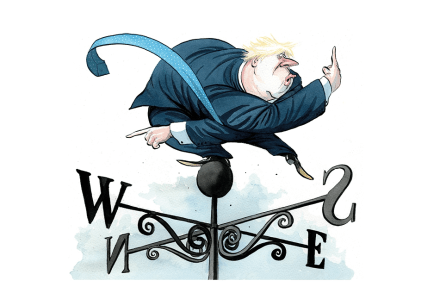
In his most recent column for the Mail, Boris Johnson fires a shot at, among other things, ‘the leftie twittersphere’. Lest we forget, that would be the same Boris Johnson that, during his time as prime minister, told us there was ‘nothing wrong with being woke’; who seemed remarkably unbothered about mass illegal immigration; who blithely nodded through the Bank of England printing funny money like there was no tomorrow (you’ll never guess, but it turned out there was, and we are now living in that tomorrow). He even, bizarrely, described the invasion of Ukraine as ‘a perfect example of toxic masculinity’.

Harry and Meghan may still have a bright podcasting future

From our UK edition

After Spotify sacked/let go/‘mutually agreed to part ways’ with, in the words of one of its executives, those ‘f-ing grifters’ Harry and Meghan, there have much discussion about where it all went wrong for the podcasting pair. The general consensus is that the Sussexes may have overestimated public interest in anything they have to say beyond self-pitying tittle-tattle. Their recent statement that they’re not even going to do that any more makes you wonder what else they have stocked up in their ideas cupboard, and why the world would want to pay it their attention. The duff duo haven’t even been paid the full $20 million (£16 million) they signed up for back in 2020.

We are far stranger than aliens

From our UK edition

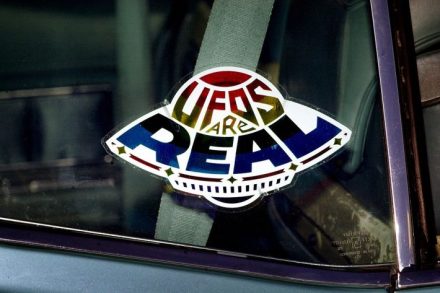
You may have missed it amid all the other news of the last few days, but the aliens have apparently landed. In fact, they’ve been landing – or more commonly crashing, the clumsy green scatterbrains – for decades. And just like in the movies, secret military departments around the world have been scooping up the bits of their super advanced technology, figuring out what makes it go, and using it to improve our earthly weapons and gadgets.  How do we know this? Because David Grusch, formerly of the US UAP (Unidentified Aerial Phenomena) task force, has blown the whistle on it to Congress and to the media. Look a little bit harder though (the details are buried in a very long read in tech news site The Debrief).

What the Smiths’ critics don’t get

From our UK edition

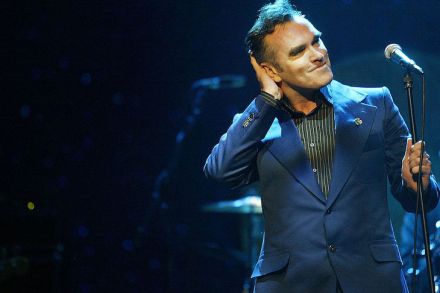
It’s forty years since the Smiths released their first single ‘Hand In Glove’. We’ve already seen a slew of articles on the anniversary, and the clichés about this most singular, most wonderful pop group are doing their weary rounds yet again. The Guardian tells us that the Smiths are incredibly influential. But this is sadly not so. I don’t hear any influence, not a note, in anything that’s followed. ‘Over the past 40 years, you can see their aesthetic and spiritual influence in everyone from the Stone Roses to Oasis and the 1975,’ they tell us. If only! Those bands are derivative, certainly, but of the Smiths? Guitars and the North of England aside, it’s hard to imagine greater artistic gulfs.

The Tories need to get serious about the Blob

From our UK edition

The government has paid a whacking out-of-court settlement of £100,000 to Anna Thomas, a whistleblower sacked after she tried to warn them about the infiltration of the DWP by political activists. Baroness Falkner, chair of the equality watchdog, was placed under investigation after a spurious ‘dossier’ of complaints was compiled by staff, which just so happened to coincide with her steering the ship in a political direction some staff members didn’t approve of. The RAF despairs of ‘useless white men’; a civil service ‘diversity adviser’ describes women’s rights groups as ‘far-right’ and ‘genocidal’. Home Office staff are threatening to strike rather than implement the government’s Rwanda policy. These are merely the stories from the past week alone.

Succession’s only real flaw

From our UK edition

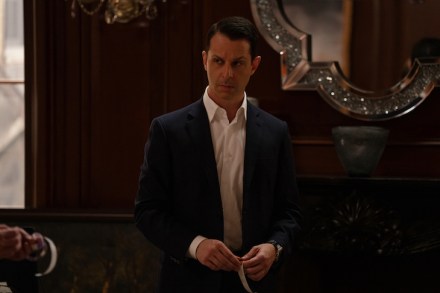
It’s strange to reach the end of something you’ve relished with a sense of relief. HBO’s Succession has given me and many others lashings of pleasure, but I was glad as the credits rolled on the final episode. Fascinating though they were, it was satisfying to wave goodbye to the Roys, every one of them both great viewing and utterly repulsive. One of the many great things about Succession, which makes it almost unique in our stultifying didactic age, is that it didn’t tell the viewer what to think Like The Iliad, which stops when its stated theme, the anger of Achilles, is over, and never gets to the fall of Troy, Succession ended when the matter of the succession was resolved.

The fascinating obsession with Phillip Schofield’s downfall

From our UK edition

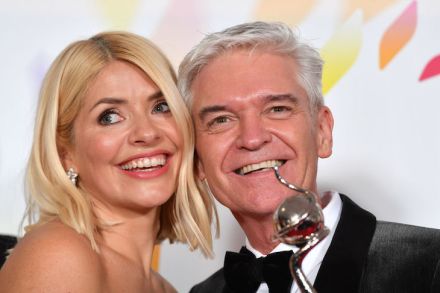
The rift between Holly Willoughby and Phillip Schofield, long-standing sobbing/giggling presenters of This Morning, has been one of the big talking points of recent weeks. A torrent of Holly 'n' Phil headlines has covered every twist and turn: Holly’s shock This Morning departure! (She clocked off ten minutes early to attend a function.) Shock This Morning farewell from Holly and Phil! (They’re taking a summer holiday like they do every year.) These headlines were all false tempters, but I'm only slightly ashamed to say I found myself clicking on every single one.

The shameful decline of BBC Radio 4

From our UK edition

Radio 4 is in trouble. Listening figures for the station have dipped to their lowest level since 2007. The Today programme, Radio 4's flagship morning show, is doing particularly badly: its audience fell 12 per cent year on year, from 6.5 million to 5.7 million, according to Rajar. For anyone who has tuned in to Radio 4 recently, this decline won't come as a surprise. ‘I’ll just stick Radio 4 on’ was the default habit of my life when bored, from about the age of ten in 1978 to fifty in 2018. It felt like the still, reliable centre of the nation. It was also handy as a blood pressure reducing device. But, in the last few years, something changed.

A Lib-Lab coalition would be hilarious

From our UK edition

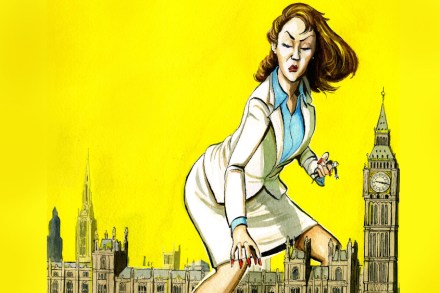
Talk of a new Labour-Lib Dem coalition is in the air. This is piquantly nostalgic to those of us whose earliest political memories were forged in the fire of the red-hot excitement of David Steel and Jim Callaghan’s short-lived Lib-Lab pact of 1977-78. My initial reaction, along with many others I’m sure, was a guttural ‘oh God no’. But a moment later a different aspect of it occurred to me, in a fine example of what the young people call ‘cope’. My banter senses started to tingle. Because, yes, it would drag out and exacerbate the country’s current despairing decline. But it would also be hilarious. PR might very well remake British politics, but not in the way that the progressives intend There is something inherently funny about coalitions.

Could AI save the human race?

From our UK edition

Two things are buzzing about in the air at the moment: decline and artificial intelligence. Douglas Murray and Louise Perry have written recently in these pages about social desuetude: Murray on the five million or so Britons who seem to have opted out altogether of economic activity; Perry on the worrying lack of new humans being born. Could AI get us out of these holes?  It’s tempting to scoff at new tech and the alternating warnings and promises about what’s coming down the line. Many of us in the demographic bulge of older citizens will recall the heated clamour of the early 80s. We remember how the auguries about the microchip revolution turned sour when we found that toilets still had to be cleaned and bins still had to be emptied.