Gabriel Gavin

Gabriel Gavin

Gabriel Gavin is a Moscow-based journalist covering central and eastern Europe.

The West is powerless in the face of Russian war crimes

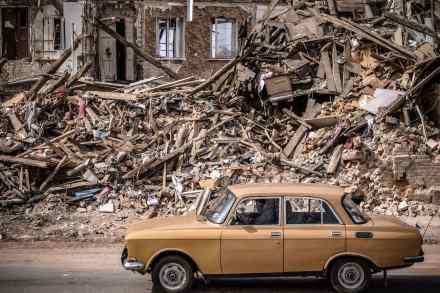
‘Our home is our heart,’ a video posted by a couple from the Kyiv suburb of Hostomel begins, showing them cycling through its leafy streets and playing with their dogs. In a split second, the picture changes. Their house is on fire. Outside, a car has ploughed into a ditch, its young passengers shot dead. Helicopters tear overhead while Russian soldiers stalk the surrounding woodland. The UN estimates that 3,500 innocent people have been killed or injured since the invasion of Ukraine began. As Russian troops are pushed back around the capital, evidence is mounting that the number may already be much higher. Just south of Hostomel is the suburb of Bucha, which the Ukrainian army retook last week from Moscow’s forces.
Ukraine is witnessing the future of drone warfare

Russian forces have reportedly been ordered to watch last year’s state-funded propaganda film Sky. The Kremlin-funded drama follows the lives of Russian airmen in Syria, where an estimated 18,000 people are believed to have died in Moscow's bombings. With jets soaring through the sky and explosive special effects, it tells the story of Oleg Peshkov, a pilot shot down by a Turkish fighter plane. When Hollywood makes its own action flicks about the war in Ukraine, directors may settle for a different kind of hero. Instead of strapping military men jumping into cockpits, it is becoming increasingly clear that Kyiv owes much of the credit for its fierce defence to drones.

Is Putin’s playbook finally being used against him?

Goris, Armenia 'Where we deploy our own troops within our own borders is nobody’s business but our own,' Kremlin press secretary Dmitry Peskov said a few months ago, as tens of thousands of Russian soldier gathered close to the border with Ukraine. 'They pose no threat to anybody.' Now, with Russia's brutal invasion of the neighbouring country stretching into its fifth week, president Vladimir Putin’s credibility is dead, along with his reputation as a master strategist and countless young men he sent in to wage what was supposed to be a swift war.

Is Putin’s war spreading?

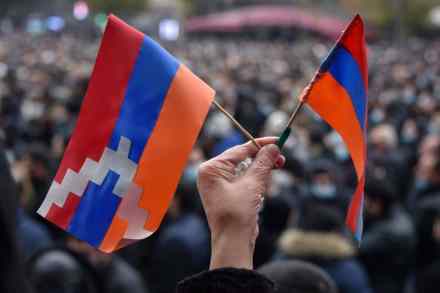
Yerevan, Armenia ‘This is our land,’ Anna says, looking out over her roadside flower shop. ‘Lenin promised it to us.’ Her father was born across the mountains in Russia, one of around 100,000 displaced Armenians only able to return home after world war two. ‘But thanks to Lenin, we have our own country. A free country – at least for now.’ As the fighting in Ukraine stretches into its first month, another conflict between two former Soviet states might not be far away. Last year, a brief but bloody war broke out between Armenia and Azerbaijan over the breakaway region of Nagorno-Karabakh, which had been autonomously governed by ethnic Armenians over the past three decades.

Turkish drones are transforming the war in Ukraine

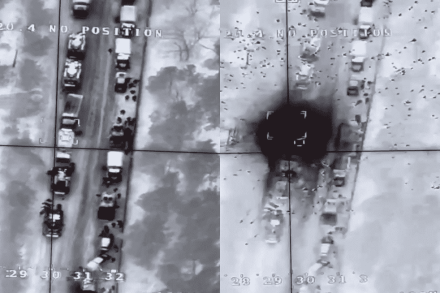
Istanbul, Turkey A cheer rings out in a secret command centre. On the screen, another Russian missile launcher has vanished in a cloud of shrapnel and smoke. Working miles behind the front line, a team of Ukrainian drone operators is trying to turn the tide of the war against the Kremlin’s forces. The most effective weapon in their arsenal is the Turkish-made Bayraktar TB2. Soaring 160 meters above the battlefield, it delivers death at the push of a button. So fearsome is its reputation that it has inspired a love song that has gone viral in Ukraine and even a video game. https://www.youtube.com/watch?

Could Turkey rejoin the West?

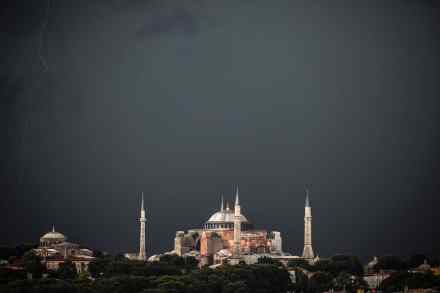
Istanbul, Turkey Wherever you go in Istanbul, Atatürk is rarely far away. Portraits of the man who founded the Turkish Republic hang in the Grand Bazaar and in apartment building foyers. His face is etched on everything from street signs to café mugs. With his vision of Turkey as a liberal, secular state, Atatürk set his nation on the path to western alignment and, ultimately, Nato. When he died in 1938, Winston Churchill said his ‘death is not only a loss for the country, but for Europe is the greatest loss’. Yet in recent years, Turkey’s position as a western ally has all but disintegrated.

Can we trust our spies’ claims about Russia?

In the Spring of 1988, the body of Britain’s most notorious Cold War spy was lowered into the ground at Kuntsevo cemetery on the outskirts of Moscow. Kim Philby’s defection to the Soviet Union, a quarter of a century earlier, had rocked the world of espionage. Western spooks were left scrambling to work out just how much sensitive information he might have handed over. For a brief moment, a spotlight fell on the secret circles of informants, shady deals and double-agents. Now, spies are once again coming out from the shadows and grabbing headlines. Over the past few months, officials in the UK and US have made a series of bombshell disclosures, citing classified intelligence and warning that Russia could be on the brink of ordering an invasion of neighbouring Ukraine.

How the EU hardened its heart towards refugees

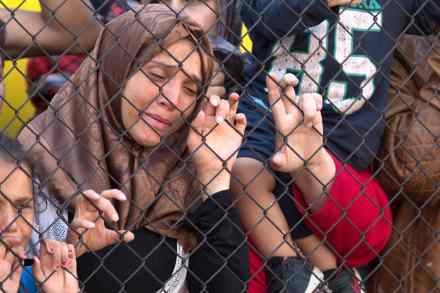
'They wanted me to fight, and I knew I had to leave, or die.' My translator, a former English teacher from Syria, was explaining how, after the army knocked on his door one day, he had fled the country and moved more than 2,000 miles to Liverpool. This was 2018, the bloody civil war was raging. Everyone we met in the north west – an old couple, a young family, single men – had said the same thing. As soon as it was safe, they just wanted to go home. Now, three years on, thousands of their countrymen are in a far more precarious situation, sleeping rough in tents and makeshift shelters on the Belarusian border, as temperatures plummet to below freezing at night.

Cold War, hot planet

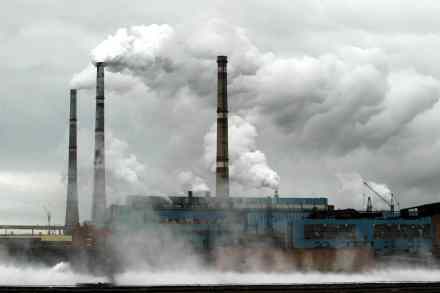
Chelyabinsk is one of the most polluted places in the world. On 29 September 1957, an explosion ripped through the nearby Mayak nuclear plant — which processed plutonium for the Soviet Union's atomic bombs — casting a cloud of highly radioactive debris across the central Russian region. Despite communist officials keeping the disaster tightly under wraps, tens of thousands of people were, eventually, evacuated from the worst-hit villages, and vast swathes of the surrounding area have been closed to the public. More than half a century on, the nuclear fall-out is now the least of the ecological worries.

The EU is powerless to stop Poland’s liberal lapse

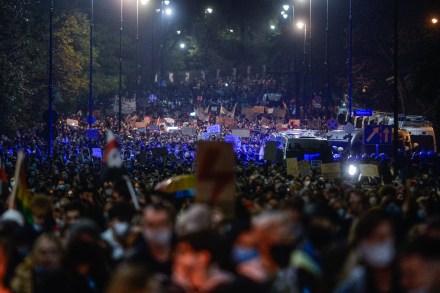
Zoliborz is one of Warsaw’s most prestigious addresses. Its leafy streets are popular with journalists, university professors and, as of last week, thousands of protestors. The suburb is home to Jaroslaw Kaczynski, Poland’s former prime minister who has led the ruling Law and Justice party for close to two decades. Despite holding no government office for most of that time, the control and influence he has over ministers has led many to conclude he is Poland’s head of state in all but name. It’s for that reason his home on a quiet residential avenue has become the destination of choice for marches and pickets over the past two weeks, after a decision by Poland’s constitutional court 'effectively barred' access to legal abortions.

How will Europe respond to a wave of Afghan refugees?

On Tuesday, Franek Sterczewski made a break for the border. Wearing a long trench coat and carrying a blue plastic bag, he managed to outrun one armed soldier before being stopped by a line of officers. Sterczewski, however, wasn't fleeing his native Poland — he was trying to help those who desperately want to get in. https://twitter.com/jakwojtanowski/status/1430213700464545792?ref_src=twsrc%5Etfw August 24, 2021 Brussels has accused the Belarusian government of actively shipping in would-be refugees The rebellious 33-year old MP had planned to hand out medicine and water to the line of asylum seekers camped out on the eastern frontier with Belarus.

The EU’s growing migrant war with Belarus

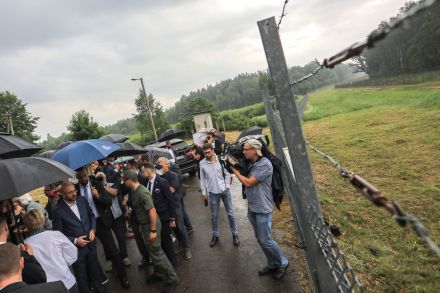
The EU is building a wall — and they’re going to make Belarus pay for it. This week, the tiny Baltic nation of Lithuania began erecting a barbed-wire border fence on its frontier with its neighbour, Europe’s most notorious autocracy. Meanwhile, Brussels is ramping up economic sanctions against Belarus. Lithuania’s parliament has declared a state of emergency, citing a sharp rise in migrants attempting to illegally cross the border. More than 800 made the journey in the first week of July alone, coming from countries like Iraq, Iran, Syria and the Congo. In response, hundreds of troops have been deployed and construction of a 340-mile barrier is underway.

How Russia lurched from vaccine victory to Covid crisis

Russia made headlines last August when it triumphantly unveiled its pioneering coronavirus vaccine, Sputnik V. But now, nearly a year on, it has a more dubious claim to fame – as the anti-vax capital of the world. For months now, sparkling clean pop-up clinics offering jabs to the public, with no appointment needed, have been open for business in shopping centres and food halls across the country. With three domestic formulas approved and millions of vials in reserve, there is no shortage of doses for anyone who wants one. And yet, Russians just aren't signing up.  New data from research giant Morning Consult, based on 75,000 weekly interviews with people across the globe, has found the nation has the highest level of vaccine scepticism of anywhere surveyed.

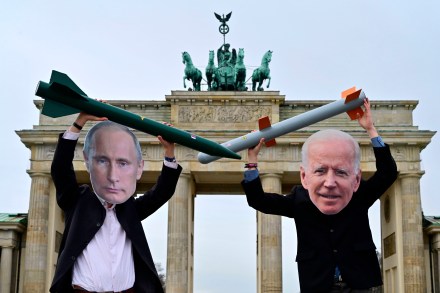
Biden and Putin sue for uneasy peace

In 2001, US President George W. Bush stared into Vladimir Putin’s eyes and said he saw his soul. Joe Biden, on the other hand, famously claimed to have told the Russian leader, 'I’m looking into your eyes, and I don’t think you have a soul.' Now the new incumbent of the Oval Office might have a second chance to check again in the flesh. On Tuesday, Biden held a rare and, by all accounts cordial, telephone call with his counterpart in Moscow to discuss the increasingly tense situation on the border with Ukraine. For months, Kiev's forces in the Donbass region have clashed with troops loyal to two Russian-backed breakaway republics, with numerous reports of drone strikes and civilian casualties.