Fredrik Erixon

Finland’s new PM has wowed the world. But what about Finland?

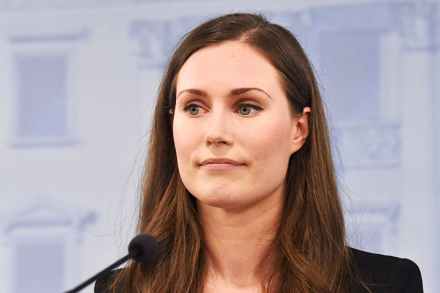
 Helsinki Sanna Marin is the world’s new feminist political icon. At the age of 34, she’s just been appointed the prime minister of Finland after a power struggle in the five-party coalition government that forced Antti Rinne out of office only six months after he won the general election. Marin isn’t just young and a woman — she was brought up by two mothers in a small town south of Tampere, an industrial region that isn’t known for championing progressive values. That backstory has earned her the plaudits of feminists on both the left and the right. To the Daily Telegraph, she’s a ‘trailblazer’. For the Guardian, her coalition of women-led parties reminds us ‘that another politics is possible’.
Delhi Notebook

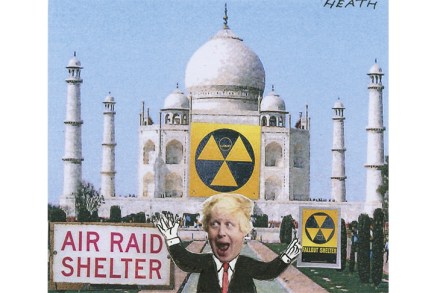
India is not preparing for war, but picking up the newspapers in Delhi you could be forgiven for thinking otherwise. For weeks, the papers have been blowing the horns of retribution against Islamabad after a convoy of police officers was rammed by a suicide bomber in Kashmir. Since both sides acquired nuclear weapons, neither had sent a warplane to bomb the other — until last week. Friends in Europe send me anxious messages: isn’t it time to leave Delhi while I still can? The Americans I meet are all a bit jumpy. A couple I chat with at the Khan Market doubt the US Embassy can rescue them if all goes off the rails — or, as they say, ‘Fubar’ (‘Fouled’ up beyond all recognition). Food and water are being stockpiled.

The last heave

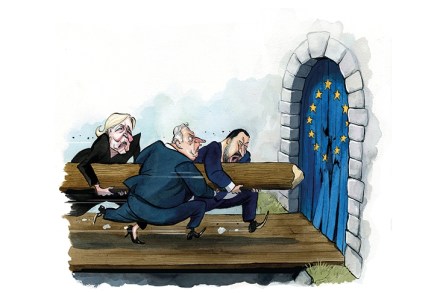
There is a strange pre-revolutionary atmosphere in Brussels. At the various receptions and dinners before we broke up for Christmas, it felt a bit like the Last Supper. Elections to the European Parliament are usually predictable affairs, but this time Europhiles (like myself) fear it will be different. We have grown used to populists doing well in national elections over the years, from Sweden to Italy. But the European Parliament elections in May might lead to a landslide victory for Marine Le Pen’s National Rally, Italy’s League and other nationalist populist parties — and a victory may change the political face of the European Union. In the past, it never really mattered much if the Euro election was carried by the left or the right: the result was the same anyway.

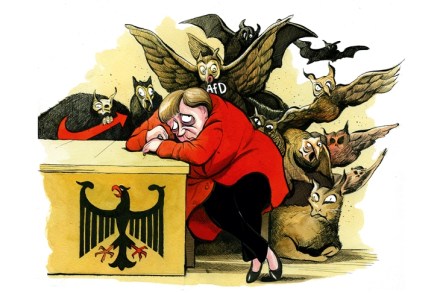
Angela Merkel is already making life difficult for her successor

“May Day, May Day. We are sinking.” “This is the German Coast Guard. What are you thinking?” This advert for Berlitz, the language school, is a good metaphor for German politics and the decline of Angela Merkel. After this weekend’s election blow in Hesse, where support for her Christian Democratic Union (CDU) party fell by 11 points, she is now standing down as the leader of her party. Merkel also announced that she will quit as chancellor in 2021. This isn’t surprising. In the past few months, Merkel has defended her position as party leader and repeatedly said that she should stay in that job as long as she leads the country.

Sweden’s PM is out – but for how long?

If Theresa May feels a bit disoriented and lonely – under pressure from her own friends in parliament – she could take some comfort in that she isn’t trying to run a government in Sweden. The country’s election delivered an inconclusive result. Prime Minister Stefan Löfven and his red-green coalition government lost a lot of its support, but the four-party centre-right alliance didn’t win many new souls. No side commands a majority – or something remotely close to it. The only parties that made substantial gains were those that no other party wants to take into government – the extreme left and the populist-nationalist Sweden Democrats. This morning the new parliament voted to kick Stefan Löfven and his government out of power.

Sweden ablaze

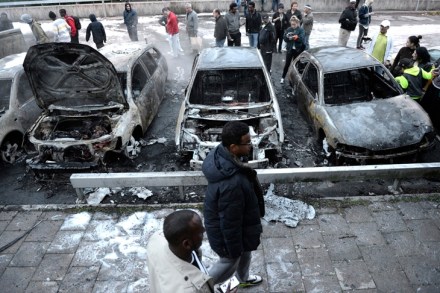
 Uppsala, Sweden When I dropped off my kids at school early last week, I noticed that -another parent’s car was covered in ash — it had been parked in a garage where arsonists had been at work, attacking scores of vehicles. His Volvo had got away: just. ‘My car can be cleaned,’ the father told me, ‘but how can I explain this to my young kids?’ As Sweden goes to the polls next weekend, its politicians face another conundrum: how do they explain all this to the country? I live in Uppsala, a leafy and prosperous university town north of Stockholm. Around Gothenburg, the attacks have been far more dramatic: in mid-August, 80 torched vehicles made the city’s normally dull boroughs seem more like Aleppo.

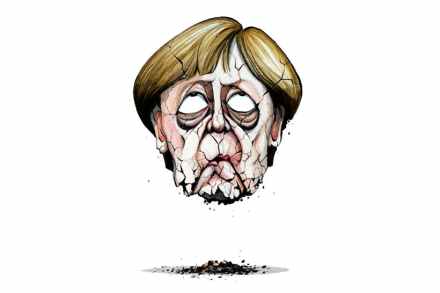
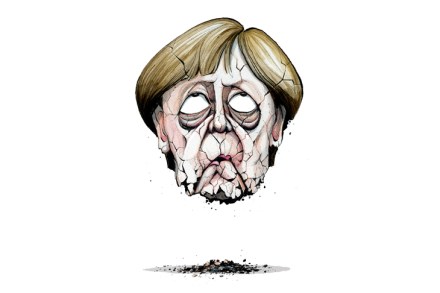
Angela’s ashes

‘This is not about whether Mrs Merkel stays as chancellor next week or not,’ said Xavier Bettel, the Prime Minister of Luxembourg, as he came out of an emergency summit on immigration last weekend. He was joking. That was exactly what the meeting had been about, and everybody there knew it. The summit was Operation Save Mutti. Their mission: to stop Merkel’s government collapsing by thrashing out a tough stance on immigration to assuage her critics. It’s quite a turnaround. Once, Merkel was queen of Europe, now she’s a beggar. Suddenly, European politics has changed beyond recognition. Merkel may, by now, regret standing for re-election last year.

Macron’s next move

It was a moment to cherish, not to spoil. But I wasn’t the only one at the grand Charlemagne prize ceremony for Emmanuel Macron in Aix-la-Chapelle last week to wonder if the French President has already accepted that the federalist game is up. The medal is awarded for services to the cause of European unification, a cause that Macron has done his best to advance. But first the Brits bailed out. Then the Hungarians and Poles dissented. Now Italy looks set to become the first of the EU’s six founding states with a government abandoning the federalist project. Angela Merkel and her German conservatives had poured cold water on Macron’s idea of a massive shake-up involving a single finance minister for the eurozone.

Merkel’s left-right coalition has given the AfD exactly what it wanted

Angela Merkel will get her fourth term as Germany’s chancellor. Members of the Social Democratic Party, the SPD, voted to get into government with her again. Yet neither the SPD nor Merkel’s Christian Democratic Union are cheering the idea of four more years in power. Merkel may not be a ‘dead woman walking’, but she’s reaching the end of her remarkable career. Barely a year ago, she was being talked about as the leader of the free world. Now she is blamed by her own party for upending German politics and, in the process, allowing the far-right to become a real political force for the first time since the 1940s. Germany will now get a majority government, but the country’s politics are in a state of crisis.

Angela’s demons

Bankruptcy, wrote Ernest Hemingway, happens in two ways — ‘gradually and then suddenly’. By now, Angela Merkel will be beginning to fear that her remarkable career is about to move into that second motion. Barely a year ago, she was being talked about as the leader of the free world. Now she is blamed by her own party for upending German politics and, in the process, allowing the far-right to become a real political force for the first time since the 1940s. The cover of Der Spiegel, Germany’s main weekly, last week summed it up in one word: ‘Crisis.’ It’s a crisis that’s been intensifying for some time.

Mutti the peacekeeper

No leader is indispensable, but it does feel like the future of Europe stands or falls with Angela Merkel. She’s been the godmother of the European Union for almost 15 years, and other leaders have learnt to accept one unspoken rule: Merkel is the adjudicator. Her aura of supreme power infuriated Nicolas Sarkozy, who wanted it for himself. Greece’s leftist leader, Alexis Tsipras, fumed that Merkel wanted to make his country a vassal state, ruled by Berlin and the gnomes of Frankfurt. But now she’s at risk of losing her power, and even her enemies fear that her absence will pull Europe in different and conflicting directions. One newly elected European leader once explained Merkel’s role in Europe to me.

Why the right is losing its way

If the British Conservative party is feeling stunned, having calamitously misread the public mood in a general election, then it is in good company. Across Europe, right-wing parties are struggling to find messages that resonate. It’s not that voters have turned away from conservative ideas: polls show a huge number interested in individual liberty, lower taxes and the nation state. The problem is that conservative parties have given up on those ideas — and, as a result, voters are giving up on them. Take Fredrik Reinfeldt, prime minister of my native Sweden between 2006 and 2014. He started off well, reforming welfare and cutting taxes. But then it all went downhill. He lost his taste for economic freedom and, with it, his edge.

Europe’s imploding right

If the British Conservative party is feeling stunned, having calamitously misread the public mood in a general election, then it is in good company. Across Europe, right-wing parties are struggling to find messages that resonate. It’s not that voters have turned away from conservative ideas: polls show a huge number interested in individual liberty, lower taxes and the nation state. The problem is that conservative parties have given up on those ideas — and, as a result, voters are giving up on them. Take Fredrik Reinfeldt, prime minister of my native Sweden between 2006 and 2014. He started off well, reforming welfare and cutting taxes. But then it all went downhill. He lost his taste for economic freedom and, with it, his edge.

Britain and the EU probably will reach a trade deal. Here’s why

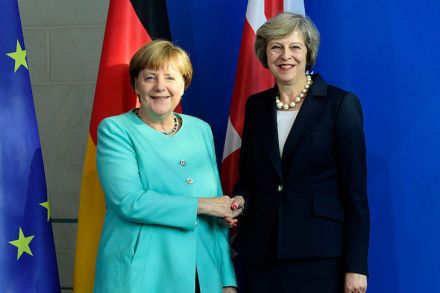
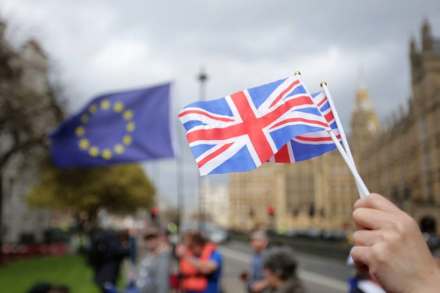
Most diplomats in Brussels will tell you that Theresa May has just embarked upon a fool’s errand, that Britain might wish for a free-trade deal with the European Union but will have to learn that it can’t cherry-pick. Anyway, they say, nothing of any value can be agreed in two years. This received wisdom can be heard, under various iterations, in most capitals in Europe — and it’s natural that the EU will be sore, perhaps a little defensive. But there is a free-trade deal to be struck. First, a declaration: I didn’t want Britain to leave the EU. I’m a Swede running a free-trade thinktank in Brussels and can tell you that the UK’s absence will be sorely felt by all of its allies.

There will be a trade deal

Most diplomats in Brussels will tell you that Theresa May has just embarked upon a fool’s errand, that Britain might wish for a free-trade deal with the European Union but will have to learn that it can’t cherry-pick. Anyway, they say, nothing of any value can be agreed in two years. This received wisdom can be heard, under various iterations, in most capitals in Europe — and it’s natural that the EU will be sore, perhaps a little defensive. But there is a free-trade deal to be struck. First, a declaration: I didn’t want Britain to leave the EU. I’m a Swede running a free-trade thinktank in Brussels and can tell you that the UK’s absence will be sorely felt by all of its allies.

If Trump abandons the Trans-Pacific Partnership, he plays into China’s hands

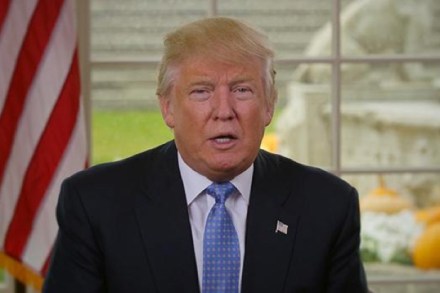
Donald Trump is not wasting any time on trade. Or is he? In his video message about what he'll do on day one, he said he'd abandon Barack Obama's plan to broker a 12-country free-trade agreement for the Pacific region, the so-called Trans-Pacific Partnership (or TPP). But that’s the thing with the Donald – it’s impossible to say if he’s serious or just collecting material for a new chapter in The Art of the Deal. Does he really want to pull out of the TPP? Or is his threat just part of a negotiation?  Killing the TPP would be a waste – but for other reasons than the economy. It certainly wouldn’t 'bring back American jobs'.

Germany, not Wallonia, is to blame for the collapse of EU-Canada trade talks

I sometimes wonder if the EU has a death wish – that europhiles like myself, when admitted to the cause, are sworn into a secret society with the ultimate goal of destroying the European Project. For a decade or more, the EU has been veering from crisis to crisis – yet presented with an opportunity to choose calm before crisis, it goes with the latter. Late on Friday, Canada’s trade minister – the former FT journalist Chrystia Freeland – declared that the trade agreement with the EU (the so-called Ceta) had failed. She’d been commuting between Brussels and Namur, the seat of Wallonia’s regional parliament, for a few days, trying to get the region’s left-wing government to support the trade deal.

Boris and the Brexiteers are talking nonsense about Britain’s trade policies

Meet Boris Johnson, Britain’s new chief trade negotiator. I admit it is an effort to imagine Boris in that parish, haggling with dry regulators over technical barriers to trade like phytosanitary rules and mutual recognition of standards in nuclear engineering. Yet Boris has great aspirations for Britain’s future trade deals, and his gusto is certainly needed if the UK is to replace its current market integration with Europe. Yet relish for the Brexit cause hides neither his confounding story about Britain’s future in trade policy nor his obvious ignorance of the matter. Unfortunately, his fellow Brexiteers do little to suppress the suspicion that, on post-Brexit trade policy, they really have no idea what they are talking about.

Poland’s shock election result has just made the EU even more of a mess

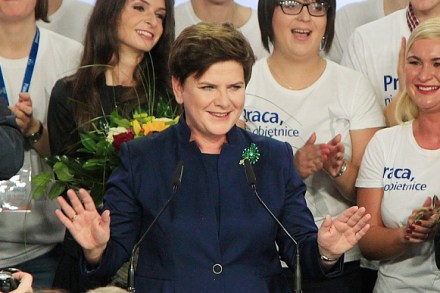
European politics hardly needs more excitement, but that’s what in store after the crushing victory for the Law and Justice party (PiS) in Poland’s general election. The party is not just pretty far off the European mainstream; its politics breathe what Adam Michnik, the legendary dissident, has called 'a combination of an inferiority and superiority complex'. Its redeeming quality now seems to be that it is, nowadays, less nutty. But its politics still have a scent of its past: a social conservatism occasionally lashing modern liberties, a confused and populist economic agenda, and schizophrenia over Germany that swings between pride and feeling of cultural inadequacy.

Greece has chosen to inflict heavy economic damage on itself

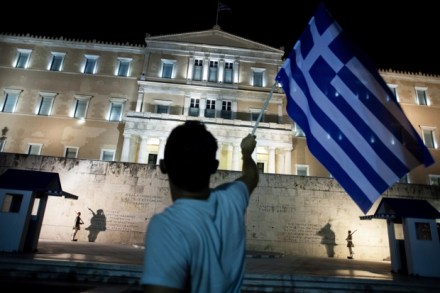
The Greek referendum will change nothing. Greek voters already expressed their great dissatisfaction with the bailout packages when they elected Syriza to power in January. The proposition they were asked to vote about now does not exist – and the referendum was just a sham. The bailout agreement that Greece and its creditors battled over for the past half-year is a dead parrot; it has ceased to exist.And yet the referendum result may change everything.It has made it close to impossible for euro governments to aid Greece with more money.