Fraser Nelson

Fraser Nelson

Fraser Nelson is a Times columnist and a former editor of The Spectator.

The chaos of Libya returns to haunt David Cameron

'Were we right to stop a massacre? Yes, we absolutely were,' said David Cameron on his Radio 4 Today programme interview. But the real question is different: were we right to depose Gaddafi, given the chaos (and bloodshed) that has followed in Libya? Are things so much better for the citizens of Benghazi (and the 80,000 souls in Sirte) now that Islamic State has moved in? The Prime Minister stopping a potential massacre at Benghazi was fairly uncontroversial. But should he have then pressed on to topple the Libyan and created the vacuum now being filled with sectarian warfare and the migration crisis? https://soundcloud.

Jeremy Hunt: if only Brits worked as hard as the Chinese 

'That sounded so much better in my head,' said Rachel from Friends in Series 2. I suspect Jeremy Hunt is now thinking the same. He meant to say that British workers need to improve their productivity, and be weaned off work subsidies. But instead, it came out like: 'We have to proceed with these tax credit changes because they are a very important cultural signal. My wife is Chinese, and if we want this to be one of the most successful countries in the world in 20, 30, 40 years' time there's a pretty difficult question that we have to answer which is essentially: are we going to be a country that is prepared to work hard in the way that Asian economies are prepared to work hard, in the way that Americans are prepared to work hard.' Oh, Jeremy.

The Tories have Adonis – but have swallowed yet another flagship Labour policy

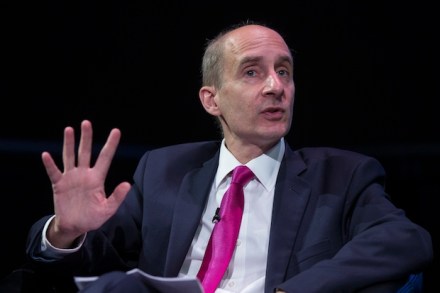
Andrew Adonis has not defected to the Conservatives but, as he’ll know, it will look an awful lot like he has. As tomorrow’s newspapers reveal, Lord Adonis is to give up the Labour whip to become a crossbench peer in order to chair a new National Infrastructure Commission. To allow this announcement to be made by George Osborne, and at Tory conference, is quite something. It is, in effect, allowing the Chancellor to present his recruitment as Tory coup. So Osborne gets the drama, but at a cost. The idea of a National Infrastructure Commission is a Labour policy, championed by Ed Miliband  last year. Adonis was keen on all of this, and advocated about it in the House of Lords in January.

Come and see Charles Moore and Andrew Neil at Tory conference

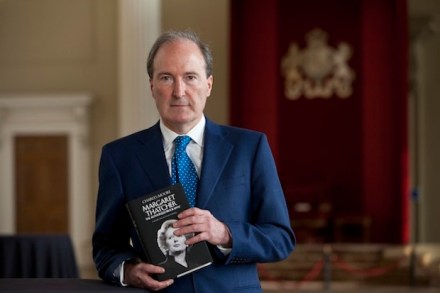
The waiting is over - the next volume of Charles Moore’s biography of Margaret Thatcher has, at last, been published. It follows the central, triumphal years of her premiership, from the Falklands to the 1987 election. Some of it has been serialised in the Sunday Telegraph today, with more in the Telegraph tomorrow. But if you’re at the Tory Party conference then do join Charles discussing the book with Andrew Neil at the Midland Hotel at 6pm– tickets are just £12, and are selling fast. There are just a few left: you can book them here. And there will be early copies of the book fro sale, too, as well as a free glass of wine.

Gay marriage happened because society wanted it, not because government ordered it

Should right-wing politicians be more moral? The question is being raised by Ricky Ross on his superb Sunday morning show on Radio Scotland*; I will be one of the guests. We recorded the discussion this morning. Why, he asked, are Tories seen as being a bit cold-hearted, obsessed with the rich and unconcerned with welfare? Why couldn’t they put themselves at the front of a social mission, like gay marriage? It’s an important point: Tories tend to dislike being seen as preachy and pious, so avoid the moralising language that Labour politicians are quicker to use.

A refreshed Spectator website

You may notice some changes being introduced to the Spectator website today; we’re having a small refresh to make it cleaner, more elegant - and better able to cope with the two million people (or 'unique users') who now read us each month. Everything should be in the same place as before: Nick Cohen, Rod Liddle, Alex Massie still occupy their usual corner of cyberspace. We're phasing in changes, so don't expect to see change everywhere. There will, of course, be glitches along the way; comments, for example, may take a couple of days to be transferred across to the new design. But in this, as in so much else, we rely on the comments and feedback of CoffeeHousers: please do let us know if you encounter anything odd.

Jeremy Corbyn can’t blame the ‘commentariat’ for public opinion

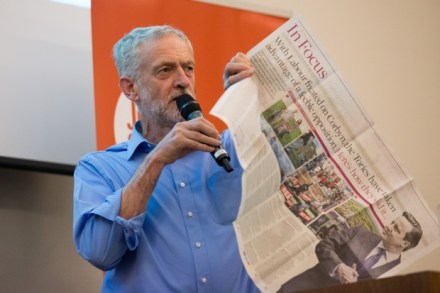
Jeremy Corbyn's Labour party conference speech started pretty well, with him poking fun at the newspapers’ more apocalyptic predictions of what would happen should he become Prime Minister. He teased the Daily Mail for a story saying that he once welcomed the prospect of an asteroid hitting the earth.* And then, a wee joke. 'It's not the kind of policy I'd want this party to adopt without a full debate in conference.' Everyone, even the press, had a laugh at the press. They were probably even laughing in Iran, where the state broadcaster was showing his speech. But then Corbyn had to go and spoil it all by denouncing the ‘commentariat'. Again.

John McDonnell’s speech gave a taste of the madness that has taken over the Labour party

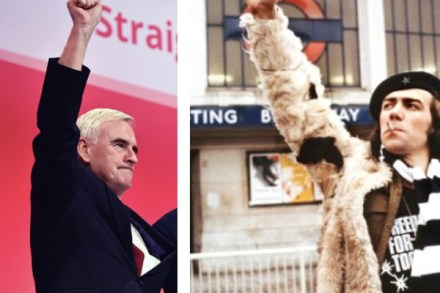
The new shadow chancellor, John McDonnell, told us to expect him to sound like a mild bank manager when he gave his speech today. He ended up sounding like he was auditioning for the remake of Citizen Smith. How many bank managers end their speech by actually scripting a Wolfie-style yawp of ‘Solidarity!'? Perhaps this is all mild and relatively sane by McDonnell’s standards: if so, it offers us an interesting glimpse of the madness which now has the Labour party in its grip. His speech was supposed to be all nuance, policy reviews and open debate but strip that away and you're left with some of the most deranged, dangerous nonsense ever spouted from the floor of a Labour party conference.

Stiglitz, Piketty – Jeremy Corbyn’s star ‘advisers’ are, like him, wrong about UK inequality

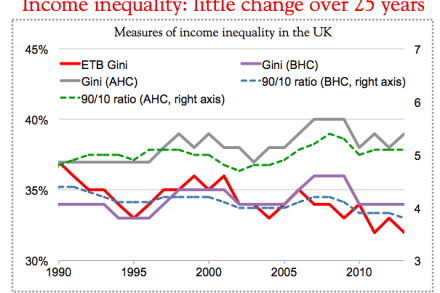
A new leader with little credibility asks famous economists to ‘advise’ him on economic policy. It’s an old trick. News that Jeremy Corbyn is seeking the counsel of Thomas Piketty and Joe Stiglitz is not surprising – both are in the business of selling books suggesting the world is becoming more unequal than ever, and that a crisis is looming. The problem is that this ain’t so - not in Britain, at any rate. Piketty’s central thesis was brilliantly dismantled by Chris Giles, the FT’s economics editor, who won an award for his expose. But at least Piketty published data that could be scrutinised: Stiglitz seems to make his up on the spot.

Why Yanis Varoufakis is right about George Osborne’s fauxsterity

Not often that I’d be inclined to agree with Syriza, but Yanis Varoufakis had a point last night when he questioned the degree of austerity that has happened in Britain. The Conservatives talk a good game, he said, but George Osborne’s cuts pretty much stopped after year one. I’m going to give a compliment to George Osborne and the Tory government. It’s going to create some consternation in the Tory part. He hasn’t really practiced austerity, he has talked about austerity and it didn’t work. He killed of the nascent recovery after 2009 with the little bit of austerity he did, but he stopped it.” The below figures, drawn from Treasury data, rather back him up.

The great British kowtow

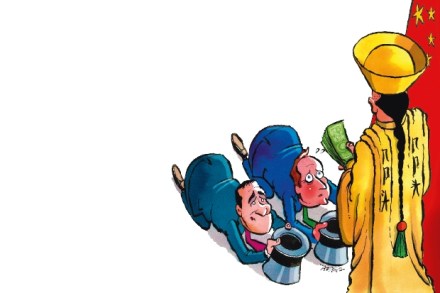
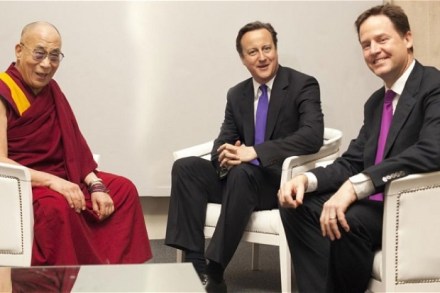
Any British Prime Minister who meets the Dalai Lama knows it will upset the Chinese government — but for decades, no British Prime Minister has much cared. John Major met him in 10 Downing Street, as did Tony Blair. These were small but important nods to Britain’s longstanding status as a friend of Tibet. Of course the Chinese Communist Party disliked seeing the exiled Buddhist leader welcomed in London — but that was their problem. How things have changed. Now China is far richer and Britain is anxious, sometimes embarrassingly so, to have a slice of that new wealth. From the start of his premiership, David Cameron has been explicit about this. ‘I want to refresh British foreign policy to make it much more focused on the commercial,’ he said.

Exclusive: the Dalai Lama lambasts David Cameron’s China policy

The Dalai Lama was in London on Monday and met his old friend (and Spectator contributor) Jonathan Mirsky. Time was when he could expect to see the British Prime Minister too – but Beijing was furious that David Cameron met him three years ago and outrageously demanded that the Prime Minister apologise for it. Cameron did what Beijing wanted. He said in public that he had ‘no plans’ to meet the Dalai Lama again. Such was his hunger for Chinese deals, which has been on full inglorious display in George Osborne’s giant kowtow in China this week. Jonathan has known the Dalai Lama for 35 years, and asked him what he’d have said to David Cameron if No10 had not forced him into the wilderness. His reply was astonishing. 'Money, money, money.

Project Fear and the grim legacy of Scotland’s ‘no’ campaign

A year ago today, Britain woke up to find the union saved – but only just. In 10 Downing St, the 45 per cent voting ‘yes’ looked like a victory, and the whole issue closed. I was in my hometown of Nairn that day, in the Highlands, where things looked rather different: after visiting pupils in my old school I wrote that, far from being closed, the debate had just begun. It wasn’t just the depressing closeness of the result, but the way the ‘no’ campaign had relied upon relentless negativity to make its case.

Jeremy Corbyn appoints convicted arsonist Mike Watson as his education spokesman

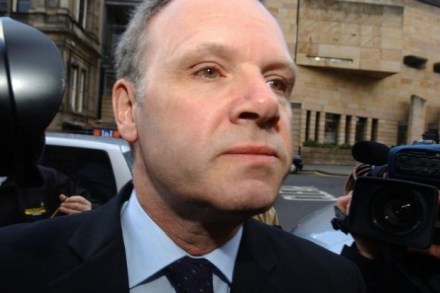
Given that Jeremy Corbyn is a Hamas sympathiser with an IRA sympathiser as his Shadow Chancellor, I imagine he didn't think too much about promoting a little-known Scot named Mike Watson. He is a Labour peer, who now takes a place in Corbyn’s frontbench as education spokesman. He is also a convicted arsonist, who quit the Scottish Parliament in disgrace after being caught drunkenly setting fire to a set of curtains during the Scottish Politician of the Year ceremony 2004. He was sentenced to 20 months in prison, which he served in HMP Edinburgh. Watson's undeserved rehabilitation says much about how Corbyn is having to scrape the very bottom of the barrel for people willing to serve under him.

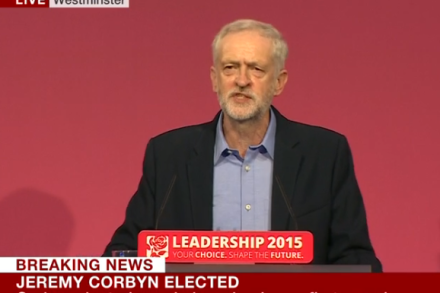
Jeremy Corbyn’s acceptance speech was the stuff of Tory dreams

When George Osborne watched Ed Miliband winning Labour leadership in 2010, he shouted "Yes!! Yes!! Yes!!" I imagine he had probably passed out by the end of Jeremy Corbyn’s acceptance speech: it was the stuff of Tory fantasy. In Miliband's acceptance speech, he had the wit to play down the role that the trades unions had played in his victory. Corbyn boasted about it, in a rambling speech which thanked them by name: the RMT, the FBU - even the Socialist Education Association and Socialist Health Association. I hadn’t heard of either of the last two until today. I suspect, now, we’ll be hearing a lot more about socialist organisations that we had thought closed down in the 1980s. It’s a brave new world.

How will Labour MPs hide their disgust at Jeremy Corbyn’s victory?

Funny to see Iain McNicol, the party's general secretary, warm Labour activists up for the bad news. "Isn't it remarkable that so many people have joined Labour?" he says. "I look forward to seeing them on the doorstep, alongside the members who have campaigned for years and decades." This was a bit of a dig - it's an open secret that McNicol and others are appalled at the way these new members have been able to pay £3 and dictate the result of the leadership election - and these guys are highly unlikely to spend any time on the doorsteps. Tristram Hunt wrote in the Spectator about these new members.

The Great Migration is a sign of increasing wealth, not abject poverty

The migration crisis is about more than Syria. A few weeks ago, Theresa May repeated one of the biggest mistakes in politics: thinking that third-world development will somehow mean fewer migrants. In a Daily Telegraph article, she argued that:- ‘We must help African countries to develop economic and social opportunities so that people want to stay.’ Give aid, not shelter, runs the argument – and she’s not the first to make it. ‘As the benefits of economic growth are spread in Mexico,’ Bill Clinton once assured Americans, ‘there will be less illegal immigration because more Mexicans will be able to support their children by staying home.

WATCH: Why Steve Backshall is one of the best presenters on British television

At a time when so much of television is read from autocue, it's a joy to come across complete professionals whose love for their subject is second only to their knowledge of it. Those who don't have young children may not have come across Steve Backshall; those who do will know that he's one of the best-informed and most impressive presenters on television on either side of the Atlantic. This above clip, from BBC3's Big Blue Live filmed in California, gives a measure of his ability: he breaks off an interview after discovering a blue whale swimming behind him. His commentary was ad-libbed, yet dripping in facts and conveyed with wonderful drama.

No wonder Osborne didn’t want the EU referendum – it may derail his journey to No10

Another disclosure from Anthony Seldon's upcoming biography of David Cameron: he reveals that George Osborne tried to stop the referendum European Union membership. The below is from the Mail on Sunday's serialisation of Seldon's book: Both men are profoundly irritated by their Eurosceptic MPs, but Osborne is even more pragmatic than Cameron. The Chancellor’s view is that it is simply not sensible to talk about disengaging from major international institutions in the 21st century – not worth considering it. Can this be true? Look at this non-denial denial from the Treasury: “This is nonsense. The Chancellor believes that the British people should be given the chance to decide whether or not we stay in a reformed EU.

If Tony Blair thought that Gaddafi wanted to cut a deal, why did no one follow up?

Just a few months ago, almost everyone thought that David Cameron was a goner. That he was about to go down in history as a one-term Prime Minister who failed to win against a bad Labour leader in 2010 then lost to a worse one in 2015. During this period, Anthony Seldon spoke to a long line of well-placed people for his biography of David Cameron; people who would have imagined they could talk freely because his book would be an autopsy. As a result, the former Master of Wellington College seems to have drawn plenty information from people who perhaps regret their candour now. David Richards, the former head of the military, is candid about how he believed that the Libyan project was a disaster – embarked upon primarily to assuage the Prime Minister’s friends in Notting Hill.