Fraser Nelson

Fraser Nelson

Fraser Nelson is a Times columnist and a former editor of The Spectator.

The OBR is relaxed about Brexit – contrary to what Osborne suggested

From our UK edition

In his Budget speech today, George Osborne made out as if the Office for Budget Responsibility was worried about Britain leaving the EU and quoted it saying "a vote to leave in the forthcoming referendum could usher in an extended period of uncertainty”. Listening, I was amazed: how could he enlist the independent OBR on either side of the UK referendum debate? But the document itself (Box 3.4, pdf) tells a very different story. Rather than take sides the OBR explicitly says "it is not for us to judge"  - and quotes a study by Open Europe, a think tank, which... ... modelled a scenario in which the UK leaves the EU in 2018 and found that GDP could be 2.2 per cent lower or 1.

Collapse in North Sea revenues destroys the SNP’s economic argument

From our UK edition

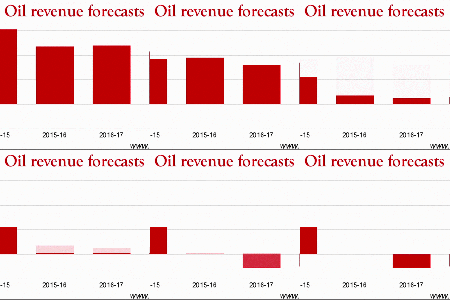
[audioplayer src="http://rss.acast.com/spectatorpolitics/georgeosbornesbudget-2016/media.mp3" title="Fraser Nelson, Isabel Hardman and James Forsyth discuss today's Budget"] Listen [/audioplayer]Alex Salmond had planned 24 March 2016 as his independence day and the budget he published during the Scottish independence referendum envisaged it having up to £7.5 billion of oil to spend. Today's Budget shows that the figure will, instead be zero: precisely 100 per cent less than what the SNP had told Scots. Without it, the Scottish budget simply would not stand up. The basic point - 'it's Scotland's oil!' - has been the SNP refrain for years. There's still oil in the North Sea but there's no profit.

Chuka Umunna: Labour MPs represent more people than the Corbynistas

From our UK edition

It's the Ides of March today, and there are pitifully few signs of a Labour plot. I was on ITV's The Agenda last night with Chuka Umunna, one of the putative successors to Jeremy Corbyn, who was teased by Tom Bradby about his ambitions. He came out with the usual hedged denials ("there's not a vacancy.,, I've said I would never say never") but then came out with the rationale for ousting Corbyn. The problem: most Labour members were not members this time last year. The party has been taken over by Corbynistas and while Labour MPs could technically change the leadership it's harder to change the membership. Chuka agreed- but then gave the democratic case for deposing Corbyn, in defiance of the wishes of party members. .

Right-wing populists surge in Germany’s state elections

From our UK edition

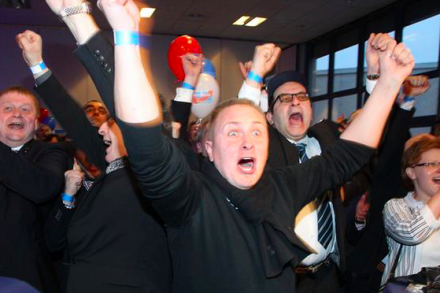
Angela Merkel continues to reap the whirlwind. In this weekend's elections Alternative für Deutschland (AfD) has emerged as the fastest-growing political insurgent party since 1945. It has managed to enter all three state parliaments - with over 10pc of the vote in Baden-Württemberg, Rhineland-Palatinate and almost a quarter of the vote in Saxony-Anhalt, more than double the centre-left SPD. It focused its campaign as a protest against Merkel’s migrant policy, a policy that paid off. Its success is more than just another example of Europeans letting off steam.

Internships at The Spectator for summer 2016. No CVs, please

From our UK edition

NOTE: Applications are now closed. Summer’s coming, and we’re looking for interns to spend a week or two with us here at The Spectator. We’re looking for people who love good journalism and understand how digital media works. The position will be paid (but not very much). We don’t mind where or whether you have gone to university; Frank Johnson was a superb editor of this magazine and he left school aged 16 (as have some of our editors). What matters is flair, imagination and enthusiasm: skills that you can't really learn in any classroom. We're not looking for writers, per se: The Spectator is blessed with a large number of brilliant freelance writers whose skills we can call on.

Britain’s young men are falling further and further behind. Does anyone care?

From our UK edition

The toughest causes to campaign for are those which are not fashionable. To fight racism in the 1950s or stand up for gay rights in the 1980s took guts - and the progress made today is largely down to those who took up the cause before it became a form of virtue signalling. International Women's Day should be a chance to remember the billions of women who are treated appallingly in developing countries - but when it comes to Britain, the battle has pretty much been won. The pay gap is a problem for women born before 1975, but not after. The problem is sorting itself out. For the under-40s, there is a negative pay gap: i.e., men are paid marginally less.

Is it too late for George Osborne to be a Conservative hero?

From our UK edition

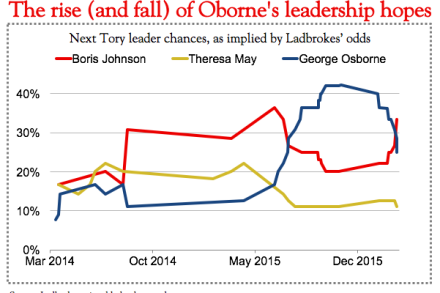
The Chancellor has today declared a ceasefire on Middle Britain: he will not go ahead with his planned pensions raid, where he was intending to erode the relief due to upper-rate taxpayers. The Times splashes on the news, and says that "pressing ahead with the plans may well have dented his popularity within the party as a leadership battle approaches." If this was his motive, it was not without foundation: the tax credits debacle, his Google gaffe and, most recently, his positioning himself as a EU cheerleader has not endeared him to the Tory members who will decide who succeeds David Cameron. The bookmakers show his odds plunging (below) and have today cut his odds on being sacked by Christmas to 6-1. Osborne has recovered before (see above graph) and can recover again.

Should internet trolls, hiding behind made-up names, be prosecuted?

From our UK edition

On Tuesday, I wrote a short blog about Sadiq Khan's threats to crack down on Uber. For the rest of the day, my Twitter timeline was filled by obloquy from made-up accounts from black cab drivers. No more than a dozen of them, but using similar themes: showing pictures of immigrant Uber drivers, claiming that they went on bizarre routes to rip off passengers, or that they rape their passengers. I have no doubt that most of their graphics were fake (like the ones showing an Uber surge 33 times basic fare) but it was a glimpse into how the internet can be used by people hiding behind made-up names to slur. In this case: a company. In other cases: real people. The Crown Prosecution Service today asks: should this sort of thing be illegal?

Sadiq Khan threatens crackdown on Uber, saying allowing its taxis was a ‘mistake’

From our UK edition

The worldwide Uber debate is quite helpful in that it forces politicians to answer a simple question: are you for the people, or the vested interests? Sadiq Khan, the Labour candidate for Mayor, declared his hand today in an LBC phone-in. Challenged by a (Scottish) black cab driver about his views on Uber, he said: There are almost 100,000 private hire vehicles in London. Over the last three years there has been, roughly speaking, a 10,000 increase in the number of private hire vehicles. The black taxis are now as low as 23,000, for the first time in a generation, there are fewer people doing the knowledge. And I’m afraid the mistake was made a couple of years ago when TFL allowed the Uber taxis to come on stream. Why are there so many more private hire taxis?

The best state schools have pulled ahead of private schools. Why is that so hard to accept?

From our UK edition

For years, now, the Sutton Trust has been releasing research showing how many doctors, judges, journalists etc were privately educated and conclude that it’s all a posh boys' stitch-up. The British press loves banging this old drum, but in doing so they drown out a new tune. Today, there is more academic excellence in the state sector than the private sector. Not that many people want to know. Take, for example, an article in this week’s Economist. “Education should not be about wealth” it quotes Tony Blair saying in 1996. Wrong, Blair! The Sutton Trust’s report shows that “two decades later, it still is" about wealth.

How are you finding The Spectator’s website, apps and emails?

From our UK edition

The Spectator is run with Prussian efficiency by a dozen editorial staff at 22 Old Queen St. We don't have very many technical gurus, and pretty much rely on our users to let us know when things go wrong. So I’d like to ask how you’re finding the website, our login system, our Apps and any other part o of Spectator online. David Cameron, for example, has been complaining that he has to log into our datawall all the time when he’s reading Coffee house and that it doesn’t remember his email. I’m hoping that this is because No10’s high-security computers don’t allow cookies, and that this a one-off. But if you have similar problems, we’d like to hear from you. Also, are you aware of all the emails that we offer?

Why immigrants are to thank for rising standards in schools

From our UK edition

Something very strange is happening in London: its state schools are going through a huge renaissance - while attainment in many northern English schools is going into reverse. The chief of Ofsted, Sir Micahel Wilshaw, laid the problem bare in a speech to the IPPR today:- Three in ten secondary schools in Manchester and four in ten in Liverpool require improvement or are inadequate compared to one in ten in inner London. The situation in some of their satellite towns is even worse. A third of the schools in Rochdale are not good enough, as is a similar proportion in Salford. In Oldham, six in ten secondaries require improvement or are inadequate and in Knowsley not a single secondary school is good or better… His list goes on.

Podcast special: Boris backs Brexit

From our UK edition

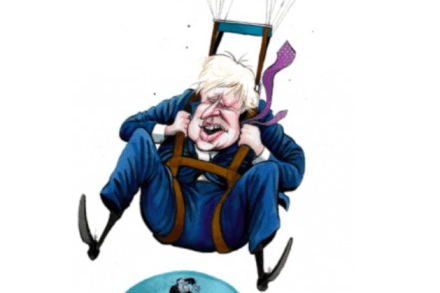
If Boris Johnson had behaved and backed David Cameron's ‘in’ campaign, he would have been foreign secretary by the summer. Instead, he chose to join Michael Gove in the ‘out’ campaign - informing the Prime Minister by text message at 4.40pm shortly before informing the reporters who gathered around his house shortly afterwards. So what does this mean for the race, and do we now have a Tory leadership contest running in parallel to the EU Referendum campaign? James Forsyth, Isabel Hardman and I discuss this in our latest podcast:- Listen to more episodes of the Spectator podcast here and click here to subscribe through iTunes.

Boris Johnson supplants Osborne as bookmakers’ favourite for next Tory leader

From our UK edition

The Mayor has not even filed his Daily Telegraph column yet, but Ladbrokes has announced that he is now the favourite to succeed David Cameron. As the above graph shows, his chances have been steadily increasing as George Osborne overplayed his hand: first, by posing as the heir assumptive, and then by various missteps (like praising Google's tax deal). The ‘out’ campaign is still seen as likely to lose the EU Referendum, but the next Tory leader will be selected by a Tory Party membership who will be about 70 per cent for ‘out’. Michael Gove, famously, has very little leadership ambition; Liam Fox won't stand again and Iain Duncan Smith has had enough of all that to last a lifetime.

Boris Johnson not invited to David Cameron’s EU Cabinet meeting

From our UK edition

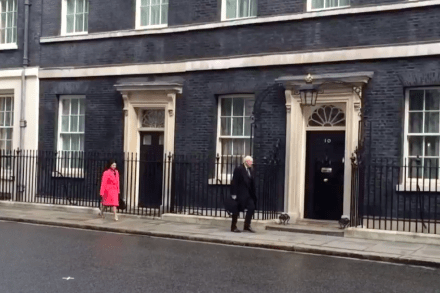
As ministers roll into No10 in front of the cameras, reporters have noticed the absence of one Boris de Pfeffel Johnson. It turns out that the Prime Minister has convened a meeting of the normal Cabinet, rather than a ‘political Cabinet.’ A minor distinction, but it does mean no Boris Johnson – who is a member of the latter organisation, but not the former. Now, of course, you can argue that it takes a normal Cabinet to approve the deal on behalf of the government. But friends of Boris had been hoping for a political Cabinet, at which everyone would say their piece, followed by a rubber stamp at the Cabinet. And that way, Boris could seen as part of the team.

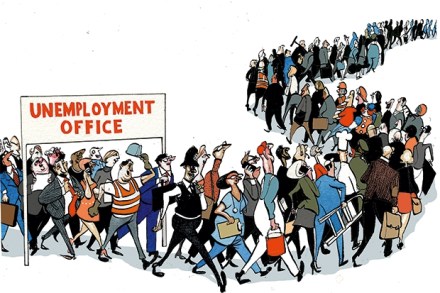
Employment at a new high, borrowing costs at a record low. So who’s afraid of Brexit?

From our UK edition

The Chancellor certainly will have plenty to boast about in his next Budget. Today's figures show an employment rate of 74.1pc, the highest ever recorded in Britain - better than Nigel Lawson's record, better than anyone's. Tax cuts and welfare reform have proved a potent combination. This makes it harder for Osborne to sustain his narrative about a scary "cocktail of risk", part of the general strategy of keeping voters fearful ahead of the EU referendum. With record employment and zero inflation - a striking contrast with the Eurozone - things really could be a lot worse. Against such a backdrop, voters might well wonder what else Britain could achieve by striking out on its own.

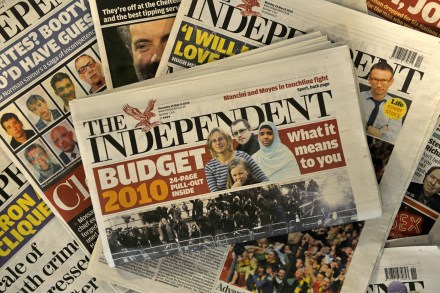
The Independent hasn’t died, it has merely changed its form

From our UK edition

Our newsagents are about to get a little duller: the Independent is no more – at least, not the print edition. I know that, in this brave new digital world of ours, we’re not supposed to equate the end of print with the death of a title. But it’s certainly the end of an era. The Independent is what brought me into journalism: I started reading it when it was set up, and was hooked pretty quickly. My first journalistic heroes—Andrew Marr and Neal Ascherson—wrote for its pages. A friend bought me Paper Dreams, Stephen Glover’s story of the Independent, for my 20th birthday. I had no friends or relatives in journalism, but that book opened a portal into this world – and I was converted; I decided that this was what I wanted to do with my life.

Introducing the Timothy Garton Ash prize for European writing

From our UK edition

Events in Europe are unfolding rapidly, and we at The Spectator are looking for writers living abroad who would be interested in contributing occasionally to the magazine and our website. So we’re setting up a writing competition: the Timothy Garton Ash prize for European writing. It will go to the best original essay from any country in Europe, which will be published both in the magazine and online. In 1978, Alexander Chancellor was looking for someone to cover events in Europe - someone actually living out there, rather than the many eloquent writers in London who knew what these countries were like years ago. Things were changing too fast, Alexander thought: The Spectator needed a new voice. Someone who could report what he actually saw.

Sales of The Spectator: 2015 H2

From our UK edition

The magazine industry publishes its sales figures today, and we at The Spectator are delighted to announce the largest figure in our 188-year history. And not just because digital sales are doing well: it’s growth on every front. Sales of the print edition of The Spectator are growing at their fastest rate for 15 years. Subscriptions, perhaps our single most important indicator, are up almost six per cent year-on-year. Our web traffic stands at a record high, with an average 1.9 million visitors per month last year, and is rising so fast that our standard monthly figure is now 2.5 million. Many of them are discovering The Spectator for the first time; many of them are getting hooked.

First, immigrants. Now, terrorism. Will Cameron’s EU scaremongering ever stop?

From our UK edition

A few weeks ago, James Forsyth revealed David Cameron’s strategy for fighting the EU referendum: to campaign on the theme on security, rather than an economic argument. This is already backfiring badly. Britain’s security does not depend upon the EU, and the Prime Minister's attempts to suggest otherwise are inflicting grave damage to his chances of winning the referendum. Yesterday, he threatened Britain with an influx of migrants if we vote to leave. His logic was that the deal agreed with France about policing Sangette was somehow dependent on EU membership. But, being a bilateral deal, it had nothing to do with the EU - as today’s Daily Telegraph reveals.