Fraser Nelson

Fraser Nelson

Fraser Nelson is a Times columnist and a former editor of The Spectator.

Bookmakers odds: chance of Brexit plunges to all-time low of 15 per cent

From our UK edition

As Britain goes to the polls to vote on the EU Referendum, the odds on Brexit are plummeting – to a new low of 17 per cent at the time of writing. The Spectator’s zoomable live odds chart, below, shows the speed of the decline. At 9am this morning it was 23pc, at 10.45am it was 19pc and by 11.30am it was 17pc. An hour later, 15pc. The chart should appear below – but while our site is especially busy it may take a few moments to load: This chimes with the opinion of everyone I’ve spoken to, in both Leave and Remain camps: there’s a chance of Brexit, but not much of a chance. Today’s YouGov poll shows the country evenly balanced, and we also know Leave voters are more likely to turn out than Remain.

A response to David Smith’s economic case for Remain

From our UK edition

When it comes to making economics understandable, no one does it better that David Smith of the Sunday Times*. Today, he has written a emphatic endorsement of the case for the UK remaining in the EU. As a longstanding admirer of his work, a few points jumped out at me when reading it. Here they are. Britain’s economy is convalescing from the biggest financial shock in a century. A few years ago we were on the edge of the abyss. We live in the shadow of the crisis. One shock was careless: to impose another, self-inflicted one before we’re over it would be stupid. Yes, you can argue that now is not the best time.

Brexit still barely half as likely as Remain, say bookmakers

From our UK edition

The campaigning has been halted, as the country mourns the death of Jo Cox, but the financial markets have continued and indicate that a Remain vote is significantly more likely than Leave. The pound has been rising sharply (it would likely fall in the event of Brexit) and the betting markets how suggest that a Remain vote is almost twice as likely as Brexit. The Spectator's Live Odds chart is below, and will update every time you revisit the page. That said, the bookmakers have been wrong before (this time last year they gave Donald Trump a 2pc chance of winning the Republican nomination) and the last few published polls give a clear lead to Leave. So this referendum will be especially hard to call.

George Osborne threatens to punish voters with tax rises if they defy him on Brexit

From our UK edition

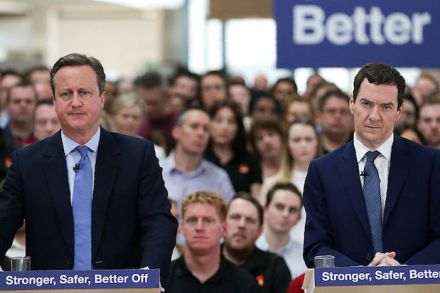
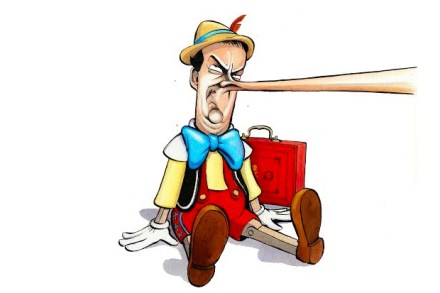
The polls are tight, so George Osborne has a cunning plan. He’ll present a “Brexit budget” where he will spell out how he’ll punish voters if they vote to leave the European Union. He'll be forced to tear up his election pledge not to raise taxes: the voters will have provoked him, you see. Pushed him too far.  He has all kind of sums in mind, that they won't like one bit, starting with an extra 2p on the basic rate of income tax. Fuel duty will rise. The higher rate of income tax will go up 3p. Another 5 per cent on alcohol and fuel duties. Then £2 billion off pensions, and another £2 billion from public services. All told, £15 billion of tax rises: you can almost sense his nose growing longer as he reels off his list.

David Cameron’s Brexit threat to pensioners is a new low

From our UK edition

Campaigns only last for a few weeks, but politicians can be defined by what they say during those campaigns. Ed Miliband will never live down the #EdStone, Zac Goldsmith will always be stained by his murkier attacks on Sadiq Khan – and I suspect David Cameron will never manage to shake off the threat he made to pensioners today. At times, it can seem as if he’s got confused and has set out to attack his own reputation, rather than that of his opponents. Those who watched George Osborne grilled by Andrew Neil last week will know the issue: the Remain campaign has decided to pretend that pensioners will be worse off after Brexit.

Nigel Farage has just been rumbled on immigration

From our UK edition

The Leave campaign has been talking a lot about immigration, but just what kind of effect would Brexit have? How many fewer would come? “Up to us, that’s the point of this referendum” said Nigel Farage, in is interview with Andrew Neil. Let MPs debate the ideal figure in the Commons, he said. His implication: that post-Brexit Britain could pick a number for net migration, any number. Given that Britain’s net migration is about 330,000 a year, Andrew Neil asked Farage how far he sees it falling after Brexit. He didn’t have an answer. From the 1050s to the 1990s, it used to be 30,000 to 40,000 a year, he (wrongly) said. That was “acceptable” so “let’s get back to normality”.

The Spectator podcast: David Cameron’s purge of the posh | 4 June 2016

From our UK edition

To subscribe to The Spectator’s weekly podcast, for free, visit the iTunes store or click here for our RSS feed. Alternatively, you can follow us on SoundCloud. Naming the best columnist in Britain is like naming you’re the best Beatles song: it varies, depending on what kind of mood you’re in. But who would deny that Matthew Parris is in the top three? The quality of his writing is, itself, enough to put him into the premier league but that’s just part of the art. What sets Matthew apart is his sheer range, and his originality. You never know what he’ll be writing about, whether you’ll agree with him, or virulently disagree. Most columnists join arguments; Matthew Parris starts arguments.

The Spectator podcast: David Cameron’s purge of the posh

From our UK edition

To subscribe to The Spectator’s weekly podcast, for free, visit the iTunes store or click here for our RSS feed. Alternatively, you can follow us on SoundCloud. Naming the best columnist in Britain is like naming you’re the best Beatles song: it varies, depending on what kind of mood you’re in. But who would deny that Matthew Parris is in the top three? The quality of his writing is, itself, enough to put him into the premier league but that’s just part of the art. What sets Matthew apart is his sheer range, and his originality. You never know what he’ll be writing about, whether you’ll agree with him, or virulently disagree. Most columnists join arguments; Matthew Parris starts arguments.

Purge of the posh

From our UK edition

Any parents considering Dollar Academy are invited to take their car along its long driveway and park outside what looks like a palace. When I first did so with my parents, I told them that it all looked ridiculously posh. My mum flew into a rage. ‘Posh’ was a word of bigotry, she said, and one I’d best not use if I was going to survive a day in boarding school. My dad left school aged 15 and eventually joined the RAF, which was kindly paying for me to board while he was posted to Cyprus. He’d have loved such an opportunity, and wanted me to see it for what it was — and to forget any class-war language that I might have picked up in my old comprehensive in the Highlands. I needn’t have worried.

Brexit odds – live updates on percentage chance of UK leaving the EU

From our UK edition

With opinion polls showing dazzling range - from Leave being 4 points ahead to Remain 13 points ahead - it's worth looking at the betting markets. The below is a live chart, which will update every time you revisit this page. It updates several times throughout the day. At the time of writing, the graph underlines a basic point about referenda: no matter what the polls say, the status quo has a huge in-built advantage. Or, at least, a lot of people are betting that voters will stay with the status quo. Mind you, this time last year, the betting markets gave David Cameron a 10pc chance of winning a majority. Greater than the 0.

Might ITV make a better fist of finding a Eurovision song?

From our UK edition

About 200 million people tuned in to the Eurovision Song Contest last night, and will have seen Britain finish third-last. The country of Adele, Ed Sheeran, the Mumfords and The Beatles was defeated by countries with a twentieth of our population (and musical talent) – so what’s going wrong? The answer is fairly simple: the UK entry is controlled by the BBC. Asking it to choose a Eurovision Song Contest winner is like asking the Parliamentary Culture Committee to choose a Christmas No1. I'm a huge fan of the BBC and its Eurovision coverage is generally first class, as are Paddy O’Connell and Graham Norton. But choosing a winning musical act is a another skill.

Immigration: a (belated) response to Andrew Neather

From our UK edition

A while ago, I promised to write about my response to allegations by Andrew Neather that the government had covered up immigration. I got waylaid a bit, but in my Daily Telegraph column today I explain why I’m not convinced by it. To believe that mass immigration was a deliberate policy to screw up the Tories would imply that someone in power had a clue what was going on. No one did. It was a massive accident: the arrival of four million more people over 15 years. But here’s the thing: have the shops run out of food? Has M&S run out of underwear to sell? Has Ryanair started to ration flights? Has there been any rise in crime or anti-immigration sentiment? Have employers run out of vacancies? Not at all.

Boris needs you!

From our UK edition

Boris Johnson is nodding along as he reads Karl Marx. To be more precise, he is standing in the Spectator boardroom reading a letter that Marx and Engels wrote to this magazine in 1850 complaining about being pursued by Prussian government spies in London. He then admires a picture of the youthful Taki chatting up Joan Collins at a New York nightclub in 1957. When he was editor of this magazine, he called it ‘the best job in London’. But now he says that being mayor of London was even better. Less fun, perhaps, but more fulfilling. After eight years at City Hall, he is turning his mind to what he will do next. As we sit down to lunch, he suggests that since he has so much more time on his hands, perhaps he could write the leading article or proofread some pages.

Watch: George Osborne grilled about his great deception over Brexit

From our UK edition

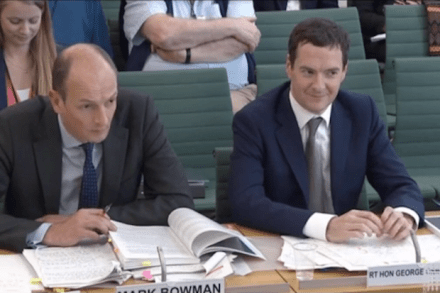
The Chancellor gave evidence to the Treasury select committee today, and he was challenged about The Spectator’s analysis of his systematic attempt to mislead over the cost of Brexit. A loss of £4,300 per household, he said: a figure that he fabricated using three tricks. He disguised an increase as a decrease: the Treasury study suggests that GDP would be a 29 per cent bigger in 2030 with Brexit and and 37 per cent bigger with no Brexit. So the choice is between two significant rises. By no stretch of the English language is this a ‘fall.’ Osborne conflated household income with the very different notion of GDP, so he could arrive at a higher (and scarier) figure.

Introducing Coffee House shots, a new Spectator podcast

From our UK edition

The Spectator’s weekly podcast, presented by Isabel Hardman, has been going for a couple of years now and is established as the best podcast produced by any magazine. But we’ve also been doing a Coffee House podcast, called Coffee House shots, which is shorter reactions to stories in the news (subscribe with iTunes here, or here's our RSS feed for use with other apps). When Iain Duncan Smith resigned at 9pm on a Friday, we had a Coffee House shots podcast up by 9.30pm: the idea is rough, but quick analysis on the day's events. If you subscribe via Downcast or iTunes, it will be waiting for you on your mobile. Here’s the latest episode: https://soundcloud.

Do our spies really depend on the EU?

From our UK edition

Sir John Sawers, an ex-MI6 chief, insisted to Andrew Marr earlier that No10 did not put him up writing today’s article in the Sunday Times saying that Britain needs the EU to ensure its security. I can quite believe it. No10 abandoned this line of argument after the Belgian Airport atrocity, and the subsequent debate which exposed how EU-wide security does not work. We saw, then, that geographical proximity is terrifyingly unrelated to the quality of intelligence collaboration. The French and Belgians were unable to exchange information about terror suspects, in spite of having a common border and common language. If you rely on institutions that don’t work, you put lives at risk.

OECD says Brexit would cut immigration by 84,000 a year

From our UK edition

We should assume that today’s OECD report on Brexit was intended to frighten Britain into voting to remain in the EU. Ángel Gurría, its secretary-general, has tried to translate his figures into a blood-curdling soundbite about losing a month's salary by 2030 (something that could easily be remedied by a tax cut). Its finding is that the trade we'd apparently forfeit would make the UK economy 5pc smaller that it would otherwise be 2030, not quite so bad as the 6pc estimated by the Treasury. And by the OECD's maths, the "cost" to households is closer to £700 a year than George Osborne's made-up figure of £4,300 a year.

Will Barack Obama’s ‘back of the queue’ threat backfire?

From our UK edition

Barack Obama's decision to visit Britain during an election campaign was controversial enough. His writing an article against Brexit in the Daily Telegraph was more controversial still. But to stand in Downing Street and threaten his host country with being dumped 'at the back of the queue' for trade talks should it choose to leave the EU is, I think, too much. It’s precisely the comment that could backfire, and spark indignation. And make people ask: who on earth is Obama to come to Britain and speak to us in this way? I've just recorded a podcast about this with James Forsyth. Here it is:- It wasn’t what Obama said, as such. Even the EU doesn’t have a free trade deal with the US, and I doubt it will ever agree a proper one.

The ejection of Romania from Eurovision is shameful

From our UK edition

On Eurovision night, the best and most heartfelt performances always come from the countries imprisoned behind an Iron Curtain not so long ago. Since Romania joined the comity of Eurovision in 1994, its entries have always impressed. It has always known that Eurovision is a rare chance for the peoples of Europe – and its environs – to come together, drink vodka and laugh with (and sometimes at) each other’s entries. The sheer effort that these tiny countries go to, as they show themselves to the world’s largest television audience for a non-sporting event, is testimony to the awesome soft power of Eurovision.

Swedes tell Britain: if you leave the EU, we’ll follow

From our UK edition

If Britain were to leave the European Union, would it survive? Britain is one of the least enthusiastic members of the EU, but other more globally-minded countries are tiring of the protectionism and insularity in Brussels. Reformers in Sweden are aghast at the prospect of Brexit, seeing Britain as their main ally in trying to fight off protectionism (a recent study found an 89pc alignment of our interests, 88pc with the Dutch and Danes). But as many in Britain come to conclude that this fight is lost, and we're better off out, many Swedes are coming to the same conclusion. According to a poll by TNS Sifo, the largest polling firm in Sweden, 36 per cent of the Swedes would wish to leave the EU if Brits vote to leave, and just 32 per cent would stay.