Fraser Nelson

Fraser Nelson

Fraser Nelson is a Times columnist and a former editor of The Spectator.

Newsnight deserves an award for its superb follow-up to the Spectator’s scoop

From our UK edition

It’s great to see Newsnight once again nominated for an award for its coverage of the Kids Company scandal, and I hope that it wins this time. When Miles Goslett broke the story in The Spectator in February last year, he had all of the details: the full horror of Camila Batmanghelidjh and her bizarre modus operandi, her dodgy finances and – crucially – how No10 overrode concerns from civil servants who had wanted to pull the plug on the venture. The story was there, on a plate: Miles Goslett had written the scoop of the year. He and Mary Wakefield, our commissioning editor, made sure it was bombproof - she sent her lawyers after us, but even they could find no specific complaint. But still, no one managed to follow up Miles's scoop.

The collapse of British housebuilding

From our UK edition

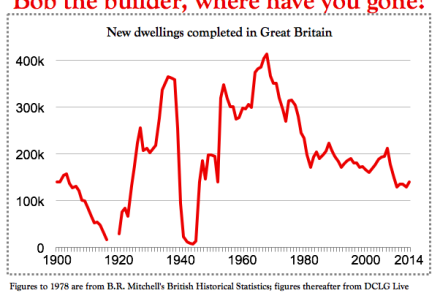
Things are pretty good in Britain right now: poverty rates are at a record low, employment is at a record high with rising wages and zero inflation. But for the young, there’s a problem: property prices are still sky high and the basic dream of home ownership (especially in London) looks cruelly unobtainable. The above graph might help explain why. The construction of new houses has been falling steadily, while the population has been rising steadily. At the same time families have been fracturing, increasing the need for more dwellings. In the last 15 years, net immigration has gone from zero to 350,000 a year. The new Brits need somewhere to live, especially as they tend to have more children.

With an 18-point lead in the latest poll, momentum is with the EU ‘in’ campaign. 

From our UK edition

Why is David Cameron having such trouble persuading Jean-Claude Juncker to give in to his minimal demands for EU reform? The Prime Minister pledged, in a Tory manifesto, to restrict welfare for migrants for the first four years they're in Britain: not as an ‘emergency’, but as a matter of routine. He was returned with a majority, and under British democracy this means it ought to happen. If the Lords were to try to frustrate this, the PM would overrule them because it was a manifesto pledge, voted on by the public. Why accept a veto from the EU? But the polls show a clear lead for 'in' - a ComRes poll for the Daily Mail tomorrow shows in leading by 18 points (54pc to 36pc) with just 10pc as 'don't knows'.

Diary – 28 January 2016

From our UK edition

For years, I’ve wondered why so many clever people go to Davos to discuss topics as meaningless as ‘the new global context’ or ‘shared norms for the new reality’. It has always struck me like a massive game of Just A Minute, in which contestants compete on how long they can talk about a theme that makes no sense at all. But as I found out when I visited last week, the real game is far more sophisticated. No one at Davos cares too much about the gabfest. The debates are, in effect, a front for the biggest networking event in the capitalist world. For one week, this ski resort becomes a fortress guarded by the Swiss army. Venture capitalists chase chief executives, who chase the politicians while the journalists chase everyone.

Why can’t the Swedish authorities be honest about crime and immigration?

From our UK edition

It’s hard to recognise Sweden from the news reports we're reading nowadays. Yesterday, a 15-year-old at an immigration centre stabbed and killed one of its female employees in Mölndal, near Gothenburg. It’s the kind of story that shakes the country to its core. Sweden has taken a staggering number of unaccompanied children - some 20,000 in the past four months - so the government has to act in loco parentis. To keep them out of trouble, as well as educate and accommodate then. It’s a very tough ask, a job that many Swedes fear is simply beyond the competence of government. In such circumstances, appalling things can happen. A police spokesman had this to say: 'It was messy, of course, a crime scene with blood.

Google obeys tax laws, and gives us awesome services for free. Why complain?

From our UK edition

If Google hoped for some good PR in offering £130 million to settle UK tax claims dating back to the Labour years, it was a miscalculation: Labour regards the offer as "derisory" and the BBC is leading its news bulletins the better to sock it to its rival. Why did Google bother? It has run up against the standard anti-business narrative: that the social worth of businesses can be measured only by how much cash they give to the government. In fact, Google provides its services to millions of Britons (worth at least £11 billion, by some estimates) at no cost at all: this is its contribution to society. As for its contribution to the government's coffers, Google has - from the offset - been following the rules. And for this, it has been lambasted.

David Cameron asks business: “help me make the case for Britain to stay” in the EU

From our UK edition

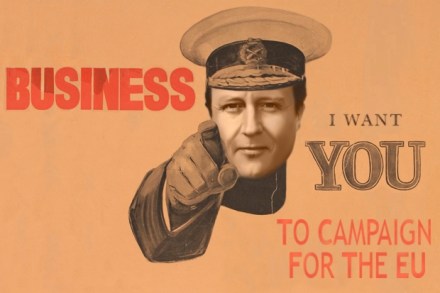
David Cameron is giving a speech in Davos later today with a message for British business: he wants to enlist them in his campaign for Britain to stay in the EU. Not that he puts it in such terms. We’re still in a phoney war where, in theory, Cameron is still negotiating, and might very well say that he wants Britain out of the EU. But in practice, the campaign has begun. He has a series of meetings with other EU leaders. He hopes for a deal next month and a referendum in June or July. Any doubt that the campaign has begun should be dispelled by the tone of his speech. Extracts released so far, he says: “The voice of business must be heard - in Britain and across the whole of the continent.

Mark Carney abandons even a hint of interest rate rise. Is Britain trapped in the zero era?

From our UK edition

It's just as well that Mark Carney is Bank of England governor: he'd have made a lousy forecaster. In August 2013 he said he'd raise interest rates when unemployment fell below 7 per cent, expecting that to take three years. It took five months. Then last summer,  Carney informed us that the decision on when to make the first rate hike ‘will likely come into sharper relief around the turn of this year’. The year has turned, but the interest rate hasn't. So yet again, the expectation has been delayed. The below graph shows the story so far... And now? As Carney said in a speech at Queen Mary University of London: ‘In my view, the decision proved straightforward: now is not yet the time to raise interest rates.

Public will now choose UK’s Eurovision entry – but should we trust the BBC with the shortlist?

From our UK edition

For almost two decades, Britain has failed dismally at Eurovision – and deservedly. Our entries have been so bad as to represent a passive-aggressive insult to an entire continent. You can blame the BBC: it picks the song, and just doesn’t understand Eurovision. It seems to think it’s the equivalent of a musical bad taste party, where the aim is to send in cheesy songs. You Europeans have awful taste, the BBC seems to say, so here’s a song so crap that you’ll love it! They tend not to. Today, the BBC has announced that the public will choose the song. Its musical politburo won’t. This is a step forward, but it raises a very important question: can the BBC actually draw up a decent shortlist?

What Oxfam won’t tell you about capitalism and poverty

From our UK edition

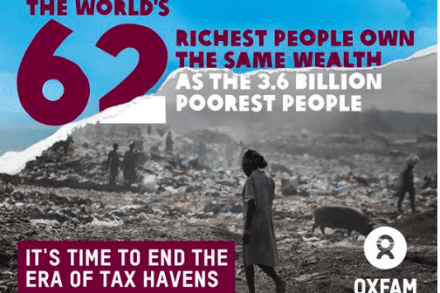
Your average milkman has more wealth than the world's poorest 100 million people. Doesn’t that show how unfair the world is? Or given that the poorest 100 million will have negative assets, doesn’t it just show how easily statistics can be manipulated for Oxfam press releases? They’re at it again today: the same story, every January. “Almost half of the world's wealth is owned by just 1% of the world's population” it said in 2014. It has done variants on that theme ever year, each time selling it as a new "big" story. All peddling the impression that inequality is getting worse, that the rich are engorging themselves at the expense of the poorest. This narrative (which is discredited as it is old) suits Oxfam’s fundraisers.

Might Britain vote to leave the EU only to find out that there’s no real exit?

From our UK edition

If Britain were to vote to leave the EU, we'd promptly set about agreeing our own trade deals as a sovereign nation. But what about our new trade deal with the EU itself? What conditions would this wounded beast set, and might we end up accepting the diktats and red tape that drove us mad in the first place? I look at this in my Daily Telegraph column yesterday. Take Norway: in 1994 it voted to stay out of the EU yet has ended up with plenty of the problems that drive Britain up the wall now. If anything, things are worse there: it has ended up paying almost as much, per capita, to the EU. It had to accept free movement of people as part of its deal with the EU.

In praise of Phil Webster

From our UK edition

Today, one of the greatest political journalists of my lifetime retires: Phil Webster, former political editor of The Times,  is leaving the newspaper after 43 years. He has been overseeing its online political coverage for the last few years and (until a few days ago) getting up at the crack of dawn to write its morning political email. Now, he has finally called it a day. It’s the end of an era. When I joined the staff of The Times in the mid-90s, as a business reporter, I used to dream of being in Phil’s team (as did most young reporters that I knew). The closest I ever came was being made Scottish political correspondent – which, admittedly, is not very close.

No, Prime Minister, we don’t need state parenting lessons. Just ask Scotland

From our UK edition

David Cameron has strong views about the family; often ones that ought to remain inside his head. He quite is keen on marriage and good parenting, but how to make this into a government policy? He offers some thoughts in his speech today. His words: 'In the end, getting parenting and the early years right isn’t just about the hardest-to-reach families; it’s about everyone. We all have to work at it. And if you don’t have a strong support network – if you don’t know other mums or dads – having your first child can be enormously isolating… Of course [kids] don’t come with a manual, but is it right that all of us get so little guidance? We’ve made progress.

Squeeze are wrong: the Tories are hellbent on fixing welfare, not destroying it

From our UK edition

Squeeze were at their best in the 1970s, and this morning demonstrated that their political ideas haven’t much evolved from that awful decade. Playing out the Andrew Marr show in front of the Prime Minister, Glenn Tilbrook changed the lyrics of this latest song to insert the line "I grew up in council houses, they're part of what made Britain great. But there are some people who are hellbent on destruction of the welfare state.” Not quite. Today’s Conservative Party is hellbent on reforming the welfare state - so it helps people out of poverty rather than traps them in it. That is what's behind today's news that the PM is minded to knock down the worst estates, rebuild the property and help rebuild the lives of the tenants.

The EU campaign has begun – and Tory wars are back

From our UK edition

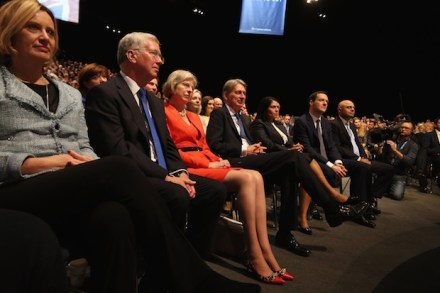
Liam Fox’s new year party at the Carlton Club has become the traditional start to the Tory Party’s year. This year there were 11 Cabinet members including the Chancellor, Home Secretary, Defence Secretary, Business Secretary and Boris Johnson. I’d say that most of the Tory MPs there are ‘leavers’, who have this week been given permission to campaign freely against a ‘remain’ campaign expected to be led by the Prime Minister.  So in this way, the old Tory wars are about to start again. I look at this in my Daily Telegraph column today. This is not Eurosceptic vs Europhile. This will be a battle between Eurosceptics: the ones who think the EU can be beaten back from within, and the ones who want out altogether.

Around the world, poverty is collapsing. Why is that so hard to believe?

From our UK edition

In 2012 and 2013, The Spectator opened its Christmas special issue with a leading article counting the ways in which the world had never been a better place, and was set to get better still. We didn’t do so this year, as the list would have been a bit too similar to previous versions – but others did pick up the theme, including Dan Hannan on ConHome. This was taken up by Matthew d’Ancona in the Guardian making an excellent follow-up point: if things are so good, why don’t people feel it? He traces this argument to Matt Ridley’s 2010 book, the Rational Optimist, and to Stephen Pinker’s 2011 book about declining violence. I agree with him that Ridley’s book is a landmark in the debate: if you haven’t read it, go buy it now.

The Spectator Dashboard: interactive UK data

From our UK edition

Great progress has been made in open data over the last few years, with most important facts and figures now available online. The quality of the UK economic debate has been enhanced by the creation of the Office for Budget Responsibility, which publishes forecasts in a non-tricksy way. The journalist is spoiled for choice. But, still, you don't tend to see such forecasts republished: the BBC doesn't share them and even the FT's 'economy at a glance' restricts itself to historic data – and static graphs, which you can't interrogate. At The Spectator, we've been using dynamic graphs for a while. Now, we're moving up to the next level using HighCharts, a more versatile Norwegian graph-making engine. The below graphs are part of it.

The Spectator in 2015: record magazine sales, record traffic

From our UK edition

There are just six hours of 2015 to go – and it has, for The Spectator, been our best year ever. Sales of the magazine broke through their record high this year: more people are buying it now than any time in our 187-year long history. And that’s just if you count magazine sales: if you count the number of people actually reading our website and enjoying our writers, the picture is as above: an astonishing 20 million people reading over 60 million articles this year. You’ll see a dip a few years back: that’s when we introduced a full paywall. We the changed that to a metered paywall: if you read more than a certain number of magazine pieces per month, we ask you to subscribe.

. . . and I won’t be Boris Mark II

From our UK edition

As soon as votes were counted in the race to be Tory candidate for London mayor, Zac Goldsmith’s problem became clear. He had won comfortably, but just 9,200 party members bothered to vote — compared with the 80,000 who took part in Labour’s contest. Goldsmith praised his party for a ‘civilised and constructive’ debate, unlike the ‘divisive and vicious’ battle won by Sadiq Khan. But if Labour can call on a machine whose activists outnumber the Tories by nine to one, the Conservative candidate faces a real disadvantage. The size of Khan’s vote, Goldsmith thinks, is deceptive and swollen by trade union members. But in May, he concedes, ‘They will be out en masse, combined with the Corbyn-istas. So yes, they know that this matters.

The green consensus has given the Tories a free pass on flood defence

From our UK edition

David Cameron is vulnerable on flood defences, having cut the budget while blowing huge amounts on green subsidies and overseas aid. But who will point this out? Certainly not the Labour Party. John McDonnell, the Shadow Chancellor, was on the radio this morning claiming, bizarrely, that the Tories were quite right to spend so much on climate change because that is somehow tackling the flood problem “at source”. "If you look at the money we're spending overseas, and if you cut that... we're tackling the issue at source. For example, we're reducing dependency on fossil fuels. If we do that [cut foreign aid] it would be a short-term saving but a long-term cost.