Fraser Nelson

Fraser Nelson

Fraser Nelson is a Times columnist and a former editor of The Spectator.

A knighthood? Lynton Crosby deserves a hereditary peerage

From our UK edition

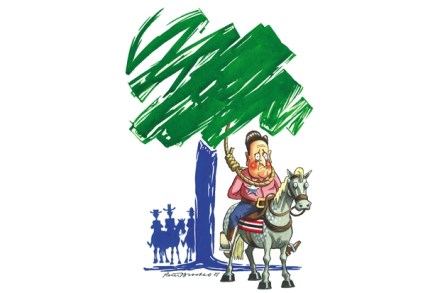
Was a political knighthood ever more deserved than Lynton Crosby’s? His personal involvement was the difference between defeat and victory – he kept Ed Miliband out of No10. As Tim Montgomerie  observed earlier, a hereditary peerage would be in order for that alone. We saw, in 2010, what a Tory general election campaign looks like if left in the hands of a Tory leadership more noted for its enthusiasm in campaigning than their expertise. Crosby distilled down the Tory offering and encouraged Cameron to drop the misnamed 'modernisation' agenda which had so narrowed the party’s popular appeal (and halved its membership). Crosby focused on the basics: tax cuts, efficiency, jobs, prosperity. The safer bet.

David Cameron: why bombing Libya wasn’t a mistake

From our UK edition

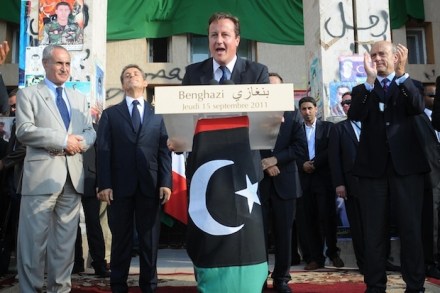
Libya has been in the news again over Christmas: the UN Security Council has endorsed a new government but as Peter Oborne found out when he visited Benghazi, the city that David Cameron addressed after his 2011 bombing campaign (video above), there isn't much government to speak of. The World Food Programme says that 2.4m Libyans will need humanitarian assistance; the country's population is 6.2m. Its economy shrank by 25pc last year alone and private enterprise is collapsing: the state now employs 80pc of Libyans. At the height of the 2011 uprising there were about 17,000 militiamen: today they number in the hundreds of thousands and they're tearing Libya apart. [datawrapper chart="http://static.spectator.co.uk/V0BIj/index.

No bells rang out for Christmas in England in 1941; bells meant Nazi invasion

From our UK edition

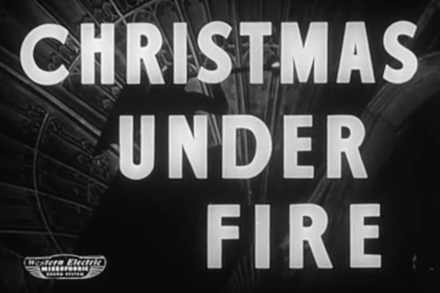
In the Christmas special edition of The Spectator we ask various luminaries about their traditions on the day itself. For David Cameron, it's gathering the kids in bed to open presents. For Jacob Rees-Mogg it's mass at Downside Abbey then the Queen's Speech. For me, it's watching a short American film about Christmas in Britain in 1941, when the country waited for German invasion. When I heard the church bells ring in Somerset this morning, I was reminded of a passage from it:- "For the first time in history, no bells ring in England to celebrate the birth of the Saviour. No church bells are allowed to be rung in England. If they do, it will mean that the invader has come...

Political earthquake in Spain as Podemos takes 20pc of vote

From our UK edition

"Spain is not going to be the same anymore and we are very happy," declared Pablo Iglesias, the leader of Podemos, last night. He's right: the two-party system which has governed Spain since its emergence from dictatorship in 1975 has just ended. Podemos, an anti-austerity populist party that didn't exist two years ago, has taken 20pc of the vote in the elections; Ciudadanos, a more centrist upstart, won 13pc. Both have deprived the conservative Popular Party of its majority. It finished first with 29pc of the vote, but it's not enough to govern. The PP's main rival, the Socialist Party (PSOE), won 22pc. So what now? It's all uncharted territory.

Jeremy Corbyn’s poll ratings are bad, but not disastrous. Why pretend otherwise?

From our UK edition

Like most political journalists, I regard Jeremy Corbyn's leadership of the Labour Party as an unalloyed disaster. But it is, perhaps, time to admit that this view is not so widely shared amongst the public. "Almost a third of Labour supporters do not think that Jeremy Corbyn will lead Labour into the next election," says today's Observer. The more striking finding is that most Labour supporters (56pc) do think that Corbyn will stay until 2020. He may be hated by Labour MPs, but his approval rating is high amongst Labour members - even amongst those who voted for Andy Burnham. It's a thing.

Pay rises go further: inflation is (just above) zero.

From our UK edition

Anyone hoping for an inflation-linked pay rise in the new year can forget it. The only good news in today's data is that, at least it won’t be a pay cut: Britain is out of deflation – prices rose by 0.1pc year-on-year last month, according to the CPI (and were up 1.1pc on RPI). But that’s still next-to-nothing. But for those whose pay rises are not linked to inflation, it's good news. We’re in a period of reasonable growth, zero inflation – and, as a result, rising disposable household income. A pretty good scenario, and one that is expected to last – and, thanks to a new graph system we’re trialling, we can show how it is expected to last. And the user can check that we're not cherry-picking the data range: it goes right back to 1970.

No, Britain can’t direct Europe. Let’s stop pretending otherwise

From our UK edition

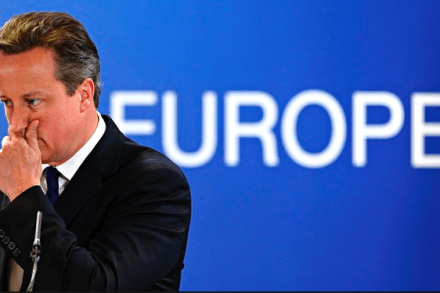
Can Britain reorder Europe? When James Forsyth and I interviewed the Prime Minister on Monday we were struck by his line of argument. Yes, he said, seeing the immigration crisis coming straight after the Euro crisis may make voters want out. But this, he said, was an instinctive reaction. There was a better response:- The longer term reaction might actually be: well if they are going to have a single currency and they are on our doorstep and they are going to try and make it work, let’s make sure our relationship with them works...  If they are going to have a borderless Europe which we’re not part of, for heaven’s sake let’s make sure they have strong external borders.

‘Voters think: Oh Christ, push Europe away from me!’ – David Cameron interview

From our UK edition

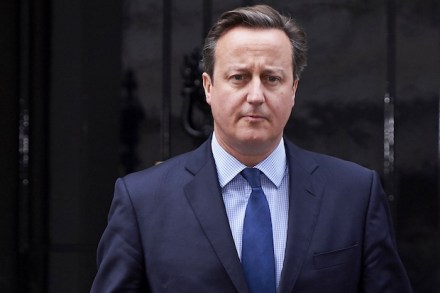
This is an extended version of an interview with the Prime Minister from the Christmas special issue of The Spectator. The last time David Cameron sat down with The Spectator for an interview, he was on a train and looking rather worried. There were just weeks to go until the general election and the polls were not moving. At the time, almost no one — and certainly not him — imagined that he was on the cusp of a historic election -victory that would not just sweep the Tories to power but send Labour into an abyss. This time, we meet on another train. But he’s far more relaxed, reflecting on winning The Spectator Parliamentarian of the Year award and recalling how election night brought him some of the ‘happiest hours’ of his life.

Cameron’s great escape

From our UK edition

The last time David Cameron sat down with The Spectator for an interview, he was on a train and looking rather worried. There were just weeks to go until the general election and the polls were not moving. At the time, almost no one — and certainly not him — imagined that he was on the cusp of a historic election victory that would not just sweep the Tories to power but send Labour into an abyss. This time, we meet on another train. But he’s far more relaxed, reflecting on winning The Spectator Parliamentarian of the Year award and recalling how election night brought him some of the ‘happiest hours’ of his life. These occurred in the men’s changing room at Witney Leisure Centre.

The Spectator Dashboard: UK Economic Data

From our UK edition

Great steps have been made in open data in the last few years. Most figures for the UK economy can be found online and the creation of the Office for Budget Responsibility means that official forecasts, too, are now available. But they have not, so far, been expressed in a way that’s easy to understand. So The Spectator has come up with this dashboard, which shows historic and projected data for the main economic indicators. This is a work in progress, so please bear with us as we get through it. And please do leave any comments below. 1.Employment 2. Bank of England base rates 3. Mortgage rates (at various loan-to-value rates) 4. Inflation (CPI and RPI pch YoY) 5. Gross Domestic Product 6. Annual change in GDP 7. Disposable income 8. Households' debt-to-income ratio 9.

The Spectator’s Isabel Hardman named Journalist of the Year

From our UK edition

This evening Isabel Hardman was named Journalist of the Year by the Political Studies Association, becoming the youngest winner in the history of the awards. The judges had this to say: 'Hardman’s contribution to political journalism over the past five years has been truly impressive. The breadth of her work across both a wide range of topics and a diversity of media is complemented by a remarkable talent for providing a depth of analysis that is, without fail, clear, engaging and insightful. There can be few journalists who have made such a sustained impact, at such a young age, and in such a short space of time.

Junior doctors were right to call off their strike

From our UK edition

Right now, the junior doctors have public support. But that would fast change if any NHS patient died during the strike in any way that could be linked to lack of junior doctor. Even as things stand, the very threat of a strike has seen up to 20,000 NHS patients having treatment postponed. The British Medical Association has other strike dates in the diary - 8 and 16 December - but they now look less likely to go ahead. Ambulance drivers stepped back from the brink earlier this year and for the same reason: they didn't want to end up blamed for anyone's death. It had seemed that the BMA and the junior doctors were not quite as strategic in their approach.

As we fret about Syria, the Islamic State is moving into Libya

From our UK edition

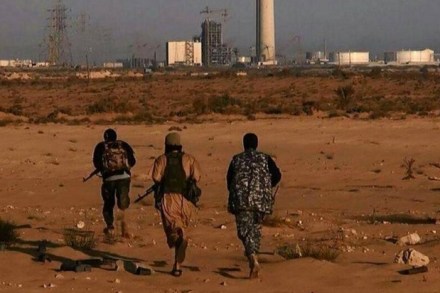
What is it about war that makes normally sensible politicians prone to hype and exaggeration? No10 is today briefing that Cameron has instructed the RAF to 'decapitate' the leadership of the Islamic State in Syria – as if the thought hasn’t occurred to the Americans, who have spent the last 17 months (and $11 million-a-day) bombing Isil positions in Raqqa. 'We’ve got to go out and kill the bastards,' the Prime Minister is quoted as saying. An admirable sentiment: the Islamic State is as barbarous a group the Middle East has ever known, so there should be no qualms about striking it. The only problem is whether we do so as an act of anger, or whether we do with a strategy and a purpose.

George Osborne’s Spending Review in ten graphs

From our UK edition

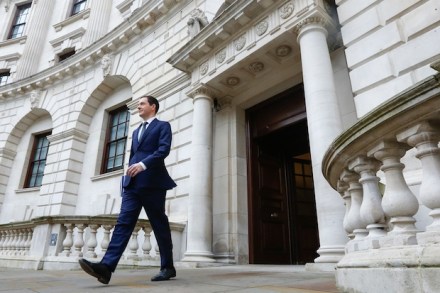
Politically, the story was George Osborne's (wise) retreat on tax credit cuts. Economically, here's the upshot:- 1. The end of austerity: state spending is shooting up. [datawrapper chart="http://static.spectator.co.uk/FOVmc/index.html"] Everyone expected a hatchet day; instead, this was a tax-and-spend budget. Total state spending is now on the rise, and will be for the foreseeable future. The above graph shows the new spending plans (in red) and old (in blue). In his March Budget, the Chancellor was talking about a £30bn cut for public services; this fell to £18bn in his July budget and today it's £10bn. How does he manage such a retreat, while keeping to his target of a £10bn surplus in 2020? 2. Osborne's new tax raid.

Wanted: commissioning editor for maternity cover

From our UK edition

Mary Wakefield, our commissioning editor, leaves for six months' maternity leave on Valentine’s Day. We’re looking for someone to cover her, which will be a real challenge. The job involves thinking of fresh, original features – and finding authors whose writing reaches the standards required of Spectator readers. And, where necessary, working with writers to give their ideas the greatest impact. To give two examples: Mary this year worked with a freelance journalist, Miles Goslett in his groundbreaking Kids Company expose which had been turned down by other newspapers. Mary worked with Miles to navigate the legal minefield and produce what is still the single best account of the imbroglio.

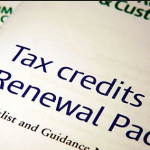
George Osborne’s retreat on tax credits is genuine – and warmly welcome

From our UK edition

Today, George Osborne stepped back from the brink. The Chancellor has reversed his calamitous plan to tear away tax credits from the working poor, and will instead phase in the new system so no one will lose out. And he has also abandoned his reserve plan: to pay for this by raiding Universal Credit. In other words, he has done precisely what The Spectator has been calling for him to do and, in his expensive U-turn, safeguarded the Conservatives’ right to be called the workers' party. I didn’t quite believe this when he first announced it; over the years a gap has emerged between what the Chancellor says in the chamber and what the small print of his budget reveals. But this really does seem genuine. It’ll cost him £3.

Syrian war heats up as Turkey shoots down a Russian jet

From our UK edition

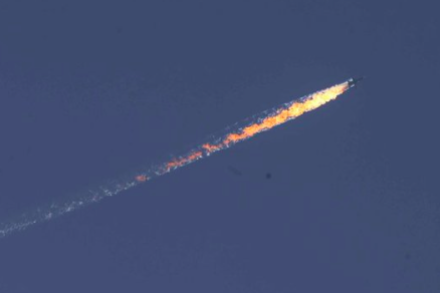
The complications of acting in Syria have just become more apparent. The Russians are fighting in support of Assad – but Turkey, a Nato member, is backing anti-Assad rebels and has just shot down a Russian Su-24 jet. The Turkish foreign ministry says that the pilots were warned ‘ten times in five minutes’ that they were violating Turkish airspace. The pilots managed to eject and video footage has emerged:- The aircraft came down near the Antakya mountains, where Turkmen rebels (backed by Turkey) are fighting Isil and Assad's forces (blue areas, below). The Su-24s, owned by both Assad's regime and Russia itself, have been bombing rebel positions for some time.

An invitation to The Spectator’s carol concert at St Bride’s church

From our UK edition

Update: it's a small church and we only have a few dozen tickers left - reserved for subscribers. One of the MANY benefits of subscribing! Join us now. The nights are drawing in, and mini santas are already in the shops. For Coffee Housers who do their Christmas planning early, I'd like to extend an invitation: to The Spectator’s annual carol concert on 9 December – my favourite event of the year. Details are here. If you’re into London’s gorgeous Wren churches and Rutter-style choral arrangements then it’s a must. We serve up mulled wine and mince pies afterwards, then adjourn to the pub. When I first joined The Spectator this was just advertised as an evening of carol singing. 'You can rely on The Spectator to be in good voice!

James Forsyth starts a weekly column in The Sun

From our UK edition

As Spectator readers know, James Forsyth is the most insightful and best-informed political columnist around. Today, he also becomes the best-read – starting a column in The Sun, the country’s favourite newspaper. It has dropped its paywall, so you can now read it here. His column is, as you’d expect, a mixture of his brilliantly-sourced insights into what’s really being said at the top table of British politics, along with the the freshest gossip. In his debut, he explains why the saying ‘Raqqa before Christmas’ is now going around the government, and the calculations that the Prime Minister is making ahead of a very risk vote.

Fit for a princess: The Spectator pictured inside the royal helicopter

From our UK edition

The Spectator: if you’re a princess with only space for one magazine in your royal helicopter, accept no substitutes. The Duchess of Cambridge certainly doesn’t. As the above picture shows, she has insisted on the new edition tucked safely in the door of the helicopter (you can see it peeking out in the corner). She's in for a treat – there's certainly plenty to read this week. Nick Cohen and Charles Moore put Jeremy Corbyn, leader of HM’s Most Loyal Opposition, through the shredder Douglas Murray writes the cover story about France’s civil war, and why Francois Holland said he’s fighting the enemy ‘inside and outside’.