Fraser Nelson

Fraser Nelson

Fraser Nelson is a Times columnist and a former editor of The Spectator.

Nicola Sturgeon raises prospect of a SNP-Corbyn ‘progressive alliance’ in Westminster

From our UK edition

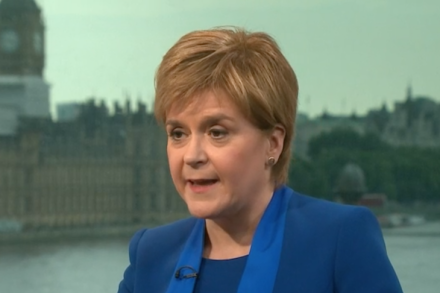
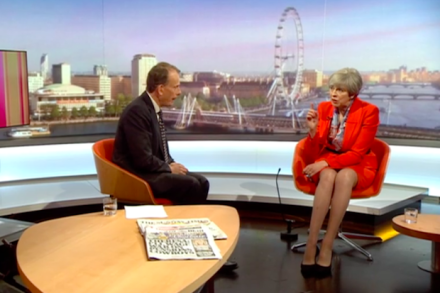
The most memorable poster of the 2015 general election campaign was an image of Alex Salmond with Ed Miliband snug in his top pocket. As Adam Boulton points out today, the Tories haven’t tried to revisit that image, but Nicola Sturgeon might have helped them along. She expects Theresa May to win a majority, she said. But if it’s a hung parliament, asked Andrew Neil, would she work with Mr Corbyn on his tax and spend? Her answer:- ‘We’ll work for progressive policies and we’ll work for the policies we put forward in our Manifesto. If there was to be a hung parliament of course we would look to be part of a progressive alliance that pursued progressive policies.

Could Theresa May blow this general election?

From our UK edition

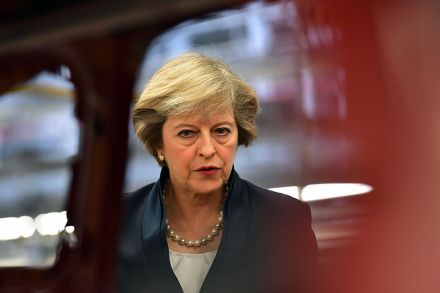
Until recently, the prospect of Theresa May flopping in this general election would have been absurd - but today’s YouGov poll shows her lead cut to just five points, less than a quarter of its peak. Converted into seats, that would mean a majority of just two MPs, down from the 17-strong majority achieved by David Cameron against Ed Miliband. At a time when the extraordinary is happening all the time, it is impossible to dismiss this opinion poll. The public like her style, but her shambolic U-turn over the so-called ‘dementia tax’ has given everyone cause to doubt whether she is as ‘strong and stable’ as she says she is. In fact, she can look indecisive and a bit dozy. She repeatedly promised us that she would not hold a general election, but then did.

Isis issues warning after claiming Manchester attack

From our UK edition

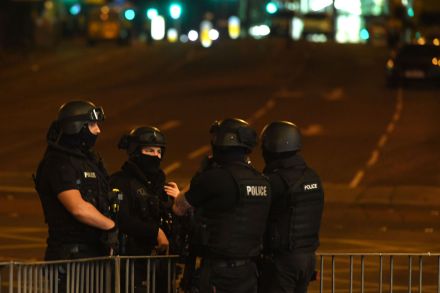
The police haven’t yet said anything about the identity of the Manchester suicide bomber, but the Islamic State has claimed responsibility. Here's the statement. This is the same layout as the statement released on social media after the Bataclan attacks, complete with the bizarre “breaking news” box on the top left and references to the murdered young girls as “crusaders”.  Its death toll is wrong – 22 are understood to have died, not 30. But it does suggest that the targeting of a pop concert attended by girls and their parents was deliberate, referring to the show as “shameless.

The night the audience turned on Nicola Sturgeon

From our UK edition

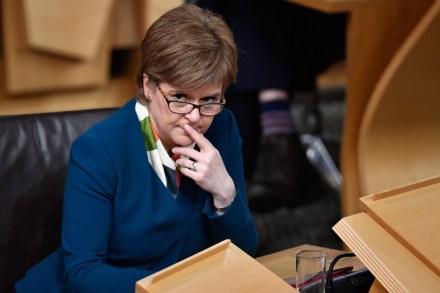
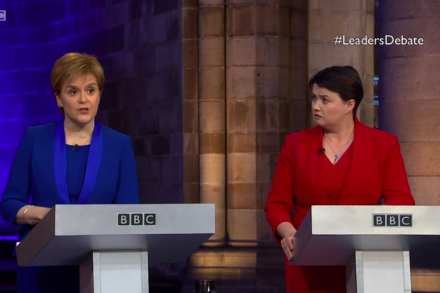
After the agony of the recent ITV opposition leaders’ debate, the Scottish leaders’ debate felt like a much-needed upgrade – in terms of leaders, and debate. Both Ruth Davidson and Nicola Sturgeon are better speakers than most MPs, and Kezia Dugdale (Labour leader in Scotland) makes more sense than anyone on Labour’s front bench. In the UK we get ‘strong and stable’ clichés from the Tories, a tragicomedy from Labour and either sex or marijuana from the Liberal Democrats. The BBC Scotland debate, deftly compered by Sarah Smith, felt like proper politics. The debate we should have had in the rest of the UK, but haven't. It was rowdy. Scots often are.

Press freedom: it was Spectator readers wot won it

From our UK edition

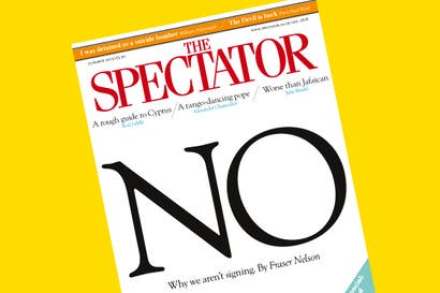
A few months ago, The Spectator sought the help of readers in defending press freedom. Theresa May’s government was consulting on whether to press ahead with a draconian new law that would make publications like ours liable for the costs of anyone who wanted to sue us, for whatever reason. The law, a hangover from the Leveson Inquiry, was intended as a way of bullying titles into signing up to Impress, a would-be press regulator bankrolled by the egregious Max Mosley. The legislation in question – Section 40 of the Crime & Courts Act – had been put out to consultation by the Culture Secretary and such things are often a numbers game.

Red Theresa

From our UK edition

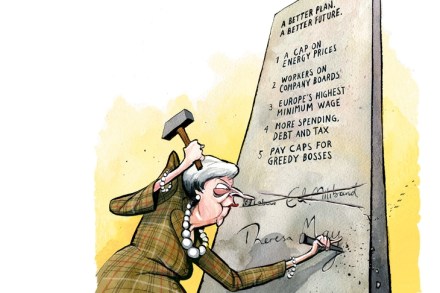
Never has the Conservative party been more confident about winning a general election. Theresa May’s popularity ratings have broken all records; her aim in this campaign is not just to defeat the Labour party but to destroy it. The Tory MPs who talk about ten years in power are the more cautious ones; some talk about staying in government until the 2040s. The party’s name is seldom mentioned in this campaign. We instead hear only about ‘Theresa May’s team’, and voters seem to approve. As to what the Conservatives stand for, they’d rather not say. At times it seems they’re not even quite sure. The Tory messages revolve around Jeremy Corbyn and not much else.

When politicians buy the newspaper front pages, they create fake news

From our UK edition

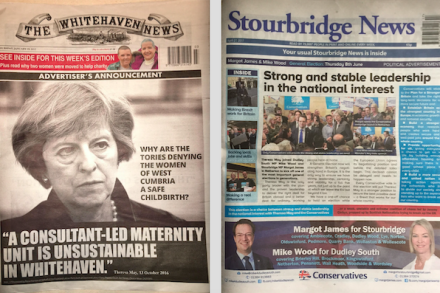
Newspapers everywhere are in trouble, with advertising revenues down about 20 per cent a year. Local newspapers are worst hit and many are on the brink of collapse, sacking staff and pages. But there can be no more depressing sign of their distress than to see newspaper owners selling front pages to political parties. Look at the above pictures: both are designed to deceive the reader and look like genuine front pages. They’re created by Labour and Conservative spin doctors, printed as so-called “cover wrap” adverts. Sure, there’s a blink-and-you-miss-it caveat saying “political advertisement" in the Labour one (left) for the Copeland by-election, there’s hardly any branding at all.

From Glasgow to the Highlands, the Scottish Conservatives are back

From our UK edition

When I was a reporter in the Scottish Parliament 15 years ago, the Tories had stopped being hated. They were pitied, which was worse. Voting Tory was not seen as a giant evil but a harmless English perversion – roughly in the same bracket as cross dressing, or cricket. The party looked dead, a joke even to its own staff members (to whom its support seemed to be confined). There were discussions about renaming it; Jamie McGrigor, a Tory MSP, suggested “the effing Tories” because that was how the party had become known. How different things look today. The Scottish Conservatives have more than doubled their number of council seats, overtaking Labour to become the official opposition in municipal Scotland just as they are in the Scottish Parliament.

First, Nigel Lawson. Then Boris. Now Kemi Badenoch moves from The Spectator to politics.

From our UK edition

  So far, the Tory candidate selection has been a predictable process: the regurgitation of old names rather than the recruitment of new talent. But tonight, this changed. Kemi Badenoch, former head of digital at The Spectator, has been selected for Saffron Walden in Essex– a seat with a Tory majority of almost 25,000. I suspect that we’ll soon be hearing a lot more about, and from, Kemi. Originally from Nigeria, she moved here as a teenager, worked her way up in the City and was an associate director at Coutts before she joined us at The Spectator. She is currently deputy leader of the Tory group at the London Assembly, and is – to put it politely – not a caricature of a Cameron moderniser.

Theresa May interpreted: her Sunday morning interviews

From our UK edition

Theresa May has perfected the art of saying nothing in interviews. The most any journalist can hope for is a subtle shift in position, or an absence where a position once stood. She seems to think that, if you refuse to give the press anything, the public won’t care. Worse, she seems to be right – for now, at least. So it would have been with a heavy heart that Andrew Marr set off to see if he could try to draw blood out of the Prime Ministerial granite. Same for Robert Peston afterwards. A Theresa May interview means the recital or verbal formulae: ‘strong and stable’ here, ‘working families’ there, ‘for the many not the few’ there. Then a journalist afterwards tries to explain what message, if any, might have been buried in those words.

Tim Farron: yes, I’ve held talks with Tony Blair. He’s great at coalitions

From our UK edition

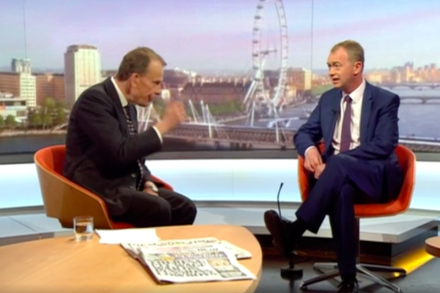
What is Tony Blair playing at? Our permatanned former Prime Minister recently declared himself to be closer to the Liberal Democrats than his own party due to his position on Brexit. "Unique circumstances demand a unique response," he said, so Labour voters in certain seats "should cross party lines" and vote for Liberal Democrats - in the cause of Remain. Might the love be reciprocated? Tim Farron, the Liberal Democrat leader, was on the Andrew Marr show today and he was asked about whether he had met Blair told discuss such an alliance. He fessed up. “Several months ago I met with Tony Blair at his request. I thought it was only courteous to do so. I have many on the record disagreements with Tony Blair not least over the illegal and counterproductive war in Iraq.

The Tories don’t need Zac back in Richmond. They need Luke Parker

From our UK edition

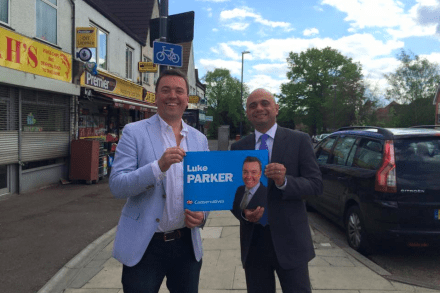
Are the Conservatives sharp enough to be able to beat the Liberal Democrats in battleground Remain-voting seats? We hear today that they might put forward Zac Goldsmith as their candidate for Richmond Park - the same Zac Goldsmith who quit the party in protest at the Heathrow decision, then triggered a by-election and ran as an independent. But he lost to a Lib Dem. So now he has decided to rejoin the party and run again - and oddly, they've let him. He's in the final three. To select him would be a huge tactical own goal for the Tories: as Neil Kinnock found out, when voters turn something down, they don’t like to be asked again. And as Zac found out, it's hard for an arch-Brexiteer to win in an arch-Remain constituency: a new fact of political life.

The strange rebirth of Scottish Conservatism

From our UK edition

At the time of their 1997 wipeout, the Scottish Tories were at least hated. When I was reporting from the Scottish Parliament some 14 years later, things were even worse: there was curiosity, even pity, for Tory supporters. One Tory MSP told me the party should rename itself "the effing Tories" because that's what they had become known as. Voting Conservative was no longer seen as a giant evil, more a harmless perversion - like cross-dressing (or cricket). Then Ruth Davidson came along, then Jeremy Corbyn, then the SNP with its obsession with referenda - and now, everything has changed. The above graph shows the latest voting intention in Scotland, with the Tories soaring above Labour and winning the support of a third of Scots.

Save aid!

From our UK edition

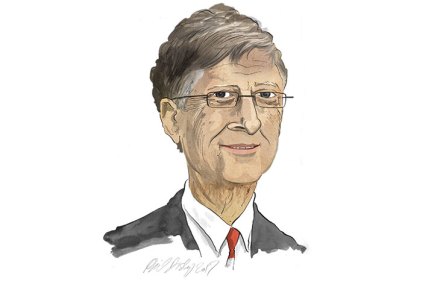
Bill Gates is worried about Britain. For years, the UK government has been one of the world’s largest donors in overseas aid, and about £60 million has been given to the Bill & Melinda Gates Foundation. But aid has been rather unpopular lately, prompting questions about whether a generous country like Britain needs charitable donations collected by the taxman. And indeed, whether the aid spending pledge might be dropped in the general election campaign. Mr Gates senses a different tone of debate in Washington and London, with too few people making the case for government aid. So the world’s richest man is stepping in.

Stockholm reels from terror attack

From our UK edition

My family were two streets away from Drottninggatan when the hijacked truck was driven into pedestrians this afternoon. It's the busiest shopping street in Stockholm, all the busier with the Easter holidays approaching. The lorry drove at speed down Drottninggatan then smashed into the entrance of Åhléns, the biggest department store in the city. The city is in lockdown, its MPs told to stay in parliament and the underground system closed - leaving shoppers (my wife included) stranded in town, checking their phones and trying to find out what's going on. Three have been reported dead so far, with ten seriously injured.

The EU’s Gibraltar mistake

From our UK edition

It was quite right for Theresa May to not mention Gibraltar in her Article 50 letter – why should the future of its people be in question in our negotiations? To do so would be to introduce a dangerous notion: that Gibraltar and its people were somehow a bargaining chip. Of course, the press will have fun with the idea that the Prime Minister forgot Gibraltar but far more plausible is Tim Shipman's story in the Sunday Times today that the idea of mentioning it in the Brexit letter was raised several times - and rejected. That the EU has brought Gibraltar up as part of the Brexit deals right now is strange and shows a worrying naivety on its part.

Confirmed: UK economic growth accelerated after the Brexit vote

From our UK edition

All of the blank ink that the FT used on the day after the Brexit vote, all of those predictions of the job losses and recessions – and still, the economy still refuses to behave as those economists predicted. Not only did British economic growth actually accelerate after the Brexit vote (GDP now confirmed at 0.7pc up in the last three months of 2016) but the confidence continues. A Deloitte survey of chief financial officers finds their optimism at an 18-month high as they become more relaxed about Brexit. As has the Bank of England (see below).

No, M Juncker, David Cameron did not “destroy” the United Kingdom.

From our UK edition

Jean-Claude Juncker could have been invented by Nigel Farage's spin doctors. He is sneering one-man advert for Brexit, Frexit and any other kind of EU-exit. As Hugo Rifkind argues in this week’s magazine, he is a caricature of the arrogant Eurocrat: “smug, lazy, unelected and utterly impervious to anything.” He is a notorious boozer, and managed ‘head of state’ by running Luxembourg, which a country with a population about the size of Sheffield. His ascension to President of the European Commission embodied everything that was wrong with the EU, a huge signal that it was time to abandon ship.

Wanted: digital guru for The Spectator

From our UK edition

Sales of The Spectator are not just at an all-time high, but growing at the fastest rate in 30 years. We’re growing, we need help and are looking for a digital guru to provide it. The job is now known, in the industry, as Head of Product. It’s a rather unromantic way of describing what I’d say is one of the very best jobs in journalism. A new position for us, a senior one, that will give someone the chance to join and shape the magazine at the most successful stage in its 189-year history. Our industry is changing, fast. Last week, for example, set a new record for people signing up to The Spectator – and nothing much happened last week.

If the EU didn’t like Boris’s prison guard joke, why conform to the stereotype?

From our UK edition

A few weeks ago, Boris Johnson made a point about the EU negotiations and the futility of the idea of punishing Britain for the sake of it. ‘If Monsieur Hollande wants to administer punishment beatings to anybody who chooses to escape’, he said, ‘rather in the manner of some World War II movie, then I don’t think that is the way forward, and actually it’s not in the interests of our friends and partners’. Cue howls of outrage. ‘Abhorrent and deeply unhelpful’, said Guy Verhofstadt, the European Parliament’s chief Brexit negotiator. But was Boris really so wide of the mark?