Fraser Nelson

Fraser Nelson

Fraser Nelson is a Times columnist and a former editor of The Spectator.

Theresa May’s Brexit speech – ten main points

From our UK edition

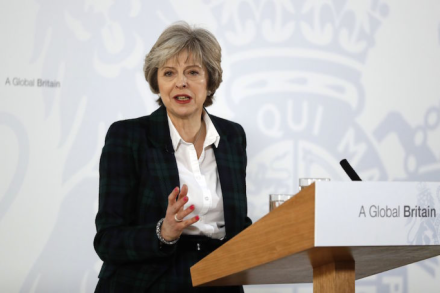
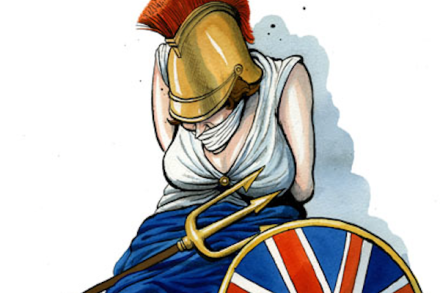
'A Global Britain' promised the slogan behind Theresa May as she delivered her big Brexit speech. It was robust and well-judged, very much in the tone of The Spectator's leading article endorsing Brexit – she even used the same 'Out, and into the world' language we put on our cover. The referendum, she said, was 'a vote to restore, as we see it, our parliamentary democracy, national self-determination and to and become even more global and internationalist in action and in spirit.' She spoke so persuasively about the case for Brexit that you almost forgot that she campaigned (or, at least, voted) against it. But after a decent period of reflection, her conversion to Brexistism is now complete.

What Oxfam won’t tell you about capitalism and poverty | 16 January 2017

From our UK edition

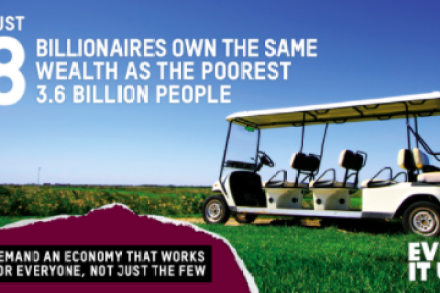
Your average milkman has more wealth than the world's poorest 100 million people. Doesn’t that show how unfair the world is? Or given that the poorest 100 million will have negative assets, doesn’t it just show how easily statistics can be manipulated for Oxfam press releases? They’re at it again today: the same story, every January. “Almost half of the world's wealth is owned by just 1% of the world's population” it said in 2014. It has done variants on that theme ever year, each time selling it as a new "big" story. All the time peddling the impression that inequality is getting worse, that the rich are engorging themselves at the expense of the poorest.

Michael Gove’s interview with Donald Trump: main points

From our UK edition

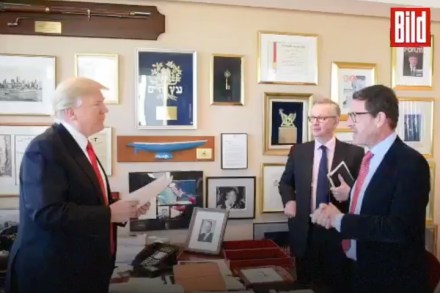
Michael Gove has landed the first British interview with Donald Trump for The Times (where he is, now, a columnist). This is his first interview since he spoke to Justin Welby for The Spectator - it’s online and as good as you’d expect. The ability to build such bridges won't hurt Gove should he want to return to government. Here are the main points:- Trump congratulates Britain for Brexit.. He says: "People don't want to have other people coming in and destroying their country. I thought the UK was so smart in getting out [of the EU]... Obama said: they'll go to the back of the line [queue]... that was a bad statement." And is keen on a quick trade deal with the UK When asked about a trade deal, he replied: "Absolutely, very quickly.

Don’t ask the experts

From our UK edition

Michael Gove never intended to make his most famous remark. In an interview during the EU referen-dum campaign, the then justice secretary was told that the leaders of the IFS, CBI, NHS and TUC all disagreed with him about Brexit. He had tried to reply that people have ‘had enough of experts from organisations with acronyms saying that they know what is best and getting it consistently wrong’. But he was picked up mid-sentence by his appalled interviewer. ‘Had enough of experts? Had enough of experts?’ Gove’s partial quote was held up to ridicule, as if it embodied Trump-style populist rage; the battle of emotion against reason.

Audio: Jeremy Corbyn’s extraordinary Today programme interview

From our UK edition

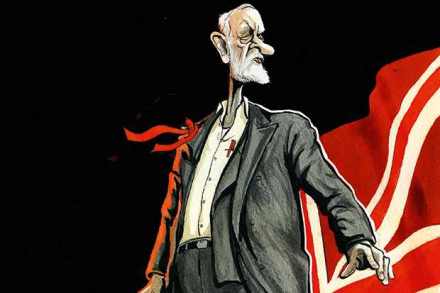
Jeremy Corbyn tends to avoid interviews, and we were reminded why this morning. Speaking to Radio 4's Today programme, he suggested that Britain should be the first free country with a 'maximum earnings limit', portrayed immigration as a kind of corporatist scam where Poles and Czechs are 'grotesquely' exploited (by working on a minimum wage vastly higher than that of their home country), declared solidarity with 'socialists' in Europe over this issue and defiantly proclaimed that he would go on and on as leader. His recent re-election as party leader, he said, was 'a mandate to take the campaign to every part of the country - that's what I'm going to be doing, and I'm going to enjoy doing it.

There’s one day left to help defend press freedom

From our UK edition

Think of the scandals of the last two decades; think of who exposed them. That’s why we need to protect press freedom and why, if you haven’t already done so, you should email to register your objection to the notorious Section 40 of the Crime & Courts Act. The consultation ends at 5pm tomorrow. If activated, it would mean that publications who refuse to bend the knee to a state-sponsored regulator would pay the legal costs of anyone who sues them – right or wrong. When Tim Yeo was exposed by the Sunday Times, he sued – even though every word of their exposé was correct. The newspaper fought him because under the basic laws of justice, if the complainant is proved to be wrong, you don’t pay a thing.

The Spectator’s online traffic hits record high in 2016

From our UK edition

If you’ve enjoyed The Spectator’s website this year, you’re in good company. Some 22 million have visited our website this year, a record high, and they have read 70 million articles between them. As the below graph shows, this is another record. The odd thing is that we did not, this year, set out to increase traffic. On the contrary, we have tightened our metered paywall. We offer only a few free articles every month before asking people to subscribe to read more. We judge online success not so much by the traffic total (a figure grossly inflated by one-off visitors) but by new subscriptions. Our aim is quite simple: to grow our family of subscribers and to serve them as well as we can.

The Spectator Christmas issue – an apology

From our UK edition

The new issue of the Spectator is out today, and hopefully those who buy their copy shops will have more luck than they did with our Christmas special issue. That seemed to sell out rather quickly, which isn’t a good sign. It’s our job to spot when sell outs are likely to happen, to restock the shelves and make sure everyone who wants a copy can do so. For whatever reason, that didn’t seem to happen as it should have done this time around. I’d like to apologise to Christopher James, who sent this distressed Tweet when he couldn’t get a copy in in Euston station, one of the places in London. There were similar stories of woe across social media. Londoners seem badly hit in general...

Priti Patel is wrong: mass migration is a sign of rising prosperity, not poverty

From our UK edition

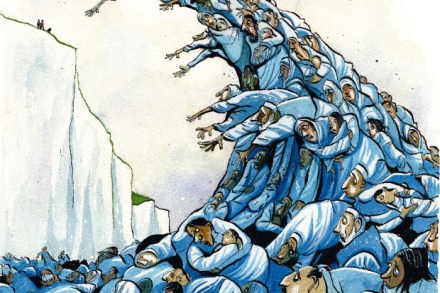
Perhaps the worst excuse for Britain's massive international aid budget is that the cash will stem immigration pressures because richer countries emit fewer emmigrants. As economists cal tell you reverse is true: emigration is an expensive journey and when the poorest countries become wealthier, more people can afford to make it. So Priti Patel was not quite right when she told the Independent's website that... ...tackling the global challenges of our time such as drought and disease which fuel migration, insecurity and instability is the right thing to do and is firmly in Britain’s interest. Tackling drought and disease is, unquestionably, the right thing to do. But the link to migration is rather more complicated.

The genius of George Michael, 1963-2016

From our UK edition

A couple of weeks ago, George Michael announced he was collaborating with another songwriter, Shahid Khan, and for his fans (myself included) it was set to be a highlight for 2017. The strange thing about his music was that it just got better, even if his newer releases had only a fraction of their earlier profile. Some of his greatest songs (like Waltz Away Dreaming with Toby Bourke, above) are hardly known at all. He'd go through quiet phases, followed by an creative bursts and he might well have managed one again. But about an hour ago, it was announced that he has died, aged just 53. George Michael's voice could be recognised, instantly, anywhere.

Podcast: Will Tories or Ukip profit from abandoned Labour voters?

From our UK edition

The Copeland by-election will be a fascinating test of whether Brexit can open up more votes for the Tories in the north – the topic of my Daily Telegraph column today. Labour is slowly abandoning its working class voters, with their unfashionable views on human rights and immigration. This was happening under Ed Miliband, and the forces wresting traditional Labour voters away from the Labour Party were laid out in detail by a strikingly prescient report by the Fabian Society entitled 'Revolt on the Left'. It identified the various groups of voters moving away from Labour: typically the low-waged and less prosperous pensioners. Those in work tended to resent those who were not. They resented Labour for losing control of immigration and the abuse of welfare.

This Christmas, fall in love with the Spectator’s books podcast

From our UK edition

Christmas is three days away, those heading off to relatives are starting to pack. Booze, books – and, I’d like to propose, one other item: the Spectator’s books podcast. Tis the season for finding a podcast, falling in love with it and downloading several episodes to listen to during a long drive (or lazy afternoons). Advances in technology mean you don’t have to listen to whatever nonsense might be on the radio. A good podcast can take you straight into conversations you’d love to have - which is what The Spectator's books podcast does. Each week Sam Leith, our brilliant literary editor, talks to authors about their ideas, approaches to their work, about maths, poems, science, the joy of museums and whether Roald Dahl was a hero or a turd.

Competition: write a response to the government’s ‘consultation’ on press freedom

From our UK edition

Since my blog about the new threat to press freedom yesterday, and the notorious Section 40 being consulted on by the government, responses have been coming in thick and fast. A few of you have copied me in to emails sent to Karen Bradley, the Culture Secretary, many of them rather brilliant. More importantly, I've been contacted by a software designer who has agreed to make a form that we can use to send a template response to the government's consultation. This leaves us with one question: what form of words? One form has been created, here. But all you really need to do is mention Section 40 and a new Leveson report and officials are obliged to record your response. Here are three responses.

The new battle for press freedom

From our UK edition

The fight for press freedom is back on – and it needs your help. The government is consulting on a draconian new law, the so-called Section 40, that could mean publications like The Spectator, who refuse to submit to Max Mosley's regulator, would have to pay the legal costs of anyone who wants to sue us, win or lose. We would be made a sitting duck for anyone who felt inclined to complain about anything. Take, for example, Camila Batmanghelidjh. She sent me a lawyers’ letter when Miles Goslett exposed the Kids Company scandal, and The Spectator became the only publication willing to call her out. It went no further as she had was a chancer and had no case – if she sued, she'd lose and would have to pay the costs. So she backed off.

Here’s how Theresa May can grant assurances to all Britain’s EU nationals

From our UK edition

In the chaos after the Brexit vote, no one really noticed when Theresa May adopted an odd position on EU nationals*. Throughout the campaign, everyone – from Ukip to the Lib Dems, Boris Johnson to Andy Burnham – had been clear that the Brexit debate was not about deporting anyone. Those EU nationals who were in Britain should stay here. In a fractious debate, it was a note of rare consensus: no one's status was in question. But days after the referendum, the then Home Secretary sat down on Robert Peston’s sofa and suggested that EU nationals might not be safe after all, and that she might use them as bargaining chips in her negotiation. (A plan which would later backfire badly.) It was baffling, bizarre and – to many - appalling.

Theresa May: ‘I get so frustrated with Whitehall’

From our UK edition

The Prime Minister’s office is a small, unimpressive room in 10 Downing Street with miserable views and unexceptional furniture. Since moving in, Theresa May has spruced it up — but only a little. There is now a large glass meeting table; her predecessor preferred to chat on the sofas. She has also delved into the government art collection to retrieve two pictures of Oxford, where she honed her interest in politics and met Philip, her husband. She has also picked a painting of an English country church (she is of course a vicar’s daughter), and that’s about it. It’s a place for work and — very occasionally — interviews. We meet a few weeks after Mrs May won The Spectator’s Politician of the Year award.

AA Gill, 1954 – 2016

From our UK edition

When we redesigned The Spectator six years ago, we spent months working on the launch issue and there was one name we wanted on the cover more than anyone else’s: AA Gill. These six letters could make you smile all on their own. They were a guarantee of wonderfully entertaining writing, gorgeous, unusual turns of phrase and, always, originality and spark. He was rather expensive; we couldn’t afford him very often. But always worth the money, when we had it. It surprised me, at first, to see that he'd phone in his copy, and dictate it. He had written it down, he’d tell me, but it would make no sense to anyone: he was dyslexic, which made the whole process harder. I always thought that this also helped explain why his writing flowed with such gorgeous distinction.

‘I get so frustrated with Whitehall’

From our UK edition

The Prime Minister’s office is a small, unimpressive room in 10 Downing Street with miserable views and unexceptional furniture. Since moving in, Theresa May has spruced it up — but only a little. There is now a large glass meeting table; her predecessor preferred to chat on the sofas. She has also delved into the government art collection to retrieve two pictures of Oxford, where she honed her interest in politics and met Philip, her husband. She has also picked a painting of an English country church (she is of course a vicar’s daughter), and that’s about it. It’s a place for work and — very occasionally — interviews. We meet a few weeks after Mrs May won The Spectator’s Politician of the Year award.

In defence of Niall Ferguson | 7 December 2016

From our UK edition

Niall Ferguson’s belated decision to back Brexit has aroused a lot of mockery today. Unkind souls are presenting him as a historian in a muddle, but for followers of his writing his new pro-Brexit stance really isn’t so surprising. He says that he had been inclined to support David Cameron and George Osborne, his friends. A noble reason. But it led him into making arguments inconsistent with those that he has been making most of his career. “Brexit woke me up, and reminded me that I needed to pay much more attention to what the non-elite majority of voters were feeling. And on the issue of EU performance, I think they were right," he said (see video, above).  In backing Remain, Niall Ferguson was doing a very un-Ferguson thing.

Beppe Grillo says he’s ready to govern after Renzi resigns

From our UK edition

It started with a blog, and it could end up with a new Prime Minister. Beppe Grillo’s 5-Star movement, which wants Italy out of the Euro, has called for an election within a week – to pick up on the momentum which saw Matteo Renzi lose the referendum by a margin of almost 20 points, far bigger than that indicated by the polls. On his blog, he had this to say:- Hooray! Democracy won! The regime's liars and its propaganda are the first losers in this referendum. Times have changed. Sovereignty belongs to the people, now we start to really apply our Constitution. The first winners are the citizens who raised their heads and went to vote en masse - and they didn’t care about the advice of the TV and newspapers.