Fraser Nelson

Fraser Nelson

Fraser Nelson is a Times columnist and a former editor of The Spectator.

The lady’s not for quitting

From our UK edition

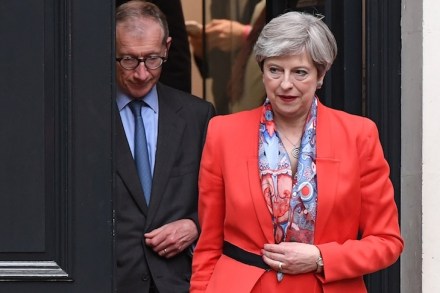
Even Damian Green seems to find it odd that he’s the second most important person in the government. When asked, the First Secretary of State plays down his influence — in fact, he plays down most things. When David Cameron wanted the Tories’ immigration policies out of the spotlight, he put Green in charge of them. And when Theresa May wanted someone she could trust to be her deputy after the disastrous general election, she chose one of the few people in the cabinet whom she can call a friend. The pair have known each other since Oxford, and now talk face-to-face every day. When we meet in his magisterial cabinet office headquarters, he talks about her with enthusiasm.
Lionel Shriver joins The Spectator as a regular columnist, starting this week

From our UK edition

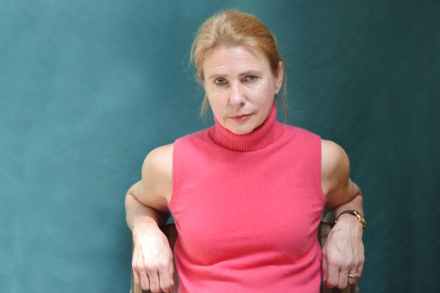
We at The Spectator are delighted to announce that Lionel Shriver is joining us as a columnist. As regular readers will know, she has written a few diaries for us and is one of the very best writers on either side of the Atlantic. She’s a hugely successful novelist but what marks her out as a journalist is her understanding of the currents of life and politics. Her writing has all of the qualities that Spectator readers most admire: originality of thought, elegance of expression, independence of opinion. Her first piece is a brilliant evisceration of the movement against historical statues. All of us in 22 Old Queen Street are thrilled that her new column starts this week: she will alternate with Matthew Parris.

Finally, Boris Johnson has overcome his stage fright. Let’s hear more from him

From our UK edition

In my Daily Telegraph column yesterday, I asked where Boris Johnson had gone. We never hear from him now, I said, unless there’s been some tragedy overseas or some risqué joke backfiring in Bratislava. Since becoming Foreign Secretary, the most gifted communicator in the Tory party had been mute – a baffling waste of talent. While he sulked, Brexit was being defined by its enemies. The narrative has become one of tedious negotiations and no one in government seemed able (or even interested) in saying what the point of Brexit was. Boris helped inspired a nation to vote for Brexit, and gave a wonderful, liberal and globally-minded definition of it – a very different version to that offered by Nigel Farage with his despicable posters.

The Spectator’s 48-year-old intern shows why it’s time to dispense with CVs

From our UK edition

We at The Spectator don’t ask for CVs when recruiting interns so we had no idea that our last one of the summer, Katherine Forster, would be a 48-year-old mum-of-three from Yorkshire. Our aptitude test is intended to draw the most promising talent from anywhere. But her writing up her story for the magazine has caused a minor sensation. She has been on the BBC three times and has been the subject of the lead Evening Standard diary story and is interviewed in p23 of today’s Sunday Times (who took the above photo). She’s an inspiring person with a simple question: why, aged 48, shouldn’t she roll the dice again? If we’re all going to work until 70, that’s plenty time to learn a new trade.

Lessons from Houston

From our UK edition

The numbers are awesome. In a matter of hours, Hurricane Harvey dumped nine trillion gallons of rainfall on Houston and southeast Texas: at one stage, 24 inches of rain fell in 24 hours. Like all American cities, Houston is prepared for hurricanes and floods — but Harvey was of a different magnitude. ‘We have not seen an event like this,’ the chief of the Federal Emergency Management Agency, William ‘Brock’ Long declared. It led rapidly to unprecedented flooding in one of the world’s richest cities. The photos from Houston have been heartbreaking. Pensioners have been pictured sitting half-submerged in retirement homes, awaiting rescue.

Was Kezia Dugdale forced out by the Corbynistas?

From our UK edition

Kezia Dugdale was overseeing a revival in her party’s fortunes. She had established herself as a passionate and articulate champion of its values and even the Tories had to admit how impressive she had become in the many debates of Scottish public life. So why quit as party leader now? In her resignation letter, she says she has had a personal re-evaluation after the death of a friend: Earlier this year I lost a dear friend who taught me a lot about how to live. His terminal illness forced him to identify what he really wanted from life, how to make the most of it and how to make a difference. He taught me how precious and short life was and never to waste a moment.

On Brexit, Labour and the Tories are closer than either would like to admit

From our UK edition

For months, Labour has been moving ever closer to the Tory position on Brexit while pretending that it isn’t. First, it backed Brexit. Then in June, John McDonnell told Robert Peston that he couldn’t see continued membership of the single market being 'on the table' in Brexit negotiations. He added that people would interpret membership of the single market as 'not respecting that referendum.' In July, Jeremy Corbyn told Andrew Marr that single market membership is 'dependent on membership of the EU.' Barry Gardiner has even suggested that the UK would become a 'vassal state' if it were to remain in the single market after Brexit.

Yet again, Trump’s presidency has conformed to a Saturday Night Live sketch

From our UK edition

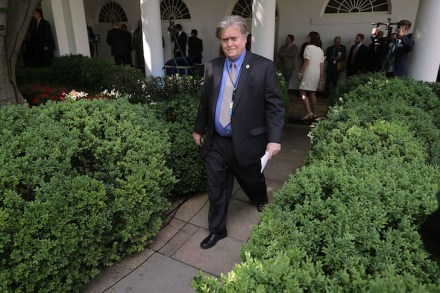
The statement from the White House makes little attempt to disguise what happened. ‘White House Chief of Staff John Kelly and Steve Bannon have mutually agreed today would be Steve's last day. We are grateful for his service and wish him the best.’ This is pretty much the same form of words used when Anthony Scaramucci was fired by Kelly. Four senior White House aides have now gone in the last five weeks. So it seems that Kelly, a former US general brought in by Trump a few weeks ago, is serious about fixing this dysfunctional White House – and, perhaps more strikingly, Trump seems serious about letting him do so. The clincher seems to be a new alliance between Kelly and Jared Kushner, Trump's son-in-law, who has wanted Bannon fired for some time now.

The method behind Donald Trump’s fire-and-fury madness

From our UK edition

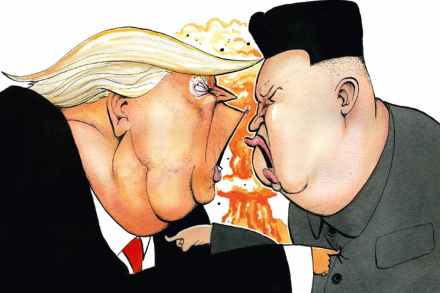
Donald Trump’s latest eruption – saying that his threat of fire and fury didn’t go far enough – will have delighted Kim Jong-un. His demented regime is based on the idea of being on the brink of war with the United States: this conceit has been used to build a nuclear weapons arsenal that has cost billions of dollars and millions of lives. He ran 24 missile tests and two nuclear tests last year and still didn’t get a rise out of Barack Obama. Then along comes Donald Tump and: bingo. Kim has finally found someone with whom to play nuclear poker. To many in Washington – and the world – this seems insane.

Sales of The Spectator: 2017 H1

From our UK edition

The UK magazine industry figures have just been published, and The Spectator has an extraordinary set of results to report. Our sales stand at the highest level in our 189-year history. We are not just the oldest weekly magazine in the world, but today’s ABC figures show that we’re growing faster than any comparable magazine with sales up 8 per cent year-on-year. The introduction of a paywall has not stopped our traffic hitting an all-time high. Our new podcast, Coffee House Shots, has released 100 episodes since the election announcement, with over 1.3 million listens. And this in a tough market. Newspaper sales have fallen by more than a third in the last ten years: it has never been easier to find news and analysis for free online.

Tina Stowell is right – going tieless could magnify class division in parliament 

From our UK edition

John Bercow’s decision to allow MPs in the House of Commons to dispense with ties has been hailed by some as a great liberation, and by others as an insult to tradition cast by a man who ought to be wearing a wig. But Tina Stowell, who joined the government as a secretary and ended up Leader of the House of Lords, has a different view: that ties (and, indeed, standard dress code) are a social leveller. She writes on her blog:- 'As someone without a degree who travelled a long path myself, I can see now that one of the most insidious ways those of us in powerful positions have diminished opportunities for non-graduates over the last 20 years is by undermining the importance of some standards hard-working people of all backgrounds used to share….

Italy’s patience with the migrant charities is wearing thin

From our UK edition

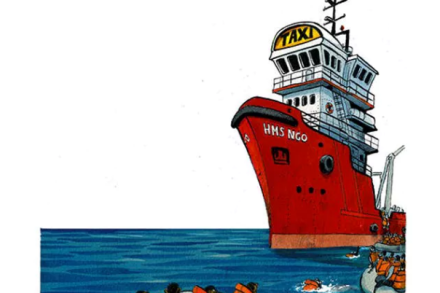
What to do about the charities who send boats to bring asylum seekers to the Italian coast? Save the Children and seven others have been doing this for some time now, to the alarm of the Italian government. It suspects that some NGOs are colluding with the people-traffickers, and undermining attempts by the government to shut down a business that has already led to 2,200 deaths this year alone. Nicholas Farrell looked at this in a recent cover story for The Spectator. The NGOs say they are saving lives – which is of course true. But the question is whether, by helping the people traffickers in the final leg of the journey, they are oiling the wheels of a new and evil industry in a way that means more, not fewer, deaths.

Philip Hammond creates a one-man Cabinet split over Brexit

From our UK edition

Leaving Philip Hammond in charge of the government was always going to be a risk because of his habit of putting his foot in it. There was the debacle of his first budget, then his saying in Cabinet that driving a train was so easy that even a woman could do it, and his comments that public sector workers are “overpaid”. Now, with the Prime Minister walking in the Alps, Hammond is in charge and has goofed again – this time in an interview with Le Monde. “I often hear it said that the UK is considering participating in unfair competition in regulation and tax. That is neither our plan nor our vision for the future. The amount of tax we raise as a percentage of our GDP puts us right in the middle of the pack.

Welcome to the herd, UnHerd

From our UK edition

A new star is born today into the centre-right blogosphere: UnHerd. The latest brainchild of Tim Montgomerie, founder of ConservativeHome, it has launched with a mission statement to 'dive deep into the economic, technological and cultural challenges of our time'. Its launch blogs show a wide mix of subjects: a YouGov poll revealing the low regard with which the public view traditional news media, Peter Franklin on why we should get ready for Prime Minister Corbyn, James Bloodworth on the crash ten years on and Graeme Archer on how meat-eating may come to be seen as barbaric by our grandchildren. UnHerd is also marked out by its financing model. It has no paywall; all articles will be free to read with the costs covered by an endowment from Sir Paul Marshall.

This isn’t a Cabinet leak, it’s just good journalism

From our UK edition

I was on the radio this morning with David Mellor who accused the Cabinet of being appallingly ill-disciplined because of 'leaks' in the weekend press. James Forsyth revealed on Saturday that Philip Hammond had told Cabinet that being a train driver is so easy that 'even' a woman could do it. Yesterday, Tim Shipman revealed in the Sunday Times that Hammond had gone on to declare that public sector workers were 'overpaid'. But here's the thing: that meeting took place on Tuesday. If Cabinet members were queuing up to leak to journalists then we'd have read about it in Wednesday's newspapers.

The interns were the real stars of the Spectator summer party

From our UK edition

It was The Spectator’s summer party last night, the high point of Westminster’s social calendar. We had the Prime Minister, Foreign Secretary, Home Secretary - and Lady Nugee (aka Emily Thornberry) apparently walking away in a fury when told her friend could not come in just because he had a peerage. We had a High Life bar, in honour of Taki, and a Low Life one, named for Jeremy Clarke. But the stars were a group of young people from the Social Mobility Foundation, and I thought I’d say a little more about them. We at The Spectator have worked with the SMF for years. Typically, they are straight-A students from disadvantaged backgrounds: bright, hard-working and hugely appreciative of advice and opportunities.

Why Priti Patel is wrong about overseas aid and immigration

From our UK edition

The Empire for International Development has a tough job justifying its deeply unpopular budget. In recent years, it has made out that development aid will stem the flow of migration. The following line appears in a piece that Priti Patel, the DFID Secretary, writes for the Sunday Telegraph today. We are taking immediate steps to protect our borders and tackle people smuggling. But the only way to resolve this crisis in the long term is to address the root causes. We need to create jobs across Africa and provide its growing population with a route out of poverty where they are. Her overall point - about how Africa needs more capitalism - is brave and correct. But this idea about development quelling immigration is the opposite of the truth.

The Spectator readers’ tea party, in pictures

From our UK edition

We host a lot of events at The Spectator but we've just held our favourite: the readers' tea party. About 200 subscribers come to the back garden for tea and cakes to meet our writers, our editors and each other. T-Sticks supplied the tea, H. Forman & Son the food and Taki brought along a bottle of Lagavulin for those in the mood for something stronger. The thrill, for us in 22 Old Queen St, is meeting the people that we spend our working lives thinking about. It's difficult to imagine a typical Spectator reader because they don't really exist: this afternoon, for example, I met a policeman, a mathematician, a specialist in Chinese antiquities, a joiner and and a taxi driver.

Is the EU-Japan ‘trade deal’ real – or just a stunt?

From our UK edition

There is much celebration in Brussels today about what's being described as a EU-Japan trade deal, but for political rather than economic reasons. Donald Trump has arrived in Hamburg for the G20 summit where he finds himself cast as a wicked protectionist, at odds with a pro-free trade global order. To hammer home this point, the EU is claiming to have agreed a trade "deal" with Japan, with whom Mr Trump pulled out of talks when he abandoned Barack Obama's Trans-Pacific Partnership. At this stage, Tokyo gave precedence to Brussels – and today's, erm, political agreement is the result. Donald Tusk, president of the European Council, is already trying to use this to taunt Trump.

I, Iain Duncan Smith – the ex-welfare secretary on tower blocks and work assessments

From our UK edition

This morning, The Spectator held a series of discussions about the future of Conservative welfare reform, chaired by Andrew Neil and made possible by the sponsorship of the Joseph Rowntree Foundation. It was a sell-out invent with a stellar panel, and we’ll bring you the full reports later. But I thought it worth mentioning what our keynote speaker, Iain Duncan Smith, had to say about tower blocks and the work capability assessments made notorious in the film I, Daniel Blake. There are 4,000 tower blocks in Britain which the former Work & Pensions Secretary says represent an "architect-led" planning mistake. "Tower blocks, by and large, are not part of the housing culture of the United Kingdom.