Fraser Nelson

Fraser Nelson

Fraser Nelson is a Times columnist and a former editor of The Spectator.

An MP as editor? It’s been done before – at The Spectator

From our UK edition

What on earth does George Osborne know about journalism? How can someone with no journalistic experience go straight in as editor – editor! – of the London Evening Standard? What were its proprietors thinking? To have dinner with an MP is one thing, but to hire him as an editor? And what does this sacked politician know of the demands facing an editor in the digital era? How can he combine such a demanding job with his duties in parliament and towards his constituents in Tatton? If I wasn’t an editor, these might be a few of my reactions to the extraordinary news today. But much as I hate to admit it, this appointment might actually work. I was rather rude about George Osborne throughout his frontbench career, and regarded him as a deeply disappointing Chancellor.

How can the Scottish Greens reconcile their manifesto promises with backing Sturgeon?

From our UK edition

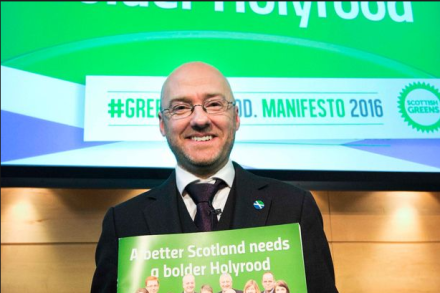
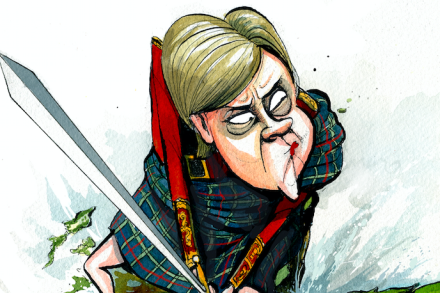
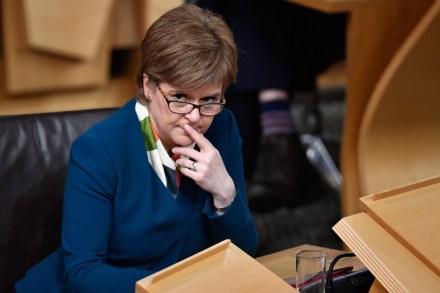
It has been barely two years since the last Scottish referendum, with no sign that opinion in Scotland has changed since then. Yet still Nicola Sturgeon hopes to vote to request a new referendum in the Scottish Parliament next week. But here’s the thing: last year, Scots voted to strip the SNP of its Holyrood majority, precisely so they could stop pretending that their agenda is the will of the nation. Thus stymied, Ms Sturgeon would need help in her vote for a new referendum from the six Green MSPs who support secession. But how could they reconcile this with their manifesto pledge (pdf, p19)? Scotland can champion a more open and participative law-making process: Citizens as legislators.

James Forsyth nominated for UK political journalist of the year

From our UK edition

It’s the Press Awards tonight and a first for The Spectator – we’re nominated for the first time. James Forsyth is up for political journalist of the year, and he and I are heading to out to the awards now (after taking out a small mortgage for the £250-a-piece tickets) to hope for the best. Since the Press Awards opened to magazines, they’re one of the few awards The Spectator enters (we tend to avoid the the Editorial Intelligence awards, which are judged by corporate lobbyists) so it was great to make tonight’s shortlist. James is up against some pretty tough competition, but that’s true every week – and every week he comes up with the most insightful commentary around.

Finita la commedia: the Brexit bill is (finally) passed

From our UK edition

For weeks, politicians on both houses of Parliament have been carrying on a drama where they pretend to get worked up about the Brexit bill while knowing that the Lords was always going to cave and the Bill was always going to be passed. The House of Lords, which last week voted to make Brexit conditional on final parliamentary approval, has tonight dropped its objection. As everyone in Westminster knew they would. It has been a long parliamentary charade, but there was still something wonderful  about it. The referendum was non-binding: parliament could have overturned the result. Just as it could have overturned the result of the 2014 Scottish referendum.

It’s Hammond vs May, as the Budget blame game intensifies

From our UK edition

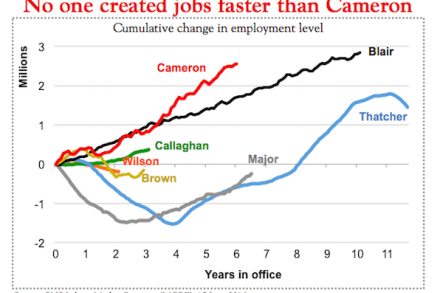
Throughout David Cameron and George Osborne's six-year double act, we seldom heard of serious arguments between them. Both were keen to avoid a repeat of the Blair-Brown psychodrama and prided themselves on their indivisibility. Same with their respective teams. You would never pick up the Sunday papers and read the sort of No. 10 vs No. 11 insults that we see this morning. The Sunday Telegraph splashes on ‘Cabinet war over Budget shambles’ and describes how even the Cabinet were not told that Philip Hammond was about to break their manifesto commitment not to raise National Insurance. Most of the Cabinet is hopping mad: one member last week told me that Hammond's breaking a promise was bad enough but to do it for such a paltry sum was madness.

Might Nicola Sturgeon’s sinking approval ratings explain her appetite for a referendum?

From our UK edition

In an interview with the BBC last night, Nicola Sturgeon suggested that the autumn of next year would be a ‘common sense’ time to hold another referendum on Scottish independence. Which would, of course, mean voting without knowing what the terms of the Brexit would be. (Or, perhaps, whether it will really happen.) Why the haste? This is another topic that came up on Question Time last night. I suggested that Sturgeon’s sense of urgency might be explained by opinion polls showing her ‘tanking’ approval rating. The 2021 Holyrood election will probably end the majority for independence, given that the SNP will have been in power for 14 years by then and Scots will already be ‘scunnered’ with them (as Ms Sturgeon might put it).

Tories, tax and trust – a warning from history

From our UK edition

I was on the Question Time panel last night, and suspected that the issue of National Insurance might crop up - and that Karen Bradley, the Culture Secretary, would be sent out to defend the indefensible. Like all ministers, she has to repeat Philip Hammond’s bizarre claim that the Tories had not broken a manifesto pledge. That when they repeatedly promised not to raise National Insurance they meant only part of the National Insurance. The 2015 Tory manifesto contained no such caveat (I brought a copy along to the studio) and it’s impossible for any minister to claim otherwise. Hammond has already been accused of 'lying' – a strong word, but he should not be surprised if a politician makes a demonstrably untrue claim.

Budget 2017 in five graphs

From our UK edition

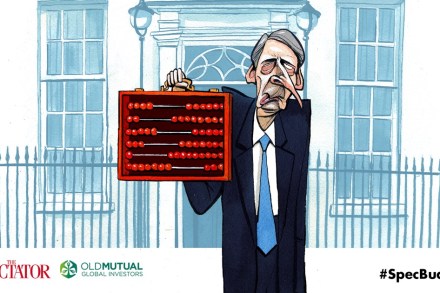
Some thoughts on today's Budget: Hammond breaks Tory promise not to raise National Insurance. Breaks his word, hits 15pc of workforce, raises a pittance. The pledge was made no fewer than four times in the 2015 Conservative Manifesto: no rises in VAT, income tax or National Insurance. And after the election, a law was then passed to stop tax rises, which I thought odd at the time. Did Osborne really need legislation to restrain himself? If Tories have made a manifesto promise, as solemn a promise as you can get in this kind of world, why pass a law? We now know the answer: manifesto pledges are seen as expendable (at least by this Tory government).

James Kirkup and Stephen Daisley join Coffee House, as The Spectator’s growth continues

From our UK edition

When James Forsyth set up Coffee House ten years ago, we imagined there being a big difference between blogs and magazine articles. We soon worked out that readers didn’t really distinguish. They read a great article on The Spectator website, and that was that. They’d share, and subscribe to read more. Over the years Coffee House has developed into a live comment section boasting up some of the best names in British journalism: Nick Cohen, Douglas Murray, Isabel Hardman, Brendan O’Neill, Alex Massie, Rod Liddle and more. And, soon, two more. I’m delighted to announce that James Kirkup, of the Daily Telegraph, will be joining Coffee House as a regular columnist. I doubt anyone who visits these pages will need an introduction.

Sajid Javid on the green belt, Brexit and his ‘homeless’ childhood

From our UK edition

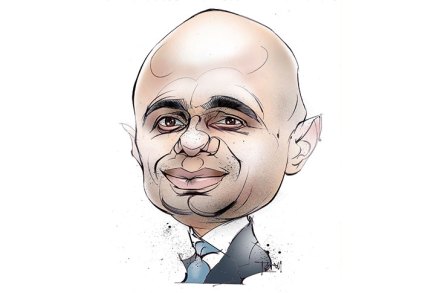
Just before Christmas, Sajid Javid performed a ritual he has observed twice a year throughout his adult life: he read the courtroom scene in The Fountainhead. To Ayn Rand fans, it’s famous: the hero declares his principles and his willingness to be imprisoned for them if need be. As a student, Javid read the passage to his now-wife, but only once — she told him she’d have nothing more to do with him if he tried it again. ‘It’s about the power of the individual,’ he says. ‘About sticking up for your beliefs, against popular opinion. Being that individual that really believes in something and goes for it.

Sales of The Spectator: 2016 H2

From our UK edition

UK print sales up 10pc in a year - fastest of any UK magazine or newspaper UK newsstand sales up 13pc. Growing popularity of digital/print bundle Last year, we revealed that The Spectator had broken its previous circulation record and was selling more copies than at any time in its 189-year history. That momentum has kept building and the figures we release today are nothing short of extraordinary: print subscriptions are up 9pc year-on-year. Print circulation is now rising at the fastest rate since 1989. To have sales at a record high is one thing: to have print circulation growing at the fastest rate for almost 30 years is quite another. There are several measures of magazine circulation: print, digital, overseas etc.

Javid’s home truths

From our UK edition

Just before Christmas, Sajid Javid performed a ritual he has observed twice a year throughout his adult life: he read the courtroom scene in The Fountainhead. To Ayn Rand fans, it’s famous: the hero declares his principles and his willingness to be imprisoned for them if need be. As a student, Javid read the passage to his now-wife, but only once — she told him she’d have nothing more to do with him if he tried it again. ‘It’s about the power of the individual,’ he says. ‘About sticking up for your beliefs, against popular opinion. Being that individual that really believes in something and goes for it.

Internships at The Spectator for summer 2017 – no CVs, please

From our UK edition

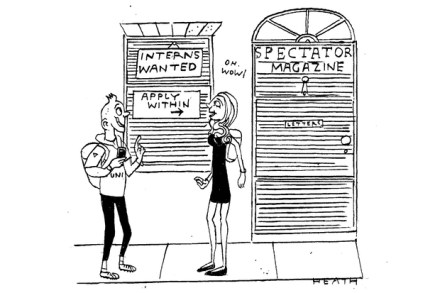
We’re looking for interns to spend a week or two with us here at The Spectator. We tend to get over a hundred applications for about a dozen places, and take the process seriously. Several of our recruits (Camilla Swift, Alex Massie, Sebastian Payne) first came through our doors as interns: when we have a vacancy, we normally ask back the best intern of the year. We take an unusual approach in that we don't want to see your CV. We don't want to know where, or even whether, you went to university. Frank Johnson was a superb editor of this magazine and he left school aged 16. The only thing that matters in journalism is flair, imagination, work ethic and enthusiasm: skills that you can’t really learn in any classroom.

Yes, the Spectator’s writers disagree. That’s why they’re Spectator writers

From our UK edition

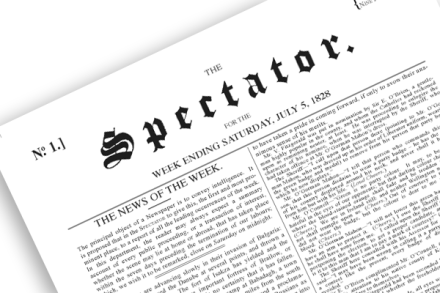
Matthew Parris’s article about the madness of the Brexiteers has caused much interest on social media, as did Alex Massie’s article along the same lines on Friday. I’ve been amused to see this described by some as a evidence of mutiny on HMS Brexit. A magazine’s star writers attacking each other with some passion, and sparing no weapon in the process. What’s going on? Simple: the same thing that has been going on since The Spectator was first published 189 years ago. We have no party line on Brexit, or anything else.

How Alexander Chancellor saved The Spectator

From our UK edition

On the wall behind my desk hangs a picture of Alexander Chancellor when he was editing The Spectator, with cigarette and telephone in one hand and looking very much the hero that all of us in the magazine have long regarded him. His death, announced earlier on this morning, is awful news: we have lost not just a columnist but the godfather of the magazine. Some editors improve their publications, others aren’t so lucky - but Alexander saved The Spectator. The magazine as we know it today – its tone, its mix, its success – is his. Before he took over, sales were tanking. We were the only publication to support Brexit in the 1975 referendum (other than the Morning Star); an admirable position but one that had become something of an obsession.

Tony Blair’s Chicago doctrine is buried in Philadelphia

From our UK edition

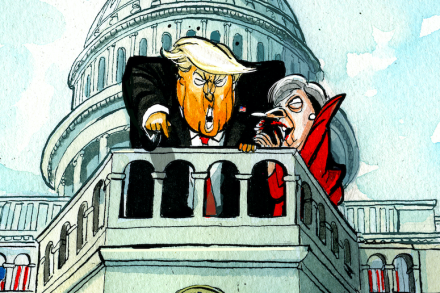
Theresa May mentioned Donald Trump only once in her speech to the Republicans gathered in Philadelphia tonight, but its centrepiece was a gift to him. In his inauguration speech, he said that the US was now out of the business of liberal interventionism. She told Republicans that the same applies to Britain. Here’s the key quote:- It is in our interests – those of Britain and America together – to stand strong together to defend our values, our interests and the very ideas in which we believe.  This cannot mean a return to the failed policies of the past. The days of Britain and America intervening in sovereign countries in an attempt to remake the world in our own image are over.

Nicola Sturgeon’s Brexit charade continues

From our UK edition

With the predictability of an atomic clock, Nicola Sturgeon has come out today condemning the Supreme Court which has reminded her that foreign affairs are not devolved, so Brexit is handled by the UK government on behalf of everyone in the UK. She concludes that 'Scotland’s voice is not being heard and not being listened to within the UK'. She started wanting to find a compromise about Brexit, she said, trying to be reasonable. But she – or, rather Scotland because they are of course the same thing – faces 'hard-right Brexit opinion'. Nicola Sturgeon on the UK Government not having to consult the Scottish Government before triggering Article 50. https://t.co/pfqV2e3r2F pic.twitter.

The Supreme Court ruling, like the Brexit vote, has defended the sovereignty of parliament

From our UK edition

I've never been a big fan of the Supreme Court, seeing it as a Blairite invention and - given our position in the European Union - a misnomer. But its decision to back the High Court and remind Theresa May that only parliament can dissolve laws that parliament makes is welcome. It has issued a useful refresher on constitutional law to certain MPs who might, in the excitement of the Brexit vote, have forgotten it. The 17.4 million who voted for Britain to leave the European Union were giving advice, rather than an instruction, to Parliament. This ought not to be a controversial point. As the judgment said, David Cameron chose to hold a consultative referendum, rather than a legally-binding one (as the AV referendum had been).

Robert Hannigan’s surprise departure leaves a large hole to fill at GCHQ

From our UK edition

The early departure of Robert Hannigan as GCHQ chief, announced today, marks not so much the end of an era as the transition between eras. The agency's famous HQ in Cheltenham, a metallic doughnut the size of Wembley Stadium, might look futuristic but was designed in the late 1990s before anyone worked out just how much data the intelligence services would have to intercept and analyse. Or how much of espionage would involve codebreaking, and on such an unprecedented scale. The workload exploded as it opened in 2003 and suddenly a GCHQ designed for 5,000 staff looked too small. New ways of working were needed. Hannigan was brought in, as outsiders occasionally are to GCHQ, to administer some course correction.

Trump has just created a vacancy for a world leader in free trade. Step forward, Theresa May

From our UK edition

Rather than seek to inspire or unite a country, Donald Trump’s inaugural address was a long vindictive swipe at his enemies mixed with a whinge about free trade and how America has been the loser from it. Nothing about only fearing fear itself, nothing about asking what you can do for your country rather than vice versa. Instead, a story about "carnage" caused by that big bad world. It has gotten a little too scary for America, so it's time to retreat. “For many decades, we've enriched foreign industry at the expense of American industry,” he said. “We've made other countries rich while the wealth, strength and confidence of our country has dissipated over the horizon. One by one, the factories have left our shores.