Fraser Nelson

Fraser Nelson

Fraser Nelson is a Times columnist and a former editor of The Spectator.

What do special advisers actually do?

24 min listen

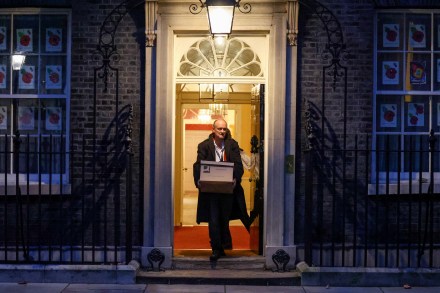
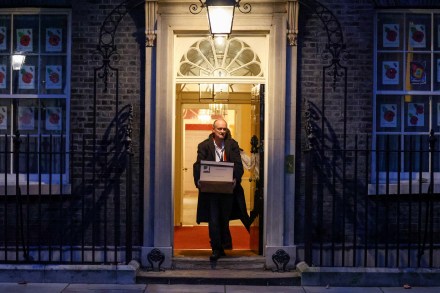
Dominic Cummings walked out of No. 10 Downing Street last night – but what did he actually do in there? Katy Balls is joined by Fraser Nelson and Peter Cardwell, a former SpAd and author of The Secret Life of Special Advisers.

Dominic Cummings’s departure is dangerous timing for Boris

Dominic Cummings didn’t angle for this job: Boris Johnson begged him to take it. The Tories faced extinction after the Theresa May debacle. Boris needed purpose, direction and miracles – which Cummings had a track record in supplying. He brought with him into No. 10 both Vote Leave staff and its modus operandi: a fixed focus on purpose, dedication to delivering and not caring too much about what commentators (like me) say. The result: an unexpected Brexit deal followed by an 80-strong Tory majority. The team stayed in place to work on what Johnson thought would be the defining issue of 2020: a Brexit deal.

Has Vote Leave lost control?

14 min listen

Downing Street has seen a day of backstabbing and counter-briefings after Dominic Cummings ally Lee Cain resigned as Boris Johnson's director of communications. John Connolly talks to Fraser Nelson and Katy Balls.

Will Lee Cain’s departure spark a Downing Street exodus?

A day of explosive disclosures from No. 10 has ended in the resignation of Lee Cain as Boris Johnson’s communications chief. Only 24 hours ago, it was reported he’d be promoted to Chief of Staff, after having threatened to quit last week. Now, he's gone. Depending on which rumours you believe, Cain had fallen out with Carrie Symonds, the Prime Minister’s fiancee and a former Tory party spin chief with her own views on how the job should be done. Cain, it's said, felt undermined to the extent of being unable to fulfil his role - all the more so when Allegra Stratton was appointed the PM's on-screen spokesman. So he offered to quit on Friday, but the PM instead offered to promote him to Chief of Staff.

Are we on the brink of a Covid vaccine?

14 min listen

The drugs firm Pfizer has announced that its vaccine — currently in stage three trials — is 90% effective. Meanwhile, Britain and the EU are entering the final stage of trade negotiations. Finally, No. 10 is ramping up its inquiry to discover who leaked news of England's second lockdown. Katy Balls speaks to Fraser Nelson and James Forsyth.

Can the NHS cope with Covid?

25 min listen

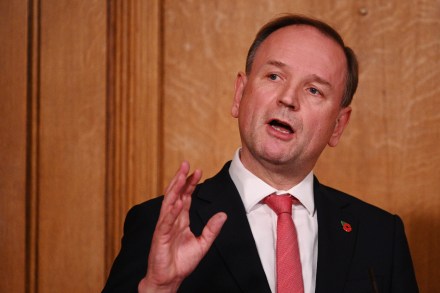
At Thursday's coronavirus press conference, Sir Simon Stevens, chief executive of the NHS, said a second wave 'is real and it's serious', as he warned that 11,000 people were already in hospital with the virus. Is the NHS able to cope with another spike in infections, and has the government adequately prepared for winter? Kate Andrews speaks to Fraser Nelson and Dave West, deputy editor of the Health Service Journal.

Why is Britain so worried about Denmark’s mink farm Covid outbreak?

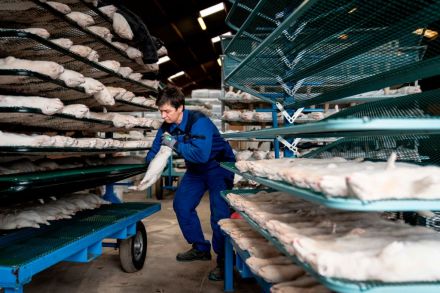
How worried should we be about a mutant strain of Coronavirus found in Denmark’s mink farms? The virus was found on its farms in June, and it emerged a few days ago that a dozen people had been infected with a strain of Covid called ‘Cluster 5’. This has raised the prospect of a new, more virulent vaccine-proof strain: a prospect dismissed in some places but being taken very seriously in 10 Downing St. So seriously that Britain has just become the only country in the world to close its borders to anyone from Denmark. Francois Balloux, a professor of genetics at University College London  has downplayed it as a story “making the rounds on Twitter.

Was the three tier system working all along?

14 min listen

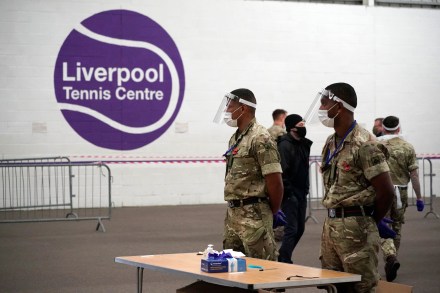
As Liverpool begins it's mass testing trial, ONS figures published today show that the coronavirus infection rate was fell in the week ending October 31. So was the tiered system working all along, meaning the new lockdown is unnecessary? Katy Balls speaks to Fraser Nelson and James Forsyth about the new data, Scottish independence, and the US election.

Why a Tory lockdown rebellion should worry Boris

18 min listen

After Boris Johnson announced that England would be put into another nationwide lockdown this Thursday, backbench Tory MPs quickly made their opposition known. Graham Brady, chairman of the powerful 1922 Committee, said the restrictions would be denounced 'as a form of evil' if enforced in a totalitarian state. But with Labour's backing meaning the measures will pass, why should a Conservative rebellion worry the PM? Fraser Nelson speaks to James Forsyth and Katy Balls.

Why have No. 10’s Covid forecasts changed so much?

Just ten days ago, Boris Johnson was attacking lockdowns for the "psychological, the emotional damage" they inflict: the effect on mental health as well as the economy. Then, he saw Covid-19 as a menace that could be managed with a "commonsensical approach" of local and regional measures. Now, he sees Covid as a monster capable of overwhelming the NHS and warns of a "medical and a moral disaster" if we do not do a stay-at-home lockdown. His view of the virus seems to have changed, utterly. Why? As soon as he started his statement, he turned to the graphs on which his case hangs. It was not so much new data, but new models showing new forecasts.

Is a second national lockdown imminent?

17 min listen

The whole of England could be put into lockdown again, reports this morning claim, as coronavirus cases continue to rise at a rate above the worst-case scenario modelled by SAGE. It comes as newly published minutes from the first week of October show the advisory group pushed the government to take action sooner. Katy Balls speaks to Fraser Nelson and James Forsyth.

New Sage leak says NHS could be overwhelmed within weeks

A few days ago, The Spectator published a classified ‘reasonable worst-case scenario’ from Sage, written back in the summer and fearing a second wave that would claim 85,000 lives, peaking at about 800 deaths a day. A new leak this morning from the Cabinet Office, using current data, paints a far-bleaker picture: 2,000 deaths a day – even 4,000 if no action is taken. The NHS is shown to be just weeks away from being overwhelmed, even if it uses its surge capacity. This is likely to be the document being used on Boris Johnson to urge a national lockdown. It’s worth looking at in some detail.

The long winter – why Covid restrictions could last until April

39 min listen

Why does the government think the second wave will be worse than the first? (00:49) Will a Biden presidency restore America's fortunes? (18:45) And finally, does Covid mark the end for the silver screen? (30:10)Spectator editor Fraser Nelson talks to Carl Heneghan, professor of evidence-based medicine at the University of Oxford; editor of The Spectator's US edition Freddy Gray is joined by columnist Lionel Shriver; and reviewer Tanya Gold is in discussion with The Spectator's arts editor Igor Toronyi-Lalic.Presented by Lara Prendergast.Produced by Gus Carter, Max Jeffery and Sam Russell.

Why we’re publishing SAGE’s ‘worst-case scenario’

In the UK’s pandemic response system, an independent committee of scientists – SAGE –draws up a ‘Reasonable Worst-Case’ planning scenario. This isn’t a prediction, but what it thinks could reasonably happen. Importantly, government then plans along these lines. But it has no obligation to tell the Cabinet, let alone the rest of the country, what is going on. As a result, government policy can be decided along lines that mystify senior government members, let alone those affected. Secrecy helps keep SAGE advice candid and allows for quick decision-making. But now that we’re settling down for what this week’s Spectator calls ‘the long winter’ it’s harder to justify the secrecy.

The long winter – why Covid restrictions could last until April

Not much makes sense during a pandemic but in recent weeks the Covid puzzle has become a deeper mystery. When local lockdowns failed, the solution was to try even more of them. Manchester was put into Tier 3 restrictions when its Covid cases were falling; now there’s talk of a Tier 4. Confirmed infections are nowhere near the 50,000 a day that Boris Johnson’s scientific advisers warned about last month - but the panic now seems far greater. The fear, of course, comes from what officials think will happen next. We’re told that the Prime Minister fears a second wave larger than the first, but we’re not really told why. Decisions are made to tighten restrictions on the basis of figures, scenarios and documents that are not shared with the public.

Was the NHS overrun by Covid during lockdown?

The decision to implement lockdown was inspired partly by the appalling scenes from Lombardy, where hospitals were overrun and dying patients left in corridors. In London, ministers were terrified by the prospect of the same happening here. Today's Sunday Times has published a long investigation from its Insight team looking at the Covid disruption in hospitals, which makes for disturbing reading. The NHS, it says, faced "an unmanageable deluge of patients" during lockdown, and it offers several examples of things going badly wrong. As we debate whether the NHS may be overwhelmed now - and what steps are needed to prevent this - it makes sense to ask how close the it come to finding Covid unmanageable the first time?

What will tier three do to the North?

10 min listen

Tier three restrictions came into force in regions across the UK, including Greater Manchester, today. Blackpool Tower even lit up with an SOS message last night, as businesses warned they could not survive in the face of new measures. John Connolly discusses what the new restrictions will do to the North with Fraser Nelson and James Forsyth.

Kemi Badenoch: The problem with critical race theory

Even now, months after the event, Labour MPs have not forgiven Kemi Badenoch for saying that Britain is one of the best countries in the world in which to be black. It was during the Black Lives Matter protests and many politicians — including Sir Keir Starmer — were ‘taking the knee’ to show fealty to its cause. Badenoch took a different view, seeing within all this a pernicious ideology that portrays blackness as victimhood and whiteness as oppression. In parliament this week, she went further: this, she said, is ‘critical race theory’ — a new enemy for the Tory party and, as equalities minister, one for her to fight.