Francis Pike

Francis Pike is a historian and author of Hirohito’s War, The Pacific War 1941-1945 and Empires at War: A Short History of Modern Asia Since World War II.

The truth about ninjas

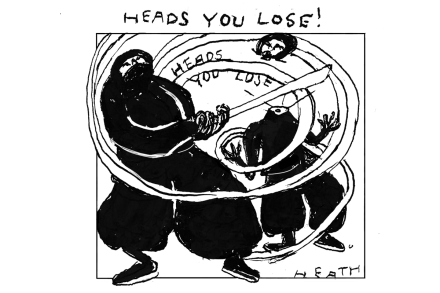
One of my favorite scenes in Kill Bill, Quentin Tarantino’s black comedy martial arts film, is the meeting of Beatrix “the Bride” Kiddo, played by Uma Thurman, with sword-maker Hattori Hanzo at his scruffy sushi bar in Okinawa. Hanzo: What do you want with Hattori Hanzo? Kiddo: I need Japanese steel. Hanzo: Why do you need Japanese steel? Kiddo: I have vermin to kill. Hanzo: You must have big rats, to need Hattori Hanzo’s steel. Tarantino filched his sword-maker’s name from history. Hattori Hanzo was a real ninja (or rather, the historically correct word shinobi). Born in 1542, he spent his life in the service of the shogun Tokugawa Ieyasu and compiled the manual Shinobi Hiden (Legends of Ninja Secrets).

ninja

Was Nixon solely to blame for the fall of Saigon?

From our UK edition

At 7.53 a.m. on Tuesday 30 April 1975, 50 years ago today, Sergeant Juan Valdez boarded a Sea Knight helicopter sent from aircraft carrier USS Midway that had landed a few minutes earlier on the roof of the US embassy in Saigon. He was the last US soldier to be evacuated from Vietnam. As he scurried to the rooftop, he was aware that some 420 Vietnamese, who had been promised evacuation, were left in the courtyard below. They faced an uncertain fate. The day before it had been reported to Washington that Saigon Airport was under persistent rocket attack. Escape by airplane became impossible. President Gerald Ford explained: ‘The military situation deteriorated rapidly. I therefore ordered the evacuation of all American personnel remaining in Vietnam’.

What is more worrying than war between India and Pakistan?

From our UK edition

This week, jihadist gunmen killed 26 tourists. For some reason Islamist diehards, supported by their stooges in British universities, did not pour onto London’s streets with their heads wrapped in kaffiyeh. I wonder why? Perhaps it was because the tourists killed were Indians not Jews or Caucasians, and the place was Pahalgam, a picturesque village in Indian controlled Kashmir, not southern Israel – so nothing to celebrate then. India has firmly laid blame for the atrocity at Pakistan’s door. Police say the suspects are members of the radical Sunni jihadist group, The Resistance Front, an offshoot of Lashkar-e-Taiba (LT) – ‘the Army of the Righteous’. It appears some of the perpetrators were Pakistani while others may have been Kashmiri.

Putin’s Russia is part of a global Orthodox revival

From our UK edition

Boris Berezovsky, the Russian oligarch, was found hanged in his Sunningdale home in March 2013. Born to Ashkenazi Jewish parents, Berezovsky converted to Russian Orthodoxy in 1994. His leap of faith, I suspected, was more political than spiritual. ‘So why,’ I asked him at dinner one evening, ‘do you buy Russian Icons?’ Berezovsky told me that he tried to bribe Vladimir Putin with motor cars, but he refused them. He was more successful with gifts of Russian Icons, which Putin passed on to churches and monasteries. Throughout his political career, the Russian president has taken care to look after the Russian Orthodox Church. Does this reflect a genuine religious belief? His mother was a devout Christian who had her son secretly baptised.

The truth about ninjas

From our UK edition

One of my favourite scenes in Kill Bill, Quentin Tarantino’s black comedy martial arts film, is the meeting of Beatrix ‘the Bride’ Kiddo, played by Uma Thurman, with sword-maker Hattori Hanzo at his scruffy sushi bar in Okinawa. Hanzo: What do you want with Hattori Hanzo? Kiddo: I need Japanese steel. Hanzo: Why do you need Japanese steel? Kiddo: I have vermin to kill. Hanzo: You must have big rats, to need Hattori Hanzo’s steel. Tarantino filched his sword-maker’s name from history. Hattori Hanzo was a real ninja (or rather, the historically correct word shinobi). Born in 1542, he spent his life in the service of the shogun Tokugawa Ieyasu and compiled the manual Shinobi Hiden (Legends of Ninja Secrets).

Owen Matthews, James Heale, Francis Pike, Christian House and Mark Mason

From our UK edition

32 min listen

On this week’s Spectator Out Loud: Owen Matthews argues that Turkish President Erdogan’s position is starting to look shaky (1:19); James Heale examines the new party of the posh: the Lib Dems (7:51); Francis Pike highlights the danger Chinese hypersonic missiles pose to the US navy (13:54); Christian House highlights Norway’s occupation during the Second World War, as he reviews Robert Ferguson’s book Norway’s War (22:01); and, Mark Mason provides his notes on coins (28:18).  Produced and presented by Patrick Gibbons.

The weapon that could end America’s global supremacy

From our UK edition

Two weeks ago, a bright light streaked through the night sky above Inner Mongolia. It was not an asteroid. The US Center for Strategic and International Studies, which released the footage, reported that it was China’s testing of a missile travelling at approximately 6,900 miles per hour. When China’s DF-27 hypersonic missile was first revealed in 2021, the US military was shaken. General Mark Milley, then chairman of the Joint Chiefs of Staff, described it as a ‘Sputnik moment’. Congress’s Nuclear Weapons and Arms Control Working Group was so alarmed that it wrote to President Joe Biden warning him that the development of hypersonic weapons ‘could fuel an arms race that we cannot afford and should seek to avoid’.

The crocodile casualties of the second world war

From our UK edition

At the end of February, 1945 about 1,000 surviving Japanese soldiers based on Ramree Island off the coast of Arakan, a province in western Burma, fled the onslaught of the British Army commanded by Lt General William Slim. A squadron led by the battleship HMS Queen Elizabeth had bombarded Japanese positions on Ramree. The 26th Indian Infantry Division, led by Marlborough and Sandhurst Old Boy Major-General Cyril Lomax, swept in to finish them off. Characteristically the Japanese soldiers did not surrender. Instead, they opted to get to shore through the mangrove swamps that connected Ramree Island with the mainland. Big mistake.

Why Tulip Siddiq had to go

From our UK edition

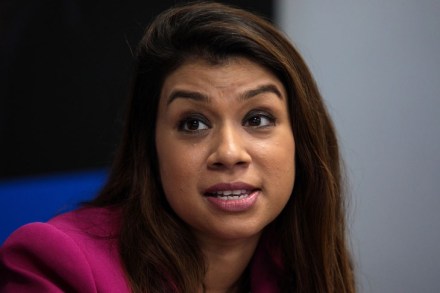
In 1996, I flew to Dhaka to meet Sheikh Hasina, the newly elected prime minister of Bangladesh, to discuss her economic strategy. It was not a pleasant experience. Hasina was humourless, arrogant and bitter – by a long stretch, the most unlikeable politician I’ve met in the sub-continent. By contrast her diminutive niece, Tulip Siddiq, Labour’s anti-corruption minister who has just resigned over her ties to her aunt, is a charmer.  It just stretches credulity that Siddiq and the Labour party did not know that aunty Hasina was a rotten apple To be fair to Hasina, she had excuses for her unattractive demeanour.

We should support Donald Trump’s attempt to buy Greenland

From our UK edition

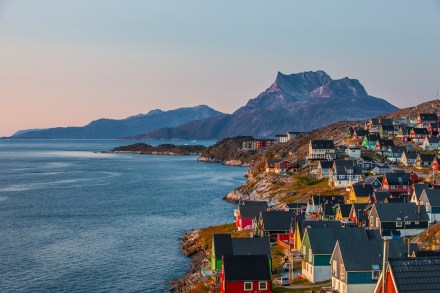
Over Christmas, president-elect Donald Trump wrote on his Truth Social site that: ‘For purposes of National Security and Freedom throughout the world, the United States of America feels that the ownership and control of Greenland is an absolute necessity.’ Trump’s overture, while highly unwelcome to the Danes, is not a new idea. He made the proposal first in 2019. When Prime Minister Mette Frederiksen described the idea as ‘absurd’ and said, ‘Thankfully, the time where you buy and sell other countries and populations is over. Let’s leave it there’, Trump promptly cancelled his visit to Copenhagen. Frederiksen has been equally dismissive this time round. But the main response has come from Greenland’s premier, Mute Bourup Egede: ‘Greenland is ours.

How the Black Death helped bring prosperity to Europe

From our UK edition

As the media alarms us about an approaching ‘quad-demic’ of diseases this winter (Covid-19, Flu, RSV, Norovirus) it is a timely moment to think about the travails of our mediaeval forebears. Their common scourges were typhus, smallpox, tuberculosis, anthrax, scabies and syphilis – all untreatable at the time. And then there was the plague. The plague tore up the foundations of society and paved the way for dramatic economic, political and social change Arriving at the ports of Venice, Pisa and Marseilles in 1347, shipboard rats carrying the Yersinia Pestis bacterium disbursed the bubonic plague in Europe. Originally it is thought that plague was brought by Genoese ships from their trading fortress, Caffa, in the Crimea.

South Korea has a long history of martial law

From our UK edition

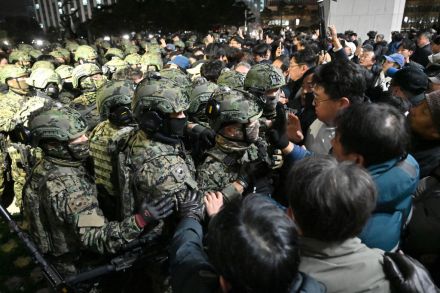
Yesterday afternoon South Korea’s President Yoon Suk Yeol made the shock TV announcement that he was putting his country under martial law. According to Article 77 of South Korea’s constitution, the People’ Power party President was within his rights. But why? Yoon wheeled out the standard coup trope that he needed ‘to restore order’. He argued that South Korea needed to be rescued from South Korea’s left wing Democrat party which won a majority in the unicameral National Assembly in April. Yoon accused of the Democrats of putting the country at risk from communist North Korea. But his problem was the absence of an emergency. Without that Yoon’s declaration of martial law could only be seen as a ham-fisted coup d’etat.  The popular reaction was immediate.

Why the West must back Syria’s Bashar al-Assad

From our UK edition

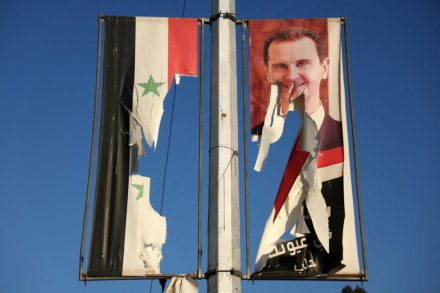
I had a nasty shock when I switched on my TV on Sunday. It was clearly a propaganda film with hijabed women standing amidst the rubble of their former homes extolling Hezbollah’s victory over the invading forces of Israel. Except it wasn’t a propaganda film; it was a BBC news report from Lebanon highlighting the plight of the de-housed Hezbollah-supporting Lebanese.  Of course, there was no report on the 60,000 Israelis who are still too frightened to return to their homes in northern Israel. They have good reason. Over the weekend, Hezbollah troops broke the ceasefire agreement and fired rockets into northern Israel. However, the anti-Israel bias of the BBC and western liberal media is a well understood fact of life. They support the perceived underdogs, Hamas and Hezbollah.

Leyte Gulf is the greatest naval battle you’ve never heard of

From our UK edition

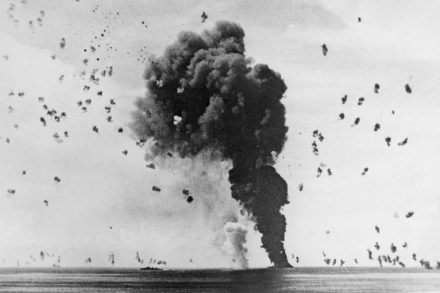
When you think of great naval engagements, the Battle of Leyte Gulf does not immediately spring to mind, despite it being the largest naval battle in modern history. Leyte Gulf, which celebrates its 80th anniversary today, took place in the Philippines in 1944. Even my well-educated American friends, the CEO of a major publishing company included, fail the vox pop test of knowledge of this epic battle. The sea battles that we remember tend to be engagements that define the outcome of struggles between empires and civilisations. At the Battle of Salamis, Athenian triremes thwarted Persia’s conquest of Greece. Similarly at the Battle of Lepanto, Pope Pius V’s Holy League navy defeated the Ottomans who threatened Europe.

India will never join China’s anti-western alliance

From our UK edition

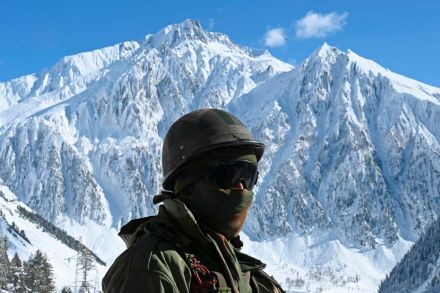
On the 15 November Xi Jinping will mark the 12th anniversary of his becoming general secretary of the Chinese Communist Party – the sixth paramount leader in China since Mao Zedong established communist rule in 1949. One of the consistent features of Xi’s rule has been China’s hostility to India. People’s Liberation Army incursions across Indian borders became a given. So, the announcement yesterday that India and China have reached a Himalayan border agreement comes as something of a surprise. Foreign Minister Subrahmanyam Jaishankar announced:  We reached an agreement on patrolling [the border], and with that, we have gone back to where the situation was in 2020, and we can say... the disengagement process with China has been completed.

Tesla is in trouble if Kamala Harris wins

From our UK edition

In the third century BC the city of Rhodes, in celebration of the defeat of Demetrius I of Macedonia, built the Colossus, a 30-metre-high statue of the sun god Helios. It became one of the seven wonders of the ancient world. Now there is a new Colossus to wonder at, not a statue but a supercomputer, reputed to be the most powerful in the world. So which American tech company built it? Apple, IBM, Google, OpenAI? Actually, none of the above. The new Colossus has been built by a US auto company… Tesla. How come?

The long-forgotten history of the Chagos Islands

From our UK edition

Now that Sir Keir Starmer has unilaterally decided to give up British ownership of the Chagos Islands, the last vestige of our imperial inheritance in the Indian Ocean, it seems an appropriate moment to look back at the long-forgotten history of this remote possession. Mauritius will be the happy recipient of the Chagos Archipelago, which consist of some 60 islands, mainly low-lying atolls and their lagoons. The Chagos Islands were ruled under Mauritius’s mantle until 1968.  Today Mauritius is largely known as a destination for the British middle class who cannot bear the thought of a winter without a week or two’s break on an island on which they can broil under a tropical sun. Mauritius has become the poor man’s Barbados.

Why Taiwan is pulling down statues of Chiang Kai-shek

From our UK edition

While the West obsesses about whether or not China’s supreme leader, Xi Jinping, is going to invade Taiwan, the Taiwanese seemingly have other concerns. Today the hot issue is statues. To be precise, statues of Chiang Kai-shek, the post-war founder-dictator of independent modern Taiwan. In an inventory taken in 2000 it was estimated that there were over 43,000 statues of Chiang in Taiwan. A removal process, albeit limited in scale, was begun shortly after. Some 150 statues were removed and taken to the sculpture garden that surrounds the mausoleums of Chiang and his son Chiang Ching-kuo – a place often referred to as the ‘Garden of the Generalissimos’.

Narendra Modi is unbeatable

From our UK edition

Voting in India’s national elections started last Friday. It will take six weeks to complete, which is less of a surprise when one considers that in a population of 1.4 billion people there are 969 million voters, 2,600 political parties, 28 states and 780 languages. It is a logistical task of dazzling scale, not only for India’s election commission but also for its political leaders. Why then, in January, did Indian Prime Minister Narendra Modi kick off his re-election campaign to secure his record third five-year term of office in the remote northern city of Ayodhya? This city, in a district with only a few million inhabitants, is a pinprick in the state of Uttar Pradesh (UP), an area with a population of around 250 million people.

The West’s shameful silence on Imran Khan’s imprisonment

From our UK edition

Donald Trump should spare a thought for Imran Khan. If the former US president feels overrun by lawsuits, he could comfort himself with the thought that they are a mere bagatelle in comparison with those against Pakistan’s former prime minister. Since being deposed in a parliamentary vote of no confidence in 2022, Khan and his PTI (Pakistan Movement for Justice) party has clocked up hundreds of civil and criminal charges. Some have been charges of corruption, treason, espionage and fraud. Others have been pettifogging in the extreme. Two weeks ago, the election commission of Pakistan won its case in the Supreme Court to deny Khan, a former world cup winning cricket captain, the use of a cricket bat as PTI’s electoral symbol.