Fiona Mountford

Oliver Basciano, Mary Wakefield and Fiona Mountford

20 min listen

This week on Spectator Out Loud, Oliver Basciano warns that we should brace ourselves for a coup in Brazil (00:53). Then, is three – or more – a crowd? Mary Wakefield discuses this in her Spectator column (08:41), before Fiona Mountford tells us about the sad demise of church pews (14:55).Produced and presented by Oscar Edmondson.
The sad demise of the church pew

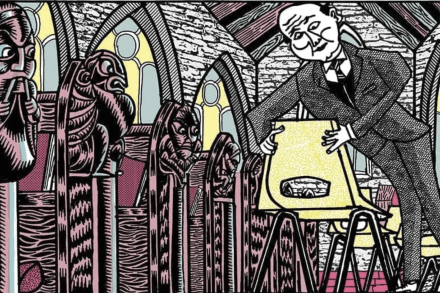
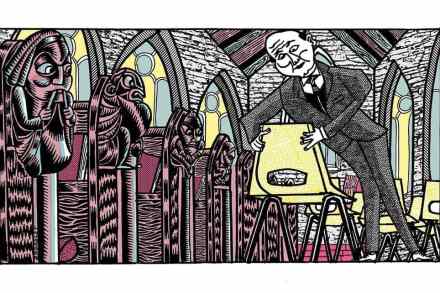
Imagine a child’s drawing of the interior of a traditional English church and the elements the picture is likely to contain. There will be colourful stained-glass windows, an altar and, almost certainly, rows of sturdy wooden pews. Yet the sad truth is that in parish after parish, the pews – which are often centuries old – are being removed and replaced by grimly functional chairs, of the sort to be found in any meeting hall or conference centre. I recently went to my own mid-Victorian parish church after a couple of months away and was dismayed to find the familiar old pews all gone and in their stead identikit rows of seats with pink cushions. Why do the Church of England’s seating arrangements matter?

Why must film delight in making us feel stupid?

‘What did the rampant chimp have to do with any of it?’ I squawked in bewildered disappointment to a friend at the end of Nope, the long-awaited third film from Oscar-winning writer-director Jordan Peele. I had hastened in great excitement to see Nope on the first day of its cinema release, hoping for a work that would rival Peele’s sparkling debut Get Out in its idiosyncratic mash-up of razor-sharp social commentary and horror. Instead, I paid £14.20 to sit through 130 minutes of barely explained peril that were resolved in a manner that was even less clear. Peele, I concluded sadly, had crossed over to the dark side of artists who appear to believe that it is fashionable to be incomprehensible.

Why now is the time to be spontaneous

I am not naturally a spontaneous person. I relish neatly laying out projects and plans in my Moleskine diary. It was out of character, then, when on the second Monday of the Wimbledon fortnight I decided on the spur of the moment to head to the All England Club and join the queue for a day ticket. If I didn’t get in, I reasoned, I could always have a nice meal in a nearby restaurant and watch the action on a big screen, content in the knowledge that I was at least sharing the air of the SW19 postcode. My back-up plan wasn’t needed. When I joined the ‘queue’, I was the only person in it. I was ushered straight into the grounds to enjoy six glorious hours of sun-drenched tennis. Perhaps there was something in this spontaneity lark after all.

The small NHS failings that let down patients like my mother

I would be the first to admit that the NHS has done a lot for my mother this year. It gave her the emergency blood transfusion that undoubtedly saved her life, followed by several iron infusions and umpteen scans and tests. It has treated a series of infected leg ulcers and provided consultations with senior medical figures and countless more outpatient appointments. It has supplied her with swanky new hearing aids and nursed her through Covid. During her four months in hospital, in two separate stays of nine and seven weeks, it came up with three meals a day, not all of them involving ravioli, mash and gravy, and a regime of (almost) daily physiotherapy. If my mum were American, I have reflected more than once, her money would have run out several rounds of ravioli ago.

The Oscars championed the average over the excellent

For a number of years now, as the streaming revolution ramps up and our watching habits become ever more fragmented, the Oscars have been locked in a desperate struggle against plummeting viewing figures and waning public interest. This is obviously a situation that Will Smith wanted to try and remedy – and not simply by winning the Best Actor award for his work in a classic all-American story of triumph over adversity. His fierce portrayal of Venus and Serena Williams’ maniacally driven father in King Richard was deservedly popular yet incredibly, less than half an hour prior to picking up this gong, Smith had climbed impromptu onto the stage at the Dolby Theatre in Los Angles to sock presenter Chris Rock squarely in the face.

Turkey’s dilemma

39 min listen

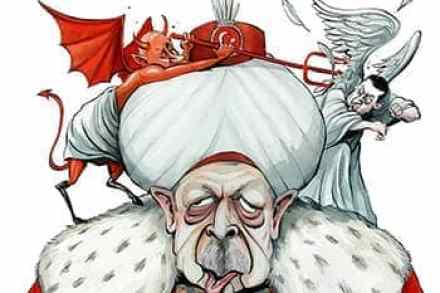
In this week’s episode: could President Erdogan broker a peace deal between Putin and the West?  For this week’s cover piece, Owen Matthews has written about how Turkey’s President Erdogan became a key powerbroker between Vladimir Putin and the Western alliance. On the podcast, Owen is joined by Ece Temelkuran, a political thinker, author, and writer of the book How to Lose a Country. (1:13)Also this week: a look at Tina, the drug devastating the gay community.Dr Max Pemberton has written about Tina, a dangerous drug often used at chemsex parties. Max joins us now along with Philip Hurd, a chemsex rehabilitation professional and trustee of Controlling Chemsex. (14:02)And finally: Are The Oscars losing their relevance?

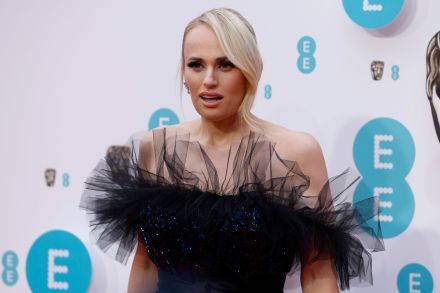
Rebel Wilson’s crass humour was a bad fit for the BAFTAs

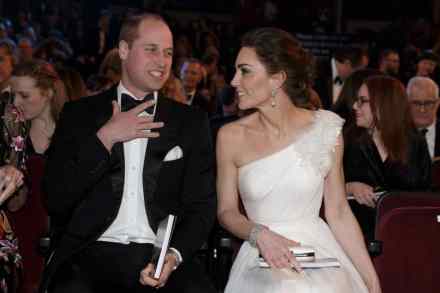
After the two oddest years in the history of the red carpet, when Covid restrictions saw stars accepting gongs from their sofas via Zoom, glitzy prizegivings as we (used to) know them are back. Last night’s BAFTA ceremony, from the Royal Albert Hall, marked the opening salvo of a two-week run-in of the biggies, as the Oscars follows at the end of the month. It was, reassuringly for fans and teeth-grindingly for detractors, the customary heady cocktail of self-absorption and virtue-signalling, along with acknowledgment of some very fine pieces of cinema. As well as Kenneth Branagh’s Belfast. In recent years, awards ceremonies have tied themselves in all sorts of knots over their hosts.

Why BAFTA has shunned the Oscars A-list

Last week, the nominations for the BAFTA film awards were announced and very swiftly afterwards the annual chorus of lamentation started up. For whatever poor old BAFTA does, a vocal segment of film fans and critics alike will declare themselves unhappy. BAFTAs-bashing, it can often seem, is how those in cultural circles like to keep themselves warm and entertained in the darkest and dullest months of the year. As if that weren’t enough, hot on BAFTA’s sweaty heels come the Oscar nominations, providing the opportunity to grumble on an international scale. As recently as 2020, grave accusations of ‘whitewashing’ were levelled at the British Academy, when it somehow managed to locate not one actor of colour worthy of nomination in the four acting categories.

The London Film Festival lets you watch films early – and brag about them

 October plays host to one of my very favourite jamborees across the entire spectrum of the arts, namely the London Film Festival. One of the myriad joys of an arts festival is the tantalising opportunity it offers to deviate from our cultural strait and narrow and try something out of the ordinary. We can rest easy in our festival wanderings, knowing that everything has been curated by experts in the field. Under this reassuring aegis of selection, we find ourselves emboldened to roam far and wide, often encountering en route the very artists who have made the work, as festivals love nothing better than to offer a Q&A in congenial surroundings.

Top dog: how have animals captured politics?

34 min listen

On this week's episode: should animal lives be considered as valuable as human lives? It’s often said that Britain is a country of animal lovers, but have we taken it too far? Pen Farthing’s evacuation has shown how some people value animal lives more than human lives. William Moore writes our cover piece this week, arguing that the public outcry is emblematic of our faith-like approach to animal rights in Britain. He joins the podcast together with the FT's Henry Mance, author of How to Love Animals. Plus, will the government’s proposed tax reforms solve the crisis in social care? In this week’s issue, Kate Andrews argues that instead of solving the crisis in care, the plans will only worsen intergenerational inequality.

The rise of the secular godparent

I always knew that I didn’t want children, but also always knew that I wanted godchildren. Lots of them. One of the less-discussed aspects of the decline of the church in our secular age is the fact that this precious relationship, more than a millennium old, is increasingly scarce. Previously godparents were there to ensure a child’s spiritual development, as well as to have in reserve some handy grown-ups should something awful befall the parents. All this is still important, but the role has shifted. Its primary benefit now is to provide a wonderful extrafamilial link that spans the generations, creating an instant and enduring bond between a child and the wider world.

Leading article, Fiona Mountford, Laurie Graham and Isabel Hardman

24 min listen

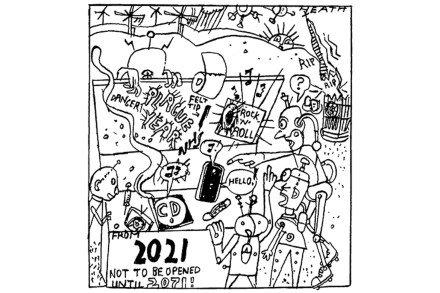
On this week's episode, Fraser Nelson starts by reading our leading article: the Prime Minister promised 'data, not dates', so should we reopen before 21 June? (01:15) Fiona Mountford is on next, saying she's had enough of corporate faux-friendliness. (07:20) Laurie Graham reads her piece afterwards, wondering what to put in her Covid time capsule. (13:00) Isabel Hardman finishes the podcast by reading her notes on Dandelions - perhaps the 'cheeriest of wild flowers'.

The insidious creep of corporate friendliness

Have you noticed it? The slide towards faux-friendliness and fake sincerity from the companies with whom we used to have an impersonal and transactional relationship. The deal used to be simple: we paid them, they did things or provided stuff, thank you and goodbye. If something went awry, we told them and, with luck, they fixed it. Feelings, other than occasional frustration, did not come into it. But in recent years, presumably inspired by American corporate culture, companies are no longer content with worming their way into our wallets. Now they want to commandeer the emotional part of our brains as well. They’ve done their research into behavioural science and the psychology of retail. They have started to emote, to empathise, to understand and to ‘chat’.

What to look forward to at the theatre

It might seem counterintuitive to say this about such a chatty medium, but what I have missed most about the theatre during its long year in the Covid wilderness is silence. More specifically, the two distinct types of silence unique to this artform, the silences that top and tail a production of import, a piece that matters. The first is the silence of anticipation, as an excited first night audience settles into its seats and stops fidgeting and the lights sink down. The second sort, even better, is the kind that floats and shimmers around the auditorium once the final word has been spoken and the lights come up, before rapturous applause bursts forth from every excited spectator, buzzing with the sensation of having just shared in something special.

Ian Williams, Fiona Mountford and Deborah Ross

23 min listen

On this episode, author and journalist Ian Williams starts by looks at how China is using tech to expand its reach. (00:45) Then, Fiona Mountford reflects on how to deal with grief. (12:00) Finally, Deborah Ross reviews the Oscar-nominated Promising Young Woman, 'a wonderfully clever, darkly funny, stomach-knotting' revenge-thriller.

The green games: Boris’s plan to rebrand Britain

37 min listen

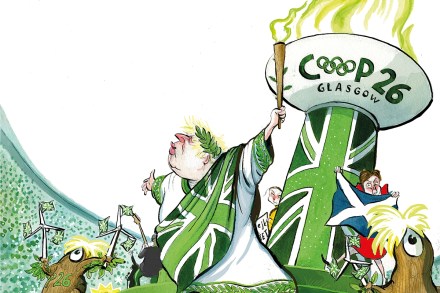
In this week’s podcast, Katy Balls expands on her cover story, analysing Number 10’s hopes for November’s COP26 summit in Glasgow (01:10). She’s joined by Boris Johnson’s former advisor and co-author of the last Conservative election manifesto, Rachel Wolf and together, they ponder whether the much-anticipated green jamboree signposts a supercharged boost not only for global climate policy, post Covid but also the Johnson premiership?

Mourning sickness: our conspiracy of silence over grief

No one can say that, over the course of the past year, we have not had the opportunity as a country to practise the grim arts of grief and mourning. We all know the figures — 127,000 Covid deaths and counting — but I wonder if, in the face of this onslaught, we have lost sight of the vital fact that behind each loss there will be a group of family members and close friends of the deceased setting out on the long, slow trudge down the boggy path of grief. How are we dealing with this suffering? When my father died extremely suddenly six years ago, there was one thing for which I was even more unprepared than the abrupt absence of the most cheerful person I had ever had the pleasure to know.

The necessary politics of Promising Young Woman

Last month there occurred an event so culturally seismic that it made, well, a barely perceptible dent on the news headlines. Not just one but two actual women were nominated for the Best Director Award at the Oscars, a category that has for many years now been open to five nominees. It was the first time that two women have ever made it into contention in the same year and, by their audacious presence at the top table, Emerald Fennell (Promising Young Woman) and Chloé Zhao (Nomadland) have at a stroke increased the number of women the Oscars have ever nominated for this prize from five to seven. (Only one, Kathryn Bigelow, for The Hurt Locker, in 2009, has won).  Given that 2021 will see the 93rd iteration of the Academy Awards, that’s not bad going.

Unopposed: Why is Starmer making life easy for the PM?

42 min listen

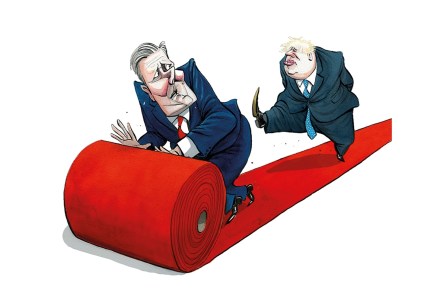
Is Keir Starmer becoming irrelevant? (00:50) Do the Oscars really celebrate the best that film has to offer? (15:55) Jordon Peterson is back with his new book, Beyond Order, but is it beyond readable? (25:40)With the Spectator's political editor James Forsyth; broadcaster and former Labour adviser Ayesha Hazarika; writer Fiona Mountford; the Spectator's arts editor Igor Toronyi-Lalic; novelist Philip Hensher; and the Spectator's associate editor Douglas Murray. Presented by Lara Prendergast.Produced by Max Jeffery, Sam Russell and Arsalan Mohammad.