Fiona Mountford

Awards season loses its shine when no one can go to the cinema

Here it is again, a couple of months later than usual but back nevertheless. It’s the time of the annual jamboree that is film awards season, a three-month extravaganza that predominantly revolves around three key events: the Golden Globes, the Baftas and the Oscars. All three of these celebrations of artistic excellence and mutual backslapping have been delayed due to Covid. The Globes took place — virtually — three weeks ago, Bafta revealed its shortlist last week and the Oscar nominees were announced on Monday. The starting gun has been fired — while all our cinemas remain closed. Have you seen Nomadland, The Father or Promising Young Woman? Of course you haven’t. No one, apart from the critics, has been afforded the opportunity.
The importance of a good funeral

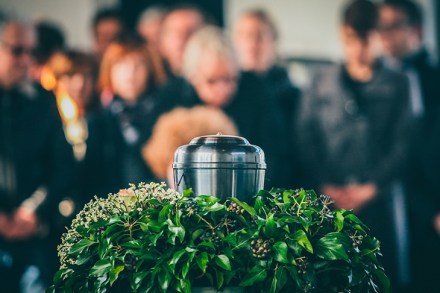
In ITV’s otherwise terrible drama Finding Alice, one line struck me with particular force. A funeral director is addressing our heroine, who finds herself unexpectedly having to organise last rites for her partner. Wicker coffins are particularly popular now with relatives, says the undertaker, and I found myself nodding in strong agreement. A light woven coffin, made of pleasingly biodegradable material and topped with a simple but stylish cross of early spring flowers, was exactly what we selected for my father, to be buried in one of the last remaining — and therefore highly sought-after — spots in the churchyard.

Women need to take control and take the wheel

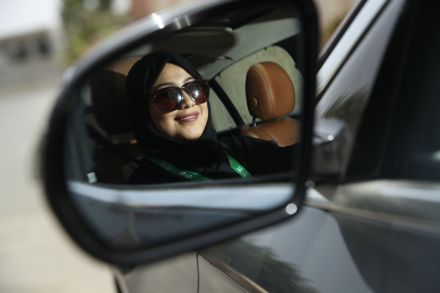
There is a Saudi Arabian film that I love. It is called Wadjda and is about a young girl who longs to have her own bike, so that she can play outside and ride wherever and with whomsoever she likes. Yet Riyadh’s restrictive patriarchy frowns upon women having agency over their means of transport, even bicycles, ensuring that they are forever at the mercy of capricious and often irascible male drivers.  I have thought about this film and its message a lot this year, when the many benefits of having our own independent methods of transport, primarily cars, have been amply highlighted.

Sets appeal: the distracting beauty of TV backdrops

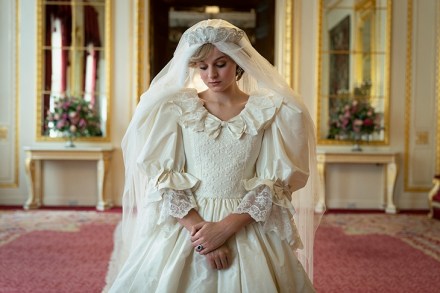
Never mind the regal and political tussles depicted in The Crown; the real action comes with the closing credits. This is the kind of list of job titles of which many feature films can only dream. In addition to the seven art directors of various ranks, there is an art department co-ordinator, art department assistant, five set decorators, two set decoration runners and a set decoration prop driver. Not to mention a drapes master, drapes master assistant, one florist and two home economists. You don’t get the stand-ins for Buckingham Palace, Balmoral and all the other stately piles of multiple turrets and crenelations looking as good as they do without armies of behind-camera personnel.

Just the ticket: why I love collecting stubs

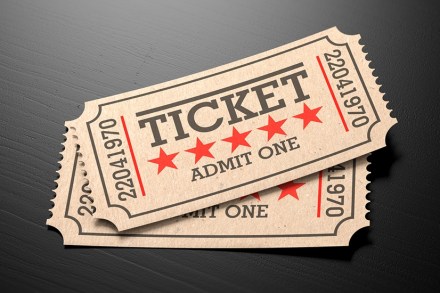
I know the exact day when my future life as a critic was set on its course, because I still have the ticket stub to prove it. It was 5 June 1992 — seat D4 at the 8.15 p.m. screening, to be precise — when I went to the Curzon Phoenix cinema in central London with three schoolfriends to see what would become my all-time favourite film (and, subsequently, book), Merchant Ivory’s Oscar-winning masterpiece Howards End. That perforated ticket stub, a little raggedy around the edges now, sits in pride of place on one of the three cork pinboards I display in rotation on the wall of my bedroom, all of which host a mini patchwork quilt of tickets for plays, films and exhibitions I’ve seen.

Covid has exposed our confusion about food

These past five Covid-buffeted months have shone a spotlight as never before on the choices we as a nation make about and around food. We are quite confused when it comes to eating. The government’s two recent messages on the subject are in conflict with each other: it’s our civic duty to ‘eat out to help out’, we’re told, but also we need to lose weight to protect the NHS. These muddled messages were evidenced by the somewhat mad poster advertising ‘eat out to help out’: after listing the practical terms of the scheme, the optimistic last line reads ‘Look out for better health choices’. I don’t know about you, but if I’m going to dine out, I’m going to get something tasty and tempting.

As the primary schools go back, it’s the older kids who suffer

It now appears that school’s out till after the summer for pretty much all secondary pupils. The loudest cries, an equal mix of exaltation and despair, come from those who were due to sit GCSE and A-l-evel exams this term: groups now split between delight at unstructured months of leisure time and anxiety that lackadaisical efforts in mock exams won’t prove enough to secure them the required grades. Yet my sympathies in this stalemate lie with those in Year 12, or the lower-sixth, the sandwich year between the two public exam groups. The Prime Minister has said that from 15 June, these 16- and 17-year-olds will be allowed ‘some contact’ with their teachers, but with just one quarter of the usual class permitted to be present at any one time.

Is baking and watching Netflix really comparable to being bombed?

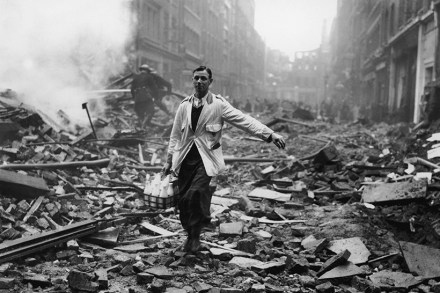
Much mention has been made in these past weeks of ‘Blitz spirit’. The Queen even hinted at it in her address to the nation, referencing Vera Lynn in her ‘We will meet again’ closing remarks. TV presenters, journalists and indeed our own Prime Minister cannot resist these stirring references to the resilience of the Home Front, the sense of national solidarity, the pluck and grit of the British people, especially as we reach the 75th anniversary of VE Day. Blitz spirit has become such a powerful and recognisable reference point in our national imagination that it is applied, almost at whim it often appears, to any tricky situation the country faces (the possibility of a no-deal Brexit, for instance).

The unexpected joy of going to church online

During Holy Week and Easter I went to church five times. Or more accurately, I should say that I logged onto Facebook Live on five separate occasions. There I watched with joy and no little sense of amazement as my suburban parish church, by no means at the cutting edge of modern technology, skilled up in a matter of days in order to stay connected with its flock during this vital period for both the church and the world at large. I am now very closely acquainted with the pattern of the curtains in my vicar’s living room – the same kindly vicar who thoughtfully posted each member of his flock a palm cross which he proceeded to bless online during the Palm Sunday service.

Will ‘performative Europeanness’ end on Brexit day?

The Rubicon has almost been crossed, the die has almost been cast and whatever other choice phrases from European history spring to mind. As we leave the European Union, to the cheers of the 52 per cent and the tears of the 48, what most interests me as a reluctant Remainer is how, or indeed whether, it will affect our collective national sense of Europeanness. In certain – London, metropolitan – quarters, this somewhat elusive quality has been getting an exhaustive airing and we may well need to brace ourselves for a further mass outbreak of EU flag waving in the coming weeks. One of the most fascinating aspects of the last three and a half years has been the rise of what I have taken to calling ‘performative Europeanness’.