Eliot Wilson

Eliot Wilson

Eliot Wilson was a House of Commons clerk, including on the Defence Committee and Counter-Terrorism Sub-Committee. He is contributing editor at Defence On The Brink and senior fellow for national security at the Coalition for Global Prosperity

How many peacekeepers can Europe send to Ukraine?

We may look back to find Sir Keir Starmer partly defined by the phrase ‘coalition of the willing’. It is hard to fault the prime minister’s energy in rallying nations to implement a peace settlement in Ukraine, but there are issues to unpick. Who makes up the coalition? What is its role in Ukraine? What forces and capabilities will it need to fulfil that role, and where will it get them? The answers to these questions are both vague and subject to change, so let us see what we can establish. Only two months ago, President Zelensky told the World Economic Forum that enforcing a peace settlement would require a force of ‘at least 200,000… a minimum. It’s a minimum, otherwise it’s nothing.

Can Keir trust Macron?

13 min listen

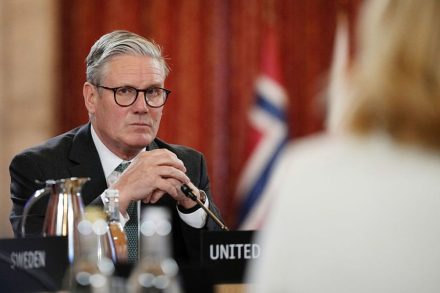
It’s a big day in defence. Keir Starmer began the day in Barrow talking about nuclear subs and will end the day in a meeting of the ‘coalition of the willing’ on the outskirts of London. But that coalition seems like it could be undermined by the European Commission’s decision to exclude non-EU arms makers from the bloc’s new €150 billion defence fund. Officials are keen to stress that this is not a done deal yet, but this would be a massive blow for the UK (and the US) and a big win for France. With Europe rearming, who stands to benefit? And what should we expect from the meeting of military officials later today? Oscar Edmondson speaks to James Heale and Eliot Wilson, former clerk to the House of Commons, including on the Defence Committee. Produced by Oscar Edmondson.

The EU wants to shaft British defence firms

Sir Keir Starmer’s attitude to Europe and the EU is hard to fathom. As a left-leaning human rights lawyer who lived in Kentish Town before he moved into Downing St, he could hardly be more of a stereotyped Remainer. He campaigned to stay in the EU and to hold a second referendum when he was Jeremy Corbyn’s Brexit spokesman. Yet by the time the Labour party manifesto was published last year, he pledged ‘no return to the single market, the customs union, or freedom of movement.’ Perhaps this week his attitude will be clarified. On Wednesday, the European Commission published a White Paper on defence and rearmament. One of the most eye-catching proposals was the establishment of a €150 billion loan instrument, snappily entitled Security Action for Europe, or ‘Safe’.

Who are the contenders to be the next ‘C’?

Somewhere in an office on the south bank of the Thames, a man is writing in green ink and signing himself simply ‘C’. He is doing these things because all of his 16 predecessors have done so since 1909. Sir Richard Moore is Chief of the Secret Intelligence Service (SIS), more popularly known as MI6, the only employee of the organisation whose name is made public, and he will soon step down after five years in the role. SIS is Britain’s foreign intelligence organisation, collecting and analysing human intelligence overseas to protect the United Kingdom’s national interests, inform the government’s strategic understanding of the global situation and support counter-terrorism, counter-proliferation and cyber security.

The problem with Starmer’s peacekeeping plan for Ukraine

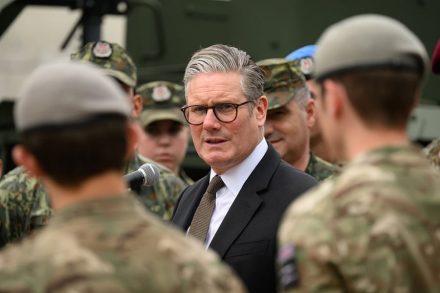
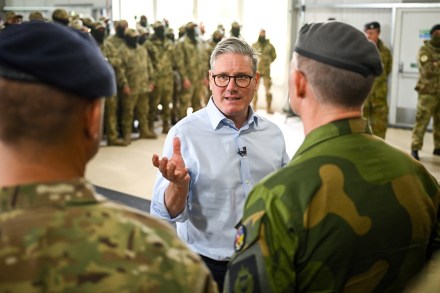
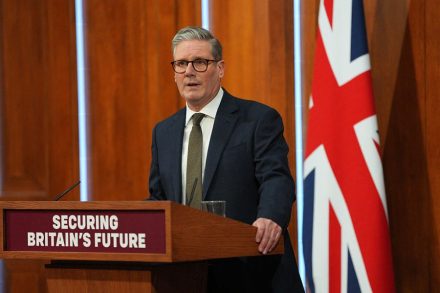
Sir Keir Starmer has been tireless in his diplomatic efforts to construct a 'coalition of the willing' and send a peacekeeping force to Ukraine. At the weekend, he hosted a conference call with 29 other world leaders, and on Thursday the defence secretary, John Healey, will convene a meeting of military chiefs at the MoD’s Permanent Joint Headquarters at Northwood 'to put strong and robust plans in place to swing in behind a peace deal and guarantee Ukraine's future security'. The Prime Minister's commitment is firm and public. Along with likely partners France, Turkey, Canada and Australia, the United Kingdom is ready to contribute to a military force of up to 30,000 personnel to be deployed in Ukraine.

What hope does John Healey have of influencing Trump?

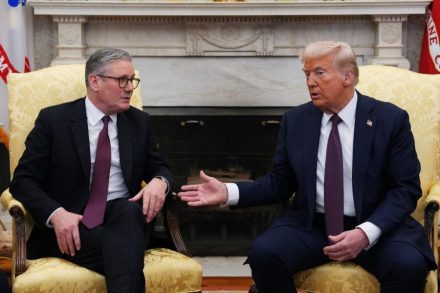
In the eight months since he was appointed Secretary of State for Defence, John Healey has undertaken so many foreign visits that his residency status must be dubious. The Yorkshireman, who turned 65 last month, has travelled to Ukraine, Estonia, Poland, Germany, Belgium, Israel, Cyprus, Turkey, Saudi Arabia, Norway and the United States. On Wednesday, he returned to Washington for a meeting with his American counterpart, Pete Hegseth. It is a marker of these extraordinary times and the volatility of President Donald Trump’s instincts – they are not policies in any meaningful sense – that British ministers visiting Washington do so with trepidation.

Who is to blame for the state of Britain’s military?

Old soldiers never die, in the words of the barrack ballad, but increasingly they do not fade away either. With an unusually intense public focus on defence issues thanks to the insistence of Donald Trump that Europe up its military spending pronto, platoons of former senior officers are now popping out of the woodwork to weigh in with analysis and advice on what needs to be done. Last week, General Sir Richard Shirreff, former deputy supreme allied commander Europe for Nato, told the i that defence spending would need to rise to 3 per cent of GDP as a minimum. The government, he also said, should consider limited conscription of 30,000 a year to increase the size of the army.

Starmer’s defence spending hike isn’t enough

The prime minister has told the House of Commons that defence spending will rise to 2.5 per cent of GDP by 2027. The UK already spends 2.3 per cent, so this works out as an increase of £13.4 billion a year. It will largely be funded by substantial cuts to the international aid budget. It is good that Sir Keir Starmer has got the memo on the desperate need to increase the defence budget. But the memo is dated ‘early 2024’: it was last April, after all, that Rishi Sunak pledged to increase defence spending to 2.5 per cent.

Can the British army stretch to peace-keeping in Ukraine?

It has been a traumatic week for Europe’s political and military leaders. Last Wednesday, without warning, US President Donald Trump announced that he had spoken to Vladimir Putin by telephone for 90 minutes. During a 'highly productive call', he and the Russian leader had 'agreed to have our respective teams start negotiations immediately' to bring an end to the war in Ukraine. The Ukrainian president, Volodymyr Zelenskyy, had not been informed of the conversation beforehand, much less involved. The transactional high-handedness of Trump’s approach, ignoring the injured party in the conflict and making direct and friendly overtures to the aggressor, should not have come as a surprise.

Is Starmer about to finally increase defence spending?

There is joy in the presence of the angels of God over one sinner that repenteth. Only three weeks ago, Sir Keir Starmer was considering delaying increasing the United Kingdom’s defence budget until the next decade. 'Whitehall sources', a catch-all term of varying reliability, said that the Prime Minister regarded the political costs of cutting public expenditure elsewhere as too great: accordingly, defence, which everyone professes to believe is important but few are willing to prioritise, would have to wait. Now the mood music has changed. The Sunday Times reports that Starmer intends to overrule Rachel Reeves and the Treasury in their insistence on no additional expenditure.

Starmer is in denial about the high cost of defence

It is hard to think of a recent prime minister whose first months in office have seen defence in the headlines more often than Sir Keir Starmer. Even John Major, coming to power in 1990 as a United States-led coalition prepared to eject Saddam Hussein’s army from Kuwait, was dealing with an expeditionary adventure which soon concluded. Labour has come to power against the backdrop of a grindingly bloody and entrenched war in Ukraine and furious military activity in the Middle East. Starmer had also made choices: he had committed to an immediate strategic defence review. His party’s manifesto had also tried evasively to counter the Conservatives’ pledge of more money for the military by saying that it 'will set out the path to spending 2.5 per cent of GDP on defence'.

Why didn’t Starmer go to Munich?

The Munich Security Conference, which this week gathers in the Bavarian capital for its 61st edition, is a big deal in defence and foreign policy circles. When it first convened in 1963, there were just 60 delegates, but that has now grown to more than 350 heads of state, government and international organisations, ministers, senior military leaders, parliamentarians, business leaders and others. The incoming chairman of the conference is former Nato secretary-general Jens Stoltenberg. Sir Keir Starmer is not among the attendees. While Boris Johnson gave speeches in 2021 and 2022, and Rishi Sunak addressed the meeting in 2023, the current prime minister will be represented by David Lammy, John Healey, Peter Kyle and Anneliese Dodds.

Starmer may come to regret his EU defence pact

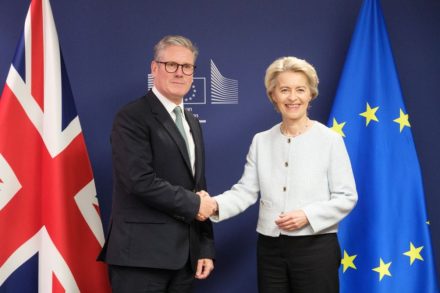
Sir Keir Starmer has been on another overseas visit. On his 18th trip in seven months as prime minister, he travelled to Brussels yesterday to talk to European Union leaders about defence and security, an area on which he is keen to expand cooperation. His mission was both practical and symbolic: he is pursuing a defence agreement with the EU, but he is also desperate to show that he has 'reset' the United Kingdom’s relationship with Europe and has been welcomed into the club by the leaders of the 27 member states. As well as EU leaders, including the new president of the European Council, António Costa, Starmer met Mark Rutte, secretary general of Nato, as a warm-up.

Keir Starmer can’t afford not to hike defence spending

Over the last few years, defence spending has been higher up the political agenda than at any time since the end of the Cold War. The scale, intensity and sheer cost of the war in Ukraine following Russia’s invasion in February 2022 provided a shock to the system – but it only reinforced what many of us had known for a long time: the United Kingdom’s military capabilities in every domain are underfunded, stretched beyond endurance and often non-functional. But is Keir Starmer now avoid increasing defence spending at all? Last February, the House of Commons defence committee published a report entitled Ready for War?. It had damning conclusions.

Did Axel Rudakubana deserve a harsher sentence?

The murder of three young girls in Southport last July by Axel Rudakubana was an act of extreme savagery and calculated evil. Six-year-old Bebe King, seven-year-old Elsie Dot Stancombe and nine-year-old Alice da Silva Aguiar were victims not only of a brutal killer but also of a system of policing, intelligence and criminal justice which failed at several points: they did not need to die. Rudakubana pleaded guilty at the beginning of his trial this week to all sixteen charges against him: three counts of murder, ten of attempted murder, one count of possession of a knife, one of ricin production and one terror-related charge. But he showed no remorse, and had told police after his arrest: “I’m glad those kids are dead, it makes me happy” and that he was “so happy, six years old.

Starmer’s support for Ukraine has become half-hearted at best

Sir Keir Starmer arrived in Kyiv this morning. He came by train, crossing the border from Poland, since air travel into the Ukrainian capital is now unacceptably hazardous. Perhaps he regards this visit as a respite after the week’s event so far at Westminster. The Prime Minister arrived to meet President Volodymyr Zelensky bearing gifts. The centrepiece is an extensive 100-year partnership agreement between the United Kingdom and Ukraine, covering nine 'pillars' from culture and education through science, technology and healthcare to security and military assistance. This is intended to be a significant and enduring relationship. Since the general election, however, the support has seemed to some to have wavered 'This is not just about the here and now,' Starmer told the media.

How much longer will Starmer back Reeves?

It's not been a happy new year for Sir Keir Starmer. The Prime Minister's Treasury minister Tulip Siddiq has been forced out following an anti-corruption investigation in Bangladesh. Siddiq's job became untenable following questions over links to her aunt, the former prime minister of Bangladesh, Sheikh Hasina. Siddiq has denied wrongdoing and an independent investigation found that she had not breached the Ministerial Code, but it was clear over the weekend that Siddiq's position was untenable. Starmer, however, bafflingly allowed to her to stay on until yesterday afternoon. 'Starmer dithered and delayed to protect his close friend,' says Tory leader Kemi Badenoch. It's hard to disagree with that assessment.

The ‘shocking tactics’ of Kemi Badenoch

Whitehall is being swept by moral outrage. Ministers, in full This Is Spinal Tap mode, have turned their pious horror up to 11 and Keir Starmer has accused the opposition of a ‘shocking tactic’, preferring ‘the elevation of the desire for retweets over any real interest in the safeguarding of children’. What dark perfidy has been done? What cynical political stunt have the Conservatives pulled, staining their hands with such baseness? Kemi Badenoch has tabled a reasoned amendment to the Children’s Wellbeing and Schools Bill, which is being debated at second reading today. Let me explain briefly.

Kemi Badenoch is right to bide her time

Kemi Badenoch has only been Conservative leader for two months. The next general election is likely to be held in 2028 or 2029. Yet there have been persistent rumblings that she must set out clear policies if she is to win back support from voters who left the Tory fold. In The Financial Times, Robert Shrimsley warned that Badenoch “does not have as much time as she thinks”, and that “she does not have the luxury of leisure to figure it out while a grateful nation waits and watches”. Announcing specific policies at this stage would force Badenoch to create an army of hostages to fortune Shrimsley has previously won a prize for satire, so perhaps this was an unannounced return to the genre.

Keir Starmer could still walk away from the Chagos deal

When Sir Keir Starmer announced in October that he had reached an agreement with Mauritius to transfer sovereignty of the Chagos archipelago, he was met with fierce and sustained criticism. The deal essentially surrendered the British Indian Ocean Territory (BIOT), one of the 14 remaining overseas territories, to the government of Mauritius, while salvaging a 99-year lease on the island of Diego Garcia, home to a strategically vital joint UK/US military and naval base. But the Prime Minister has unexpectedly been handed an opportunity to row back on this agreement. The question is, will he take it?