Ed West

Ed West

Ed West writes the Wrong Side of History substack

What have Britons got against America?

35 min listen

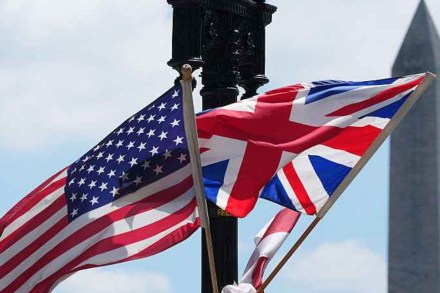
British favourability dropped sharply sometime around 2016 and then further declined in 2024. Trump is clearly the main driver of negative feelings, although not the only one. There was much antipathy in 2020, which may have been related to the election but seems more likely due to the chaotic scenes that followed George Floyd’s death. To discuss this, Freddy Gray is joined by Ed West, who has written about this for his Substack The Wrong Side of History.
What have Britons got against America?

What Tsarist Russia tells us about anti-Semitism in Britain today

From our UK edition

During the autumn of 1888, as London’s East End erupted in panic following the Whitechapel murders, blame was soon cast on a convenient target: the area’s large number of recently arrived Russian Jews. Initially the killings and mutilations were linked to a Jewish suspect called ‘Leather Apron’, real name John Pizer, a bootmaker known to have used and abused prostitutes. But even after he cleared his name the stories persisted. The new arrivals had heard this all before; back home these sorts of rumours were usually the trigger for the pogroms which had forced them to leave. Expecting the police to round them up and frame one of their number, many within the community went to ground, closing their doors and waiting for the inevitable.

How Hitler came to define Western morality

From our UK edition

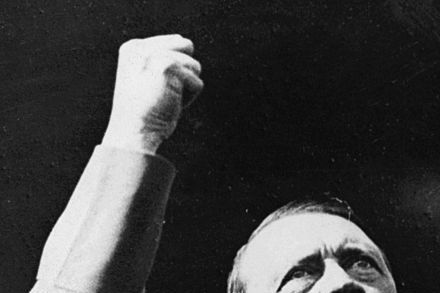
‘A century ago, the most potent moral figure in Western society was Jesus Christ. Now it is Adolf Hitler. Perhaps we still believe that Jesus is good, but not with the same fervour and conviction that we believe Nazism is evil. Crosses and crucifixes have lost most of their power in our culture. It is possible to play with them, even joke about them, and no one really minds. Not so with swastikas, which pack an emotional punch like no other visual image.

The state completely failed Valdo Calocane’s victims

From our UK edition

On June 13, 2023, a mentally ill man named Valdo Calocane went on a rampage in Nottingham, murdering 65-year-old caretaker Ian Coates and two 19-year-old students, Barnaby Webber and Grace O’Malley-Kumar. All three victims were clearly much loved by family and friends, and warm tributes poured out; O’Malley-Kumar had died trying to protect her friend and was posthumously awarded the George Medal for bravery. It was a senseless waste of life, all the more so because the killer had a long history of violence. Just six weeks before the murders he had attacked two people. The police failed to act.

What really scares people about Adolescence

From our UK edition

Two books I read in my teens made me want to be a writer. One, Nick Hornby’s Fever Pitch, appeared when I was in the third year of secondary school and delivered a style of memoir so warm, so funny and affable that I wanted nothing more than to do the same. The other was Harper Lee’s To Kill a Mockingbird, a very tattered tenth-hand copy borrowed from a friend (and never given back, sorry). I was mesmerised. It was probable that I would have headed down the path to Grub Street anyway, but if you want to blame anyone for my contribution to the discourse, then Harper Lee must shoulder a small part.

The Green party is playing with fire in Gorton

A good pub quiz question in the year 2050 will go something like this: ‘True or false, the “green” in the “Green Party” originally referred to the environment.’ By this point, the etymological origins of Britain’s sectional Islamic party will be as obscure as the relationship between British Conservatives and 17th century Irish bandits. A key milestone, our mid-century quiz regular will inform his teammates, was the 2026 Gorton and Denton by-election in which the Greens stood neck and neck in a three-way race with Labour and Reform before voting opened. If decades of generous immigration policies have created constituencies where people vote along religious lines, there is nothing to stop someone appealing to that market.

The martyrdom of Chris Kaba

From our UK edition

In The Bonfire of the Vanities, Tom Wolfe’s great satirical look at 1980s New York, a white Wall Street trader accidentally ends up in a hit and run involving a black teenager. The cause is taken up by a succession of activists, led by the corrupt race-baiter ‘Reverend Bacon’, all determined to make political capital of the incident. Much of the satire is easily recognisable from real-life cases, including the way in which the biography of the black victim is turned into a hagiography, and the menacing implication that the streets might erupt in violence if the protesters don’t get what they want.

A short history of the New York Times being wrong about everything

The ‘nothing ever happens’ people seem to be, sadly, correct about Iran thus far, although one hopes that the brutal Islamic Republic might still be overthrown. It’s hard to know what to think, and at times like this we all turn to the experts to give their analysis of what might happen and what might follow. Foreign policy expertise is hard work, because it requires both a specific knowledge of the national culture and the relative strength of personalities. Because there are so many factors involved, analysts frequently get things completely wrong, the Iraq and Afghanistan debacles being the notorious examples.

Keep children out of politics

From our UK edition

In Citizens, his account of the French Revolution, Simon Schama wrote how the Jacobins recruited children into ‘relentless displays of public virtues’. These youth affiliates, the ‘Young Friends of the Constitution’, encouraged children to attend sessions at the group’s headquarters in Paris, while ‘throughout France, “Battalions of Hope”, consisting of boys between the ages of seven and 12, were uniformed and taught to drill, recite passages from the Declaration of the Rights of Man and of the Citizen and parade before the -citizen-parents in miniature versions of the uniform of the National Guard’.

Starmerism was always doomed to fail

From our UK edition

Numerous civil servants have recalled their first encounter with Labour ministers following their election victory last year. After the new rulers of Britain first walked into their departments, and following pleasantries with their officials, ministers asked them for their ideas about how to run the country, to which the confused officials responded: ‘That’s your job, minister’. The new government was woefully underprepared, and in opposition did little in the way of thrashing out policy It’s a tale repeated by various people in SW1, and might help to explain the surprising implosion of the Labour government so soon after their landslide victory.

The case for narcotics licences

From our UK edition

I’ve just been in New York for the first time in two decades. It’s a young person’s city, it has to be said, but my view was slightly darkened by being far out in Brooklyn and having to spend a lot of time on the subway, perhaps the most depressing public transport network on earth. Aesthetically horrific, incredibly dirty, full of madmen, unusually uncomfortable and bumpy (the only train service where one can actually experience turbulence). Worst of all, it stinks of weed, almost everywhere. You could pump in the urine smell of the Paris Metro and it would be a vast improvement.

How worried are Americans about Britain?

From our UK edition

20 min listen

In Donald Trump and J.D. Vance, Britain has a double-edged sword: one of the most anglophile U.S. administrations of all time – but a greater awareness of UK domestic politics. From Lucy Connolly to the recent arrest of Graham Linehan at Heathrow airport, there is much chatter in America about free speech in Britain and whether it is under threat, especially from the American right. Author Ed West and Spectator World contributor Lee Cohen join Freddy Gray to discuss how much this is cutting through with Americans, what this means for UK-US relations and the new dynamic caused by Reform UK's success. Produced by Megan McElroy and Patrick Gibbons.

Lucy Connolly is in prison because of her politics

From our UK edition

Childminder Lucy Connolly was caring for infants at her home in Northampton on July 29 last year when she heard on the news about the murder of three young girls in Southport. She was upset – like many people – and had seen – again, like many – rumours that an illegal immigrant was responsible. These had been fuelled by early eyewitness reports describing the killer as dark skinned, boosted by fake online news reports, and growing public discontent about hotels being filled with mostly young men claiming asylum.

Labour’s demographic crisis

From our UK edition

It’s local election week in Britain (stifles yawn) and a chance to observe the exciting next generation of political idealists. Among those standing for office in Burnley, Lancashire, 18-year-old Maheen Kamran is an aspiring medical student who was ‘motivated to enter politics by the war in Gaza, where she believes a “genocide” is taking place.’ Kamran told PoliticsHome that she wanted to ‘improve school standards, public cleanliness and encourage public spaces to end “free mixing” between men and women.’ Sensible policies for a happier Islamic Britain.

Trump is going to give us a thousand years of woke

From our UK edition

I try to avoid expressing strong opinions on foreign party politics, because I enjoy the luxury of not having to. From an outside perspective, American politics seems dominated by two quite extreme fringes, the only difference being that the mad things believed by Democrats tend to be aped by British elites, and therefore have an impact on our everyday lives here. The Republican party’s insane ideas are in contrast a punchline to Europe’s governing classes, and indeed tend to cement support for the opposing views. Trump’s rhetorical excesses and breaking of political norms – loser’s consent being the most outrageous example – may suggest poor character, but they have little effect on our politics other than as a source of horrified amusement.

Why Britain isn’t standing up for Canada

From our UK edition

In May 1940, days after the Dunkirk evacuation, the Churchill defender Andreas Koureas recalls how the great British war leader was, ‘informed by the Canadian Prime Minister, Mackenzie King, of more dreadful news. Roosevelt had no faith in Churchill nor Britain, and wanted Canada to give up on her. Roosevelt thought that Britain would likely collapse, and Churchill could not be trusted to maintain her struggle. Rather than appealing to Churchill's pleas of aid – which were politically impossible then anyway – Roosevelt sought more drastic measures. A delegation was summoned for Canada. They requested Canada to pester Britain to have the Royal Navy sent across the Atlantic, before Britain’s seemingly inevitable collapse.

Why Elon Musk cares about Britain’s sinking reputation 

From our UK edition

Diaspora politics is a funny old thing, a form of loyalty that is often coloured by nostalgia and deeply unconnected with the reality back home. It can be especially prickly but also amusing. The growth of ‘cultural appropriation’ as a concept was often driven by third generation East Asians in North America who had assimilated and lost their ancestral culture and language and were over-compensating. Their parents didn’t care about such perceived slights, and even welcomed outsiders attempting to mimic their clothes or cuisine, as most people would.

The surprising truth about old myths

From our UK edition

I visited Mycenae for the first time this autumn. While the ruins of classical Athens can seem almost familiar, the ancient hillfort of a millennia earlier truly feels as though it belongs to the world of gods and heroes, of Homer and the Trojan War. If my imagination hadn’t been destroyed by decades of television, I could almost imagine myself there. One of the curiosities of findings in archaeology and DNA is that many of the old myths appear to be true Walking past ancient burial mounds and gazing at Argos in the near distance, I liked to think that I was in the footsteps of a real Agamemnon – and perhaps I was, and there really was a king of that name who led a war across the sea.

The right reason to give back the Elgin marbles

From our UK edition

I took my daughter to Athens for a short holiday at half-term. She is studying Ancient Greek at GCSE, which makes me immensely proud as I didn’t even get that far with Latin. Delphi was wondrous but Mycenae was perhaps the most powerful: there is something about the place, as if one might close one’s eyes, touch the stone and travel back to the Age of Heroes. It is also salutary to ponder that this was once the largest city in Europe, just as Uruk, home to the written word, is now rubble. There is a streak of romantic Hellenism that runs through the British ruling class Yet the Parthenon, even though I’ve been before and it’s as crowded as Thermopylae on a bad day, is still magical, both up close and from a distance.

Why Britain should actually woo Trump

From our UK edition

We went to Skye last year on a family holiday – an amazing island, beautiful scenery, so many great people. Towards the end of our trip we visited Dunvegan Castle, ancestral home of the mighty Clan MacLeod. It featured much about the history of the family and its famous sons and daughters, although I noticed that it failed to mention perhaps the most influential and important MacLeod of all time – Donald J. Trump.