Ed West

Ed West

Ed West writes the Wrong Side of History substack

My January diet and detox – anything to stay in the middle class

From our UK edition

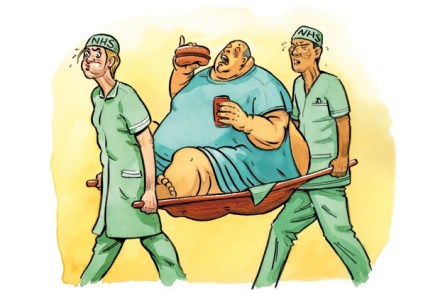
Like many of you folks out there, I’m currently engaged in the thinly-disguised admission of alcoholism that is ‘Dry January’. I’m also on a diet, and this week have eaten what looked like two shrivelled gonads for lunch, (they were boiled potatoes, I think) and yesterday a ‘salad’. The goal is to be down to Class I Obese by the summer. The diet means no white bread, no pasta (white pasta but I don’t recognise brown pasta as such) and most of all no sugar, which is now thought to account for a large number of deaths from heart disease.

The BBC isn’t Left-wing as such, it’s elitist

From our UK edition

The BBC made a ‘terrible mistake’ in not reflecting public concern about immigration, Nick Robinson has said. This is the latest case of BBC self-flagellation. (Now I think about it, a sort of Maoist-themed programme in which Beeb executives denounced themselves would make great TV.) BBC bias is a subject I know a bit about, having written a pamphlet on it last year. I thought that, while the BBC is a much-loved institution, it must carry at least some of the blame for the mistakes most people feel were made over immigration under New Labour.

Economists – the scourge of mankind

From our UK edition

Are there any disciplines on earth as hyped-up and overrated as economics? Every subject depends to some extent on others; you can’t, for example, understand history without a bit of geography or human biology, and you can’t master either of those without a bit of chemistry, for different reasons. The same goes for all disciplines – except, for some reason, economics, where the opinion of the experts seems to count for a great deal in discussions where their field is only one aspect. The great example of this was the euro, which was promoted by the great and the good of the dismal science as a brilliant idea because, of course, reducing barriers between markets will make us wealthier.

How We Invented Freedom by Daniel Hannan – my political book of 2013

From our UK edition

It’s rare to read a book about politics and be actually excited to get back to it, like you’re on holiday and lost in a novel; but that’s what I felt with How We Invented Freedom & Why It Matters, Daniel Hannan’s account of the development of English law and politics. But then again, I am quite weird. The book begins with Hannan’s native Peru, and his father’s farm being threatened by a mob during one of that country’s various periods of political instability. Although a Hispanophile (and Francophone), Hannan goes on to explain why those of us in Britain, the United States and the other Anglosphere nations should be so grateful to live with the English system of law.

Nigel Farage is right – let the Syrians come, but let them stay

From our UK edition

It doesn’t surprise me in the slightest that Nigel Farage has appeared to out-leftie the three main parties on the subject of asylum for Syrians. It just surprises me that anyone is surprised. Ukip as a party is opposed to mass immigration, and believes that the social costs of ‘diversity’ vastly outweigh the short-term economic benefits of migration. But the gift of asylum is something else; no one is saying that Syrians are needed to enrich our culture or add vibrancy or make cappuccinos for people who work at the Economist, they just need to escape from a hellish war or they may die. Of course we should give refuge to more. But we shouldn’t pretend to ourselves that this is a temporary matter.

Stella Creasy’s stance on gendered toys misses the point

From our UK edition

I felt a touch of sadness on Tuesday when Marks & Spencer caved in to demands that they de-gender their toys, which must make me the worst person on earth. After her triumphant campaign, MP Stella Creasy tweeted: if it annoys some so much girls might want 2 play with cars, imagine how they’d feel if they knew also wanted 2 run companies & stuff! ;-@ — stellacreasy (@stellacreasy) December 18, 2013   Is that why, though? What annoys a lot of people is that a vocal pressure group professing outrage, the universally accepted currency of public discourse, has limited customers’ options. It’s like when people complain about Amazon selling costumes that offends some victim group whom they claim to represent.

‘If they kill us all, what would be the reaction of Christians in the West?’

From our UK edition

The Silence of Our Friends, my Amazon Singles ebook about the persecution of Christians in the Middle East, is published today. I know I’ve written several posts on this subject recently, so I promise to stop, so long as everyone buys the book. Otherwise I won’t. Ever. It’s a subject that has become ever more urgent this year with violence against Christians in Syria, where Islamists have been engaged in ‘religious cleansing’, and in Egypt, which saw the worst anti-Christian violence in centuries.

In praise of consumerism at Christmas

From our UK edition

It’s about this time of year – the darkest days of winter – when we traditionally get those newspaper articles lamenting the amount we consume over Christmas and how it’s all grossly commercial, which is bad because some kids go hungry; followed by the Thought for the Day piece about how we should all embrace poverty, which is what the Christian message is really about, rather than stuffing our fat faces and spending loads of money we don’t have. But to me what’s special about Christmas is that my children really enjoy being given presents, including the ones from Fr Christmas, now a sort of grandfather-god of consumerism.

You have to admire the chutzpah of the Saudis in protesting religious intolerance

From our UK edition

Further to yesterday’s post on Britain’s apathy about Christian persecution, the main question people asked in response was: what can Britain do, without military means? Taking aside that our military power helped to bring about persecution in Iraq and almost certainly would have done in Syria had this government got its way, there are lots of ways you can peacefully influence a country’s politics, including financial and moral pressure. That is what Saudi Arabia does, after all. The Organisation Islamic Co-operation (OIC), for example, a bloc of 57 Muslim countries dominated by the Saudis, has just released the latest edition of its annual ‘Islamophobia report’.

Britain’s refusal to defend Christians in the Middle East is shameful

From our UK edition

I have an ebook published next Thursday, called The Silence of Our Friends, on the persecution of Christians in the Middle East and the apathy of the West about this tragic and historic event. (A link will appear at the top of this page next week – in the meantime please spread the word.) I say apathy, but lots of people are concerned, and in the past year and a half such books as Christianophobia, Persecuted and The Global War on Christians have tackled worldwide persecution; there has also been increasing awareness following violence in Syria and Egypt over the summer, and last month Baroness Warsi became the first minister to raise the subject.

The EU is corrupt because southern Europe is corrupt

From our UK edition

What with Britain’s dreadful performance in the PISA educational rankings, there has been comparatively little attention given to another international league table– Transparency International’s Corruption Perception Index. The good news is that Bulgaria and Romania, with whom we will become much more intimate next month, are already in the EU’s top 5 for corruption, placed 2nd and 4th, with Greece, Italy and Slovakia filling out the leader board. I don’t object to Romanian and Bulgarian EU citizens being able to come to Britain as such, I object to the very idea of these countries joining the polity of which I am a member. But then I’m not too happy about being part of the same state as Greece and Italy, for the same reason.

Bob Dylan falls foul of Europe’s neo-blasphemy laws

From our UK edition

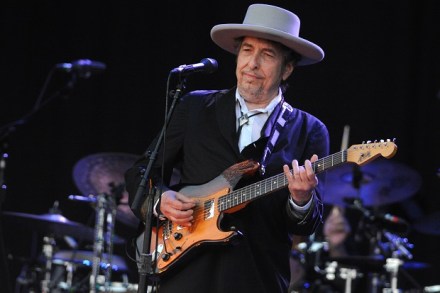
The French authorities are investigating Bob Dylan after some Croats were offended by something he said in an interview with Rolling Stone last year. The singer had said: ‘If you got a slave master or [Ku Klux] Klan in your blood, blacks can sense that. That stuff lingers to this day. Just like Jews can sense Nazi blood and the Serbs can sense Croatian blood.’ Dylan is the latest victim of Europe's neo-blasphemy laws, in which offending someone’s group identity is treated in the same way that offending God once was. When Christianity stops being sacred, everything becomes sacred; did GK Chesterton say that? Well it’s the sort of thing he might have said.

Someone rid us of the awful slogan: ‘hardworking families’

From our UK edition

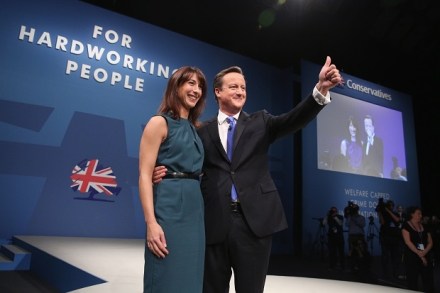
This is a message to any politician out there thinking of using the phrase ‘hardworking families’ or ‘hardworking people’ – I will look for you, I will find you, and I will kill you. A day does not go by without a Tory politician using this highly irritating slogan, especially in the regular spam emails I get from the party. The latest occurrence happened today with the energy minister telling WATO that ‘We are determined to protect hard-working families from fuel bill rises’. I must be out of touch with public opinion, as usual, and this idea must resonate with people in general, because otherwise the media-obsessed Tories wouldn’t repeat it like a mantra.

Untold truths – how the spirit of inquiry is being suppressed in the West

From our UK edition

It looks like Boris has offended lots of people by suggesting that some folk are where they are because they’re not very bright, something Nick Clegg calls ‘unpleasant’ and ‘careless’. It’s also, as Clegg must know perfectly well, true, but as Rod Liddle writes this week there are certain things you just can’t talk about, not just despite being true but because they’re true. Rod cites what Dominic Grieve recently said about corruption, which was rude, offensive, insulting to the Pakistani community and of course totally true. Likewise when Richard Dawkins recently pointed out a fact about the relative success of the Muslim world vs Trinity College, Cambridge – that was offensive.

Ex-Muslims are living the British dream – Britain should support them

From our UK edition

There was an excellent Radio 4 documentary on yesterday in which Sarfraz Manzoor interviewed a group of people you don’t hear much about – ex-Muslims. Like all good radio documentaries, it left me wanting to know more about the individuals involved, feeling more confused about the world, and with mixed feelings too. On the one hand I can understand that Dover Beach sadness of people falling away from religion, and why the parents of those interviewed would feel devastated by that loss. On the other hand, the ex-Muslims are right. They’re right to question the beliefs they were brought up with, and they’re right to see the inconsistencies and those aspects where Islam’s morality clashes with theirs, and to follow what they think to be right.

When it comes to diversity, most of us vote with our feet

From our UK edition

Liberals are almost as likely to flee diversity as conservatives, according to new research by Prof Eric Kaufmann for Demos. Some 61 per cent of white people who were ‘very comfortable’ with mixed marriages (the best indicator of views on race) moved to whiter areas during the period, compared to 64 per cent of those who were ‘fairly uncomfortable’. The Sunday Times called it ‘polite white flight’. The tendency of white liberals not to practise the diversity they preach dates back to the 1960s at least, and offends people who rightly point out that their reasons for moving are to do with space, schools, housing and a number of other things. Up to a point.

How much of homophobia is just generic macho stupidity?

From our UK edition

I fear that Stonewall are turning into those old colonels who used to write to the Telegraph complaining that the word ‘gay’ had been taken up by homosexualists. Viz had a letter to that effect a few years back lamenting that the kids have taken a perfectly good word, ‘gay’ as in homosexual, and now use it to mean ‘rubbish’. Stonewall have a point, of course; however much people might argue that gay in its tertiary sense is entirely separate from its secondary meaning, it’s still clearly going to be hurtful when kids use it as an insult. You can make all the semantic arguments in the world about how words evolve, but even as they do they still carry a legacy.

What is the point of having a ‘city of culture’?

From our UK edition

‘Hull has been named the 2017 city of culture. Better luck next year, Luton.’ So wrote the Telegraph’s Tim Stanley on Twitter. Nadine Dorries said: ‘Hull? City of culture? As one originating from Liverpool, a former recipient, I'm er, surprised but of course, delighted for Hull!’ That summarises the general reaction to the choice of the 2017 UK City of Culture. I’ve never been to the East Riding city, so I can’t comment on whether the widespread view of it as a dump is fair, but certainly lots of the cities that compete for this honour are certified Crap Towns. Dover? Stoke-on-Trent?

The CofE doomed? Only because it’s surrendered to phony soullessness

From our UK edition

The Church of England is doomed, Lord Carey has said, warning that Anglicanism is just ‘one generation away from extinction’. To be fair people have been saying this for a long time; in the mid-19th century the Church decided to make a survey of churchgoing, and were stunned to find out that only a quarter of people in England attended Anglican services and a similar number to non-Conformist services. Half the population wasn’t going at all. Now you’d be lucky to get that many at Christmas.

The Saudis spread their ideas around the world – why don’t we?

From our UK edition

The persecution of Christians, the greatest story never told in the Western media, is finally building momentum as a story, after a year which has seen villagers massacred in Syria, dozens of churches burned down in Egypt’s worst religious violence for centuries, and the Peshawar atrocity in which the suicide-bombing of a church killed more than 80 people. Earlier this week several MPs discussed the issue in Parliament, Fiona Bruce saying that 'We should be crying out with the same abhorrence and horror that we feel about the atrocities towards Jews on Kristallnacht.' And Baroness Warsi will say in a speech in Washington today that: 'A mass exodus is taking place, on a Biblical scale. In some places, there is a real danger that Christianity will become extinct.