Ed West

Ed West

Ed West writes the Wrong Side of History substack

The Saudis spread their ideas around the world – why don’t we?

From our UK edition

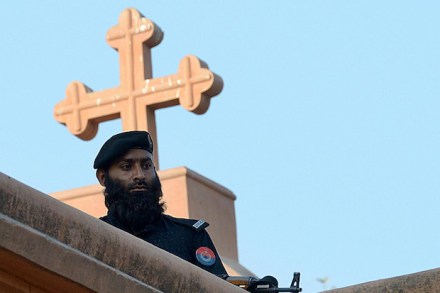
The persecution of Christians, the greatest story never told in the Western media, is finally building momentum as a story, after a year which has seen villagers massacred in Syria, dozens of churches burned down in Egypt’s worst religious violence for centuries, and the Peshawar atrocity in which the suicide-bombing of a church killed more than 80 people. Earlier this week several MPs discussed the issue in Parliament, Fiona Bruce saying that 'We should be crying out with the same abhorrence and horror that we feel about the atrocities towards Jews on Kristallnacht.' And Baroness Warsi will say in a speech in Washington today that: 'A mass exodus is taking place, on a Biblical scale. In some places, there is a real danger that Christianity will become extinct.

Can Britain leave the Commonwealth?

From our UK edition

My dad used to tell me that when he was a foreign correspondent in the 1960s he was once assigned to the Gambia where, upon arriving at the airport, some man started trying to sell him a watch. Brushing aside the persistent chap, dad finally said ‘sorry, I’m going to be late for my meeting with the foreign secretary’, only for the man to tell him ‘I am the foreign secretary’. They got on famously, my dad said. I imagine the standard of African politician at the time was probably higher than it is now.

Should state education be abolished?

From our UK edition

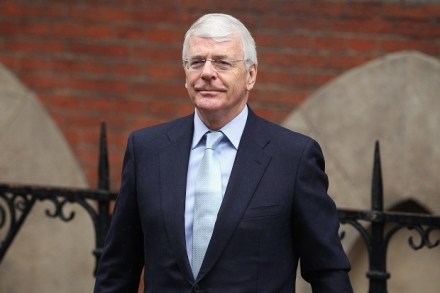
These days I find myself so drifting away from the bounds of acceptable opinion that I don’t even shout at Radio 4 for being biased, because I don’t even understand the basis of what the arguments are about. Take this morning’s schools feature (occasioned by Sir John Major's comments about the 'truly shocking' dominance of a privately educated elite in public life), in which Harry Mount argued in favour and Owen Jones against the motion that grammar schools lead to more social mobility than comprehensives.

Drivers are a menace to society

From our UK edition

I hate drivers. Don’t get me wrong, I don’t hate all of them, just a considerably larger proportion than I hate of the population as a whole. And, like most cyclists, I drive myself, having been bullied into it by my then girlfriend who bought me lessons for my 27th birthday. But generally speaking I feel the same way about them as Rod Liddle feels about cyclists. Although I agree with Rod on almost all things, it would be weird and awkward if I agreed with him on everything, and this is the slither outside the bubble on the Venn diagram. I don’t object to his characterisation of cyclists as angry, self-righteous ninnies, because I’m not opposed to generalisations as they’re quite necessary.

My idea for a new date in the calendar – Hate Speech Day

From our UK edition

I know we’re inundated with ‘raising awareness’ days these days when we’re supposed to wear a bracelet or grow facial hair, but I’ve got a great idea for a new one – Hate Speech Day. It occurred to me while reading this Atlantic piece about gay rights by Jonathan Rauch in which the author came out with a brilliant sentence explaining how liberal societies should work. ‘The best society for minorities is not the society that protects minorities from speech but the one that protects speech from minorities (and from majorities, too).’ Exactement! The best route towards maximum freedom, peace and happiness is through open debate, and that requires that all theories be tested, even the hateful ones.

Should Saudi men be allowed to drive?

From our UK edition

It’s important that newspapers make themselves sounding boards for unpopular opinions, especially in an age when identity is sacred and people are judged by having the right views rather than the right behaviour. But we still reserve the right to mock if they are badly argued, such as this Guardian piece arguing that since most Saudi women oppose lifting the driving ban, we should not be campaigning for it. It concludes: ‘People in Saudi Arabia have their own moral views and needs. What works in other societies may not fit in Saudi, and the reverse.

Malala – the girl who hates Britain

From our UK edition

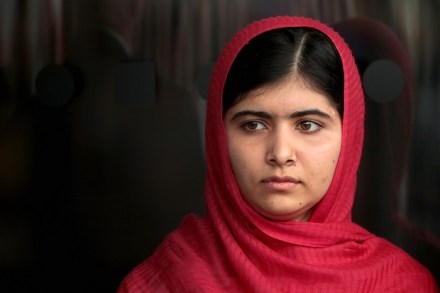
Before a mob turns up at my house and someone starts dragging up that unfortunate picture of my grandfather with Hitler, the headline is a joke, but I do wonder if the media has given a rather misleading idea of Malala Yousafzai. For example, the Pakistani International Marxist Tendency claim that the schoolgirl sent a message to their 32nd congress stating: ‘I am convinced Socialism is the only answer and I urge all comrades to take this struggle to a victorious conclusion. Only this will free us from the chains of bigotry and exploitation.

Blonde children and Roma: when the two great hysterias of our age clash

From our UK edition

The media seem to be in a pickle over the removal of a blonde girl from a Roma family in Dublin, which followed the arrest of a couple in Athens who had a suspiciously Nordic-looking child with them. It’s a fascinating story because for the first time I can remember the two great hysterias of our age have finally clashed – racism and child-snatching, the Guardian's obsession versus the Sun’s. It has also pitted the almost immovable object of media taboo against the unstoppable force of the human-interest story. The highbrow media maintains a sort of code of decency about reporting the Roma, so that you will never read anywhere an accurate analysis of anti-Roma prejudice.

The Leveson Test – separating the ‘Decent Left’ from ‘the Idiots’

From our UK edition

If the Leveson Inquiry does nothing else, then it has at least provided a useful guide to the British Left for those of us on the saliva-speckled wastelands of British conservatism. Political tribes are complex but occasionally one issue will neatly divide a movement into easily identifiable clans, of which press regulation is one. And on one side you have one part of the British Left, the liberal tradition that values the liberty of all as a starting principle, and on the other the radical tradition that sees press freedom as a way for the rich to monopolise power. We might call them 'The Decent Left' and 'The Idiots'; and while it’s not a clear-cut test, and there may be some Idiots against regulation and some Decents in favour, as a rule of thumb it works.

Real feminists stand up for women

From our UK edition

As Edmund Burke wrote: ‘Manners are of more importance than laws. Upon them, in a great measure, the laws depend.’ Testify, brother – and if our lawmakers have no manners, then we are really up a creek. As Spectator columnist James Forsyth noticed yesterday: ‘Quite remarkable that no MP has offered Jo Swinson, who is seven months pregnant, a seat. Really shocking manners and decency.’ Swinson didn’t help matters when, according to the Mail, she said it would have been ‘quite sexist’ to suggest she was not capable of standing. I wonder how damaging that sort of attitude is to feminism in general?

Intelligence is just another privilege you inherited from mummy and daddy

From our UK edition

I’m starting to get the impression that the Guardian isn't very keen on Michael Gove, and may not give him the benefit of the doubt in their reporting. The latest offering was this, ‘Genetics outweighs teaching, Gove adviser tells his boss’, which was presumably designed to infuriate teachers, about an essay written by Dominic Cummings. This was followed up by a Polly Toynbee piece denying the role of hereditary factors in intelligence and claiming that it was all part of some government plan to keep the poor in their place. Others have waded in, raising the spectre of eugenics, and I imagine someone is right now composing a comment piece about Dr Mengele’s legacy with the headline MICHAEL GOVE’s ‘FINAL SOLUTION’ FOR POOR CHILDREN.

What have Londoners gained from the London housing bubble?

From our UK edition

Now that the middle class squeeze has become my sujet du bore at the fancy north London dinner parties I attend, I was interested in Saturday’s New York Times piece about what foreign billionaires are doing to our insane property prices. One statistic really stuck out: ‘An astonishing £83 billion worth of properties were purchased in 2012 with no financing — all cash purchases. That’s $133 billion.’ Crikey. Author Michael Goldfarb argues: ‘And as for services, the minimal tax paid by those who have made property into money means that a city whose population has increased by 14 percent in the last decade can’t afford to build new schools. There will be a capacity shortfall of an estimated 90,000 places by 2015.

What Mo Farah tells us about multicultural Britain (very little)

From our UK edition

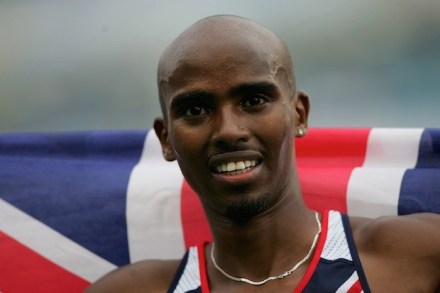
The outrage over Jack Wilshere’s comment that ‘If you live in England for five years it doesn't make you English’ shows how the Overton window can shift in such a short space of time. Fifteen years ago no one would have cared, but many drew sinister implications from the statement, and England cricketer Kevin Pietersen asked: 'Interested to know how you define foreigner...? Would that include me, Strauss, Trott, Matt Prior, Justin Rose, Froome, Mo Farah?' Mo Farah, again. Every time someone uses Mo Farah as an argument for multiculturalism I do my own version of the Mobot by sinking my head into my hands; even intelligent commentators writing for conservative publications have taken to making this anecdotal case for diversity.

Did the Catholic Church get to Tommy Robinson?

From our UK edition

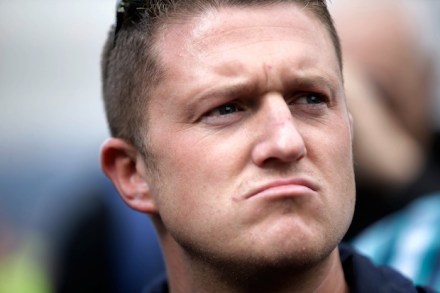
I met Stephen Lennon/Tommy Robinson once, in Luton. Dreadful place – I’d wear a niqab just to reduce my view of the appalling architecture (like in Birmingham, the hub of the town is a shopping centre surrounded by a sort of ring road). I never liked the organisation’s tactics, nor am I completely sure of what their aims were, but as Lennon described it – of people openly recruiting for the Taliban while his classmates were off in the Army – the anger was understandable. In Luton, in particular, the Labour government also funded mosques in a way that was bound to lead to resentment among the white working class.

Do we really need to turn the mentally ill into victims?

From our UK edition

Public wrath has finally moved from the Daily Mail, and to the Sun over its splash yesterday on the mentally ill. It’s deemed especially offensive because this is apparently Mental Health Awareness Week. For some time now mental illness has been becoming the new victimhood du jour, and among the reasons is that mental illness is so spectral and ambiguous that lots of people can join in (especially journalists). Laurie Penny wrote that it was unfair to use stereotypes about mad axe man because: ‘Like a lot of people, I sometimes get depressed and anxious. On precisely none of these occasions have I flown into a murderous rage and stabbed up a stranger.

Ukip’s supporters are anxious, not awkward

From our UK edition

I guess the ‘unite the Right’ memo has not got through to some Tories, with Michael Heseltine calling Ukip 'a racist party' and James Wharton saying they’re ‘an awkward group of strange people’. That may be unwise — rather like attacking your customer-base — but it’s also untrue. Small Right-wing parties have a huge disadvantage because, although lots of people are socially conservative, soc-cons tend on average to be low in social skills and charisma and so the normals are easily driven away by the weirds, especially when immigration is an issue.

Opponents of marriage tax breaks need to ‘check their privilege’

From our UK edition

What with the flap about Ed Miliband’s dad, the legion of the outraged have forgotten what they were planning to get angry about this week – the marriage tax break, which is social engineering and a blatant Tory attempt to punish single mothers in favour of the patriarchy. As a paid-up member of the patriarchy it always sounds more fun coming from people complaining about it than it actually is. Marriage, for men, is a form of domestication and many would rather spend their 30s and 40s playing computer games, if possible with a live-in girlfriend to whom they have made no commitments. Many end up getting married partly because their peers do, and the social pressure to conform. Why do we do it?

Why is ‘feminism’ such a dirty word?

From our UK edition

A few years back I did one of those online debates on the Times website, the subject being why feminism had fallen out of favour. Within about 60 seconds four people had used the phrase ‘gender is a social construct’ and, well, I sort of switched off at that point. It’s strange that the F-word is now so unpopular that even David Cameron, a man with a desperately keen ear for metro-liberal opinion, refused to identify as such last week. When asked by Red magazine, he said: ‘I don’t know what I’d call myself... it’s up to others to attach labels. But I believe men and women should be treated equally.

Ed Miliband ducks the question. If squaddies are victims, who or what is threatening them?

From our UK edition

A country’s laws say much about its people’s character, though not in the way its lawmakers intend. Perhaps the oldest written law in English history, dating back to King Ethelbert of Kent, decreed strict punishments for anyone who attacked Church property, which suggested that either they were very pious folk or, more likely, quite a few people were stealing from churches. The idea of sacrilege predates Christianity; in ancient Rome violence against some officials was punished more severely because their positions were sacred. The modern advent of hate crimes has reinvented this idea, with certain people granted protection because of group victim status, victimhood being the closest thing we now have to the sacred, offending someone’s identity a blasphemy.

The insanity of ‘votes for children’: who cares what adolescents think about politics?

From our UK edition

Should people who comment under YouTube videos be deciding the fate of our country? That’s the frightening scenario proposed by Ed Miliband, who wants to give 16-year-olds the vote because, as he put it, it will make them ‘part of our democracy’. Or, in other words, the electorate’s opinion is no more important than a child’s. There is nothing progressive about allowing children to vote, any more than it is progressive to allow kids to sit on juries or take out mortgages. These things all involve the ability to make judgments, which is not sufficiently developed in adolescence. Voting isn’t just a right that makes you feel ‘part of democracy’; it’s a responsibility and decision-making process.