Ed West

Ed West

Ed West writes the Wrong Side of History substack

The silence of our friends – the extinction of Christianity in the Middle East

From our UK edition

The last month and a half has seen perhaps the worst anti-Christian violence in Egypt in seven centuries, with dozens of churches torched. Yet the western media has mainly focussed on army assaults on the Muslim Brotherhood, and no major political figure has said anything about the sectarian attacks. Last week at the National Liberal Club there was a discussion asking why the American and British press have ignored or under-reported this persecution, and (in some people's minds) given a distorted narrative of what is happening. Among the four speakers was the frighteningly impressive Betsy Hiel of the Pittsburgh Tribune-Review, who has spent years in Egypt and covered Iraq and Afghanistan.

Lib Dems vote for forced marriage for commitment-phobic men

From our UK edition

Never let it be said that the Liberal Democrats are against marriage - in fact they’re so keen on it that at their conference they voted for a motion that effectively forces marriages on commitment-phobic men. The Cohabitation Motion is aimed at giving cohabiting couples (whether they have children or not) rights currently only enjoyed by married couples. MP Julian Huppert explained: 'Cohabitation is on the rise, creating families of all shapes and sizes. In the UK more and more couples, different sex and same sex, are choosing to live together without entering into civil partnerships or getting married. In 2010 more than 15 percent of all families in the UK were living as cohabiting couples.

We should encourage and promote ‘Cultural Anglicanism’ in schools

From our UK edition

In this week’s magazine Douglas Murray has struck up a friendship with Professor Richard Dawkins, despite things having started rather badly when Douglas previously suggested that the professor’s failure to criticise Islam was just him ‘showing his survival instinct’. Well, no one can accuse Dawkins of being shy on that front now, and the Professor recently received a sort of auto-de-fe for stating Islamophobic facts.

Some people are feminine – get over it

From our UK edition

In the latest victory against sexism, Toys 'R' Us is to stop labelling its products as being for 'boys' and 'girls' after pressure from campaigners, joining such shops as Sainsbury's, Tesco, Boots, Harrods and Hamleys . In its report the Huffington Post quoted a woman who sells engineering toys aimed at girls, who hopes to show it's not just a 'niche' but rather they can 'prove convention wrong' by making it more mass market. But what is wrong with being a niche market? One of the wonderful benefits of free-market capitalism is that it allows niches to flourish, so that people who once would have been forced into uncomfortable roles can instead find a place for themselves in the world.

Does Syria mark the end of American world dominance?

From our UK edition

Will historians see the Syrian war as 'the start of the historic American retreat'? Syrian media seems to think so, and they’re not the only ones; there’s a big market in 'America is doomed' literature, although the fact that lots of people are out there buying books suggests it maybe isn’t yet. I’m sure that, within weeks of the British victory of 1759, some miserablist pamphleteer was saying that Britain won’t last the century. Yet just because doom-mongers have been wrong in the past, they could still be right now – I call it Weigel’s law. And America has big problems, on top of the fact that China will soon overtake it as the world’s largest economy.

Stop mentioning the bloody war!

From our UK edition

Seventy-fours years ago today we stood shoulder to shoulder with our closest ally, issuing an ultimatum to a Fascist dictator who had overstepped a red line. And the rest is history – in fact the only history that most people know anything about. One of the things the Syrian crisis has shown is just how much the Second World War dominates public discourse in Britain and the US. The last week has seen a flowering of dubious WW2 analogies, with 'appeasement' being bandied around by MPs and lots of usually sensible people making references to 1938, Chamberlain and Churchill. John Kerry has said that Assad is like Hitler because he used poison gas, even though, as the Guardian pointed out, Churchill used it too. Assad is nothing like as threatening as Hitler.

For the middle classes, things can only get worse

From our UK edition

In this week’s magazine Fraser Nelson and I look at the breaking of the English middle class, a subject so scary you’ll want to hold someone’s hand when reading it. The frightening thing is that in Britain, as in the United States, the middle class is not just squeezed but shrinking and sinking. Even before the Great Recession began, middle-class jobs in the law, media and accounting have been melting away, outsourced, unprofitable or obsolete, while salaries are falling behind prices. This is not a product of the credit crunch, and it will not be going away. Median hourly income in London is now below 2002 levels, real wages in Britain have not risen since 2005, and the median income has been static or in decline since 2004.

The strange death of the British middle class

From our UK edition

To Voltaire, the British class system could be summed up in a sentence. The people of these islands, he said, ‘are like their own beer; froth on top, dregs at bottom, the middle excellent’. A harsh judgment, perhaps, but one that might still have some truth  in it today. Yes, we have horrible poverty in our council estates and toffery on our country estates. But Britain is a country that has always taken pride in what we think of as middle-class virtues — hard work, honesty, thrift and self-help. Today, however, we are witnessing the strange death of the middle class. In Britain, as in the United States, it isn’t just being squeezed — it is actually shrinking and sinking.

Is eastern European immigration a result of the working class being demonised?

From our UK edition

We had a Bulgarian chap do up our house. Lovely guy, worked all day and never wanted a break, and I didn’t have to drop my aitches or pretend to like football around him. Actually he turned out to be Polish but after weeks of me asking questions about Bulgaria he presumably felt too embarrassed and just played along with it. But there are many Bulgarians working in north London, and Birmingham, and they tend to be quite skilled, there being restrictions on who can work here. Naturally as those restrictions are removed, and as the quantity of immigration goes up, the quality goes down. MigrationWatch claim that net migration from Romanian and Bulgaria will be 50,000 every year for the next five years, and the group were pretty accurate in predicting the 2004 A8 influx.

The name game

From our UK edition

The ONS have published its list of popular names, and so it’s time for that annual ritual of debating whether Mohammed, if you include all eight spellings, is really the most popular name in Britain. It depends; if you include spelling variations in a name, do you also include diminutives, in which case Oliver and Ollie, and Henry and Harry, outnumber all Mo’s. But then diminutives are sort of separate names where variations are not, Isabella, Lisa and Jack all having started as diminutives, now surely names in their own right. Why on earth does this pedantry pop up?

Are people really that offended by Godfrey Bloom’s comments?

From our UK edition

Lots of people are hating on Ukip’s Godfrey Bloom after he featured on the Today programme attacking foreign aid, which he said was used 'to buy Ray-Ban sunglasses, apartments in Paris, Ferraris' and 'F18s for Pakistan'. What made many furious was that he was recorded referring to recipient countries as 'Bongo Bongo land'. I genuinely find it hard to believe that anyone is really offended by this. Maybe I’m missing some part of the brain that relates to outrage; I’m not even offended by jokes about Catholics, the Irish (or the English when I’m in Ireland), or anything else that might be targeted at me in particular. If it’s funny and clever, laugh; if it’s tired, old and predictable, then don’t.

Why do people write abuse on the internet? Because they can

From our UK edition

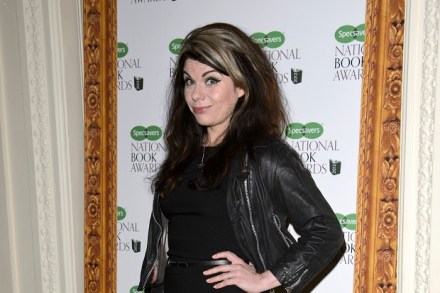
I was away last week, filled with joy and love following the birth of our child, but just occasionally I’d check the multi-character psychodrama that is Twitter to stop myself getting too soppy. I sort of agree with Caitlin Moran’s stance in principle; if people are behaving appallingly on Twitter, Twitter should kick them out. If I ran a pub and people were driving away women with foul language, I needn’t call the police, but I’d have every right to bar them. What is problematic is that the organisers of Trolliday do not see this as a question of manners, but of misogyny – hate crime, in other words.

Jane Austen on banknotes – the right person for the wrong reason

From our UK edition

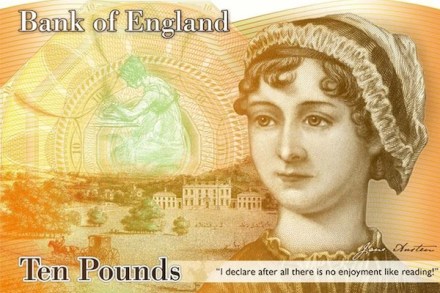
So the huge online campaign and (rather strange) legal action won in the end: Jane Austen is to appear on the new £10 note. Most people would agree that she is in the top division of English authors, so it’s a shame that, rather than being celebrated as a novelist, she has now been chosen as a woman, rather less of an accomplishment. As a consequence people will mentally devalue her, because the human mind always subconsciously adjusts to tokenism in the same way it adjusts to inflation. (And it is the same reason that Buy British campaigns have never worked, sending as they do the message that the products are lousy.

Internet news is driving us apart, not bringing us together

From our UK edition

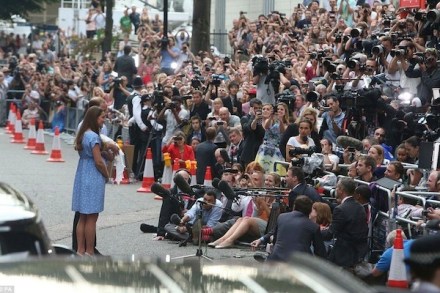
Congratulations to Kate and William, and Baby Cambridge, who has an extensive Wikipedia entry already but no name. The poor couple faced the cameras yesterday with good grace, which is the last thing you’d want in their situation; after my wife’s last labour was over I looked like one of the crew from Das Boot and I’d barely done anything. Not everyone is so keen to join in, which is why The Guardian has been offering readers the chance to switch off all coverage of royalty with a 'republican' button. It’s an interesting foretaste of newspapers tailoring news and comment towards an individual’s own interests.

Dear Michael Gove, please abolish yourself

From our UK edition

When I was at secondary school my lunch usually consisted of a packet of Space Raiders and a Toffee Crisp, washed down with a healthy can of Dr Pepper, at least until I started spending the lunch money on fags. And look at me now – a strapping hulk of a man with teeth like Donny Osmond. Partly the reason I avoided school dinners was because they looked, smelled and tasted like something served up in Attica Penitentiary; that seems to have improved, as has the quality of food across British society. But many people prefer packed lunches, large proportions of which are apparently devoid of nutrition and presumably contribute to the nation’s morbid levels of obesity as well as educational shortcomings.

The British people are not wrong about everything

From our UK edition

Imagine that you’re a passenger in a car driving down a country road at 20mph. All of a sudden the driver hits the accelerator and you’re now zinging away at 60mph. If asked what speed you were going at, what would you say? I’d imagine probably something like 80mph, at least until you became accustomed to your new situation. Yesterday it was revealed that the British public have some quite wildly inaccurate perceptions about the true level of crime, teenage pregnancy and immigration. Presumably this was seen as evidence that, although the public have conservative views on these subjects, they are misinformed and therefore cool policy reasoning should be left to the experts, who after all have done such a great job at running the country.

Katie Hopkins – this is why we have political correctness

From our UK edition

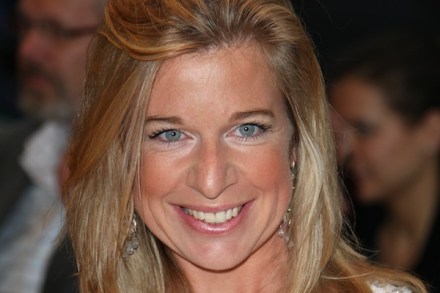
I’ve been reminded just why political correctness exists: Katie Hopkins of the Apprentice, the TV show that glorifies the entrepreneurial ideal and the psychopathic levels of self-confidence that accompany it. Hopkins is on a bit of a roll with her homespun wisdom. Late last week she criticised 'lower class' children’s names, saying: 'I think you can tell a great deal from a name… I tend to think that children who have intelligent names tend to have fairly intelligent parents and they make much better playdates for my children.' As well as also having a go at people with tattoos and fatties, she also quipped: 'Ginger babies. Like a baby. Just so much harder to love.' Her response on Twitter was: 'Dear PC brigade.

The marriage debate is about probability, not stigma

From our UK edition

Should the government subsidise married couples? Arguing about whether births outside wedlock lead to worse childhood outcomes, or whether broken homes and such outcomes both stem from some third factor, really depends on one’s worldview and which studies one chooses to ignore. My own suspicion, based on the wisdom of the ages and what I read in the Daily Mail, is that social and personal problems are likely to be more prevalent on average among those who have children out of wedlock, which makes proving the case for marriage hard. In addition, the actual absence of a father on average makes a difference. But how could this be proved except through a cruel social experiment where random members of society lost their fathers?

Cant phrase of the moment: community cohesion

From our UK edition

Ever since the Woolwich murder I’ve noticed an upsurge in the use of what is now my least favourite cant phrase – 'community cohesion'. Political cant proliferates when theory fails to match reality, and today we have a diverse and vibrant array of words and phrases that mean two contradictory things at once, and also nothing. It’s important to talk about community cohesion because diversity is our strength, and also our weakness, and should be celebrated, and policed. Community cohesion also has a darker Singaporean edge. In Singapore, the world’s first truly multicultural modern state, speeches and broadcasts can be arbitrarily shut down if community leaders believe them to be offensive or threatening, so that no real criticism of religion is permitted.

The government needs to stop trying to legislate for manners and common sense

From our UK edition

Is there such a thing as the Loony Right? The reaction of those on the Left to Peter Bone and Philip Hollobone's Alternative Queen's Speech selection of bills certainly suggested so. But what defines whether something is loony? Is it lunacy because it is unprecedented, out of step with other civilised countries, incoherent? Or just that no one you meet or read advocates it? I don’t support the death penalty, for instance, but in the case of murder it’s not wacky – most US states still practise it, after all, as does Japan. Some of the other suggestions are not just reasonable, but probable, such as withdrawal from the European Union.