Douglas Murray

Douglas Murray

Douglas Murray is associate editor of The Spectator and author of The War on the West: How to Prevail in the Age of Unreason, among other books.

An endangered species

Last night the BBC aired a brilliant horror-movie (viewable on iPlayer) called ‘Young, Bright and on the Right.’ It followed two young men, one at Oxford the other at Cambridge, trying to make their way in student Conservative party politics. One of the stories – of a young man from a one-parent family in Yorkshire whose father had been in prison – was genuinely interesting. Rather than being happy about himself and his background, he had become someone else. Though he presented this as being essential in order to get on in Conservative party politics, I am not certain he was right. Having never been involved I can’t say for certain, but it does occur to me that William Hague, for instance, never lost his accent.

Peter Hitchens vs Mehdi Hasan

A fascinating column in yesterday’s Mail on Sunday by Peter Hitchens asks ‘Am I an “animal”, a “cow” — or just another victim of BBC bias.’ The spur for asking this otherwise surprising question is a BBC radio programme presented by the former New Stateman writer, Mehdi Hasan. While presenting ‘What the Papers Say’ a couple of weeks ago Hasan found the opportunity to misquote a column by Hitchens, who promptly complained to the BBC. For its part, the BBC seems to have accepted that the quote was doctored and has tried to make up for this. But now Hitchens asks some questions about Hasan’s own opinions.

Why is Hezbollah still not on the EU’s list of banned terrorist organisations?

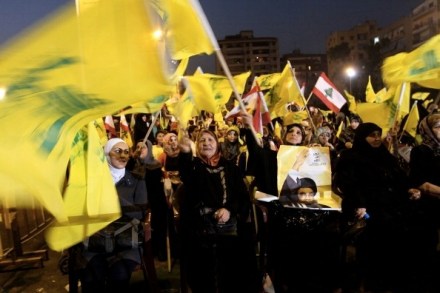
Despite having carried out terrorist attacks for the last thirty years and killed hundreds of people around the world, the terrorist group Hezbollah is, unbelievably, still not on the European Union's list of banned terrorist organisations. In today's Wall Street Journal. Daniel Schwammenthal lays out the imperative case for putting them on that list. Officially the EU claims that there is a difference between the terrorist group's political and military wings.  But that is not so, any more than it is the case for Hamas (which the EU does recognise as a terrorist entity).

Will tweets soon paralyse the nation?

It is becoming increasingly clear that Twitter might be the greatest threat to civilised life in Britain. Take just 24 hours of news: A 17 year-old has been arrested (and is currently being detained) in Weymouth for sending unpleasant tweets to the nation’s Olympic hero Tom Daley. Rio Ferdinand has been charged by the FA with retweeting a comment which referred to another footballer as a ‘choc-ice’. The Mail reports: ‘The initial ‘choc ice’ remark about Ashley Cole came two days after the Chelsea defender gave evidence on behalf of team-mate John Terry in his race trial concerning Ferdinand’s brother Anton.

Disliking the Olympics opening ceremony does not make one a Nazi

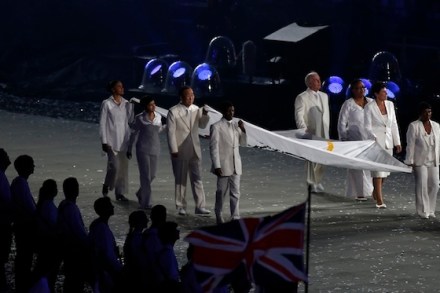
Some conservatives have been accused of ‘politicising’ the Olympics by daring to say anything negative about the opening ceremony. Having begun by attacking an obscure back-bench MP, these accusations are now being aimed at Conservatives in the cabinet. Yet it is not conservatives, but the organisers of the opening ceremony who politicised the event. Naturally, those who agreed with the political bent on display rejoiced in it and continue to do so. Take the Labour Minister for Social Justice and Local Government in the Welsh Assembly, Carl Sargent who tweeted on the night: This is the best Labour Party political broadcast I've seen in a while. And: Working class history, multi-cultural, nhs, cnd, gay kissing. Well done comrade Boyle! Bet Dave is wriggling!

The Olympic opening satire

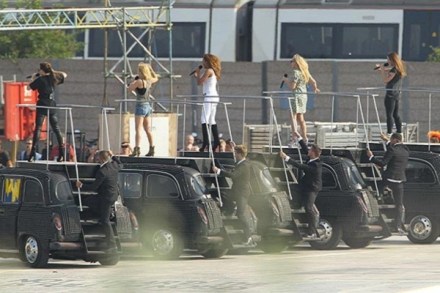
Until last night I thought Danny Boyle was the respected director of a film about smack-heads. But after seeing the Olympics opening ceremony I now realize ‘Danny Boyle’ is the nom de guerre of the satirical team of Rod Liddle and James Delingpole. In their capable hands what might have been merely an opportunity to showcase Britain became instead a hilarious example of our national humour. This included pretending that our national life only really began with the Empire Windrush, that our national religion is the NHS and that our leading icons include – and I never thought the boys would get away with this one – Shami Chakrabarti. It was so funny I almost wept at times. But then I reflected on their choice of music and became solemn.

Anti-Semitism, Islamism and Islam

My blog on last week’s bombing in Bulgaria and convictions in Manchester provoked a response from my colleague Martin Bright which I should like to respond to in turn. In his post Martin writes: ‘You won’t hear me say this very often, but I don’t think Douglas has gone far enough. For once, I think even he has pulled his punches. ‘What links these two events across a continent?’ he asks. ‘The answer is ideology. It is an ideology which deliberately targets Jews as Jews.’ I know what Douglas means: that there is a deeply entrenched anti-Semitism at the heart of the politics of extremist Islamism which strips its victims of humanity. We tip-toe around this phenomenon at our peril.

An ideological hatred

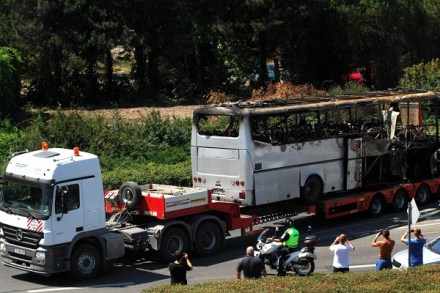
Two events this week have highlighted, from very different places, an identical problem. In Bulgaria on Wednesday a bomb was detonated on a tour bus carrying Israelis. Six people were killed and many more badly injured. On Friday a couple from Oldham, Mohammed Sadiq Khan and Shasta Khan, were sent to prison for attempting to put together an explosive device and planning to attack Jewish targets in Manchester. What links these two events across a continent? The answer is ideology. It is an ideology which deliberately targets Jews as Jews. In the West many people continue to try to pretend that it is not about Jews at all, but about Israel, or about houses in East Jerusalem or the presence of Jewish communities in the West Bank or any other excuse that people can come up with.

Is there any way to stop the infantilisation of Britain

As the world turns to London it may still imagine us a serious, taciturn people. If so, the world is in for a shock. For Britain has become a land all but denuded of grown-ups. We are in the grip of a full-scale, double-dip regression. We were not surprised that our Prime Minister should be addicted to a video game called Fruit Ninja. His predecessor, then in his late fifties, claimed to enjoy listening to teenage pop bands and had a wife who held ‘slumber parties’ for other women in their forties. Stand in any British high street and you’ll see the people to whom these politicians hope to appeal. Most middle-aged British men and women dress as if auditioning for a prequel to High School Musical. Their tastes are indistinguishable from those of adolescents.

We can’t just bury Bloody Sunday

I have a piece in today’s Wall Street Journal about the case for prosecuting certain of the Bloody Sunday soldiers. I am aware that it is not a popular argument, and one that most British people tend to shy away from. It also seems to provoke a certain amount of confusion. On a radio programme the other day, discussing potential prosecutions, the interviewer went so far as to ask how or why somebody who is ‘right-wing’ could be making these points. Firstly of course, this is a straightforward category error (‘right-wing’ equals bad and mean and therefore any ‘right-winger’ must be in favour of shooting civilians). Secondly, I think that there is in fact a vital conservative case for carrying this through to the stage of prosecutions.

The Gazan double standard

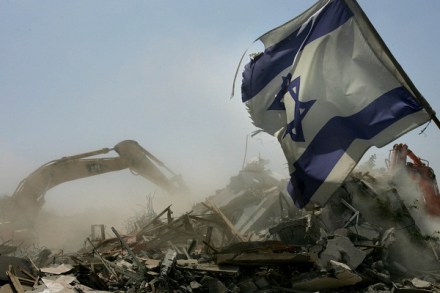
The journalist Tom Gross notes a story that you may have missed.  One hundred and twenty families in Gaza have lost their homes. 'Ma’an and other Palestinian news agencies report that the Hamas government in Gaza has renewed its policy of demolishing the homes of Palestinian families in order to seize land for government use. 120 families are to lose their homes in the latest round of demolitions – a far greater number than the number of illegally built Palestinian homes Israel has demolished in recent years – and unlike Israeli authorities, Hamas doesn’t even claim these homes were built illegally or with dangerous structures. Yet western media and human rights groups have been virtually silent about these destructions of Palestinian homes by Hamas.

Uncontrolled immigration

So the 2011 census results for England and Wales are out. And sure enough it turns out that the last decade has seen the largest population increase in any decade since records began. Twice that of the previous decade. Woe betide anybody who does not welcome this with a punch in the air and a few ‘Woohoos’. Despite having no democratic mandate for this societal transformation — indeed acting against public opinion on the matter — the last Labour government oversaw an immigration system which either by accident or design went demonstrably out of control. Naturally, some people will welcome this. They will say that another city the size of Manchester springing up every year is exactly what this country needs. In which case I hope they live there.

Britain does not need more mass immigration

Jonathan has already mentioned yesterday’s Fiscal Sustainability Report from the Office of Budgetary Responsibility. He appears to welcome mass migration both now and as an inevitable part of our future. Perhaps I could put a dissenting view? Migration itself can be a good thing. But mass migration (in the numbers it has happened in recent years in Britain and many other Western countries) is a bad thing. It strains our welfare systems, encourages people to ghetto-ise rather than assimilate and creates not so much a multi-racial society as a country made up of different mono-cultural centres. It causes a breakdown in trust both between and among communities, and erodes the possibility of any collective history or common culture.

DJ Delingpole

My Spectator comrade James Delingpole has many talents. Among them is his skill as a podcast-presenter for an American conservative website called ‘Ricochet’.  Yesterday he asked me to join him for his latest, deeply irregular, instalment of 'Radio Free Delingpole'. It was without question the most anarchic 40 minutes I have ever spent on air and  I should never have done it were it not for my love of James and the vast fee he unwisely promised. We covered a fair amount of ground, including the US elections and House of Lords reform, but mention of the Rolling Stones brought the programme to a climax with a row — instigated by James — over whether Led Zeppelin was better than Schoenberg.

The problem with UKIP’s opponents

Leafing through a pile of Economists I've just caught up on a Bagehot column from last month which inadvertently demonstrates exactly where UKIP’s opponents go wrong. The very final lines of the piece explain: ‘Mr Farage’s real dream is to reshape Britain, by pulling the Conservatives to the right and bouncing Mr Cameron into a referendum on EU membership. If he pulls that off, his insurgency will be no laughing matter.’ It is what is assumed here, rather than what is said, that is most revealing. Why should the prospect of a consultation of the British people on their membership of the EU be so fearful? Surely it could only be so if you were somebody greatly in favour of the EU who believed that the public did not share your beliefs?

4 years to bury the ghosts of Bloody Sunday?

It has just been announced that the police are going to launch an investigation into the Bloody Sunday deaths. It comes after the Police Service Northern Ireland and the Public Prosecution service reviewed the evidence of the Saville Inquiry. There will be a lot of comment about this in the coming days, but I think a couple of things are worth noting at the outset. Firstly, there can be no doubt that a number of soldiers deliberately shot and killed innocent people that day. Secondly, there can be no doubt that they then lied and misled an exceedingly long and costly public inquiry set up precisely in order to find the truth of what happened that day. As it happens, the Saville Inquiry provided ample opportunity for people to tell the truth.

At home with the Stalins

We all know what a city does when a local boy or girl has done good. But what do you do when the local boy turns out to have done very bad indeed? This is the dilemma facing the Georgian authorities in the city of Gori, not far from the boundary line of South Ossetia. For as well as being the first target of Russian forces during Vladimir Putin’s 2008 invasion, Gori is best known for giving birth to Joseph Stalin. It is now two years since the large statue of its most famous son was taken down from in front of Gori’s town hall. But there remains a dilemma over what to do with his opulently preserved birthplace and the connected museum commemorating his life. The Georgian authorities are eager to look towards Europe and away from their Soviet-occupied past.

Gitta Sereny and the truth about evil

The death of the author and journalist Gitta Sereny earlier this month drew some strangely critical notices. One piece even tried to blame her for a current cultural tendency to claim people are not responsible for their own actions. Though this was a dissenting view, there was a more general seam of criticism which ran through many obituaries. The claim was, essentially, that Sereny grew too uncomfortably close to her subjects and even ended up on occasions sympathising with them or excusing them. It is probably on the basis of her biography of Albert Speer that most of the criticism has come. It is true that Sereny got close to Speer and liked him.

A question for Martin McGuinness

‘God speed’ was apparently what Martin McGuinness said to the Queen when they met a short time ago. I wonder what she, and the Duke of Edinburgh, would have liked to say to him? Of all the things that the Queen should be asked to do in her Jubilee year, perhaps the most cruel has been to expect her to shake the hand of the former IRA commander and now deputy first minister of Northern Ireland. Many people bereaved by the Troubles have made gestures of almost super-human forgiveness, but few can have been so pushed towards doing so. And McGuinness is a particularly difficult case.

Al Qeada breathes again, but this is no time for dictators

Two sentences in the speech by the Director General of the Security Service, Jonathan Evans, yesterday evening have drawn particular notice. They are his statement that parts of the Arab world after the so-called ‘Arab Spring’ have become: ‘a more permissive environment for Al Qaeda’ and also that: ‘a small number of British would be jihadis are also making their way to Arab countries to seek training and opportunities for militant activity, as they do in Somalia and Yemen’. Without going over all of the responses to these facts, I would make just one comment.