Douglas Murray

Douglas Murray

Douglas Murray is associate editor of The Spectator and author of The War on the West: How to Prevail in the Age of Unreason, among other books.

Did Israeli settlements in the West Bank kill the two-state solution?

When did the dream of a two-state solution die? When it became clear that there are already two Palestinian states – the Hamas-run Gaza and the Palestinian Authority-governed West Bank? Or when the extremists of Hamas fired thousands of missiles into Israeli cities? Or last week when the ‘moderates’ of Fatah once again refused Israeli offers to go to the negotiating table and instead moved to circumvent their only negotiating partner via a diplomatic coup at the UN? No, in the eyes of portions of the UK government as well as the international community, the two-state solution is threatened not by these consistent, physically and diplomatically violent moves; but by everybody’s favourite subject: Israeli settlement building.

Is voting Lib Dem just a state of mind?

‘UKIP is not a party but a state of mind’ wrote the usually excellent Matthew d’Ancona in a remarkably sniffy column a couple of days back. Now, given that UKIP became the second party in the Middlesborough and Rotherham by-elections, perhaps some people will have to consider that the UKIP state of mind is rather closer to that of many British people than that of certain mainstream political parties? After all, yesterday the Liberal Democrats managed to record what is now being anointed the worst ever by-election result by a major political party. The Liberal Democrats managed to poll behind the Respect party, the British National Party and the English Democrats.

Abbas and the death of the two-state solution

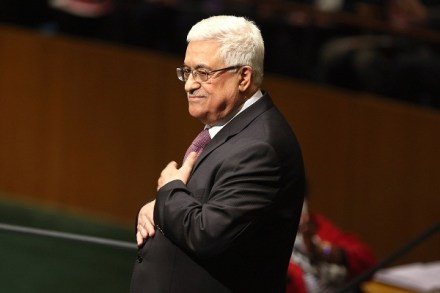
If anybody still wonders why there has not been a two-state solution long ago to the most famous – albeit least bloody – Middle East conflict, tonight’s UN speech by Palestinian Authority leader Mahmoud Abbas is a good learning-curve. Abbas says that his act of unilateralism is the ‘last chance to save the two state solution.’ But of course what he means is that he thinks it is the last chance to save Mahmoud Abbas. For despite his talk of ‘the Palestinians’, ‘the Palestinian people’ and the ‘Palestinian state’ no such monolithic entities exist. There are already at least two major Palestinian entities, the Palestinian Authority on the West Bank, and Gaza which is governed – after a fashion – by Hamas.

Israel under Islamist siege

I have a piece in the Wall Street Journal (Europe) today on the pyrrhic ceasefire between Israel and Hamas. Also - this week’s magazine carries a cover piece by me on the change that is happening in the region. As though determined to prove me right, the new Egyptian President has – with the praise of Hillary Clinton and Ban Ki-Moon still ringing in his ears – made certain declarations of intent: ‘Egypt's President Mohammed Mursi has issued a declaration banning challenges to his decrees, laws and decisions. The declaration also says no court can dissolve the constituent assembly, which is drawing up a new constitution. President Mursi also sacked the chief prosecutor.

Israel under siege

The dictators have fallen one by one. Several more look likely to fall soon, and few will miss them. But as popular revolutions approach their demise, something else has come along. In one country after another, the Muslim Brotherhood — the fundamentalist revolutionary Islamic party founded in 1920s Egypt — and other Islamist parties have used the ballot box for their own ends. After decades of repression and opposition, they have finally come to power. The era of the Islamists has begun, and as recent events in the Middle East have demonstrated, the world they create will not only look very different but be far more dangerous for Israel and beyond.

A moral distinction in the Gaza conflict

Hamas have claimed responsibility for a bus-bombing in Tel Aviv earlier today. It is worth watching this video, which went out a few hours ago on Hamas’s ‘Al-Aqsa’ TV.  Over the presenter's response are shown the first photographs of wounded Israelis being carried from the scene of the bus-bombing. The presenter is saying: 'These are the scenes of the casualties. God willing, we will soon see black body bags. I pray to Allah the exalted that we see body bags in a short while. These are scenes of the Zionist casualties so far.' Right now in these moments, the mosques in the Gaza Strip – their minarets are loudly sounding cries of “Allahu Akbar” and cries of joy, and the residents of the Gaza Strip are bowing down to Allah for this offering.

Bigotry on the Beeb

I have only just caught up on the latest episode of BBC Radio 4’s ‘Any Questions’. In that programme, from All Saints Church in Somerset, a Mr Stephen Bedford asked the panel this question: ‘Despite all the foreign aid and support Israel has spectacularly failed to get on with its neighbours.  Does Israel deserve a future?’ More people have been killed in Syria in the last twelve months than have died in the whole of the conflict between the Israelis and Palestinians over recent decades. In addition, the Assads have spent recent decades destabilising the Lebanon, assassinating leading politicians there and much more.

Some questions for the apologists of Hamas

The latest offensive between Israel and Hamas may only just have begun. But already a set of the usual lies have entered the British coverage. Let me pose a few questions to the people who are propagating them. 1) Why are Hamas firing into undisputed Israeli territory? The territory that Hamas are firing rockets into is not disputed territory. They are firing into Israel proper – that is, into land which absolutely everyone except for Israel’s annihilationist enemies recognises is the land of Israel. Is this Hamas’s way of calling for a two-state solution? Is it their way of trying to persuade Israel to sit down with Hamas’s enemies in the PA? Of course not.

Israel vs Hamas: Who started it?

The papers and media are full of the news that Israel has killed a Hamas leader in the Gaza. Why did this happen? Where did it come from? Is it not yet another example of the blood-thirsty Zionists doing their worst? If you read most of the British media that may well be what you think. After all there has been barely any previous mention in the British papers of the massive escalation in rocket fire into Israel in the last month or the even swifter escalation this week. Certainly no British paper or broadcaster has come close to giving these attacks the front-page publicity they grant to Israel’s response today. Nobody much bothered to report that in October alone, 116 rockets and 55 mortar shells were launched against Israel in 92 separate attacks.

Barack Obama’s foreign policy boast unravels after election

What a lot of things President Obama seems to have been holding back until after his re-election. Each day brings something new. There has been the news of an attack by Iran on a US drone in the Persian Gulf. Then there is the Petraeus affair – known about for months, but only leading to the CIA chief's resignation immediately after Obama's re-election. The Benghazi hearings are yet to come. And now another surprise. It transpires that the Iraqi government, a body which is only in power because of the sacrifice of thousands of American, British and other allied troops, is releasing from custody a senior Hezbollah terrorist who was in detention for killing American troops.

Abu Qatada’s victory proves how low we have been laid

For years a collection of politicians and commentators said that the ECHR and ECtHR would have no impact on British justice. Then they said that they would have no negative impact on British justice. Then it was said that while they might have some negative impact on British justice this would be out-weighed by the good done. Now some say that though the good may be outweighed by the bad the ECHR and ECtHR are still worth something anyway. They, and we, should be plain. It no longer matters what the British government or Home Secretary wants. It no longer matters what the British courts want. It no longer matters what the British public wants. Because the Prime Minister, Home Secretary, Parliament, British courts and British people no longer have power in this country.

A crisis, yes. But let’s not all shoot the BBC.

I have just returned from two hours of broadcasting on the BBC World Service. It is an odd time to be inside the BBC, not least because reporters from the organisation itself, as well as its rivals, are standing outside the studio doing pieces to camera about what is going on inside. Anyhow – having dealt with some web and print-press troubles in my last post, I wanted to jot down a few thoughts on the BBC's troubles. 1) The first is that the Newsnight McAlpine story is devastating. How any news organisation, let alone the publicly-funded (and compared to its commercial rivals extremely well-funded) BBC could have run such an amateurishly flawed piece of investigative journalism is appalling.

The complexity of the war on free speech

Free speech in Britain is being pulled in two completely opposite directions. On the one hand, thanks to the increasingly tortuous mission-creep that is the Leveson Inquiry, there are a range of demands for greater regulation of the print press.  Today’s rather surprising letter to the Guardian by various Conservative MPs is an example of some thinking on this. What is odd is that this should happen at exactly the same moment when the internet is pulling us in an opposite direction. It is all very well to come up with ever more labyrinthine ways in which to keep the print-media in line, but this increasingly looks like advocating temperance to a person who enjoys a glass of wine with their meals, whilst an alcoholic rampages through the same room.

The importance of truth

The words ‘Saville’ and ‘Inquiry’ have taken on a somewhat different meaning in recent weeks. But this is just to tell interested readers that my book on the original Saville Inquiry, Bloody Sunday: Truths, Lies and the Saville Inquiry is out now in paperback. If you can still find a bookshop then you might find it there. Otherwise it is of course available on Amazon etc. Priced at £12.99, it includes updated material on the recently-announced police investigation. The book has been described by the Spectator magazine, no less, as ‘a real-life whodunit’, by the New Statesman as ‘compelling’, by the Literary Review as ‘indispensable’, by the Irish Independent as ‘riveting’, by Kevin Myers as ‘superb’.

Beyond a joke

This week the National Theatre opened another new play — its seventh — by Alan Bennett. For those who know only his earlier work, Bennett remains the Queen Mother of British literature, a national treasure adored by all for his cosy charm and twinkly-eyed naughtiness. But anyone who holds this view has clearly not seen, or is blind to the failings of, his recent work. For me, sitting through new Alan Bennett plays has increasingly become like discovering that in old age the Queen Mother developed a sideline as a flasher. Of course, the quality of all writers’ work varies. But few have fallen off so steeply or horribly as Bennett. At one point this original member of the Beyond the Fringe quartet appeared to have real creative longevity.

Why I would vote for Mitt Romney

What is the role of a commentator in an election in which he or she cannot vote? And how would I vote tomorrow if I could? The response of many British journalists to the American elections is to do one of several things. These include becoming either a mystical seer or a partisan hack. The former have been doing particularly well in this election. People with no notable back catalogue of work on the US keep popping up writing, ‘Why Romney cannot win unless he does X’ pieces, or ‘Why Obama has it in the bag if he does Y’, etc. Few of these seers know what they are talking about. Most are just churning out the received wisdom of their political ‘side’ and will carry on regardless even after repeatedly being proved wrong.

Sandy exposes another difference between the US and the UK

Differences between the US and the UK are often commented upon. But the storm ‘Sandy’ this week has highlighted one in particular. It is no criticism of either President Obama or Governor Romney to say that it seems strange to me to see them hugging and otherwise comforting people who have lost their homes and in some cases all their possessions. I keep testing – and then mentally blocking – the images of a similar thing happening here. I am trying to imagine my mental state had my house and few possessions been washed away only to see, emerging from the mist, the figure of Gordon Brown. He would be surrounded by legions of cameras and reporters, of course, otherwise there would be no point in him being there.

The politics of poppies

The politics of poppy-wearing shift slightly each year. The unofficial rule used to be that poppy-wearing began at the start of November. In recent years this has crept forward further and further into October, largely, I think, because of politicians and the BBC. The BBC lives in terror of someone appearing on one of its programmes without a poppy and thus sparking a round of ‘BBC presenter in poppy snub’ stories in the papers. If you appear on the BBC during this period you will find people on hand to pin a poppy on anyone not already sporting one. To my mind this slightly misses the charitable, not to mention voluntary, purpose of the exercise. But politicians have also fuelled this poppy mission-creep. Each year they begin to wear their poppies earlier.

The UK pays salaries to terrorists

Why are UK taxpayers paying salaries to terrorists? The answer, as I explain in this morning’s Wall Street Journal, is Alan Duncan. The International Development Minister has been told repeatedly that money provided by the UK taxpayer to the Palestinian Authority’s and its ‘general budget’ is being used to pay salaries to Palestinian terrorists in Israeli jails. As I explain in the piece, Alan Duncan appears to have remained smugly unbothered about these payments of up to £2,000 a month to the worst murderers. That is more than the average income across most of Britain. Duncan’s claims that this was not happening have now been thoroughly refuted. Andrew Mitchell resigned for swearing at a policeman.

Jimmy Savile and the dangers of received wisdom

What does the Jimmy Savile case tell us about received wisdom? Over the last few weeks it has become clear that one of the most famous people in Britain was known by very many people to be an active, abusive paedophile. Many other people in broadcasting knew it. People in charities he was associated with knew it. People in hospitals he was associated with warned child patients about how to get around it. The person who founded Childline, no less, had heard about it. But nobody said or did anything. We are told that there were various reasons for this. Savile himself is said to have threatened that there would be some funding shortfall for Stoke Mandeville hospital should claims about his rape of children be made public.