Douglas Murray

Douglas Murray

Douglas Murray is associate editor of The Spectator and author of The War on the West: How to Prevail in the Age of Unreason, among other books.

Am I responsible for inciting a British jihadi to join ISIS?

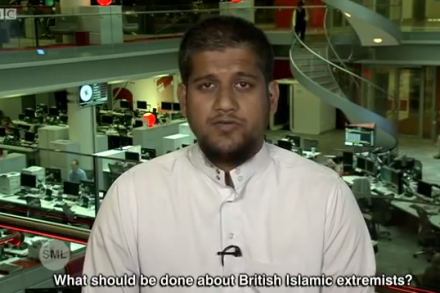
I fear I may be done for incitement.My friend and expert on all things ISIS, Shiraz Maher, alerts me to the fact that Abu Rumaysah has gone, apparently to fight in Syria. Shiraz and I last encountered him on the BBC programme Sunday Morning Live, alongside nobody's idea of a push-over Dame Ann Leslie. (You can see the video above).Anyhow, this Anjem Choudary goon spent his portion of the discussion praising ISIS ("I would like to see Britain governed by Sharia," etc) until provoking Dame Ann, Shiraz and me to ask him why on earth he didn't just go and join them. All talk and no suitable length trousers etc etc. I ended up volunteering that we would "do a whip around" (18m 32s into the above video) between us in the studio.

Citizenfour: the paranoia of Snowden & co will bore you to death

In simple entertainment terms Citizenfour isn’t as interesting as watching paint dry. It is more like watching someone else watching paint dry. People with opinions on Edward Snowden tend to divide into those who think he’s one of the biggest heroes of all time and those who think he’s at least one of the worst patsies or traitors of all time. Either way it’s hard to imagine why either party would want to watch two hours of footage of him typing on a keyboard. And then typing some more. While the camera focuses on him from the other side of the keyboard. For a very long time. Neither is it obvious why we should wish to watch footage of him staring out of a window. Or gelling his hair.

To make asylum work, we’ll have to talk frankly

[audioplayer src="http://traffic.libsyn.com/spectator/TheViewFrom22_6_Nov_2014_v4.mp3" title="Justin Marozzi, Douglas Murray and Fraser Nelson discuss immigration" startat=53] Listen [/audioplayer]It is the easiest thing in the world to say who should come to Britain and why. But if there are people who should be coming here, then surely there are others who should not? It is through our unwillingness to address the second part of this question that our problems arise. All polls show a majority of the British public want immigration reduced. But our politicians do not know what to do about it. One answer is to be honest. The Canadian and Australian ‘points-based systems’ we often hear about these days is just cover-speak for ‘who we want to let in’.

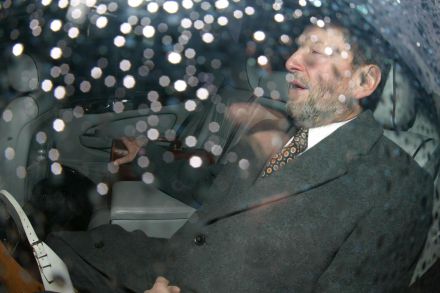
‘Swamped’ much? David Blunkett 2014, meet David Blunkett 2002

[audioplayer src="http://traffic.libsyn.com/spectator/TheViewFrom22_23_Oct_2014_v4.mp3" title="Mats Persson and Matthew Elliott join James Forsyth to discuss Europe and migration."] Listen [/audioplayer] Last week saw an example of the cynicism, not to mention circularity, of our immigration debate that is too important to miss. The former home secretary, David Blunkett, took to the pages of the Daily Mail to support the current defence secretary, Michael Fallon. Mr Fallon, readers will recall, had just been caught in an interview using the ‘swamped’ word to refer to the historically unprecedented levels of immigration that have affected much of Britain in recent years.

Jonathan Sacks on religion, politics and the civil war that Islam needs

Jonathan Sacks has an impressive track record for predicting the age we are in. In his 1990 Reith Lectures, ‘The Persistence of Faith’, the then chief rabbi pushed back against the dominant idea that religion was going to disappear. In the early 2000s, he predicted a century of conflict within Islam. And he was one of the first religious leaders and thinkers not only to critique multi-culturalism (‘the spanner in the works for tolerance’) but to try to think of a path beyond it. We recently talked over some of this at his house in London, where he lives during gaps in a busy teaching schedule that also takes him to New York.

Why would jihadi terrorists attack Canada? Better to ask: why not?

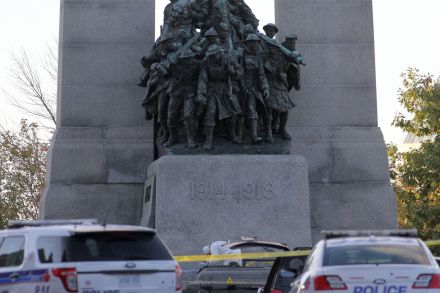
The attacks in Canada probably seem non-sensical to some people. After all, much of the press and political class in the West has spent years trying to cover over the motivations of people like those who have spent this week targeting soldiers and politicians in Canada. 'Why did they target Canada?' headlines are asking today. And well they might. There has been a great push in recent years to put the causes of Islamic jihad not onto the perpetrators but onto the victims of this problem. So, for instance, when America has been attacked, it has regularly been suggested that 'the United States had it coming' (as Mary Beard so charmingly put it immediately after 9/11). Of course Israel should always be presumed to be inciting attacks by such people.

The UK doesn’t need Barroso’s ‘positive’ messages about the EU

What a godsend to Ukip José Manuel Barroso must be.  On his recent short visit to the UK he not only managed to tell the British public that limits to immigration (desired by the overwhelming majority of the British public) would be ‘illegal’.  He also managed to tell us that if we left the EU, Britain would have ‘zero’ influence in the world. I do wonder who bureaucrats like Mr Barroso think they are going to persuade.  Are they simply relying on swaying or scaring us on the presumption that we have no historical knowledge or memory?  Because this latest message can’t possibly work, can it?  Most British people don’t feel we were an impoverished, backward and weakly nation before the EU came along and saved us.

‘Islamophobia’ strikes again – national students’ union refuses to condemn Isis

[audioplayer src="http://traffic.libsyn.com/spectator/TheViewFrom22_16_Oct_2014_v4.mp3" title="Sean O'Callaghan and Govinda Clayton join Lara Prendergast to discuss talking to terrorists." startat=808.5] Listen [/audioplayer] In a world often devoid of good news, there has been a fine development on the farthest-flung shores of insanity. The British National Union of Students aspires to represent students, though traditionally tends only to represent those students who are politically ambitious and possess left wing views. In any case, its latest idiocy is that it has tied itself in knots over the Islamic State in Iraq and Syria - Isis. A condemnation of the ebullient Islamic group was tabled by a student of Kurdish descent.

Recognising a Palestinian ‘state’ in Parliament is not only pointless, it’s dangerous

Today in Parliament, MPs are voting on a backbench motion (supported by a one-line whip from the Labour party) proposing that Britain recognises Palestine as a state. The motion attempts push a new status quo on Israel-Palestine, without the agreement of the partners on the ground. This is not just an arrogant move, it is a pointless one - not least because the Cameron government has already said it will ignore the vote.  What is of concern, however, is that the whole move displays a startling degree of naivety in Westminster. At the same time as the West has declared war on Isis, it is odd for British MPs to be publicising their intention to support the exponents of another caliphate - one centred on the Palestinian territories.

Clive James on his late flowering: ‘I am in the slightly embarrassing position where I write poems saying I’m about to die and then don’t’

Clive James has published a new poem days before we meet. It opens, ‘Your death, near now, is of an easy sort’. It is about a Japanese maple his daughter has planted in the garden of his Cambridge home where we are sitting, and whether the poet will live to see the leaves flame red this autumn. The poem has made news. ‘At the moment,’ he says, laughing, ‘I am in the slightly embarrassing position where I write poems saying I am about to die and I don’t. My wife is very funny on that subject.’ It is part of an astonishing late body of work. This month there is a new book of writing on poetry, Poetry Notebook.

Why is Theresa May pretending that Islam is a ‘religion of peace’?

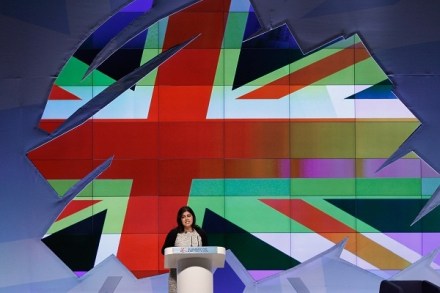
In advance of the Home Secretary’s speech today the Conservative party issued an advance briefing of its ‘new strategy for tackling extremism’. It was gratifying to see that a huge chunk of it credited a piece of mine from four and a half years ago. It is always gratifying when the political consensus catches up with you. So in my self-anointed role of prophet, let me highlight something which, four and a half years from now I will expect another Home Secretary to say. Because although there were many things to admire in Theresa May’s speech there was also one horrible, glaring and nearly unforgivable error. That is that the Home Secretary chose to speak about religion – indeed to lecture the hall, and the nation, on religion.

Why are we paying more benefits to Islamist preachers than our own soldiers?

'We need new laws' is a phrase most often heard from people who haven't much bothered to investigate whether laws which are already on the books can be used. For some time I have suggested that it is inexplicable that laws like those which can be used against people for membership of a proscribed organisation were being almost totally ignored. So the arrest of Anjem Choudary and others for precisely this is doubly pleasing. The banning of the various manifestations of the radical group Al-Muhajiroun was always vaguely farcical. The Home Office would ban one offshoot of the organisation and A-M would respond by starting something of exactly the same beliefs and precisely the same constituent people and parts under another name.

Are Syria air strikes legal? Perhaps not, but why should we care?

‘Are Syria air strikes legal?’ asks the BBC as part of its lead story today. The answer is that nobody is very sure. But personally I do wonder: ‘Why should we even care?’ Is beheading people legal? Is crucifying people illegal? Probably not. But aside from some vague talk last month of international inspectors being sent in to Isis-controlled areas to try to collate evidence of war-crimes I have seen very little written about this. This debate over the ‘legality’ of hitting Isis reminds me of nothing so much as the conversation after Osama bin Laden was shot in the head.

Anna Nicole is a masterpiece

It isn’t often that you can say you’ve seen an opera not only of but about our times. But Anna Nicole – which I saw Thursday night at the Royal Opera House in London – is such a work. The music is by Mark Anthony Turnage, the libretto by Richard Thomas. It sets off by causing the audience to laugh out loud repeatedly, but grows darker until the whole thing turns on the audience and indeed on our times. The story of the small-town girl turned billionaire widow is probably familiar to most people.

Vote for Britain to be a force for good in the world. Vote to keep the Union

I have been almost silent about the Scottish independence campaign. Not just because, like a lot of British people, I had assumed that this terrible matter would never have been opened unless people who know more than me were certain that the union would continue. But also because there has been a stifling of debate which has even carried me along. Since the start of this campaign there has been a whittling down of who is and who is not a suitable person to speak about it. Anybody who doesn’t live in Scotland at the moment – even if we have in the past, or were born and brought up there – has been encouraged not to take part in the debate. ‘Who are you?’ the Nats say with that familiar mixture of contempt, chip and menace.

Isis are setting our news agenda. We need to stop playing their game

Isis are playing a game with this country and America. We need to take a view about what our response to that game should be. The ‘game’ is the gradual drip-drip of beheading videos. Obviously the images are intended to spread terror and maximise the dissemination and impact of the terrorist movement’s beliefs, demands and aims. The releases are highly personalised in every way. By drawing out these atrocities and each time announcing the next victim, they force the Western media into anticipating the story and seeing it through.

How can Jews oppose Muslim anti-Semitism without being ‘Islamophobic’?

On Sunday there was a rally in London demanding ‘zero tolerance’ of anti-Semitism. About 4,500 people gathered in front of the Royal Courts of Justice. Speakers who addressed the crowds included the Chief Rabbi, Maajid Nawaz and me. Among the things I told the crowd was to expect more and to demand more of their ‘communal leadership’. Long-term readers will know that I’ve never had much time for communal leadership of any kind. I don’t like the groups who claim to speak on behalf of all Muslims – groups which disproportionately represent a politicised and fundamentalist hard-line interpretation of their faith.

Modern Britain’s apathetic, inadequate response to child sexual abuse

The customs developing around how modern British officialdom reacts to the gang-rape of children is very interesting. I’ve just watched an interview (above) with Shaun Wright, the Police and Crime Commissioner (PCC) for South Yorkshire, a man who has to struggle along on a tax-payer funded salary of £85,000. The interview was in reaction to the revelation that Mr Wright was PCC during much of the period in which at least 1400 children in his area were raped and gang-raped by groups of men.  I’m not quite sure what we’re currently allowed to say by way of identifying these men.  We might once have said that they were ‘diverse’ or ‘vibrant’.

The reluctance to talk about the link between beheadings and Islam

Why do they behead people? Why do Islamic extremists—like those who killed the American journalist James Foley—choose beheading as their savage tactic of choice? I have not heard anybody ask that question on the media over the last week. But it is quite an important question, and its absence says a lot about our absence of thought as well as our fearfulness. This occurred to me after a BBC discussion I was involved with about ISIS and Foley on Sunday Morning Live – you can see the segment here: I was on with Dame Ann Leslie, Shiraz Maher, Lord Winston and a Muslim convert called Myriam Francois-Cerrah. We had quite a good discussion, much helped by the unanimity sprung upon us thanks to the appearance of one of Anjem Choudary’s circle who was supporting ISIS.

Our boys in the Islamic state: Britain’s export jihad

[audioplayer src="http://traffic.libsyn.com/spectator/TheViewFrom22_21_August_2014_v4.mp3" title="Douglas Murray and Shiraz Maher discuss Britain's jihadis"] Listen [/audioplayer]It is the now familiar nightmare image. A kneeling prisoner, and behind him a black-hooded man speaking to camera. The standing man denounces the West and claims that his form of Islam is under attack. He then saws off the head of the hostage. Why did Wednesday morning’s video stand out? Because this time the captive was an American journalist — James Foley — and his murderer is speaking in an unmistakable London accent. The revulsion with which this latest Islamist atrocity has been greeted is of course understandable. But it is also surprising.