Douglas Murray

Douglas Murray

Douglas Murray is associate editor of The Spectator and author of The War on the West: How to Prevail in the Age of Unreason, among other books.

Why do politicians refuse to tell it how it is on immigration?

One of the presumptions of democracy is that leaders listen to the public. But as poll after poll in Europe shows, this presumption breaks down around the subject of migration. On that — and the numerous issues surrounding it — mainstream politicians consistently ignore the public. And not only ignore them but berate them and act against their concerns. This month sees the publication of the latest poll by Project 28, whose 2017 poll of public opinion I wrote about here last summer. Once again, the Századvég Foundation has polled opinion from 1,000 respondents in each of the 28 countries of the EU. And once again, the findings are startling. Any politician should consider them; a wise politician would listen to them.

Britain’s flawed definition of extremism is storing up trouble

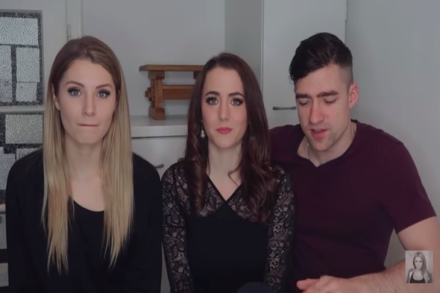
Is Allah gay? The eventuality – as Jeeves might say – would seem to be a remote one. If such a being as Allah did exist and was gay then no harm could come from stating the fact. If such a being as Allah exists and is not gay then Allah would presumably be big enough to shrug off such insinuations. And if – and I only mention the possibility – such a being as Allah does not exist at all, then it really is neither here nor there whether he, she, they, ze or zir is alleged to be gay, bi, trans or anything else. Certainly none of this should be cause for being banned from the country. Yet that is what happened last week when a Canadian journalist-activist called Lauren Southern got turned away at the UK border and refused permission to enter the country.

My Rod Liddle nightmare

I do the overnight from Washington in order to be back for Jewish Book Week. Some months ago the organisers asked who I would like to interview me. I suggested Fraser Nelson or one of my other delightful Spectator colleagues. They give me Rod Liddle. Dozing on the plane, after a foul BA dinner and a beaker of Scotch, my mind throws up a highly specific nightmare. Before an impeccably liberal London Jewish audience, Rod eyes me manically and — rubbing his hands — begins with ‘So, Douglas, what are we going to do about the bloody immigrants?’ The hall goes into uproar. Sweating profusely, I appeal for calm. The event is cancelled. Of course, on the night nothing of the sort happens.

California is the unexpected antidote to censorious liberalism

From our US edition

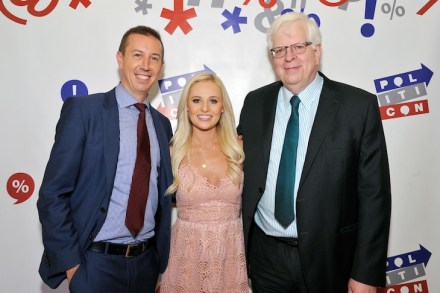
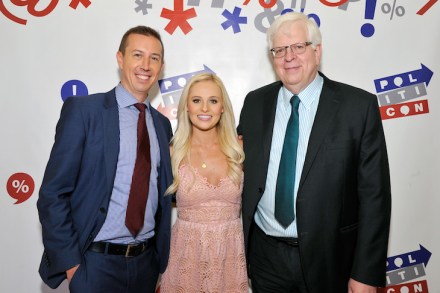
If I needed a safe space, I would nominate California. Against most odds this seedbed of censorious liberalism has thrown up the antibodies to the lurgy it created. Here within a short space of each other are a group of leftists and conservatives, religious and non-religious, all of whom are united in deploring the ‘You can’t say that’ culture which has torn across America and the West in recent years. The state may still have the shoutiest students. But it now also has the best first-responders. On Monday morning in Los Angeles I go to be interviewed by Dennis Prager, a devout, Republican talk-show host. From there I go to the studios of Joe Rogan, a libertarian comedian and martial arts expert.

Diary – 15 March 2018

If I needed a safe space, I would nominate California. Against most odds this seedbed of censorious liberalism has thrown up the antibodies to the lurgy it created. Here within a short space of each other are a group of leftists and conservatives, religious and non-religious, all of whom are united in deploring the ‘You can’t say that’ culture which has torn across America and the West in recent years. The state may still have the shoutiest students. But it now also has the best first-responders. On Monday morning in Los Angeles I go to be interviewed by Dennis Prager, a devout, Republican talk-show host. From there I go to the studios of Joe Rogan, a libertarian comedian and martial arts expert.

The BBC’s shameful silence on the Telford sex scandal

Last month, I wrote here about the BBC and ‘grooming gangs’. In particular, I speculated that it was unlikely that having once (after more than a decade) dramatized the mass gang-rape of British girls (and a man from Wales having partly been fired-up by it then ploughing a van into a crowd outside a mosque) that the BBC might not venture into such territory again. As I said, ‘nobody should be surprised if the BBC reverts to ignoring crimes like Rochdale in the future.’ As so often the situation is worse than I imagined.

What the suspected poisoning of Sergei Skripal tells us about Russia

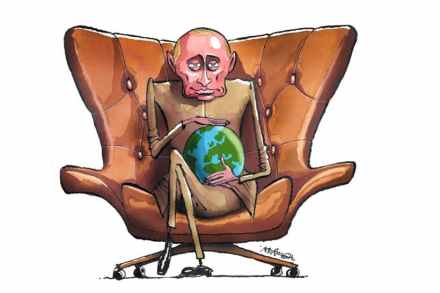
We live in a strange era when it comes to Russia. On the one hand there are people who seem willing to insist that absolutely everything is controlled by the government and agencies of that country. They claim that Russia has the power to install an American President, to make the British vote Brexit and much more besides. On the other hand – as supporters of Julian Assange seem put on earth in order to remind us – are people who seem to think that the SVR and FSB are quiescent organisations whose erstwhile employees spend their days doodling pointlessly in their offices. Perhaps the appalling suspected poisoning of Sergei Skripal in Wiltshire might help disabuse a few people from inhabiting either of these extremes.

The BBC’s coverage of Ben Bradley’s apology to Corbyn is fascinating

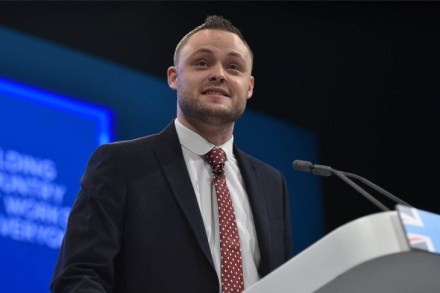
The story about Jeremy Corbyn’s contacts with a member of Czech intelligence in the 1980s has not been treated with great seriousness by our national broadcaster.  At first the BBC deigned not to run the story.  Then they treated it like some kind of joke.  For instance, given a chance to question Corbyn over his past record the BBC journalist Steph McGovern last week bowled Corbyn the humorous soft-ball ‘A final question: are you a Czech spy?’  A question which gave much opportunity for laughter and a firm ‘No’ from Corbyn, who now insists (as he does whenever he is caught in similar situations) that he was in fact discussing ‘peace’ with his agent of Czech intelligence.

Is it really homophobic to ask whether two men can make a baby?

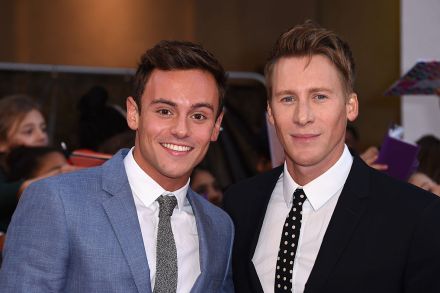
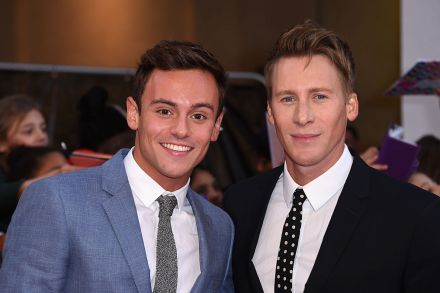
When I saw the photo of Tom Daley and Dustin Lance Black holding a photo of an ultrasound, and all the subsequent headlines proclaiming ‘Tom and Lance are having a baby’ I thought one thing above all: ‘That’s strange’. Not ‘eww’, or ‘gross’, or ‘what a way to get over certain negative recent publicity’, but just ‘That’s strange’. Strange that we should have reached the point (inevitable in a way) in which two men announce that they’re having a baby and everyone is meant to just say ‘yay’ and not ask any more questions.

Inside the intellectual dark web

In January, Channel 4’s Cathy Newman interviewed the Canadian academic Jordan Peterson. The channel broadcast a short version of the interview on the evening news bulletin, where it would have been seen by the few hundred thousand people who watch the programme nightly. But to its credit, Channel 4 also published online the full half-hour encounter. Within days, it was viewed by millions around the globe. The interview, in which the presenter repeatedly tried to misrepresent the views of her interviewee, and in which his responses finally brought her to a confounded silence, became a sensation. Memes of Newman saying ‘So what you’re saying’ washed across social media.

Is it really homophobic to ask whether two men can make a baby? | 18 February 2018

When I saw the photo of Tom Daley and Dustin Lance Black holding a photo of an ultrasound, and all the subsequent headlines proclaiming ‘Tom and Lance are having a baby’ I thought one thing above all: ‘That’s strange’. Not ‘eww’, or ‘gross’, or ‘what a way to get over certain negative recent publicity’, but just ‘That’s strange’. Strange that we should have reached the point (inevitable in a way) in which two men announce that they’re having a baby and everyone is meant to just say ‘yay’ and not ask any more questions.

Sharia law and the relative mercies of French justice

From our US edition

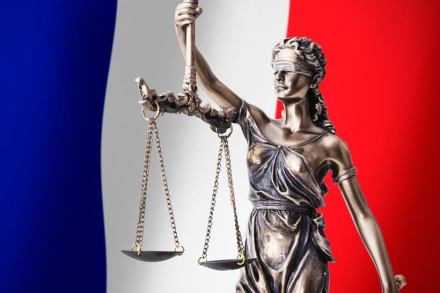
For many years, the grandson of the founder of the Muslim Brotherhood, Tariq Ramadan, has been one of my closest enemies. In Switzerland and France this Islamist dauphin had a slightly hard time establishing his reputation. This was not just due to his poor scholarship (the basis of which lay in a fawning book about his grandad) but also to his double-speak in public debate and (at best) borderline Islamist views. In France these views were most famously exposed in a television debate with Nicolas Sarkozy in which Ramadan infamously could not bring himself to condemn the stoning of adulterers outright, merely calling for a ‘moratorium’ on the punishment.

Will the BBC go back to ignoring grooming gangs?

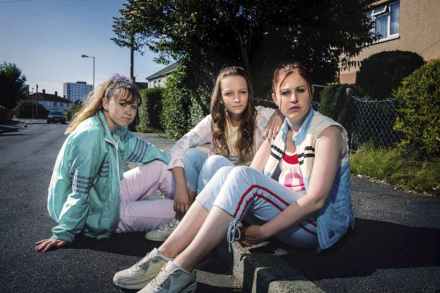
The future of modern Britain looks set to be an unusually complicated affair. Take just one piece of news that came out of the trial of Darren Osborne over recent days. According to relatives of the Finsbury Park attacker, the first trigger towards his radicalisation was watching the BBC drama Three Girls about the Rochdale grooming gangs. Evidence suggests that this drama put him on the path to deciding to hire a van and drive it into a group of Muslims in Finsbury Park a few weeks later, murdering 51-year old Makram Ali. Now of course the BBC’s drama department should not be held responsible for the death of Mr Ali. Though I would love to see a real debate on Newsnight or the like in which the BBC questioned its own apparent role in this terrible business.

It’s easy to predict where the Cathy Newman backlash will lead

Last week I wrote in this space about Cathy Newman’s catastrophic interview with the Canadian academic Jordan Peterson. Since then a number of things have happened. One is that millions of people around the world have watched Newman’s undisguisedly partisan interview. The other is that Channel 4 has tried to turn the tables by claiming victimhood. Any fair-minded observer might think that if there was any ‘victim’ in this case then it was Professor Peterson, who accepted an invitation to an interview in which he was then serially misrepresented. It was Peterson who, whenever he said anything got the response ‘So what you’re saying is’, followed by something that he had not said.

A star is born

Last Sunday night a capacity crowd of mainly young people packed into the Emmanuel Centre in London. Those who couldn’t find a seat stood at the back of the hall. When the speaker entered, the entire hall rose to its feet. It was his second lecture that day, the fourth across three days of sold-out London events. For an hour and a half the audience listened to a rambling, quirky, but fascinating tour of evolutionary biology, myth, religion, psychology, dictators and Dostoyevsky. Occasionally a line would get its own burst of applause. One of the loudest came after the speaker’s appeal for the sanctity of marriage and child-rearing. Yet this was not a Christian revivalist meeting. At least not explicitly or intendedly so.

Watch: Cathy Newman’s catastrophic interview with Jordan Peterson

In the magazine this week I have written a piece about the Canadian Professor Jordan Peterson. He has been in the UK over the last week to talk about his new book 12 Rules for Life: An Antidote to Chaos. Among many other things – much more of which I go into in the piece – his visit showed up the UK’s broadcast media in a very bad light. On Saturday morning, Peterson made an appearance on Radio 4’s Today programme. They gave him a hurried four minutes at the end of the show. They could have quizzed him on almost anything and got a point of view different from almost any other they had ever allowed their listeners to hear. Instead they decided to treat him in an alternately jocular and hostile manner.

If Dawn Butler can’t forgive Toby Young, can she forgive herself?

I am fascinated as well as appalled by the new morality being created in our country. Last night, Dawn Butler MP was on the television again (this time Question Time) making charges against Toby Young and doubling-down on a point she had made earlier in the week on the Daily Politics. The essence of it is that because of Tweets, including one about a Labour MPs breasts from 2009, Toby Young has no right to sit as one member of a 15-member board in 2018. "I don't think he should have resigned, I think the PM should have been stronger and should have said it was an inappropriate appointment" @DawnButlerBrent "It's sad, it has been proved to have been a mistake... he has changed as a person" @Freddygray31 on @toadmeister #bbcdp pic.twitter.

Indefensible silence

If there is one lesson the world should have learned from Iran’s ‘Green Revolution’ of 2009 and the so-called Arab Spring that followed, it is this: the worst regimes stay. Rulers who are only averagely appalling (Tunisia’s Zine el-Abidine Ben Ali, Egypt’s Hosni Mubarak) can be toppled by uprisings. Those who are willing to kill every one of their countrymen stay. So it is that after almost half a million dead we enter 2018 with Bashar al-Assad still President of Syria and with Iran’s mullahs approaching the 40th anniversary of their seizure of power in 1979. Last week this lesson got a chance to be learned again when protests broke out on streets across Iran, and the world wondered which date this one might echo. A revolution finally to counter 1979?

My ‘person of the year’? Theresa May

The newspapers are full of end-of-year round ups, photographic highlights of the year and so on. And I thought I would add to the melee by mentioning my ‘person of the year’. There are plenty of people who I could think of who have made my year more interesting, more enjoyable and more besides. But one person stands out for having made all of this even vaguely bearable in the first place. My person of the year is — without doubt — Theresa May. It’s slightly surprising because I’ve never been the biggest fan of the Prime Minister. Like most other people I have had – and will keep having – my criticisms.

The consequence of this new sexual counter-revolution? No sex at all

We’re closing 2017 by republishing our twelve most-read articles of the year. Here’s No. 7: Douglas Murray on the sexual counter-revolution: We are in the middle of a profound shift in our attitude towards sex. A sexual counter-revolution, if you will. And whereas the 1960s saw a freeing up of attitudes towards sex, pushing at boundaries, this counter-swing is turning sexual freedom into sexual fear, and nearly all sexual opportunities into a legalistic minefield. The rules are being redrawn with little idea of where the boundaries of this new sexual utopia will lie and less idea still of whether any sex will be allowed in the end.