Douglas Murray

Douglas Murray

Douglas Murray is associate editor of The Spectator and author of The War on the West: How to Prevail in the Age of Unreason, among other books.

The path to re-enchantment

Most social occasions now seem to kick off with a wasted hour or two. The time is spent discussing Covid: who’s had it and who hasn’t, who’s had the most nightmarish encounter with a mask fanatic and who the worst lockdown. After that there can be a second course, discussing things like international travel. Remember when we used to be able to book a ticket, put up with the indignities of the budget airlines but still arrive in any place we wanted? Now everybody has stories of friends and relatives they haven’t seen, places they can’t go, and experiences they’ve had to miss. The world has become a little smaller. A perfectly dull evening can be spent rehearsing all this. It is all good boring stuff. War stories from a non-war.

Turning the tide: how to deal with Britain’s new migrant crisis

40 min listen

Is there a humane solution to Britain’s migrant crisis?(00:52) Also on the podcast: Why is the WHO so down on e-cigarettes?(16:23) and finally... after a year and a half inside how angry will strangers make us?(27:01) With Douglas Murray; award winning film maker and producer for the Trojan Women project Charlotte Eagar; Christopher Snowdon; Clive Bates the director of The Counterfactual and previous head of ASH; Damian Thompson; and Stuart Prebble creator of the hit TV show Grumpy Old Men.

Turning the tide: how to deal with Britain’s new migrant crisis

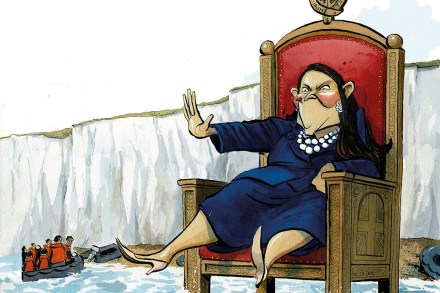
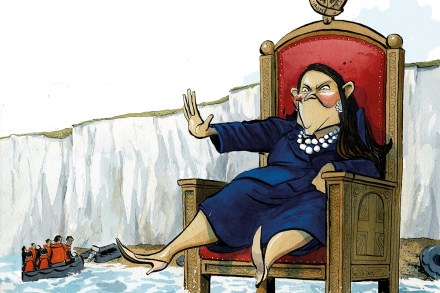
In December 2018 the then home secretary, Sajid Javid, cut short his Christmas holidays to go to the Channel and stare at boats. Two hundred illegal migrants had crossed from France in the previous two months and Javid, buckling to public pressure, declared a ‘major incident’. On that basis his successor, Priti Patel, should cancel any holiday plans for the foreseeable future. The number of migrants coming in through this illegal route reached more than 2,000 in June, setting a new record. And this is just the start. The summer crossings are under way — and the British government seems to have no idea what to do about it. The figures themselves could not be clearer.

Katy Balls, Douglas Murray and Nigel Farndale

22 min listen

This week we’ll hear Katy Balls on the government’s dwindling COVID optimism (00:41), Douglas Murray’s prediction of a dull decade of arrested development (04:26) and finally Nigel Farndale of why we owe so much of what we love about the Olympics to the Nazis (12:50).

The 2020s will be boring, not roaring

Earlier this year, I noted the suggestion (made by an American academic and run with by a swathe of the British press) that we may be about to enter a party decade. The claim was that much as the Great War was followed by the Roaring Twenties, so the Covid era might be followed by a roaring 2020s. Advocates of the theory might point to the queues of young people waiting to get into the country’s nightclubs at one minute past midnight on Monday’s so-called ‘freedom day’. But I would suggest that there is more evidence accumulating in the opposite direction. Far from roaring, I would say it is more likely that we are entering the era of the Boring Twenties.

Revd Marcus Walker, Douglas Murray and Petronella Wyatt

24 min listen

On this week's episode: Revd Marcus Walker shares his concern and disapproval at being described by the Church of England as an 'Key Limiting Factor' (00:26). Then Douglas Murray looks at the tricky subject of transracialism (09:48)And finally Petronella Wyatt gives her two cents on modern day Westminster culture (17:15).

Oli London and the trickiness of being ‘trans-racial’

Not everyone will have heard of Oli London, a British social media influencer who made news for two reasons last week. The first was that London came out as plural. Which is to say that he came out as a non-binary person. Which is very 2020 and something so un-noteworthy that I’m sure you’ll agree it is hardly worth remarking upon. The other thing London did was more unusual. Which was that he came out as Korean. You might guess from his name that Oli London is not Korean, but he has spent some time there (in the South rather than the North apparently) and enjoys the language and culture. So in his coming-out message London revealed some rather extreme plastic surgery to his face and announced that he wished to be known as Korean.

The case against Soldier F

The case against ‘Soldier F’, a veteran charged with the murders of two men and attempted murders of four others on Bloody Sunday, has today collapsed. In March 2019, Douglas Murray wrote for The Spectator about the 1972 massacre and the subsequent Saville Inquiry into what happened. It is more than 15 years since the Bloody Sunday soldiers last appeared in public. For months I sat in the room with them to watch their evidence at Lord Saville’s inquiry. And while Lionel Shriver is right that the sight of terrorists benefiting from an immunity denied to our soldiers is grotesque, there are competing qualms. Not only because British soldiers should be held to a higher standard than terrorists.

The fatal flaw in ‘see something, say something’

The official review into the Manchester Arena bombing was published this week. Four years after 22 mainly young people were killed at a pop concert, the review by Sir John Saunders reveals a catalogue of failings, as such reviews always do. Yet one failing stood out in particular. On the night in question the bomber, Salman Abedi, had been standing around the exits to the stadium for over an hour and a quarter. You would have thought that in that time, the sweaty young man with a rucksack might have attracted some attention. And you would be right. A number of people, including security guards hired to protect the venue, expressed alarm about the man struggling to walk because of the weight of his rucksack, which was packed with a 32kg bomb.

Cambridge deserves better than Stephen Toope

Regular readers may be aware that in recent months I have been having a running-spat with a Canadian lawyer called Stephen Toope. I am rarely exercised by Canadian lawyers, but this particular one is the current Vice-Chancellor of Cambridge University, and he seems intent on running that crown jewel of an institution into the ground.  Since taking over as Vice-Chancellor, Mr Toope has been responsible for a wide array of anti-free speech initiatives through which, as I recently remarked in the Daily Telegraph, he appears to want to transform Cambridge University into something like the Canadian bar association, but without the thrills, or the pay. Anyhow – our spat came to a head after Cambridge last month published its new guidance for informers.

The polarising power of plague

Now that the government has kindly allowed us to go out again, I wonder if anyone has discovered the same social challenge I have encountered? Which is that almost nobody agrees on anything. I should pre-empt a possible line of attack here and acknowledge that I am aware of the case study I am basing this on. Still I fancy the problem is wider than myself. Of course we never did agree on everything. But, after a year of seclusion, it seems that as we de-bubble, the divergences are far greater than before. Not least regarding what we have just been through. It forks off at the very beginning. For instance there are people — few in number, and perhaps not in your own circle of acquaintance — who basically disbelieve the whole Covid thing.

Lisa Bjurwald, Douglas Murray and Stuart Jeffries

29 min listen

On this week's episode, Lisa Bjurwald reports on the Swedish monarchy going woke (01:20); Douglas Murray argues that the culture wars fit the UK even less well than the US (07:00); and Stuart Jeffries interviews the world's first AI artist.Also on the podcast: a complaints letter to the Times after their March 2020 story that Carrie Symonds and Boris Johnson were considering giving their dog up for adoption. The letter, though never sent, was revealed on Friday.

When exactly did harpsichords become racist?

It’s a dangerous thing when you import the worst aspects of another culture. And an even worse thing when you import the worst interpretation of that worst aspect of another culture. This week marked a year since the death of George Floyd at the hands of a policeman in Minnesota. Since that time, Derek Chauvin, the policeman who killed Mr Floyd, has been tried, convicted of causing his death and is currently awaiting sentence. Around the world, the actions of this one awful policeman have been extrapolated out beyond endurance. It has been claimed that they revealed the truth about race relations in America. They have been used to claim that race relations around the world are the same as they are in America.

Why do parts of Britain erupt whenever Israel defends itself?

There has been a huge amount of comment in recent days on the latest round of exchanges between Israel and the terrorists of Hamas and Islamic Jihad in Gaza. As usual whole slews of celebrities and other important figures on the international stage have lamented the fact that Israel has put so much effort into the defence of its own citizens. As usual these ignoramuses cry about 'disproportionate' death tolls. As though it would all be a lot fairer if Israel turned off the Iron Dome system for a night or two and let the increasingly sophisticated weaponry of its enemies rain down, unmolested, upon its people. But all this, and much more, has been rehearsed a thousand times before. From the UK there is only one interesting observation that can be made about this conflict.

The great pretender: Nicola Sturgeon’s independence bluff

31 min listen

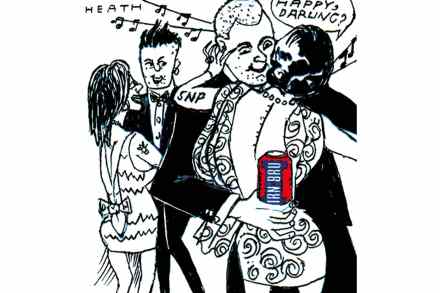
In this week’s podcast, we talk to The Spectator's editor Fraser Nelson and associate editor Douglas Murray about the challenges facing a freshly re-elected SNP. What next for Nicola Sturgeon - full steam ahead for IndyRef2? Or have neither Scotland or Number 10 the bottle for an all-out battle for independence? [01:02] ‘When you look at the practicalities, the case for independence really does fall. Nicola Sturgeon is selling it in the abstract: “Do you feel Scottish”?’ - Fraser Nelson Meanwhile in matters of social etiquette, the new post-pandemic era looms, complete with new modes of social interactions and conversational topics.

The wrath of Nicola Sturgeon

I can’t seem to find the Oracle of Delphi’s complete works. The libraries remain shut and when I go to Google I find the search engine inadequate in the matter of the ‘Complete Pythia’. So I throw the following story out there unsourced in the sure and certain knowledge that next week’s letters page looks set to be a bloodbath for me. Spectator readers are among the most learned readers around, and I know my fate if I relay any of this inaccurately. Nevertheless, here we go. Several years ago an utterance I’m pretty sure came from the Delphic Oracle lodged in my head. A foreign king (I hear you tapping ‘Dear Sir’ as I type) wanted to know whether he should go across the river and invade a neighbouring kingdom.

We don’t need a new law against ‘conversion therapy’

The Queen's Speech laying out the government's legislative agenda included a commitment to banning conversion therapy. Douglas Murray argued against the need for new legislation in The Spectator's 27 March edition of the magazine.  Earlier this month, with the citizenry still confined to their houses, borrowing at record highs and GDP in a record slump, there was a debate in Westminster Hall about ‘conversion therapy’. An internet petition has called on the government to ‘Make LGBT conversion therapy illegal in the UK’. And so for a couple of hours MPs from across the major parties competed with each other to express their horror at gay and trans people being subjected to this practice. Feelings ran high. Nobody spoke against.

Carrie Symonds and the First Girlfriend problem

One of the least attractive aspects of American politics is epitomised in the ‘Office of the First Lady’. The office in the East Wing of the White House has grown under consecutive presidents and, depending on the incumbent’s ambitions, can include policy and legislative initiatives. All emanate from a person solely in place because some years earlier they were lucky enough — or otherwise — to marry a person who became president. It all makes America less like a democracy, more like a court, with the inevitable overspill of ‘First Children’ and more. By convention this country has been spared that problem.

The Church of England’s new religion

This article first appeared in the 20 March edition of The Spectator.The Church of England report that was leaked to Douglas Murray has now been published. You can read the full report here. With a heavy heart I must return once more to the subject of the Church of England. I recognise that is not a subject for everybody, and occasionally someone implies that it should not be a subject for me. But I am concerned about the fate of the national church because as the new religion heaves ever clearer into view, I realise that I prefer the old religion to the new one. I would rather attempts to influence the country’s morals were preached from a pulpit than through group stampede on Twitter.

The music at the heart of the Duke’s funeral

Every detail of today’s funeral of Prince Philip, Duke of Edinburgh, is likely to be pored over in the days ahead. But one aspect which should get particular attention is the musical contribution. For although the choir at the service in St George’s Chapel, Windsor, was reduced to only four singers due to Covid restrictions, their singing was a powerful and important testament to this country’s musical and specifically choral tradition. It was also a reminder of how at times of deep emotion music can provide a solace that words and other mediums of expression cannot. The settings of the Funeral Sentences by William Croft have been heard at state funerals, among others, for three centuries.