Douglas Murray

Douglas Murray

Douglas Murray is associate editor of The Spectator and author of The War on the West: How to Prevail in the Age of Unreason, among other books.

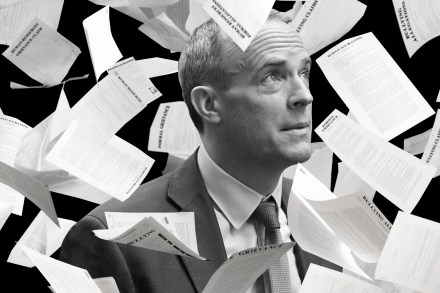
Jonathan Coad and British TV’s most catastrophic interview

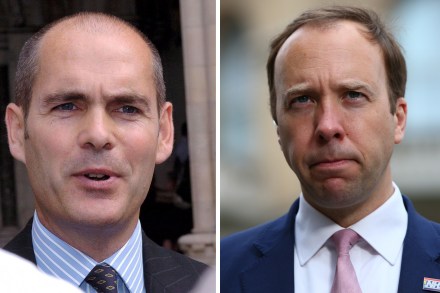
‘Coad. Coad.’ I wracked my brain. Distant bells began to tinkle as I turned the name over. As though performing a solo game of charades, I said to myself ‘Sounds like?’ And I landed on it. Jonathan Coad used to be known only to a small band of aficionados. Happily today he is almost a household name. This is because of his participation in what must be regarded, by some stretch, as the most catastrophic interview ever conducted on British television. And I have not forgotten about Michael Howard, Prince Andrew or Cathy Newman. https://www.youtube.com/watch?v=tuat8wBmMR4 This week Mr Coad was on GB News being questioned about Matt Hancock, WhatsApp, Isabel Oakeshott and the various other intrigues preoccupying us as our nation goes down the swannee.
Thomas Jefferson and the death of wisdom

In recent weeks I have been trying out a mental exercise. Perhaps you might join me? Cast your mind back to 1999. We were standing on the dawn of a new millennium. True, there was a strange fear that all the computers might crash because of a bug called Y2K. But aside from that there seemed to be a tremendous optimism. One of the biggest causes for this was the nature of information technology: specifically, the internet. Imagine if someone had said to you then: ‘We are heading into a world where almost anything can be read at the click of a mouse. Almost all the great books will be available free online. Almost any quote or reference can be found at the press of a few buttons. Oh and anyone in the world can speak to anyone else, swap information and solve problems.

Is Shakespeare ‘far-right’ now?

Oh – and the Collected Works of Shakespeare. I forgot to mention that last week: that among the books on the reading list that could be a sign of ‘right-wing radicalisation’, some genius public servant came up with the complete works of Shakespeare. Nobody knows what the attitude of Prevent’s ‘Research Information and Communications Unit’ (RICU) would be towards someone found in possession of, say, a quarto edition of All’s Well that Ends Well. Perhaps they should be deemed to be on the conveyer belt to right-wing extremism? It probably shouldn’t come as a surprise that we have officials who think owning the work of our national poet is a sign of right-wing extremism. Because in recent days it seems that everything has been such a sign. Take events in Liverpool.

Can you really be radicalised by Great British Railway Journeys?

The late Robert Conquest adumbrated three rules of politics. Perhaps the most famous (also known as O’Sullivan’s law) is that ‘Any organisation not explicitly and constitutionally right-wing will sooner or later become left-wing’. I would like to add a fourth law: ‘Any programme set up by government will inevitably metastasise unless consciously cut back by observant officials.’ Anyone in search of a textbook example need look no further than the government’s Prevent programme, into which the government’s official review was finally published last week. William Shawcross’s excellent comprehensive report contains many things worth lingering over. But one of the most interesting is what he uncovered about Prevent’s saunter into ‘right-wing extremism’.

Where have all the grown-ups gone?

Last week 100,000 civil servants from 124 government departments went on strike. This fact prompts a number of questions, not least – who knew there were so many government departments? Also, when was the last time anyone saw that number of civil servants? Since Covid, the most noteworthy thing about the civil service has been that it has completely inverted its working week. Alongside those members who never turn up to the office, a goodly portion have managed to arrange it so that they spend a couple of days a week at their desk and a five-day stretch at home recuperating. Meaning that last week civil servants finally went back to the office in record numbers only in order to stand outside it and strike.

America’s colour blindness

How many black cops does it take to commit a racist hate crime? The latest correct answer is ‘five’. That’s the number of policemen in Memphis who have been fired and charged with second-degree murder for the killing of Tyre Nichols. Last month Nichols, who was himself black, was pulled over by the officers. They proceeded to kick him, pepper-spray him, hit him and repeatedly baton him. He died in hospital three days later. Of course, if the Memphis officers had been white, American cities would be being burned and smashed to the ground again, as they were three years ago after the death of George Floyd.

Pride comes before a fall

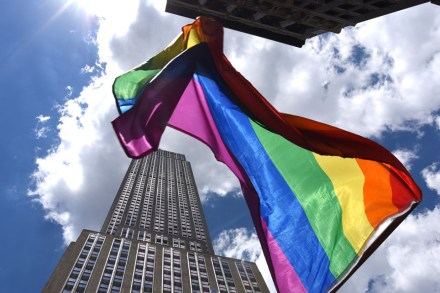
Hockey is one of those games, like lacrosse, that alters as it crosses the Atlantic. In Britain, if a man says he is a passionate hockey or lacrosse player, he may get a certain ‘Fnar fnar’ response. In North America by contrast, it would be most unwise to ‘Fnar fnar’ at your average hockey player. A good example comes in the form of Ivan Provorov. He is a big Russian-born ice-hockey player who currently plays for the Philadelphia Flyers in the National Hockey League. Not all readers will be following the NHL carefully, and I admit that I am teetering at the very edge of my knowledge as I type this. Still, the NHL grabbed my attention last week because Provorov became the latest victim of Big Gay’s overreach. Or to be precise, Big LGBTQI+’s overreach.

If not Biden, who?

Monday was Martin Luther King Jr Day in the United States. And this year it was most memorable for two events. The first was the unveiling in Boston of a new sculptural tribute to the civil rights hero. Unfortunately, depending on the position from which you view this inept work of public art, it resembles either a man holding his head in despair or some people holding aloft a giant turd. The 'Embrace' sculpture during its unveiling at the Boston Common, 13 January 2023 (Katy Rogers/Media Punch/Alamy) The second incident was Joe Biden doing what he does best. The President was careful not to politicise the day – apart from attacking the Republicans.

If only Harry took after his grandfather

Do you remember the Duke of Edinburgh awards? Some of you may even have one somewhere. An award for map-reading, orienteering or otherwise managing to find your way around in the age before Google Maps and Uber. It was – and still is – a useful scheme, set up by a man who accepted his position as second fiddle, performed the role impeccably for decades and set up the awards to help millions of other people find their way. It was on my mind as I was reading the latest revelations from Montecito, California. For the memoirs of Harry Sussex are even worse than expected. If I was the head of Netflix, I would be hopping with rage that Harry had kept all his most snore-a-thon stories for Netflix only to deliver the real juice in his memoir.

How to get nothing done

I sometimes wonder whether our government makes any decisions at all. In fact I’m trying to think of any area of public policy that is not the subject of a review, commission, inquiry or similar. The most charitable explanation for this trend is that it worsened in the coalition years. Whenever the Liberal Democrats and Conservatives couldn’t agree on anything they could always kick the matter into the long grass by commissioning a review. So much better than risking upsetting Nick Clegg. All this of course has a deep impact on the country, because it means nothing actually gets done. I am sure you will all remember the Casey review (2016). This was commissioned by David Cameron’s government from the admirable Louise (now Baroness) Casey.

How to save the BBC

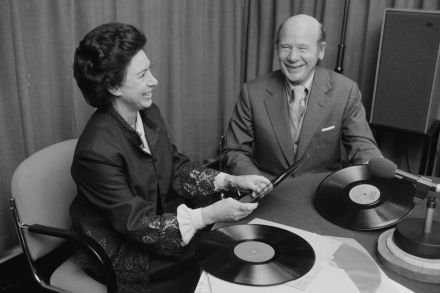
Towards the end of his life the art critic Hilton Kramer was overheard leaving a cinema with his wife. One of them said to the other: ‘Darling, from now on could we only see films that we’ve seen?’ I know the feeling. I find it almost impossible to watch most of the films that now come out, and have spent quite enough hours with serial killers on Netflix. In the same way that there comes a time when it is a greater pleasure to reread than to always read a new book, so perhaps it is the same with film and television. Yet I soon realised that there is a vast chasm in place of what I want to see. This first became clear when I was talking with a friend about Anthony Blunt. ‘Do you know A Question of Attribution?’ I asked, and it turned out he’d never heard of it.

Britain doesn’t need reinventing

What is the most hubristic line ever written? Against some very stiff competition I would say it is that famous line of Thomas Paine, from the February 1776 appendix to his pamphlet Common Sense: ‘We have it in our power to begin the world over again.’ One of the problems of the line is that even just typing it or reading it brings goose bumps. Not just because it is perfectly phrased, but because it appeals to such a basic emotion. It is an emotion similar to the one which always makes me well up at the end of Peter Grimes: ‘Turn the skies back, and begin again.’ It’s moving, in that case, because it is impossible.

The new vandals

31 min listen

This week: In his cover piece Douglas Murray writes that museums are turning against their own collections. He is joined by the historian Robert Tombs to discuss whether a culture of self-flagellation is harming British museums (00:56). Also this week: For the magazine The Spectator’s assistant editor Cindy Yu writes that the tune is changing in China. She is joined by Professor Kerry Brown, director of the Lau China Institute at King’s College London to consider what the recent protests could mean for the Chinese Communist Party (13:24). And finally: Nicholas Lezard writes in The Spectator about how to beat London's expanding Ultra Low Emissions Zone. He is joined by journalist Tanya Gold to investigate an elegant loophole in the plans (24:56).

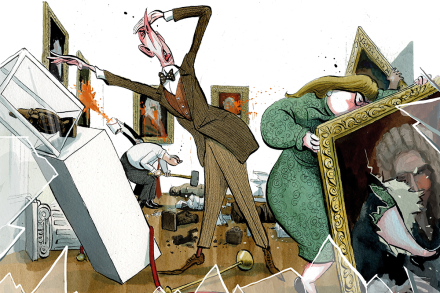
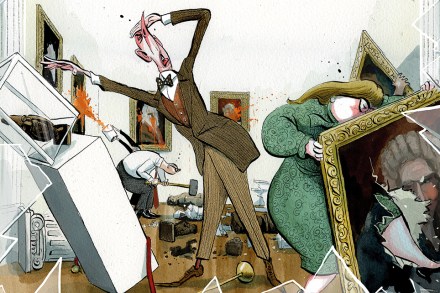
The new vandals: how museums turned on their own collections

This week I had the pleasure of going to the Pitt Rivers Museum in Oxford. I say ‘the pleasure’ but visiting the Pitt Rivers was never precisely a pleasure. Twenty years ago, as an undergraduate, the collection was something of a rite of initiation. The place, filled with strange and wondrous objects, was famed above all for its gruesome pickled heads: artefacts reminiscent of the ‘coconut’ that the one-eyed Brigadier Ritchie-Hook collects in Evelyn Waugh’s Sword of Honour.  What did we think of them in those now distant days? That they were part of another age, naturally – a collection of artefacts from another time, representing another era, with its interests and curiosities. Today the collection is still there, although the heads are not.

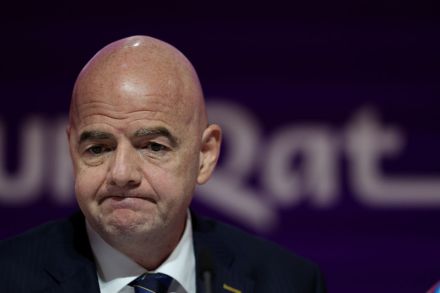
Fifa has scored a spectacular own goal

Unlike some fair-weather fans I maintain a fairly constant interest in the workings of Fifa. Not because I especially care for football, but because I consider myself something of a connoisseur of corruption. I do not spend all my time studying the matter, but I do take an interest in corrupt people and entities. They form a sort of hall of fame in part of my head. Top of my list is probably Abdalá Bucaram. For anyone who failed to follow Ecuadorian politics in the 1990s, that is the period when Bucaram was elected to office in his country. Known as ‘El Loco’ (‘The madman’), the president had a colourful period in power. Among other things, he released a pop single trying to adopt his nickname in a positive light (‘The madman who loves’).

The delicious fall of Sam Bankman-Fried

Dame Edna Everage says one of life’s most precious gifts is the ability to laugh at the misfortunes of others. You may lament this instinct, yet we all harbour it. New Yorkers are especially prone when it comes to property envy. Every couple of years, it feels like, a skyscraper goes up in the city that is significantly taller than the previous very tall new skyscraper. Each time one does, the only thing that goes higher than the tower’s residences is the cost of purchasing them. So with what rapture do New Yorkers read about the misfortunes these buildings go through. Oh, the thrill of learning that they sway in the wind, that people get seasick in the penthouses, that when owners put their garbage in the rubbish chutes the noise on the lower floors is like a tactical nuke.

The weaponisation of ‘bullying’

Bullying appears to be suffering from inflation, like everything else. Certainly as an art form it seems to be in decline. As exhibit A I should like to present the ‘bullying’ recently ascribed to Gavin Williamson MP. Williamson is a hard man to defend. He has not excelled in any of the portfolios he has been given. The principal reason he sticks in the memory is that he does quite a good impression of someone doing an impression of someone sinister. The figure he most resembles is of someone who, at a young age, read the tiniest amount of Machiavelli and experienced feelings of arousal that they had not previously felt. ‘Haha, yes,’ I imagine a young Williamson saying. ‘It is indeed better to be feared than to be loved.’ He rose to be minister without portfolio.

The negligence of ‘not in my lifetime’

It is sometimes said, correctly, that conservatism is more an attitude than an ideology. And for me there have always been certain individuals who embody that attitude. The late and much-missed Tessa Keswick was one such person, and for some reason a remark of hers has recently been in my head. A few years ago we were at a friends’ house for dinner, with an eclectic group. At one point we were all debating something or other and one slightly left-wing woman at the table said: ‘Well, it’ll all be after my time, so I don’t see why I should care.’ If my eyebrows raised, Tessa’s positively shot up. After the meal the two of us debriefed. ‘That is one of the most shocking things I’ve ever heard,’ Tessa told me. I agreed.

The West’s uncivilised euthanasia policy

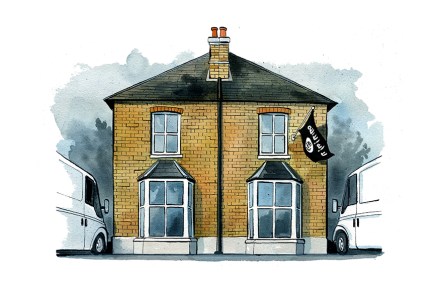
So much is happening on the surface at the moment that it can be difficult to notice certain undercurrents. Since the following story has gone almost unheeded in the Anglophone press, let me point at one especially suggestive current which could be glimpsed on the Continent this month. Cast your mind back to March 2016 and you may remember a co-ordinated set of suicide bombings in Brussels: two at the airport, one at a metro station. The three Isis-inspired terrorists managed to kill 32 people that day. But you may, understandably enough, have forgotten about it. The attacks came after the even larger ones in Paris, and people didn’t really have much to say about them.

How to protest the protestors

These are bleak times in our land, and we must take our pleasures where we can. Personally I have been able to find a great deal of consolation over recent days in watching members of the public confronting protestors from the Just Stop Oil movement. There is some especially pleasing footage of van drivers in south London hauling protestors off the roads by the scruff of their necks. The colourful language which accompanies these acts is an additional delight, for the irate British public is not always immune to using words that polite people might deplore. All the videos bring some satisfaction. This week a strange-looking man-child with a comb-over sprayed orange paint on to the Aston Martin showroom in central London.