Douglas Murray

Douglas Murray

Douglas Murray is associate editor of The Spectator and author of The War on the West: How to Prevail in the Age of Unreason, among other books.

In defence of Picasso

‘Well, they can’t cancel Picasso.’ That was my optimistic take some months ago when a friend in the art world said: ‘Watch out, they’re coming for him next.’ It doesn’t really matter that, like Paul Johnson – late of this parish – I don’t feel unadulterated admiration for Pablo Picasso’s work. The late period seems to me a commercial art factory that would have made Andy Warhol blush. But the fact he was a cast-iron genius is beyond doubt, proven by the fact that no one who came after him could go around him. Like Stravinsky in music, you couldn’t continue afterwards as though nothing had happened; Picasso had happened, and for a long time that was that.

The lost shepherds

40 min listen

On the podcast this week: In his cover piece for the magazine, journalist Dan Hitchens examines whether Archbishop Justin Welby and Pope Francis can heal the divisions threatening to tear apart the Church of England and the Catholic Church. He is joined by Telegraph columnist Tim Stanley to ask whether these two men – once heralded as great unifiers by their respective Churches – can keep their flocks in order. (01:05)  Also this week:  In his column, The Spectator’s associate editor Douglas Murray questions whether the English countryside can be considered exclusionary, after the news that the green and pleasant land will be studied by ‘hate crime’ experts. He is joined by the explorer and broadcaster Dwayne Fields to ask is the countryside racist?

The English countryside isn’t racist

I don’t know what your plans are for Easter. Mine generally include a nice walk in the English countryside. There is something incalculably consoling about our landscape. I might even find myself leaning on a stile and looking at some Easter lambs while they do that sudden vertical jump thing, as though they have suddenly found they are standing over a geyser. But perhaps I should instead scour the rolling hills for signs of racism which I could then report to the relevant authorities. What am I going on about, some saner readers might be wondering. Well, I have been reading reports in the British press that the English countryside is about to be ‘studied’ by ‘hate crime experts’ to find out whether ‘rural racism’ is lurking.

Our poor deluded MPs

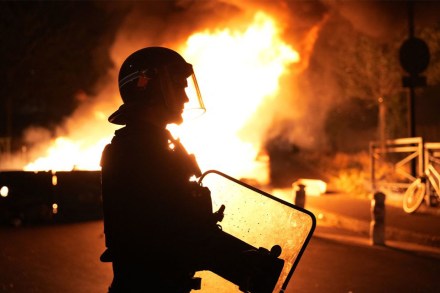
They say that death and taxes are the only certainties in life. But I would add a couple more things to that list. ‘French rioting’ is one. And ‘MPs getting caught trying to make cash on the side’. This week a campaign group called Led by Donkeys released footage of a sting operation they have been running to try to trap MPs into agreeing to do consultancy work for a South Korean company. You may not be surprised to learn that the company does not actually exist. A number of MPs, however, clearly were. After some initial flirting, Gavin Williamson did not fall for it, though we can see from the beginning of the interview the horrific sight of him trying to be charming. It is like watching the Demon Headmaster on a date.

The joke is on America

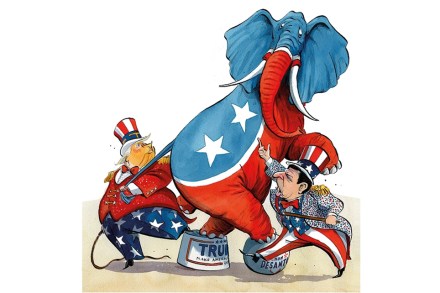
I was brought up on Dan Quayle jokes. You know the ones – like the gag that the then vice-president had turned up in Latin America and apologised for not speaking Latin. Thankfully vice-presidents are no longer a laughing stock. Today we have Kamala Harris. Anyway, probably the most memorable line about Quayle was that people were surprised he was able to walk and chew gum at the same time. Yet recently such a feat has indeed come to seem extraordinary to the American right. Today’s Republicans seem to believe that America can have a foreign policy or a domestic policy, but not both. Just consider the main talking points on the American right relating to the war in Ukraine.

The overuse and abuse of ‘fascism’

I would be very happy if I never had to hear the name Gary Lineker again. He was a vague presence in my childhood thanks to his playing the game of football and his advertising of a brand of delicious, obesity-inducing crisps. But after more than a week in which his name has dominated every news bulletin, I have serious Lineker-fatigue. I feel as one might had we just had a fortnight of discussion and talk of the collapse of major institutions due to a political view expressed by Russ Abbot. To speak plainly, I do not care to hear the views of a retired footballer or crisp-seller on the matter of immigration. Nor do I wish to hear the views of such a person on the Nazi genocide of European Jewry.

Jonathan Coad and British TV’s most catastrophic interview

‘Coad. Coad.’ I wracked my brain. Distant bells began to tinkle as I turned the name over. As though performing a solo game of charades, I said to myself ‘Sounds like?’ And I landed on it. Jonathan Coad used to be known only to a small band of aficionados. Happily today he is almost a household name. This is because of his participation in what must be regarded, by some stretch, as the most catastrophic interview ever conducted on British television. And I have not forgotten about Michael Howard, Prince Andrew or Cathy Newman. https://www.youtube.com/watch?v=tuat8wBmMR4 This week Mr Coad was on GB News being questioned about Matt Hancock, WhatsApp, Isabel Oakeshott and the various other intrigues preoccupying us as our nation goes down the swannee.

Thomas Jefferson and the death of wisdom

In recent weeks I have been trying out a mental exercise. Perhaps you might join me? Cast your mind back to 1999. We were standing on the dawn of a new millennium. True, there was a strange fear that all the computers might crash because of a bug called Y2K. But aside from that there seemed to be a tremendous optimism. One of the biggest causes for this was the nature of information technology: specifically, the internet. Imagine if someone had said to you then: ‘We are heading into a world where almost anything can be read at the click of a mouse. Almost all the great books will be available free online. Almost any quote or reference can be found at the press of a few buttons. Oh and anyone in the world can speak to anyone else, swap information and solve problems.

Is Shakespeare ‘far-right’ now?

Oh – and the Collected Works of Shakespeare. I forgot to mention that last week: that among the books on the reading list that could be a sign of ‘right-wing radicalisation’, some genius public servant came up with the complete works of Shakespeare. Nobody knows what the attitude of Prevent’s ‘Research Information and Communications Unit’ (RICU) would be towards someone found in possession of, say, a quarto edition of All’s Well that Ends Well. Perhaps they should be deemed to be on the conveyer belt to right-wing extremism? It probably shouldn’t come as a surprise that we have officials who think owning the work of our national poet is a sign of right-wing extremism. Because in recent days it seems that everything has been such a sign. Take events in Liverpool.

Can you really be radicalised by Great British Railway Journeys?

The late Robert Conquest adumbrated three rules of politics. Perhaps the most famous (also known as O’Sullivan’s law) is that ‘Any organisation not explicitly and constitutionally right-wing will sooner or later become left-wing’. I would like to add a fourth law: ‘Any programme set up by government will inevitably metastasise unless consciously cut back by observant officials.’ Anyone in search of a textbook example need look no further than the government’s Prevent programme, into which the government’s official review was finally published last week. William Shawcross’s excellent comprehensive report contains many things worth lingering over. But one of the most interesting is what he uncovered about Prevent’s saunter into ‘right-wing extremism’.

Where have all the grown-ups gone?

Last week 100,000 civil servants from 124 government departments went on strike. This fact prompts a number of questions, not least – who knew there were so many government departments? Also, when was the last time anyone saw that number of civil servants? Since Covid, the most noteworthy thing about the civil service has been that it has completely inverted its working week. Alongside those members who never turn up to the office, a goodly portion have managed to arrange it so that they spend a couple of days a week at their desk and a five-day stretch at home recuperating. Meaning that last week civil servants finally went back to the office in record numbers only in order to stand outside it and strike.

America’s colour blindness

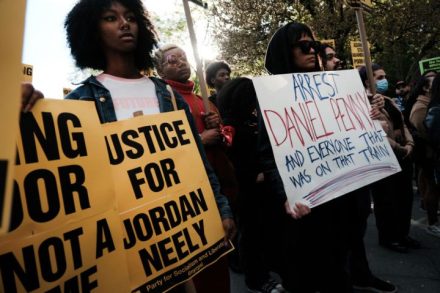
How many black cops does it take to commit a racist hate crime? The latest correct answer is ‘five’. That’s the number of policemen in Memphis who have been fired and charged with second-degree murder for the killing of Tyre Nichols. Last month Nichols, who was himself black, was pulled over by the officers. They proceeded to kick him, pepper-spray him, hit him and repeatedly baton him. He died in hospital three days later. Of course, if the Memphis officers had been white, American cities would be being burned and smashed to the ground again, as they were three years ago after the death of George Floyd.

Pride comes before a fall

Hockey is one of those games, like lacrosse, that alters as it crosses the Atlantic. In Britain, if a man says he is a passionate hockey or lacrosse player, he may get a certain ‘Fnar fnar’ response. In North America by contrast, it would be most unwise to ‘Fnar fnar’ at your average hockey player. A good example comes in the form of Ivan Provorov. He is a big Russian-born ice-hockey player who currently plays for the Philadelphia Flyers in the National Hockey League. Not all readers will be following the NHL carefully, and I admit that I am teetering at the very edge of my knowledge as I type this. Still, the NHL grabbed my attention last week because Provorov became the latest victim of Big Gay’s overreach. Or to be precise, Big LGBTQI+’s overreach.

If not Biden, who?

Monday was Martin Luther King Jr Day in the United States. And this year it was most memorable for two events. The first was the unveiling in Boston of a new sculptural tribute to the civil rights hero. Unfortunately, depending on the position from which you view this inept work of public art, it resembles either a man holding his head in despair or some people holding aloft a giant turd. The 'Embrace' sculpture during its unveiling at the Boston Common, 13 January 2023 (Katy Rogers/Media Punch/Alamy) The second incident was Joe Biden doing what he does best. The President was careful not to politicise the day – apart from attacking the Republicans.

If only Harry took after his grandfather

Do you remember the Duke of Edinburgh awards? Some of you may even have one somewhere. An award for map-reading, orienteering or otherwise managing to find your way around in the age before Google Maps and Uber. It was – and still is – a useful scheme, set up by a man who accepted his position as second fiddle, performed the role impeccably for decades and set up the awards to help millions of other people find their way. It was on my mind as I was reading the latest revelations from Montecito, California. For the memoirs of Harry Sussex are even worse than expected. If I was the head of Netflix, I would be hopping with rage that Harry had kept all his most snore-a-thon stories for Netflix only to deliver the real juice in his memoir.

How to get nothing done

I sometimes wonder whether our government makes any decisions at all. In fact I’m trying to think of any area of public policy that is not the subject of a review, commission, inquiry or similar. The most charitable explanation for this trend is that it worsened in the coalition years. Whenever the Liberal Democrats and Conservatives couldn’t agree on anything they could always kick the matter into the long grass by commissioning a review. So much better than risking upsetting Nick Clegg. All this of course has a deep impact on the country, because it means nothing actually gets done. I am sure you will all remember the Casey review (2016). This was commissioned by David Cameron’s government from the admirable Louise (now Baroness) Casey.

How to save the BBC

Towards the end of his life the art critic Hilton Kramer was overheard leaving a cinema with his wife. One of them said to the other: ‘Darling, from now on could we only see films that we’ve seen?’ I know the feeling. I find it almost impossible to watch most of the films that now come out, and have spent quite enough hours with serial killers on Netflix. In the same way that there comes a time when it is a greater pleasure to reread than to always read a new book, so perhaps it is the same with film and television. Yet I soon realised that there is a vast chasm in place of what I want to see. This first became clear when I was talking with a friend about Anthony Blunt. ‘Do you know A Question of Attribution?’ I asked, and it turned out he’d never heard of it.

Britain doesn’t need reinventing

What is the most hubristic line ever written? Against some very stiff competition I would say it is that famous line of Thomas Paine, from the February 1776 appendix to his pamphlet Common Sense: ‘We have it in our power to begin the world over again.’ One of the problems of the line is that even just typing it or reading it brings goose bumps. Not just because it is perfectly phrased, but because it appeals to such a basic emotion. It is an emotion similar to the one which always makes me well up at the end of Peter Grimes: ‘Turn the skies back, and begin again.’ It’s moving, in that case, because it is impossible.

The new vandals

31 min listen

This week: In his cover piece Douglas Murray writes that museums are turning against their own collections. He is joined by the historian Robert Tombs to discuss whether a culture of self-flagellation is harming British museums (00:56). Also this week: For the magazine The Spectator’s assistant editor Cindy Yu writes that the tune is changing in China. She is joined by Professor Kerry Brown, director of the Lau China Institute at King’s College London to consider what the recent protests could mean for the Chinese Communist Party (13:24). And finally: Nicholas Lezard writes in The Spectator about how to beat London's expanding Ultra Low Emissions Zone. He is joined by journalist Tanya Gold to investigate an elegant loophole in the plans (24:56).

The new vandals: how museums turned on their own collections

This week I had the pleasure of going to the Pitt Rivers Museum in Oxford. I say ‘the pleasure’ but visiting the Pitt Rivers was never precisely a pleasure. Twenty years ago, as an undergraduate, the collection was something of a rite of initiation. The place, filled with strange and wondrous objects, was famed above all for its gruesome pickled heads: artefacts reminiscent of the ‘coconut’ that the one-eyed Brigadier Ritchie-Hook collects in Evelyn Waugh’s Sword of Honour.  What did we think of them in those now distant days? That they were part of another age, naturally – a collection of artefacts from another time, representing another era, with its interests and curiosities. Today the collection is still there, although the heads are not.