Dot Wordsworth

Is Boris Johnson standing for Parliament — or running for it?

‘Boris Johnson broke cover yesterday to declare that he will run for parliament,’ the Times reported last week. The Mirror had him running too. The Independent and the Guardian had him standing for Parliament. The Express said rather oddly that he would ‘stand as an MP’, as did the Evening Standard, though the latter made amends by speculating that Zac Goldsmith was being urged ‘to stand as the Tory candidate for Mayor of London’. There is no doubt that running for election was originally an American phrase, though it hardly blew in yesterday. Andrew Hamilton, a founding father of the United States, wrote in a letter that ‘either Governor Clinton, or Mr Burr... is to be run in this quarter as Vice President in opposition to Mr Adams’.

Should you be prejudiced against ‘pre-’?

‘Pre-diabetes is an artificial category with virtually zero clinical relevance,’ said an American professor in the Times. A friend of mine has even been told by the vet that her little cat is in a pre-diabetic condition, being a little over the norm on the feline body mass index. I began to think that pre-diabetes was like the countryman’s hills: if you can see them it’s going to rain. (If you can’t, it’s raining — you’ve got diabetes.) But then I did something sensible. I looked up the term in the dictionary. It is no neologism. The first example in the OED comes from more than 100 years ago.

Does pre-diabetes really exist?

Pre-diabetes is an artificial category with virtually zero clinical relevance,’ said an American professor in the Times. A friend of mine has even been told by the vet that her little cat is in a pre-diabetic condition, being a little over the norm on the feline body mass index. I began to think that pre-diabetes was like the countryman’s hills: if you can see them it’s going to rain. (If you can’t, it’s raining — you’ve got diabetes.) But then I did something sensible. I looked up the term in the dictionary. It is no neologism. The first example in the OED comes from more than 100 years ago.

The mystery of the missing Mrs

I don’t much care for being called Wordsworth. Oh, the name is rather distinguished, though it came from my husband, but I mean that I don’t like to be referred to as ‘Wordsworth’ without the Mrs. It makes me sound like a convicted criminal. I don’t even like Jane Austen being referred to as ‘Austen’. I know it sounds prissy nowadays to call her ‘Miss Austen’, but we don’t hesitate to refer to Mrs Thrale (though she became Mrs Piozzi) or to Mrs Patrick Campbell, though she married George Cornwallis-West in 1914. (After he was divorced from Winston Churchill’s mother in that year, she reverted to ‘Lady Randolph Churchill’, which must have taken some force of character.

Does ‘autonomy’ mean anything any more?

My husband is constantly amused by talk of patient autonomy — for people who want to have a limb lopped off to solve their feeling of body dysmorphia and so on. I suppose he is amused because that is his nature, rather than that these things are inherently funny. In any case, as I have told him more than once, he is himself an example of impatient autonomy. There was great talk of autonomy in the debate on Lord Falconer’s Assisted Dying Bill. The learned Lord Brennan pointed out that, if it is passed, ‘Litigants will say to the court, “I want to exercise my autonomy and my choice. Why is it restricted to the terminally ill?

Origins of the toe-rag

‘I am glad to say that I have never seen a toe-rag,’ said my husband, assuming, as unconvincingly as one would expect, the demeanour of Gwendolen from The Importance of Being Earnest. ‘It is obvious that our social spheres have been widely different.’ I had been mentioning the perverse tendency of the human race to defend their own amateur etymological theories, even when convicted of gross error. A vigorous example at the moment is tow-rag, a catachrestic version of toe-rag, a term of abuse taken from the practice of wrapping rags round the toes. ‘Stockings being unknown,’ wrote J.F.

Just how old-fashioned is Labour’s ‘cost of living’ campaign?

Labour’s appeal to the cost of living has a rather old-fashioned feel to it: as if the whole nation still heated water with a geyser over the bath and darned (or got me to darn) its socks of an evening. ‘Till recent years the phrase “Cost of Living” was only used loosely by economists when the balance between movements of wages and prices was in question,’ the Encyclopædia Britannica remarked in 1922. ‘In popular parlance it has since become a recognised economic problem.’ That was when Sidney and Beatrice Webb were busy with their blue books and squared paper, before discovering a ‘New Civilisation’ in Soviet Russia. The next big step was the construction of an index to the cost of living.

Diffuse, defuse and the damnably confused

It’s funny how people hardly know what they are saying. I read recently of diplomats going to Riyadh ‘to diffuse tensions over anti-Islamic stickers’. Did the writer mean defuse? Probably. He was trying to say ‘reduce’ tensions and just reached for the nearest dead metaphor from the shelf. Still, it doesn’t do to be too snooty about origins of words, as I have often told my husband, who responds by becoming narrower, shriller, louder and much snootier. What happens if you bother to look up diffuse in the 20-volume Oxford English Dictionary? You find the first entry quotes from old John Florio’s World of Words from 1598, which spells it defuse.

The bloody battle for the name Isis

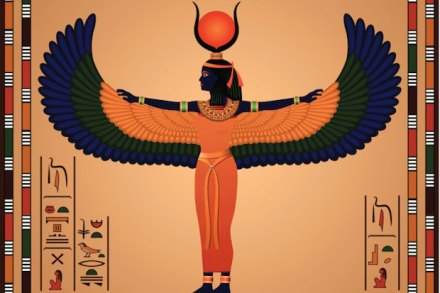
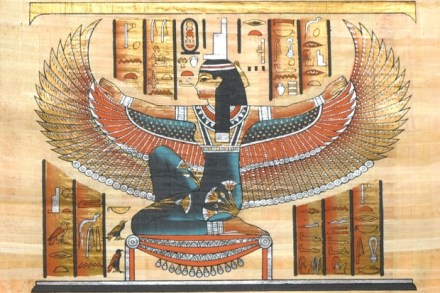
‘This’ll make you laugh,’ said my husband, looking up from the Daily Telegraph. For once he was right. It was a letter from the Pagan Federation complaining that the acronym Isis ‘is likely to form an inadvertent association in the minds of hearers between Sunni jihadists and followers of the goddess Isis’. These ‘may be caught up in unintended fallout’. They are not the only ones. Apart from the army of bloodthirsty Islamists, Isis is a centre for scientific research at Harwell, near Oxford; a group of schools teaching English; an ‘end to end’ professional photographic service in Clerkenwell; a private equity investor; and a seven-seater from Toyota.

Terrorists still can’t ‘execute’ anyone

During the sudden advances of ISIS in Iraq, one visual image stood for their brutality. As the Daily Mail reported it, there was ‘a propaganda video depicting appalling scenes including a businessman being dragged from his car and executed at the roadside with a pistol to the back of his head’. I’ve heard from friends in the press, though not at the Daily Mail, that this description enraged readers. It wasn’t the fact, but the use of the word executed. This, they pointed out, meant the commission of a sentence imposed by a court, which was certainly not the case here. To execute, as the Oxford English Dictionary defines it, is ‘to carry into effect ministerially a judicial sentence.

Why would a Danish queen say ‘basta’?

My husband heard me in the kitchen exclaim: ‘What would I do without you?’ He curiously imagined I was referring to him. But it was of you, dear readers, that I spoke, and in particular Elizabeth Maynard from Oxford, who wrote explaining the use of the Italian word basta by Danes. Well, how was I to know? I’d supposed that Queen Alexandra, who used the word in 1901 (Mind your language, 24 May), had picked it up from the Italian opera. Not at all, Mrs Maynard tells me, since her own Danish mother’s elder sister — born in 1893 — used it too. She would rap the table, to end arguments among the youngsters, and say sternly: ‘Og dermed basta’ (‘And with that basta’). Professor M.J.

Square meals didn’t start in Nelson’s navy – but you could get one in a gold-rush town

I never dare go with my husband to any restaurant that uses square plates or he will play up the horrors of these ceramic items, huffing and puffing and pretending that he can’t stow his knife and fork without their falling off. When the subject attracted the attention of readers of the Daily Telegraph recently, one of them wrote in to say that square wooden plates were ‘standard issue in ships of the line in Nelson’s day’. Sailors were fed a hot meat meal every day, he pointed out, and ‘the practice led to the expression “a square meal”, meaning a good one’. This is a nice idea, but there is no evidence for it. Even Admiral W.H.

The sinister new meaning of ‘support’

When I asked my husband why paramedical professions were given to remaking the language in strange ways, he replied in a threatening tone ‘Whadya mean?’ I think he was in denial. But it is undeniably true that where two or three trained counsellors or disability campaigners are gathered together, the first victim will be the English language. Who was it, after all, that came up with the phrase ‘issues around’? The latest craze is to urge the need for supporting people to do something, or even into something. So, on the NHS careers website, part of the job of a social worker may be to work  with offenders, ‘supervising them in the community and supporting them to find work’.

‘Basta’ must be the Queen’s English — a Queen used it

My chickens do not usually come home to roost so rapidly. Only a fortnight ago I wrote that ‘some people use basta in English, but to my ears it sounds like saying ciao — inauthentic’. Then I went back to reading Jane Ridley’s Bertie, the life of Edward VII (and how much I enjoyed it too). What should I find on page 357? I found Queen Alexandra writing about what she would wear at the coronation in 1901. ‘I know better than all the milliners and antiquaries,’ she wrote. ‘I shall wear exactly what I like, and so shall all my ladies — Basta!’ I can hardly accuse a queen of England of speaking the King’s English inauthentically. But I wonder where she picked up basta.

How DO you pronounce ‘Marylebone’? 

‘Take a trip to Marylebone station,’ chanted my husband. ‘Do not pass Go. Do not collect £200.’ I had been to the station to take the rather nice Chiltern Railways train to Stratford-upon-Avon. En route I had developed doubts, not about my destination, but about the pronunciation of Marylebone. I’ve always said marry-bun, with the vowel of bun indeterminate. But a taxi driver and a ticket collector had said marly-bun. So, back at home, I turned to How to Pronounce It by Alan S.C. Ross, the man who invented U and non-U, but a proper linguistician for all that, and a man guaranteed to take into account traditional tendencies. He counsels against introducing an ‘l’ into Marylebone. Good.

What the French now mean when they say ‘bugger’

The French for tête-à-tête is one-to-one now, according to a new survey of English invaders by Alexandre des Isnards. Actually, only half of the 400 neologisms that M. Isnards has collected for his Dictionnaire du Nouveau Français (Allary Editions) are English, though that’s a high enough level. It seems to me that French and English people are in common cause here, for it is in business-speak that the English neologisms most easily put down their nasty little suckers — an unweeded garden in both languages. Bullet-points now seem as desirable to French business people as to English. Verbs are spawned simply by sticking –er on the end of English words: forwarder, photoshoper (with a single p), rebooter.

Why –y? The evolution of a suffix

Hitler was ‘dark, shouty, moustachioed’ in Churchill’s eyes, or rather, that was Jonathan Rose’s view of how Churchill saw Hitler, according to Sam Leith, writing in the books pages on 19 April. Shouty is not a word Churchill would have used in exactly this sense, for which no example is recorded by the Oxford English Dictionary before 2001. It falls in the category of –y suffixes that connote condemnation, ridicule, or contempt, like catty, churchy or beery. There are plenty of entries for a rather different sense, ‘like a shout’, as Henry Coward noted in his Choral Technique and Interpretation (1914) of untrained voices that may be ‘shouty, throaty, cavernous, hooty, scoopy, and nondescript’.

Dot Wordsworth: What is an astel?

Dear old Ian Hislop was pottering around North Petherton, Somerset, on television, to talk about the Alfred Jewel, found nearby (where the king burnt the cakes) in 1693 by a labourer digging for peat. Since then, learned men have made foolish pronouncements on the jewel — as in a game of charades when the guesser says ‘pot’ and ‘a toe’, but can’t get potato. The ninth-century Alfred Jewel, a favourite exhibit in the Ashmolean, is a tear-shaped piece of rock crystal, two and half inches long, covering an enamel figure holding two scepters. Round the edge, gold letters spell out: Aelfred mec heht gewyrcan — ‘Alfred had me made’. Alfred the Great had actually mentioned the thing as an aestel, or astel as we’d spell it now.

What’s in a universe?

‘So there are lots of universes besides ours,’ the ancient atomists concluded, in the brief account by Peter Jones (Ancient and modern, 29 March). ‘Dot Wordsworth,’ he added cheerfully, ‘will tell you that should be a multi-universe, not a multiverse.’ The trouble with language is that no one takes any notice of ‘should’. In Latin, the adjective universus meant ‘whole, entire’ and, as a noun, ‘the whole world, everybody, the whole caboodle’. The English word multiverse is used in two quite different senses. In one sense, invented by William James, the novelist’s brother, the idea was to portray the universe as lacking order or a guiding power.

Ping – a silly word with a heroic history

In the search for the remains of flight MH370, a pulse signal was detected beneath the ocean. The BBC called it a ‘ping’, in inverted commas on its website and with the spoken equivalent in broadcasts, as if ping were too demotic to be used with due respect. Ping seems joky only because its origin is imitative. In naval slang, the operator of an Asdic echo-sounder in the second world war was known as a ping-man or ping-jockey (by analogy with disc-jockey, first heard in 1941). Asdic is an acronym coined in 1939 from ‘Allied submarine detection investigation committee’.