Dot Wordsworth

Posh

From our UK edition

Two rules of grammar are certain: never split an infinitive and never end a sentence with a preposition. As for the origins of words, it is universally known that the origin of posh is from ships’ tickets to and from India stamped ‘Port Out, Starboard Home’. None of this triad of certainties is true. Let me touch upon posh, about which I wrote here in 2002. Since then, the admirable philologist Michael Quinion has published a book called Port Out, Starboard Home, a title emblematic of popular etymology. He doesn’t think that this was the origin of posh, of course. No one has ever found such a ticket or any reference in shipping archives.

Watch on

From our UK edition

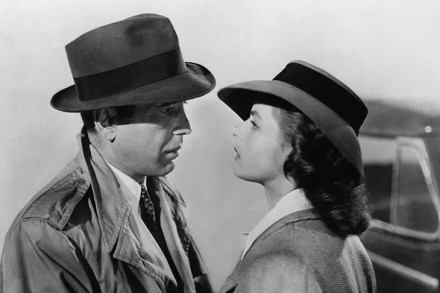
In Casablanca, Mr and Mrs Leuchtag resolve to speak English to each other in preparation for emigration to America. Mr Leuchtag asks: ‘Liebchen — sweetness heart, what watch?’ Mrs Leuchtag: ‘Ten watch.’ Mr Leuchtag: ‘Such much?’ The head waiter, Carl (played by S.Z. Sakall) comments: ‘Hmm. You will get along beautiful in America.’ A development in the use of watch, as a verb, has emerged recently. ‘Harry Kane was forced to watch on as Spurs scraped through,’ reported the Sun, and the Guardian wrote of Amish women playing volleyball ‘as their husbands watch on and cheer’. To me, it should either be look on or simply watch.

Doggo lingo

From our UK edition

Doggy sounds childish. ‘How much is that doggie in the window?’ asks the popular song. (The song title used the spelling doggie, being American, though Britain enjoyed a cover version by Lita Roza in 1953, the same year as Patti Page’s original.). Doggo sounds cooler (like daddy-o in hep talk), but in the strange world of internet image-sharing it goes with a sentimentality which would shame the nursery. The internet has said ‘Aaah’ (or in America ‘Aaaw’) to cute cats, but people post pictures a-plenty of cute dogs. One Twitter account, WeRateDogs, has 8.13 million followers and simply tweets photos of dogs with a caption and a rating out of ten. Like the 110 per cent that employees are asked to give, its ratings exceed the maximum.

Coinage

From our UK edition

‘How many words will you use today, first used by Thomas Browne in the 17th century?’ asked a trailer on Twitter for Radio 4’s In Our Time. A tweeter called Adam B replied that, of the examples given, ambidextrous, carnivorous and medical could all be found before Browne. He added: ‘I love Browne, will be listening.’ So do I, and I enjoyed the programme. But I agree that it is no use looking in the Oxford English Dictionary and concluding that words first cited from any author were coined by him. In the dictionary, 4,156 quotations are taken from Browne, 60 per cent from Pseudodoxia Epidemica (1646), his longest book and I think the most fun. Of these, 771 provide the first evidence of a word and 1,575 the first evidence of a particular meaning.

Artichoke

From our UK edition

My husband has been growling: ‘You cross-legged hartichoak.’ He tries it on obstructive pedestrians hypnotised by their mobile phones. He thus hopes, optimistically, to utter insults while avoiding any ism that could get him into trouble. This imprecation hartichoak he took from the mouth of Young Tom Strowd, a Norfolk man, in The Blind-Beggar of Bednal Green, a play from 1600 by John Day (a Norfolk man) and Henry Chettle (in and out of debtors’ prison). The artichoke jokes went down so well that two sequels were performed, though their text, sadly or not, does not survive. Artichoke displays a modest degree of folk etymology. It came into English in the 16th century from words already obscure in their derivation.

Men in suits

From our UK edition

After he invented the term young fogey (in The Spectator in 1984), the much lamented journalist Alan Watkins coined the term men in suits. Of course other people before him had used the phrases young fogey and men in suits as nonce formations. Watkins identified both as what has since been denominated ‘a thing’. By his own account, even before Margaret Thatcher had been dislodged by them in 1990, the men in suits (identified as a group by the definite article) had been transformed into the men in grey suits. This, he observed, was inaccurate: ‘The typical Conservative grandee tends to wear a dark blue or black suit, with chalk- or pin-stripes, what may be called a White’s Club suit.

Book

From our UK edition

‘Is it like a packet of fags?’ asked my husband, less annoyingly than usual, but still in some confusion. I had been telling him why a book was like a sarcophagus, which I admit has the ring of a Victorian riddle. It has long been accepted that book shares the same derivation as beech. I used to be reminded of that by Beech’s bookshop in Salisbury, now no more. After all, the Latin liber, ‘book’, came from a word for a tree’s inner bark, just as codex (earlier caudex), ‘wooden tablet’ or ‘book’ in Latin, came from a word for ‘tree trunk’. People made letters or runes on wood or bark.

Bolection

From our UK edition

A pleasant menagerie of words grazes in the field of architectural mouldings (the projecting or incised bands that serve useful and aesthetic purposes): gadroon, astragal, larmier and rabbet, but none is chunkier or more mysterious than bolection. Bolection mouldings cover joints, especially between surfaces of different levels, such as round the panels of a door. Such three-dimensional things are hard to describe clearly in words. No one knows the origin of bolection and even its proper form is uncertain: balection, belection, bilection, bolexion. It sounds like the Liberal Democrat attitude to Brexit. Gadroon derives from the name of a round convex fold sewn into a piece of textile, found as goderon in 14th-century French.

Fungible

From our UK edition

‘No darling,’ I said, ‘nothing to do with mushrooms.’ My husband had responded to my exclaiming ‘What does she think that means?’ on hearing Theresa May use the word fungible. This rare word now crops up in discussion of Brexit, perhaps caught from lawyers and business types. They seem to think it means ‘porous, malleable, flexible, convertible’. Dominic Grieve told the Commons last month that he’d prefer ‘a longer and fungible extension’ to the Article 50 process. Stephen Doughty spoke of a ‘flextension, fungible extension or whatever’. Jo Johnson said on another day that he wanted train tickets to be ‘fungible between operators’.

Lapwing | 2 May 2019

From our UK edition

Some birds seem inherently comical. I can’t help being amused by the duck taking its name from its habit of ducking. In English it has enjoyed this name for some time — a thousand years or so. Before that it was called ened, a word related to the Latin anas, anatem. Similarly, the swift is so called because it is swift. That name seems to go back fewer than 400 years, and I’m not sure what it was called before that. Swallow, perhaps, since it has something in common with it. But there are some false friends among the feathered tribes. The lapwing was itself friendless last week, when Natural England stopped farmers shooting its predators. Its alternative name, peewit, comes from its cry, and it is also known as the peeweep, peesweep or tewhit.

Haggis

From our UK edition

Someone on The Kitchen Cabinet remarked that sambusa, as samosa is known in Somalia, came from Arabic. Perhaps it does, for the Hindi samosa, which we have borrowed for the fried triangles, comes from Persian sambose. Loan words weave in and out of the routes of trade and cultural conquest between the Near East and the East Indies. Far more mysterious is haggis. Before the 18th century, this dish was not regarded as particularly Scottish. Thomas Hobbes did not think it ridiculous to use it in a translation of the Odyssey: ‘Antinous a haggas brought, fill’d up / With fat and blood’, to be enjoyed with bread and wine. But where did haggis come from? The Oxford English Dictionary stoutly declares: ‘Derivation unknown.

Epic

From our UK edition

Spoiler alert: in Henry Fielding’s play Tom Thumb, the hero is swallowed by a cow ‘of larger than the usual size’. Before this tragic end comes a scene between Princess Huncamunca and Lord Grizzle, who declares: ‘Oh, Huncamunca, Huncamunca, oh! / Thy pouting Breasts, like Kettle-Drums of Brass, / Beat everlasting loud Alarms of Joy.’ At this the Haymarket Theatre roared, for Fielding was parodying a line widely mocked two months earlier, in February 1730, during the ten-day run of the tragedy Sophonisba by James Thomson, where Masinissa (King of Numidia) exclaims: ‘Oh! Sophonisba, Sophonisba, oh!’ It might not sound worth mocking now, but in 1730 theatre-goers, had to bear quite a lot of cod classicism.

Augury

From our UK edition

Was the cascade of water that made the Commons suspend its sitting an omen or augury? When I asked that in conversation last week, a friend of my husband said that ‘strictly speaking’, augury is to do with divination from the behaviour of birds. I’ve since discovered that even more strictly speaking, it isn’t. Dear old Isidore of Seville reckoned that auspices are avium aspicia, examination of birds. Augury, he says, is one kind of such divination, since auguria comes from avium garria, ‘chattering of birds’, or else augurium comes from avegerium, because aves gerunt, birds reveal.

Shame on you

From our UK edition

In 1663, just before Samuel Pepys visited the stables of the elegant Thomas Povey, where he found the walls were covered with Dutch tiles, like his own fireplaces, he was worrying about Navy pay. People who were owed money by the Navy had to apply for it at a goldsmith’s shop, where they would have to forgo 15 or 20 per cent to secure it. Pepys called this ‘a most horrid shame’. Pepys also used the phrase horrid shame about a case of mistreatment of a watchman by the Lord Chief Justice, and of the King climbing over the garden wall of Somerset House to visit the Duchess of Richmond. It was what we might call a scandal.

Coin a phrase

From our UK edition

My husband has been doing something useful but criminal for the past two years. He reads the sports pages, mostly of the Telegraph, or of other papers if another member of his club has nabbed the Telegraph. When he comes across something promising, he tears out a snippet, none too neatly often, and stuffs it in his top pocket. That is antisocial and deserves expulsion. But it is not for a mere woman to interfere. I’ve gone through some of his grubby snippets that include the words to coin a phrase. Most are used in the orthodox manner, ‘ironically to introduce a cliché’ as the Oxford English Dictionary puts it. Brexit allowed these words to be attached to strong and stable, take back control or nothing has changed.

Dark lantern

From our UK edition

‘Does a dark lantern give out black light?’ asked my husband as if in delirium. He was reading a book I would have been enjoying if he hadn’t grabbed it. It is called 1776, being about London in that year, when Britain was losing its Empire of America. It’s by Justin Lovill, who ten years ago gave us an entertaining miscellany called Ringing Church Bells to Ward off Thunderstorms. Anyway, my husband’s question concerned an incidental reference to a dark lantern, spelled lanthorn in the newspaper source quoted. It made me realise that I have never understood this apparatus. The spelling lanthorn is a piece of popular etymologising, based on lanterns almost always, before the 19th century I think, glazed with horn.

Coloured

From our UK edition

‘The term coloured, is an outdated, offensive and revealing choice of words,’ tweeted Diane Abbott last week in response to Amber Rudd having remarked on the radio with regard to verbal abuse: ‘And it’s worst of all if you’re a coloured woman. I know that Diane Abbott gets a huge amount of abuse, and I think that’s something we need to continue to call out.’ Rudd rapidly apologised: ‘Mortified at my clumsy language and sorry to Diane Abbott.’ It is funny to think that if Rudd had said woman of colour she’d have been immune to criticism. But she tripped over a shibboleth. The Oxford English Dictionary abides by strict neutrality over the use of language.

One fell swoop

From our UK edition

The Sun, reviewing a new laptop from Huawei, mentioned a combined fingerprint sensor and on-switch that lets users ‘power up and log in in one fell swoop’. Logging-in is not usually a fell act, but one fell swoop has long been a cliché, rather than a quotation from Macbeth, where Macduff, on hearing of their murder, asks: ‘What, all my pretty chickens and their dam / At one fell swoop?’ The phrase at one swoop was in the Jacobean air, for Webster in his White Devil has Lodovico declare: ‘Fortune’s a right whore. / If she give ought, she deales it in small parcels, / That she may take away all at one swope.

Kibosh

From our UK edition

‘What is a kibosh?’ asked a German medical friend of my husband’s, when the word cropped up. No one knew, though we were certain it was the kibosh and it was put on things. All our lives, the earliest citation for the word had been from Dickens’s Sketches by Boz (1836): ‘ “Hoo-roar,” ejaculates a pot-boy in a parenthesis, “put the kye-bosk on her, Mary”.’ The entry for kibosh in the Oxford English Dictionary is not fully updated, but the online edition has cleared up that strange k. In the first edition of the Sketches, it was spelt kye-bosh, later doubtless misprinted kye-bosk. Someone in the journal Notes & Queries had in 1901 suggested a Yiddish origin, others an Irish one.

Interrogate

From our UK edition

My husband sat in his usual chair, interrogating the contents of his whisky glass with his old, tired nose. In 20 years’ time that sentence may seem normal. To me it seems at best whimsical, perhaps arch. There’s a lot of interrogating at the moment, quite apart from the traditional kind by unpleasant policemen. Jay Rayner, in the Observer, said that he saw some people in a restaurant interrogate their plates. In the Guardian someone suggested we should ‘interrogate the things that make us want to drink too much’. In the Guardian again someone else declared: ‘It’s important to challenge and interrogate sexist beauty ideals, of course.’ Of course.