Digby Warde-Aldam

Carry On El Comandante. Does the world need a Hugo Chavez exhibition?

The other day I got an invitation to a do called ‘For Now and Forever – a reception and photo exhibition celebrating the life of Hugo Chávez’, with speeches by various left-wing notables, including the one and only Len McCluskey. It’s been a year since Venezuela’s cuddly comandante passed away, and supporters of his Bolivarian revolution want you to know it. Attracted by the prospect of a free glass of wine and the comedy value of hearing somebody say ‘¡Hasta la Victoria Siempre!’ unironically, it was a no-brainer. And so I found myself in Fitzrovia’s Bolívar Hall, surrounded by the most 70s crowd this side of a Van der Graaf Generator revival.

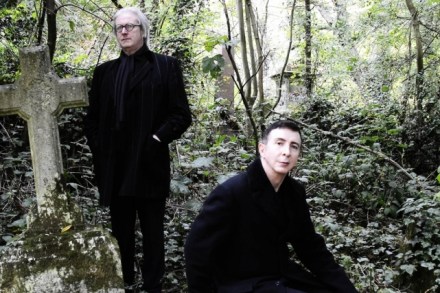
Review: John Harle/Marc Almond, Barbican Hall. Ignore the prog-rock pretension. Almond is a joy.

Funny how quickly you forget the makeup of the average highbrow pop concert. It’s 96 per cent male, obviously, and very partial to a receding hairline-ponytail combo; last night’s performance by saxophonist and composer John Harle and former Soft Cell singer Marc Almond brought these types out to the Barbican in force. They were here to see The Tyburn Tree, a psychogeographical song cycle (!) based around  London folklore and mysticism. Thus, whatever the evening promised, a degree of mass chin-stroking was inevitable. The audience sat down to complain about the quality of the craft beer on offer to their imaginary girlfriends, and the band began to tune up. This went on for a very, very long time. Finally, though, the overture to the performance began.

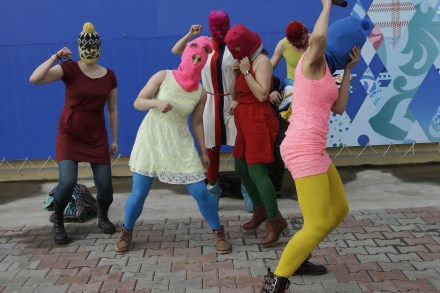
Is Pussy Riot’s music actually any good?

Victims of state persecution, ambassadors for day-glo knitwear and wank fodder for beardy liberals the world over, the members of Pussy Riot have been filling both prison cells and column inches since 2012. In the process, they’ve also become one of the most famous bands on the planet. But let me ask you this – have you ever actually heard any of their music? And crucially, is it any good? Was it purely their politics that led the Cossacks to attack them with horsewhips last week, or is that just the way they do pop criticism in the Caucasus? We took to the internet to get some balanced and entirely un-facetious critical perspective.

We watched the Brits so you didn’t have to…

It goes without saying that the Brits are not the draw they once were. But I was sick of being cynical about them. I sunk into my chair with the reservoir of alcohol I had bought and waited to witness something other than James Corden and mediocre musical performances. And did I? The fact that Ellie Goulding was named best British female solo artist should tell you everything. Of course I bloody didn’t. Unless you count David Bowie’s unionist shout out, delivered by a Kate Moss-shaped proxy, as inflammatory (it wasn’t), this junket was as boring and self-congratulatory as last year’s. And the year before. And the year before that. Compère James Corden did some things he thought people would find amusing. Which they didn’t.

The 10 most annoying phrases of 2013

Sifting through the heaps of discarded language and redundant memes expended in the last twelve months, it’s clear that they don’t make ‘em like they used to. Ah, for the days when clichés were built to last! Twitter now rolls out disposable buzz phrases like a chopstick factory, and all we can do is get a bit angry and forget about them. This is not to say that Neology is dead. This year gave us ‘Twerking’, which I rather like - provided it remains confined to inverted commas rather than let loose in my kitchen. Another 2013 winner is ‘Chumley’ – shorthand for laddish berks with aristocratic pretentions and red trousers. It’s useful, it’s funny and it genuinely identifies something previously unformulated as a word.

Stuck for Christmas presents? Hit the museums

The plan to do last year’s Christmas shop at Peter Jones on 23 December was doomed from its sorry inception. I was soaked by the time I got there, my plimsolls waterlogged, kept going only by my expectation of a quiet and civilised department store, rammed to the skylights with perfect presents. Instead, I found myself spearing a path through the seething, teeming, hostile masses with my sodden umbrella, and, worse — finding its  stock all but decimated. The claustrophobia that ripped through me was so violent that I was forced to run to the toilets to hide — and even then I had to queue. I shivered in the stairwell and contemplated defeat. What do you do about all those uncles? In-laws?

Are you a Yuffie? 

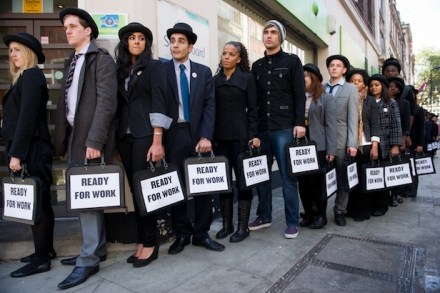
I remember, during one of my last classes at UCL, the topic of conversation turned from the cultural implications of Algerian independence to the subject of life after university. Our lecturer, a grumpy ‘progressive Hoxhaist’, told us that things had never been worse, and out of the 20 or so students in the room, only one or two would have found any kind of full-time employment by the time the year was out. ‘But it’s not fair!’ cried one girl, ‘we’ve all worked so hard over the last four years, we’re all clever [speak for yourself, I thought], we all have debts and we’re just going to be ignored!’ ‘Who are you going to blame, then?’ responded the lecturer. The question was a pertinent one: who were we to blame?