Deborah Ross

Deborah Ross is the chief film critic of The Spectator

Cold frames

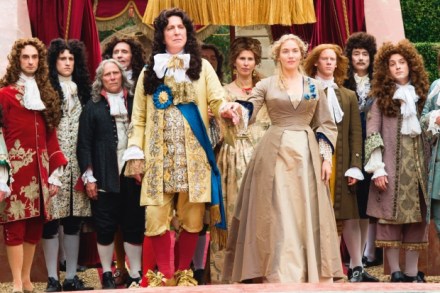
A Little Chaos is a period drama directed by Alan Rickman and starring Kate Winslet as a woman charged to design and build a grand fountain garden for Louis XIV at Versailles. The film is, I noted from the poster, ‘the official film of RHS Gardening Week’, which may or may not be a hotly contested title, I just don’t know. All I can tell you is that it is, in fact, more of a love story than a horticultural story, and while it has occasional pleasing moments, and is lavishly costumed, it manages to do what I do whenever I try my hand at gardening. That is, despite my best intentions, and slogging my guts out, I somehow kill everything stone dead.

All that glitters is not gold

Woman in Gold feels rather like a Jewish version of Philomena as this too is about an older woman seeking justice for what has been stolen from her in the past but, unlike the Jewish version of almost everything, this is not in any way superior, and may even be a dud. It is based on a true story, which is an excellent and fascinating story, but it’s the storytelling that counts, and the storytelling here is not only familiar and pedestrian, but so emotionally manipulative that it doesn’t come with one sentimental ending, but several in quick succession. ‘Oh good, it’s over,’ you will think to yourself, as you make to rise from your cinema seat, but what’s this coming at you? Yet another sentimental ending? Every character gets their own?

Lily James’s Cinderella is more of a doormat than my actual doormat

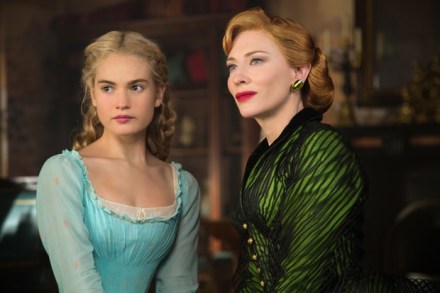
Kenneth Branagh’s Cinderella is a Disney film based on a Disney film, so is double Disney, if you like. It is a live-action adaptation of the 1950 animated version, and an entirely faithful retelling. As such, it comes with no irony, no modern winks aimed at a modern audience and no smarty-pants updating of the smarty-pants kind. It is lush, with dazzling costumes by Sandy Powell, but without any reinvention whatsoever this is a film that, at some point, should have asked itself, ‘OK, I’m all dressed up, but do I actually have anywhere to go?’ It stars Lily James (from Downton, apparently) as our heroine, Ella. Ella had a childhood as golden as her hair. Ella, as we see, lived in a heavenly house with a mummy and a daddy who loved her very much.

The Voices review: a hateful, repellent, empty film

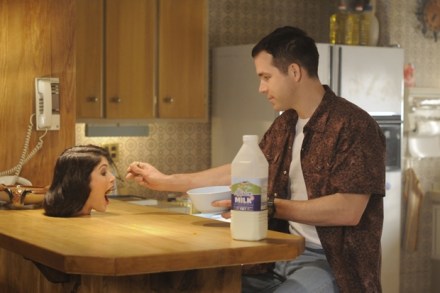
The Voices is ‘a dark comedy about a serial killer’, which is not an overcrowded genre, and I think we can now plainly see for why. I was up for it, initially. The buzz around the film had been good. ‘Unexpectedly pleasurable’, GQ. ‘Wild and hilarious’, Hollywood Reporter. Which just goes to show: never, ever trust reviews. This is a hateful and repellent and empty film. This is not pleasurable, unexpectedly, expectedly, or otherwise and it is neither wild nor hilarious. I bitterly resent each of the 104 minutes I gave to it, and I say that as someone who never has anything better to do. It may even be that I’ll never read another review again.

Suite Francaise review: what is this film playing at, when it comes to Jews in attics?

Suite Française is being billed as a second world war romance about ‘forbidden love’ and, in this regard, it is handsome, solid, well played and probably fine, if you haven’t read Irène Némirovsky’s novel, but if you have? Then you may have been hoping and praying for something deeper, something more special. As you know — because I have been nothing if not repetitive down the years — I desperately try not to compare films with their source material. Let a film live or die by its own merits. But this book nags like nothing else on earth. What? Really? No! And where did that Jew in the attic come from? What is this film playing at, when it comes to Jews in attics? Can anyone put a Jew in an attic, whenever they so fancy?

Fifty Shades of Grey, review: ‘Use a condom!’ my sister shouted

And so, in the end, I went with my sister, Toni, to see Fifty Shades of Grey and we saw it at noon on Valentine’s Day at the Odeon in Muswell Hill. In the audience on that particular day at that particular time there were eight other women, all around our age, and all on their own. The Fifty Shades phenomenon has been described as ‘soft porn for middle-aged housewives’ and it’s said as an insult, but it sounds rather good to my sister and me. Indeed, after what feels like a lifetime of pairing socks and putting meals on the table and basically performing the role of main drudge at Drudge Central we feel we deserve a little soft porn and who knows, if we like it, we could work our way up to hard porn?

Love Is Strange review: subtle and nuanced in ways which, I’m assuming, Fifty Shades is not

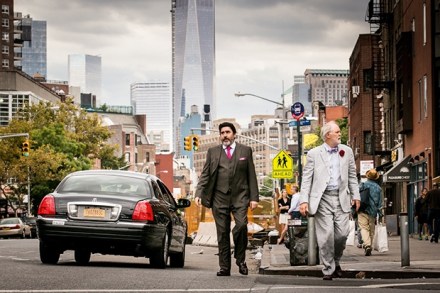
You will be wondering why I haven’t seen Fifty Shades of Grey as this is very much Fifty Shades of Grey week and although I’m as curious and excited as anybody — how has Sam Taylor-Johnson filmed a book which, let’s face it, is quite a bit shit? — there were no UK media screenings prior to going to press. This means I will now have to pay and see it at the cinema, which is something, I know, you little people do all the time, but still, who does one go with? As it happens, my mother (86) expressed an interest, but I had to tell her: no way. ‘Mum,’ I said, ‘I love you and would do anything for you but, in the words of Meatloaf, “I won’t do that.”’ Who do you go with? Tell me, please.

Selma review: rich, nuanced, heartbreaking

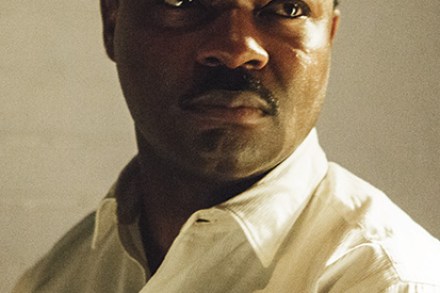
Selma, the civil rights film that stars David Oyelowo as Martin Luther King, undoubtedly contains the best and most powerful performance of the year as not nominated for an Oscar. Oyelowo has said this is because Hollywood prefers black actors when they play ‘subservient roles’ and aren’t ‘the centre of their own narrative, driving it forward’, which, alas — and before I could help myself — immediately made me think of Driving Miss Daisy (nine nominations, and winner of Best Picture over Spike Lee’s Do the Right Thing). So, a useful reminder that, in congratulating ourselves on how far we have come, we should not forget how far we still have to travel. (And that is your lesson for this week.

Trash, review: trash by name, trash by nature

Trash is the sort of film one desperately wishes to be kind about — heart supremely, if not burstingly, in the right place and all that — but it doesn’t make life easy for itself. Directed by Stephen Daldry, with a script by Richard Curtis, and set amid the kids who work the rubbish dumps of Rio de Janeiro, this aspires to combine (I think) the lively spirit and warmth of Slumdog Millionaire with the hard-hitting social agenda of City of God, but in working both angles, it doesn’t pull off either one. It also culminates in the most implausibly happy ‘feelgood’ ending known to man (and here I am being kind, because I could have added ‘or beast’, but did not).

A Most Violent Year, review: mesmerising performances – and coats

A Most Violent Year is a riveting drama even though I can’t tell you what it’s about, or even what it actually is. (What’s new?) Set in New York City in 1981, against the improbable background that is the heating oil business (it’s sexier than you’d think), this isn’t quite a gangster film and it isn’t quite a thriller and it isn’t quite a morality play and it isn’t quite an exploration of the American Dream and it isn’t one of those parables about the evils of capitalism either. This is discombobulating, initially. We are used to the familiarity of well-defined genres. ‘Where is this going?’ you will keep asking yourself, whereas your best bet is simply to go with it, while admiring the coats.

Wild made me want to puke

Wild is yet another film based on a true story, as currently seems to be in vogue for some reason. (See The Imitation Game, Foxcatcher, The Theory of Everything, Testament of Youth etc.) Maybe the film world has run out of made-up stories, which was bound to happen sooner or later, as you can’t just pluck them out of the air? I don’t know. I can only tell you that this is the story of Cheryl Strayed who, after a series of personal struggles, opts to rebuild herself by walking 1,000 miles of the Pacific Crest Trail, from the Mojave Desert to the Oregon/Washington border. This is a female on-the-road narrative, which should be cause for celebration in and of itself, as it’s a genre that, going right back to The Odyssey, has never given women much of a look-in.

Foxcatcher: piercing, shattering, spellbinding

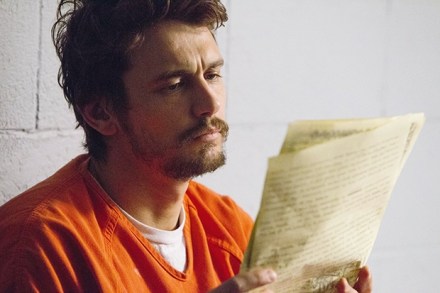
Foxcatcher is a crime drama (of sorts) that has already been dubbed ‘Oscarcatcher!’ as it barely puts a foot wrong. It is tautly directed, deftly written, thoroughly gripping and offers psychological heft as well as sublime performances all round, even from Steve Carell’s prosthetic nose, which deserves a nomination in and of itself. (Schnozzle of the year?) It’s also based on a fascinating true story, although the less you know about this story, particularly how it ends, the better. I would even advise you to stop reading right now, but I need the money, plus the abuse in the comments section below. My life wouldn’t be worth living without that. How would I even know I was alive?

Birdman: plenty to see, little to feel

Alejandro González Iñárritu’s Birdman, which stars Michael Keaton as a one-time superhero movie star (just like Keaton himself), is audacious technically, and so meta it may well blow your mind, but it is also weird, maddening, wearing and exhausting. It is so frantically fast-paced it feels as if you are on a theme-park ride that just won’t stop, or slow down, if only for a minute, so you can take a breather, collect yourself, come up for air. It is already a critical smash. It has garnered seven Golden Globe nominations. It is widely tipped for the Oscars. It has received five-star reviews everywhere.

Deborah Ross’s top five films of 2014

1. Mr Turner Mike Leigh’s infinitely superior biopic starring a sublime, if grunty, Timothy Spall. 2. 12 Years A Slave Harrowing - you’ll be harrowed to within an inch of your life - but it’s unflinching look at American slavery will stay powerfully with you unlike, for example, Django Unchained or The Butler 3. Boyhood Richard Linklater’s epic, heart-warming observational chronicle explores  the banality of everyday life without ever being boring; a rare achievement in cinema. 4. Twenty Feet From Stardom A host of extraordinary women and a sensational soundtrack take this documentary about backing singers to another level, and will take you with it. 5.

If you like bland films full of blondes, you’ll love Kon-Tiki

Kon-Tiki is a dramatisation of Thor Heyerdahl’s 4,300-mile, 101-day journey across the Pacific by balsa-wood raft, which took place in 1947, and was a remarkable achievement, unlike this film, which so isn’t. True, it does what it says on the tin. There’s an ocean, and it’s traversed. There is jeopardy, most notably in the form of a big plasticky shark. But it’s played as such a straight-up-and-down, old-fashioned, formulaic adventure that it lacks any intimacy or feeling and almost can’t be bothered with its own characters. Consequently, it’s as bland as it is blond, and it is exceptionally blond. As styled by Th’Oreal, I guess you could even say.

Paddington review: put your mind at rest – no one gets marmalade up the bum

‘Please look after this bear,’ reads the famous label hanging round Paddington’s neck, and this film does that, admirably, handsomely, endearingly, lovingly and not at all sexily. Such a furore, when the film was awarded a PG instead of a U certificate for ‘sexual references’ — oh no! What have they done to the bear? — but it was just the BBFC being somewhat over-enthusiastic, as it would later admit, when it downgraded it to ‘innuendo’. Still, I wanted to put your mind at rest, wanted you to know the bear is safe and this isn’t Paddington: the Sex Pest or anything, even though that’s a film I’d probably quite like to see.

Just because The Homesman has a few women in it doesn’t make it a ‘feminist western’

The Homesman, which stars Hilary Swank and Tommy Lee Jones and is set in the Nebraska territory in the 1850s, is being sold as ‘a feminist Western’, which is a bit rich. This is not a bad film. It’s modestly entertaining, in its way. And it does portray the harshness of life for the early women settlers. But feminist? When, at around the midway mark, it goes all John Wayne on us? ‘Oh please, don’t go all John Wayne on us,’ I begged the film. ‘Please be more interesting than that.’ But it was determined. And I suppose the clue was in the title all along. This is not, ultimately, a story told through a woman’s eyes. It is told through a man’s eyes. And it’s not a story in which any woman’s character takes a journey.

The Imitation Game: a film that’s as much in the closet as Alan Turing was

The Imitation Game is a biopic starring Benedict Cumberbatch as Alan Turing, the brilliant mathematician who broke the German’s Enigma code during the war, created the blueprint for the modern computer and was then hounded to death by the authorities for being gay, the bastards. It’s a fascinating story, as well as one of those stories that needs to be told, over and over if necessary, but I just wish it had been told here with a little more guts and flair. This is solid, sturdy and offers a few great moments. But it is rather formulaic, and as much in the closet as Turing ever was.

Interstellar: like Star Trek – but dumber and more tiring

Christopher Nolan’s futuristic epic Interstellar isn’t a clever film, or even a dumb film with a clever film trying to get out. Instead, and no matter what the hype may say, this is a dumb film with an even dumber film trying to get out. Even the tag line, which is also the basic premise, is super-dumb. It goes: ‘Mankind was born on earth. It was never meant to die here.’ Who says? How can anyone know what nature’s intentions might be? What did it intend for dinosaurs, for example? The golden toad? The use of ‘mankind’, rather than ‘humankind’, is also telling, as this is very much in the tradition of the alpha-male American superhero who single-handedly saves us (ladies too!; thanks!

Mr Turner: the gruntiest, snortiest, huffiest film of the year – and the most beautiful too

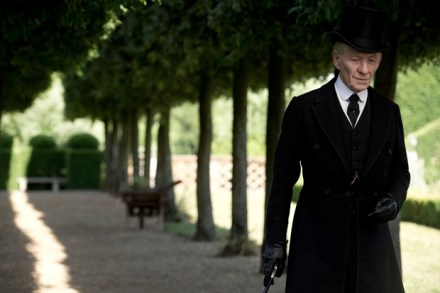
[audioplayer src="http://traffic.libsyn.com/apollomagazine/Apollo_final.mp3" title="Tom Marks, editor of Apollo magazine, talks to Mike Leigh"] Listen [/audioplayer]Mr Turner may be the gruntiest film of the year, possibly the gruntiest film ever. ‘Grunt, grunt, grunt,’ goes Mr Turner (Timothy Spall) as he sketches, paints, gropes his housekeeper, woos a Margate landlady, winds up John Constable something rotten. But what I now know is that when you have Spall doing the grunting, and Mike Leigh at the helm, as both writer and director, such gruntiness can be quite sublime, as can snorting and huffing. This is a biopic of the painter J.M.W. Turner, ‘master of light’, and the greatest painter that ever lived according to many, but it is not a regular biopic.