Deborah Ross

Deborah Ross is the chief film critic of The Spectator

Going nowhere fast – and loud

As a general rule, I would not wish to spend nearly three hours in a mini-van with young people who turn up the music real loud. As a general rule, being the age I am, I would go to any lengths to avoid such an experience. But American Honey is a film by Andrea Arnold and even though it does require you to spend nearly three hours in a min-van with young people who turn up the music real loud, you will not, in fact, regret it. Or at least not regret it entirely. A bit, perhaps, but you’ll get a good two hours regret-free. This is the first American film by Arnold, the British director who made Wasp and Red Road and Fish Tank — three brilliant films in the social-realist tradition, one of which happens to be among my favourite films of all time. (Clue: Red Road.

Wrong side of the tracks

You will surely have seen the posters for The Girl on the Train with Emily Blunt staring from a train window beneath the question: ‘What did she see?’ I don’t know ...buddleia? Bindweed? The occasional abandoned supermarket trolley? That is all most of us see from trains and while it’s true that buddleia, bindweed and the occasional abandoned supermarket trolley would make for a very dull film, it could scarcely be any duller than this. And that is the truth. This is an adaptation of the thriller by Paula Hawkins; a thriller that, I would venture, attained bestseller status largely because it was touted as ‘the next Gone Girl’ and ‘the British Gone Girl’ and we all fell for it.

White Knight

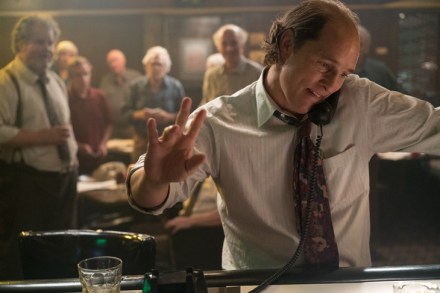
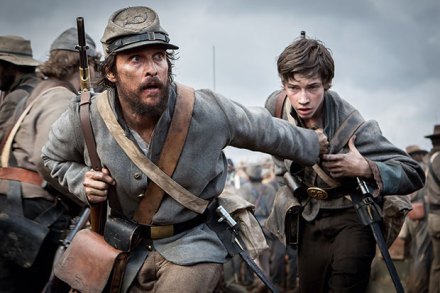
Free State of Jones is an American Civil War drama ‘inspired’ by the life of Newton Knight, who led an armed rebellion against the Confederacy in Jones County, Mississippi, and one rather wishes that that was all it was about. Directed by Gary Ross (Seabiscuit, The Hunger Games), and starring a whiskery, leathery Matthew McConaughey, it tells that story, then thinks: while you’re here, might we tell another story? And another one? So you are fully educated in all matters? In the end, such is the weight of all these stories that you won’t lose the will to live exactly, but you will find it has been significantly weakened. The film opens in 1862 and opens as you might expect. That is, bloodily and viscerally on a battlefield mid-combat as body parts fly.

No fear

I can’t say I care for zombies particularly or even understand them — OK, they’re the living dead, but what do they have against the living living? Why do they always want to bite their faces off? — and I can’t say I cared for The Girl With All the Gifts either. This is an adaptation of the dystopian horror novel of the same name by Mike Carey, who also wrote the screenplay. I have not read the book, I confess, as I don’t do much that’s dystopian if it doesn’t involve Margaret Atwood, but I know it was critically well received as well as hailed as ‘an original and compelling new take on the zombie genre’, which may well be the case, but there is little evidence of that here.

A Bridge too far?

Bridget Jones’s Baby is the third outing for our heroine as played by Renée Zellweger, whose cosmetic work to face has received more media attention than the film itself, but we will try to counteract that here. So, on this occasion, Bridget finds herself pregnant but does not know if the father is our old friend, uptight lawyer Mark Darcy (Colin Firth, who is not as young and dewy as he was at, say, 32, perhaps because he’s now 56), or the American dating magnate Jack Qwant (Patrick Dempsey, 50, who may have let himself go a bit, but then he has had three children, so fair’s fair). And now a note to self: stop going on about how Hollywood women are damned if they do and damned if they won’t (get older, that is) and just tell us if this is worth seeing.

Business as usual | 18 August 2016

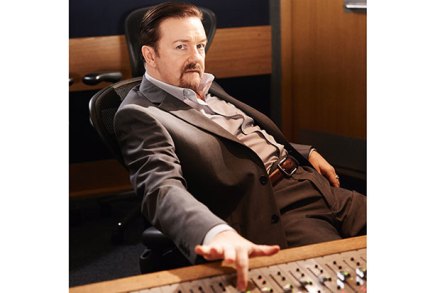
I should probably nail my colours to the mast and state that The Office is possibly my favourite TV sitcom of all time (bar My Family, which surely goes without saying), but some comedies that have ended should simply stay ended, as no one has ever said, but should have. (Or maybe John Cleese has said it?) There are a few decent jokes here. Some of the bad songs are really good bad songs. But it’s a repetitive rehash rather than a worthwhile continuation of the character, and the comedy and pathos is in exactly the same place as it always was. That is, in the gap between the winner David Brent (Ricky Gervais) thinks he is, and the loser we know him to be. Fifteen years ago, that was revolutionary, and genius, and funny, and affecting, but now? Not so much. Quite tiresome, in fact.

Oven-ready

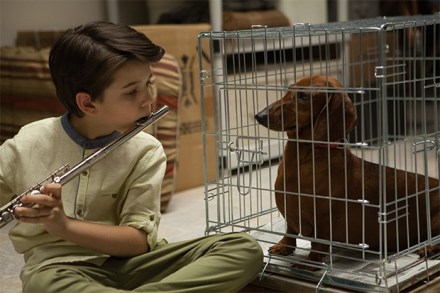
Todd Solondz’s Wiener-Dog is billed as a ‘dark comedy’ although it is far more dark than comic. If pressed to put a number on it, I’d say that, despite the film’s poster, which shows a cute dachshund’s butt, and leads you into thinking cute dachshund thoughts, this is 98 per cent dark, and the sort of film that actually makes you want to come home, draw the curtains, and stick your head in the oven. Life’s a bitch and then you die, it says, literally. There’s every chance you’ll hate it. I’m not convinced I don’t. But this is a film that, once seen, you’ll always know you’ve seen and, in the most disquieting way, it feels as if it has somehow seen you too.

Corn again

The Carer is a Hungarian-British co-production about a cantankerous old thesp (Brian Cox) and the young Hungarian woman (Coco König) who is dispatched to look after him, much against his wishes, and whom he’ll eventually throw out on her ear. I’m joshing you. She wins him over, naturally, and mutual respect develops, naturally, and a friendship blossoms, naturally, although I wish he’d thrown her out on her ear as that way this wouldn’t have felt like something we’ve seen a hundred times before. There are affecting, powerful films to be made about old age, loss, mortality and dependence, but this, alas, has all the emotional grit of a Driving Miss Daisy.

The lying game | 28 July 2016

JT LeRoy was a teenage hustler who emerged from a childhood of abuse, drug addiction and homelessness to write about his harrowing experiences and become a literary sensation as taken up by Madonna, Bono, Winona Ryder, Carrie Fisher, Courtney Love, Lou Reed and Gus Van Sant, among many others. His back story was shocking — raped at five; pimped out by his prostitute mother at truck stops; HIV-positive; heroin-addicted ...sit on that, Angela’s Ashes! — but the biggest shock, when it arrived? He did not exist. JT, it turned out, had been confected by Laura Albert, a 35-year-old woman from Brooklyn.

Girls v. ghosts

From the moment this all-female reboot of Ghostbusters was announced, the fan-boy panic set in: where will it end? An all-female Top Gun? Will it make me pregnant? Who are these ‘women’? Where do they come from? Are they a recent thing? Do we know any? If it’s proved they can carry big Hollywood comedies, how will they ever be stopped? Such vitriol had to be coming from a sexist place as films are rebooted all the time and superheroes are endlessly — Batman can’t bend down to pull up his socks without being rebooted — yet they don’t provoke hate. Plus, it’s not as if remaking a film erases the earlier one. You can purchase the 1984 original on DVD for £3.

Erectile dysfunction

Anthony Weiner is the American politician who made a comeback after a sexting scandal and stood for New York mayor. He was topping the polls, when a second sexting scandal broke, which proves what, probably, none of us had suspected all along: that thing you do where you send women pictures of your erect penis must be awfully hard to quit. This fly on the wall documentary was, happily, already filming Weiner and his fascinating wife (Huma Abedin, Hillary Clinton’s long time aide) when his career imploded, and the result is as supremely entertaining, painfully funny and queasily riveting as you might have hoped, with one caveat: why is it so awfully hard to quit? Why is it so awfully hard not to press ‘send’?

Darkness visible

Perhaps you have sometimes wondered: how would you even begin to make a film about going blind and being blind and what that means? How, when the subject is so profoundly and inherently uncinematic? Or maybe it’s other thoughts that keep you awake at night — such as when we all finally receive our £350 million a week plus free puppy, where will we be expected to keep them? — but even if that’s so you’ll still find Notes on Blindness to be a singular achievement, as well as a truly wonderful one. This is based on the audio recordings of John Hull, the academic, writer and theologian who was Emeritus Professor of Religious Education at the University of Birmingham.

Home alone

The Secret Life of Pets is the latest animation from Illumination Entertainment, which also brought us Minions and Despicable Me, but whereas they were smart, funny, charming and original, this is not that smart, not that funny, not that charming and not that original. It’s an average caper that feels familiar and suffers mightily from an excess of chase scenes although, in the interests of full disclosure, I should add I attended the screening with a six-year-old who said afterwards: ‘I loved it.’ Six-year-olds. We are fond of them and all that, but they just don’t ever get the bigger picture, do they? This is set in Manhattan and concerns Max, a little terrier as voiced by Louis C.K. (The dogs speak, but to the human ear it sounds like barking.

Highly illogical

Matteo Garrone’s first English-language film is a baroque fantasy based on Pentamerone (Tale of Tales), the 17th-century collection of fairy tales by the Italian poet and courtier Giambattista Basile. (It is also known as The Story of Stories, ‘Lo cunto de li cunti’, but that, I think we can all agree, travels rather less well in the original language.) Garrone, who is best known for his grittily realistic Neapolitan crime drama Gomorrah, has thrown gritty realism entirely to the winds here. Instead, this is fantastically unhinged, veering madly between wonder and horror, gorgeousness and grotesquery, as hearts are eaten, fleas are cuddled, and an old woman’s youth and beauty are restored once she’s been suckled by a witch. (Take that, Clarins!

The lost world

Every now and then, with great infrequency (alas), a film comes along that is like no other and completely knocks you for six, and that is Embrace of the Serpent. The first Colombian film to be nominated for an Oscar — it lost to Son of Saul, should you set any store by such things — it was filmed in the Colombian section of the Amazon basin, with a script developed in consultation with native tribes, and tells the story of a shaman’s encounters with two white scientist explorers, which unfold in different time periods. So far, so National Geographic; a world disappeared by colonialism and all that (sorry; our bad).

Jane Austen on speed

Love & Friendship is based on the little-known Jane Austen epistolary novella, Lady Susan, which was not published until after Austen’s death, and was then ill received. As G.K. Chesterton declared: ‘I, for one, would have willingly left Lady Susan in the wastepaper basket.’ Knowing what I know now and having, in fact, read Lady Susan, I, for one, would have willingly punched G.K. Chesterton in the head, had I been around at that time. And, had I wished to torment him further, which is highly likely, I might have then told him that it would one day be turned into the most delicious hoot of a film, so put that in your pipe and smoke it. I think he’d know he’d met his match.

Memories, dreams, reflections

Heart of a Dog is a film by Laurie Anderson and it’s a meditative, free-associating rumination on life, loss, love and dogs, with particular reference to her and her late husband’s (Lou Reed, who died in 2013) beloved rat terrier, Lolabelle (who died the same year). It follows no linear logic. It’s a visual collage, a cine-poem, a dreamy documentary essay that was screened in London earlier this week to owners and their dogs — to rave reviews. ‘It’s great!’ said a golden retriever, but as he said the same of ‘a ball’ and also ‘a pizza crust’, he may not be the most reliable of critics. (This is why you never see golden retrievers on Film 2016 or writing for Sight & Sound.

The male gaze

Everybody Wants Some!! is a comedy written and directed by Richard Linklater, which is the good news, but it’s set among baseball jocks at a Texas college in 1980, which may be the less good news. Your enjoyment of the film may depend not on Linklater’s abilities, which are there for all to see — Dazed and Confused, Before Sunrise, Boyhood — but on how much time you wish to spend with these dudes anyhow. They drink and party, party and drink, and drive around town tooting at girls in short shorts who are just short shorts as they aren’t given any actual dialogue except in one trying instance. I was fed up of them all by the end, I have to say — and rather pleased to get rid.

Striking the wrong note

Before we turn our attention to Florence Foster Jenkins — but if you can’t wait, it’s so-so — I feel I should address the several hundred (and counting; hell’s bells) comments below my negative review of Captain America: Civil War last week, and the many pleas that I should ‘get a life!’, which seemed a bit rich. Indeed, as I’m not the one overly invested in a film franchise where the films are barely films, just noisy assemblages of CGI set pieces, am I the one most in need of this ‘life’ being talked about?

Less than Marvellous

Captain America: Civil War is the 897th instalment — or something like it — in the Marvel comic franchise. This time round, the superheroes take sides, with the marketing asking if you’re #TeamCap or #TeamIronMan but not if you’re #TeamNeither, as would be most useful in my case. I swear this is the last Marvel film I will see as I never get anything out of them and whatever I say only sets the fans against me, which is not what you want at my age. I only attended this one because I had read the American critics (and some of the British ones who’d had a heads up). They all said, at last, a decent Avengers movie with ‘emotional depth’ and ‘moral complexity’, and now I have to question what planet they’re living on.