Deborah Ross

Deborah Ross is the chief film critic of The Spectator

Mother superior

From our UK edition

Unlike with buses, you wait ages and ages for one fabulous film as framed by the older female perspective to come along and then there’s absolutely no saying when the next one will be, or if there will ever be another. (Indeed, a recent study of 2,000 films found that women in the 42–65 age bracket are given less and less to say while dialogue for men of the same age actually increases.) So don’t let this pass, and don’t do so having dismissed it as ‘a feminist film’ because it’s emotionally smart about everybody. It just takes in that portion of the human race usually left out, is all.

Metal fatigue

From our UK edition

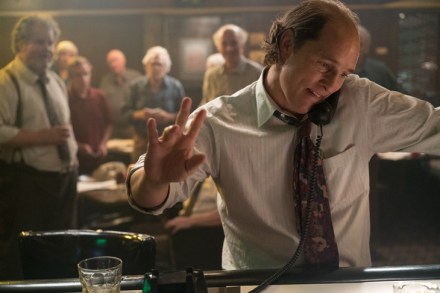
‘All that glisters is not gold,’ wrote Shakespeare (The Merchant of Venice), and you have to hand it to the guy, as he’s nailed it on the head. This Gold certainly glisters. You look at the poster and think: ‘Oh, yes. Glistery.’ It’s directed by Stephen Gaghan, who wrote and directed the terrific Syriana. It stars Matthew McConaughey. It’s based on a true mining scandal that is as outrageous as it is fascinating. But this Gold is not gold.

Sloppy seconds

From our UK edition

Danny Boyle introduced T2 Trainspotting at the screening I attended and said that, throughout filming, he’d seen the cast looking at him and what these looks were saying was: ‘It had better not be shite, Danny.’ This may sum up all our thinking, pretty much. It had better not be shite, Danny. Danny, do what you have to do but, we beg you, don’t make it shite. Once more, with extra feeling: don’t, don’t, don’t make it shite, Danny. And? I take no pleasure in saying it (seriously, hand on heart) but this sequel is, in fact, quite shite.* I won’t bore on about the original film, even though some of us are still recovering from it — oh God, Dawn, the dead baby — and may never recover from it, and this may be part of the problem.

Acting with a capital ‘A’

From our UK edition

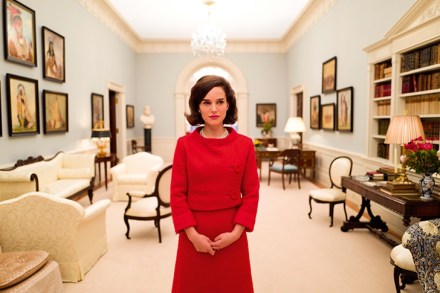
Let’s be clear: Jackie is a better performance than it is a film, although I suspect the performance will carry the day, even if that performance is Acting with a capital ‘A’. Was I riveted by Natalie Portman as Jackie Kennedy? I was. She has the look. She has the posture. She has the breathy, Marilyn Monroe-ish voice. But was I aware it was Natalie Portman, Acting? Always. And there isn’t much else here. Jackie never adds up to a whole, or anything near; we don’t penetrate ‘the myth’, and there is no real drama. So it’s disappointing albeit with a small ‘d’ because there are worse disappointments in life, and also the clothes are rather good.

Caveats be damned

From our UK edition

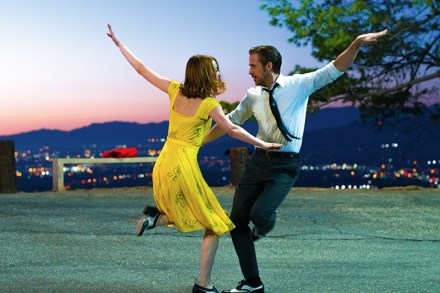
You will have registered the buzz surrounding La La Land and clocked its seven Golden Globe wins and 11 Bafta nominations. However, I know you won’t believe it’s wonderful unless you hear it directly from me, so here you are: it’s wonderful. Mostly. It’s wonderful, with a few caveats. I feel bad about the caveats but if you have caveats and repress them, it can make you quite ill in later years. Best to get them out there. But just so we’re clear: La La Land with caveats is still more wonderful than almost anything else. It is written and directed by Damien Chazelle (Whiplash), who grew up loving old-style romantic musicals, even if that was only ten minutes ago (he is 31, goddammit).

Long suffering

From our UK edition

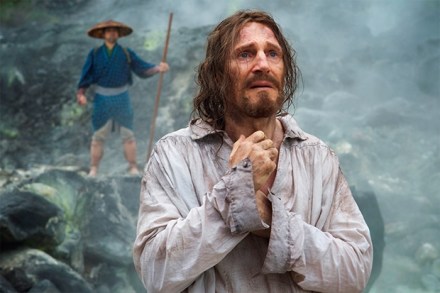
Silence is Martin Scorsese’s film about Jesuit priests in 17th-century Japan whose faith is sorely tested, just as your patience will be sorely tested too. There are moments of grandeur. The landscape is lush, and often mistily beautiful. The torture porn is spectacularly inventive. But its commercial compromises may drive you to distraction (the casting, the language choices), it is punishingly repetitive and, at nearly three hours, sooooooo, sooooooo long. My own patience was sorely tested to the point that I might have taken a little bit of a nap. If I did I never sensed I missed anything of note, but then it is that kind of film. This is based on the 1966 novel by Shusaku Endo who was, unusually, a Japanese Catholic, known as ‘the Japanese Graham Greene’.

All bark and no bite

From our UK edition

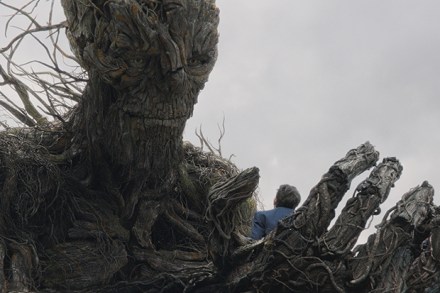
A Monster Calls is a fantasy drama about a young boy whose life is crap, basically. His mother is sick. His father has scarpered. He is being bullied at school. He may also have an itch he can’t get at, for all we know. (Always hateful, that.) But he finds an ally when the ancient yew tree he can see from his window morphs into the giant tree monster who’ll take him on a journey of ‘courage, faith and truth’. This has its visually wondrous moments, and the lead (Lewis MacDougall) is a true find, but there’s too much bark, too little bite. This is no Pan’s Labyrinth, for example. Wish that it were, but it is not. Based on the bestselling book by Patrick Ness, and directed by J. A.

Question time | 8 December 2016

From our UK edition

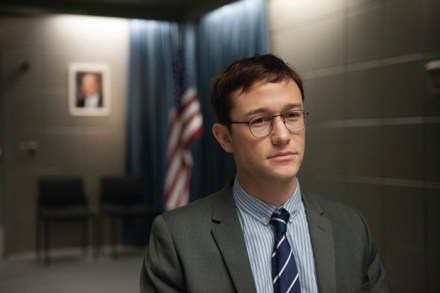
If you were to see one film about American whistle-blower Edward Snowden — there is no law saying you have to, but if you were — then the film you want is probably Laura Poitras’s 2014 documentary Citizenfour rather than this biopic from Oliver Stone. It’s being sold as a ‘pulse-pounding thriller’ but oh, if only it were. Instead, it’s psychologically thin, tiresomely hagiographic and doesn’t answer any of the questions you’d like it to answer. Certainly, my pulse failed to oblige and if yours doesn’t behave similarly, I’d be most surprised.

You’ve lost that loving feeling

From our UK edition

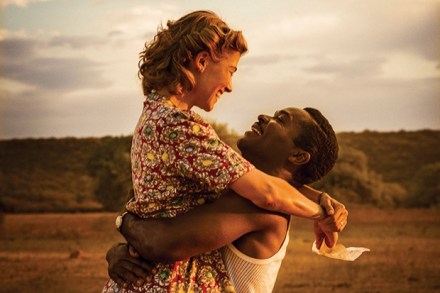
A United Kingdom is based on the greatest love story you probably didn’t have a clue about. I know I didn’t. It’s based on the true story of Seretse Khama, heir to the African kingdom of Bechuanaland (now Botswana), and Ruth Williams, a typist, who fell in love in 1940s London and married despite everyone and everything trying to separate them, including a vicious colonial British government. But this, sadly, is not the greatest film about the greatest love story you didn’t have a clue about. It’s OK. It does the job. It’s serviceable. It won’t be the biggest disappointment in your life. The story’s too good for it to get away completely.

About a boy | 17 November 2016

From our UK edition

Indignation is an adaptation of Philip Roth’s 2008 novel and amazingly, for an adaptation of a Philip Roth novel — see the recent dog’s dinner that was American Pastoral, for example — it may even be worth two hours of your time. (Depending on what you would otherwise be doing with that time; I wouldn’t wish for you to cancel that hip operation or similar.) It stars Logan Lerman as Marcus Messner, a 19-year-old Jewish boy from Newark who, in 1951, escapes the Korean war and the over-anxious clutches of his parents by winning a scholarship to a college in Ohio. Marcus, at the outset, is a good Jewish boy — an exemplary Jewish boy. Marcus is the Jewish boy you would want if you happened to be in the market for a Jewish boy.

Tongue twister

From our UK edition

Arrival is a big budget sci-fi film with a smaller, more pensive, cleverer film trying to get out, which has to be an improvement on a dumb film with an even dumber film trying to get out, as in the manner of Interstellar, say. So we have that to be thankful for, at least. The film stars Amy Adams, who appears to be everywhere these days. (Check your sock drawer and under the bed; you never know.) She plays Dr Louise Banks, a university linguist who lives in a beautiful, modernist lakeside house, as any academic in any American film always does. (Do such houses come with tenure?) As we see right at the start, she is mourning the death of her daughter.

Loach at his most Loach

From our UK edition

I, Daniel Blake is a Ken Loach film about a Newcastle joiner who can’t work but faces a welfare bureaucracy that won’t listen, humiliates him, grinds him down, so it’s fun, fun, fun all the way. Yes, it is that Ken Loach film, but as that Ken Loach film is more powerful than most other films — and this is fearsomely moving (I cried), and fearsomely tender (I cried again) — you’re just going to have to suck it up.

Going nowhere fast – and loud

From our UK edition

As a general rule, I would not wish to spend nearly three hours in a mini-van with young people who turn up the music real loud. As a general rule, being the age I am, I would go to any lengths to avoid such an experience. But American Honey is a film by Andrea Arnold and even though it does require you to spend nearly three hours in a min-van with young people who turn up the music real loud, you will not, in fact, regret it. Or at least not regret it entirely. A bit, perhaps, but you’ll get a good two hours regret-free. This is the first American film by Arnold, the British director who made Wasp and Red Road and Fish Tank — three brilliant films in the social-realist tradition, one of which happens to be among my favourite films of all time. (Clue: Red Road.

Wrong side of the tracks

From our UK edition

You will surely have seen the posters for The Girl on the Train with Emily Blunt staring from a train window beneath the question: ‘What did she see?’ I don’t know ...buddleia? Bindweed? The occasional abandoned supermarket trolley? That is all most of us see from trains and while it’s true that buddleia, bindweed and the occasional abandoned supermarket trolley would make for a very dull film, it could scarcely be any duller than this. And that is the truth. This is an adaptation of the thriller by Paula Hawkins; a thriller that, I would venture, attained bestseller status largely because it was touted as ‘the next Gone Girl’ and ‘the British Gone Girl’ and we all fell for it.

White Knight

From our UK edition

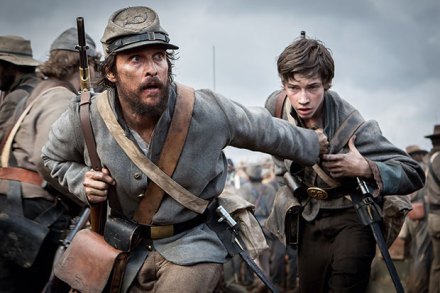
Free State of Jones is an American Civil War drama ‘inspired’ by the life of Newton Knight, who led an armed rebellion against the Confederacy in Jones County, Mississippi, and one rather wishes that that was all it was about. Directed by Gary Ross (Seabiscuit, The Hunger Games), and starring a whiskery, leathery Matthew McConaughey, it tells that story, then thinks: while you’re here, might we tell another story? And another one? So you are fully educated in all matters? In the end, such is the weight of all these stories that you won’t lose the will to live exactly, but you will find it has been significantly weakened. The film opens in 1862 and opens as you might expect. That is, bloodily and viscerally on a battlefield mid-combat as body parts fly.

No fear

From our UK edition

I can’t say I care for zombies particularly or even understand them — OK, they’re the living dead, but what do they have against the living living? Why do they always want to bite their faces off? — and I can’t say I cared for The Girl With All the Gifts either. This is an adaptation of the dystopian horror novel of the same name by Mike Carey, who also wrote the screenplay. I have not read the book, I confess, as I don’t do much that’s dystopian if it doesn’t involve Margaret Atwood, but I know it was critically well received as well as hailed as ‘an original and compelling new take on the zombie genre’, which may well be the case, but there is little evidence of that here.

A Bridge too far?

From our UK edition

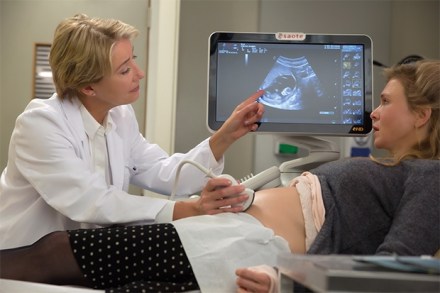
Bridget Jones’s Baby is the third outing for our heroine as played by Renée Zellweger, whose cosmetic work to face has received more media attention than the film itself, but we will try to counteract that here. So, on this occasion, Bridget finds herself pregnant but does not know if the father is our old friend, uptight lawyer Mark Darcy (Colin Firth, who is not as young and dewy as he was at, say, 32, perhaps because he’s now 56), or the American dating magnate Jack Qwant (Patrick Dempsey, 50, who may have let himself go a bit, but then he has had three children, so fair’s fair). And now a note to self: stop going on about how Hollywood women are damned if they do and damned if they won’t (get older, that is) and just tell us if this is worth seeing.

Business as usual | 18 August 2016

From our UK edition

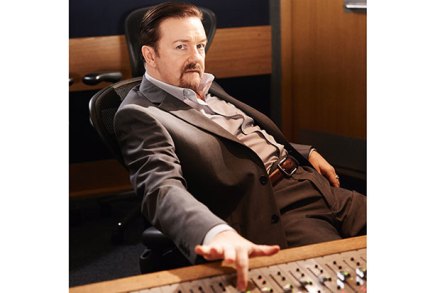
I should probably nail my colours to the mast and state that The Office is possibly my favourite TV sitcom of all time (bar My Family, which surely goes without saying), but some comedies that have ended should simply stay ended, as no one has ever said, but should have. (Or maybe John Cleese has said it?) There are a few decent jokes here. Some of the bad songs are really good bad songs. But it’s a repetitive rehash rather than a worthwhile continuation of the character, and the comedy and pathos is in exactly the same place as it always was. That is, in the gap between the winner David Brent (Ricky Gervais) thinks he is, and the loser we know him to be. Fifteen years ago, that was revolutionary, and genius, and funny, and affecting, but now? Not so much. Quite tiresome, in fact.

Oven-ready

From our UK edition

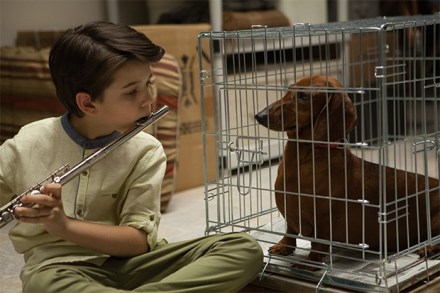
Todd Solondz’s Wiener-Dog is billed as a ‘dark comedy’ although it is far more dark than comic. If pressed to put a number on it, I’d say that, despite the film’s poster, which shows a cute dachshund’s butt, and leads you into thinking cute dachshund thoughts, this is 98 per cent dark, and the sort of film that actually makes you want to come home, draw the curtains, and stick your head in the oven. Life’s a bitch and then you die, it says, literally. There’s every chance you’ll hate it. I’m not convinced I don’t. But this is a film that, once seen, you’ll always know you’ve seen and, in the most disquieting way, it feels as if it has somehow seen you too.

Corn again

From our UK edition

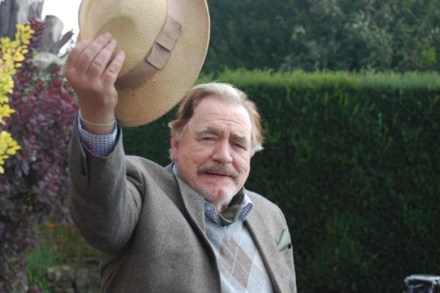
The Carer is a Hungarian-British co-production about a cantankerous old thesp (Brian Cox) and the young Hungarian woman (Coco König) who is dispatched to look after him, much against his wishes, and whom he’ll eventually throw out on her ear. I’m joshing you. She wins him over, naturally, and mutual respect develops, naturally, and a friendship blossoms, naturally, although I wish he’d thrown her out on her ear as that way this wouldn’t have felt like something we’ve seen a hundred times before. There are affecting, powerful films to be made about old age, loss, mortality and dependence, but this, alas, has all the emotional grit of a Driving Miss Daisy.