Debbie Hayton

Debbie Hayton

Debbie Hayton is a teacher and journalist. Her book, Transsexual Apostate – My Journey Back to Reality is published by Forum

Was this volunteer cancelled by Childline for his views on gender?

When Liz Truss confirmed that the government was committing itself to banning LGBT conversion therapy, there was some bemusement: is the middle of a pandemic really the time for this? The decision was announced back in May, and Truss – who serves as equalities minister – conceded that 'many forms of the practice are already prevented under current legislation'. But this 'new ban', she added 'will ensure that it is stamped out once and for all.' Let’s be clear: coercive and abusive practices need rooting out. But if existing laws doesn’t work, will new ones really help? Or could they have unintended consequences? James Esses – a trainee psychotherapist – worried that normal therapeutic practices could get caught in the net.

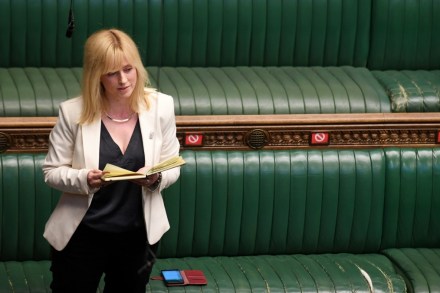
The hounding of Rosie Duffield

I grew up in 1980s County Durham; it felt at the time like a People’s Democratic Republic. When the miners went on strike in 1984, Labour held 53 of the 72 seats on the county council. But whatever impression southerners might get from watching Billy Elliot, boys like me did not engage in ballet. Labour may have been in charge, but attitudes were socially conservative. We played football and supported the Toon, or Newcastle United to give them their official name. Allegiance to Sunderland raised eyebrows — in my town at least — while Manchester United was beyond the pale. If boys were ostracised for supporting the wrong football teams, teenagers struggling with sexuality or gender learnt to keep those things very close to their chests.

Marion Millar and Scotland’s growing hostility to women

Women in Scotland are angry. Yesterday, hundreds gathered by the McLennan Arch on Glasgow Green where their sense of betrayal was palpable. The gathering was precipitated by the ongoing case against Marion Millar, a businesswoman from Airdrie, who came under police investigation after objections were raised about six of her tweets from 2019. She was charged under the Communications Act and faces up to six months in prison if convicted. According to a report by the Times, the messages investigated by officers are understood to include a retweeted photograph of a bow of ribbons in the green, white and purple colours of the Suffragettes, tied around a tree outside the Glasgow studio where a BBC soap opera is shot. The case is ongoing.

Jess Phillips and the assault on biology

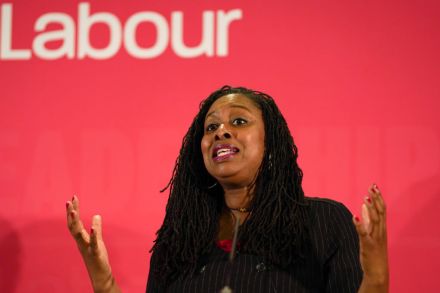
Jess Phillips thinks that transwomen — like me — are not female, but we should be treated as women. She has probably succeeded in upsetting both sides of what has become a toxic debate. Politicians entering these shark-infested waters do so at their own peril. If, like Rosie Duffield or Joanna Cherry, they stand up for science and reason, they put their careers at risk. If they go with the programme that we all have a gender identity, and biological sex doesn’t matter, they end up looking ridiculous, like the ‘jiggle on the stairs’ crew. https://twitter.com/zarahsultana/status/1229459634559291393?ref_src=twsrc%5Etfw Phillips worked for Women’s Aid before becoming a Labour MP.

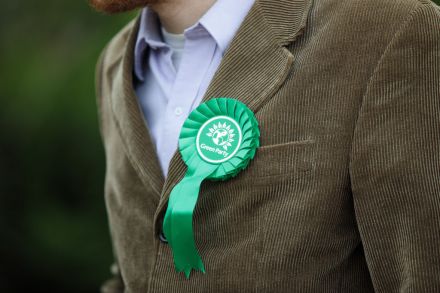
Does the Green party care more about trans rights than the environment?

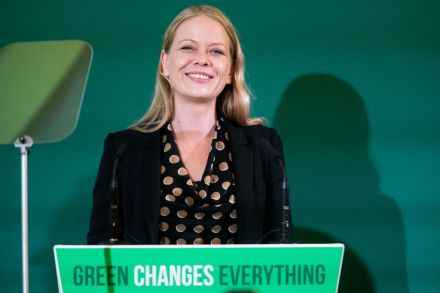
Our planet is in a mess. Ice caps are melting and the glaciers are retreating. This summer in Canada, the mercury has already broken through 49 degrees Celsius, with August still ahead of us. Climate change worries me, and I think it should worry others too. But despite the party's name, the Green party isn't devoting its full attention to this issue. Instead, some of its members are preoccupied with rooting out alleged transphobia within the party. This week, co-leader Sian Berry announced that she was standing down over 'inconsistencies' within the party. Her statement didn’t name names, and was probably baffling to the ordinary voter, but the cause of her discomfort was easy to read between the lines.

New Zealand’s transgender debate is turning nasty

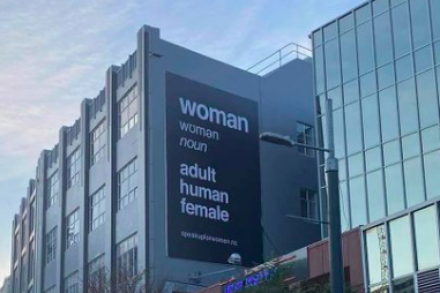
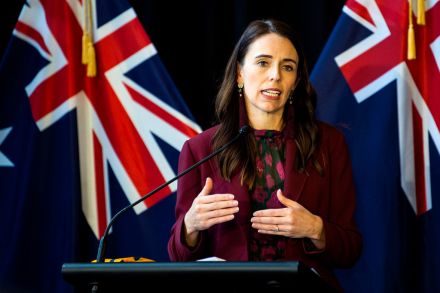
New Zealand was the first country in the world to give women the right to vote in parliamentary elections. But now, 120 years on from that landmark moment for female equality, Kiwi women are fighting a rear-guard campaign to defend the meaning of the word 'woman'. As well as dealing with the fallout from the pandemic, Jacinda Ardern’s Labour government has been busy prioritising a bill that would effectively allow anyone to become a woman just because they wanted to. While Ardern is being cheered on by the transgender lobby, it has fallen to Speak Up for Women, a grassroots campaign group, to speak truth to power. Rather predictably, politicians seem unwilling to listen; worse, some are determined to stop anyone else hearing what these women have to say.

New Zealand’s worrying battle over transgender rights

Last year, the equalities minister Liz Truss set aside laws which would have allowed people to self-identity as the legal gender of their choice. For those worried about the effect self-ID could have on women-only spaces, Truss’ move was a welcome relief. But campaigners for women’s rights should not be too complacent. As recent developments across the world in New Zealand show, it only takes a general election to trigger a massive move in policy in a matter of months. Two years ago, the New Zealand campaign group Speak Up for Women thought that self-ID had been taken off the table when Tracey Martin, the New Zealand minister for internal affairs, announced that the Births, Deaths, Marriages, and Relationships Registration Bill was to be deferred.

Stonewall’s worrying school guidance

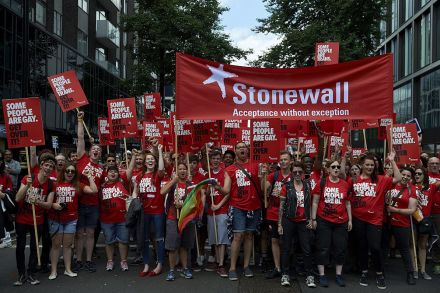
Stonewall’s ‘Diversity Champions’ programme appears to have been haemorrhaging members since an investigation by the university of Essex found that the organisation had been preaching ‘Stonewall Law’ rather than the actual law. But it is not only corporations, councils and government departments who have been persuaded to part with good money to receive questionable advice. Stonewall’s similarly named ‘Schools and Colleges Champion Programme’ seems to have sucked places of education into the charity’s web as well. As a teacher I know how tight school budgets have become in recent years, but it seems that several schools have still found money to hand over to Stonewall. The sums are not trivial.

Maya Forstater’s win is a victory for rational thinking

At her employment tribunal, two years ago, Maya Forstater was told that her views ‘were not worthy of respect in a democratic society.’ That was after Forstater had been cancelled by the Centre for Global Development think tank, an institute that had employed her, when she was caught preaching the gospel of science and reason on the internet. Some of her colleagues grumbled about her gender critical beliefs, and Forstater’s contract was not renewed. Today, after an appeal, last year’s judgment was cancelled. The significance of this case cannot be overstated. In the current ideological battle between fact and fantasy, only one side comes to the table with cogent beliefs.

The sinister attacks on the LGB Alliance

Lesbian and gay rights are still not secure in the UK. This week the LGB Alliance – a group used to being smeared and misrepresented – came under further attack. With astonishing impudence, the LGBT+ Consortium, Gendered Intelligence, the LGBT Foundation, TransActual, and the Good Law Project ganged up with Mermaids UK in a staggering appeal to strip the LGB Alliance of its charitable status. The legal action is being brought in the name of Mermaids UK, a controversial charity that works with transgender-identified children. If it wasn’t such a serious attack on a legitimate charity, the appeal would be laughable. It’s clear from their submission that Mermaids doesn’t much like the LGB Alliance, but hubris eclipses accuracy in their grounds of appeal.

What Dawn Butler gets wrong about Stonewall

It’s been a bad night for Stonewall. Yesterday, the Labour MP Dawn Butler created a Twitter Poll. ‘Who do you trust more?’ she asked her 150,000 followers, Stonewall or Liz Truss? It’s not exactly clear what inspired Butler to ask this question online, but this is, of course, the MP who last year told Good Morning Britain that she believed ‘babies are born without a sex.’ https://twitter.com/DawnButlerBrent/status/1399708211838607362?ref_src=twsrc%5Etfw Why anyone would need to hand over good money to show they treat their staff with dignity and respect is a mystery to me Butler’s folly gave anyone with a Twitter account the opportunity to have their say. The numbers are not looking good for Stonewall.

Are ‘controversial stickers’ really a matter for the police?

Has Police Scotland misunderstood the purpose of policing? A recent crackdown on 'controversial stickers' appears to suggest as much. 'On Monday 17th May we received a report of controversial stickers having been placed on lampposts,' said a message on Kirkcaldy police's Twitter feed, posted last week. 'Should you come across stickers of this nature, please contact ourselves or Fife Council so that their removal can be arranged'. So what did the stickers actually say? It transpired that they were emblazoned with the words: 'Women won’t wheesht' Baffling? Maybe. But is it really the business of the police to investigate such stickers? Various hashtags, including 'SexNotGender' and 'WarOnWomen', were also included.

Trans offenders are skewing crime statistics

Tonia Antoniazzi’s speech in the House of Commons this week was remarkable, not because of what she said – the need for accurate recording of crimes according to sex – but because she had the courage to actually say it. After the ongoing intimidation of Rosie Duffield, it is a brave Labour MP who stands up and defends the right of members of her sex not to be blamed for the crimes of the other sex. Antoniazzi pointed out that where particular offences are very rarely committed by women, the addition of just one or two people can have a significant impact on data. Antoniazzi alluded to the case of transgender fell-runner Lauren Jeska who was jailed in 2017 for the attempted murder of Ralph Knibbs, UK Athletics' head of human resources and welfare.

Caitlyn Jenner is right about transgender athletes and women’s sports

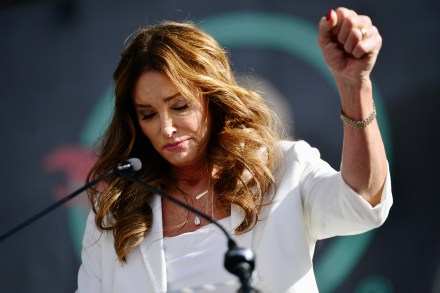
Caitlyn Jenner – gold medallist in the men’s decathlon at the 1976 Montreal Olympics – is now in the running to the be the next governor of California. These days, Jenner is more famous for marrying into the Kardashians before a very public transition in 2015. 'Call me Caitlyn,' screamed the headlines at the time. Like me, Jenner seems to be someone for whom gender transition was no impediment in life. Perhaps we both have our feet on the ground when it comes to the reality of biological sex? On Saturday, Jenner was accosted by a journalist in a car park. There were questions to be answered.

In praise of the LGB Alliance

Once upon a time an organisation was established to campaign for gay and lesbian rights. They faced opposition from the outset. They were widely condemned, even called out as a hate group when they talked about same-sex attraction. When they sought charitable status, a petition was launched, urging the Charities Commission to reject the application. Tens of thousands of people signed it. But this was not the dark days of the 1980s, when Section 28 stopped councils and schools 'promoting the teaching of the acceptability of homosexuality as a pretended family relationship'. This is now. LGB Alliance was formed in 2019 to promote the elimination of discrimination on the grounds of sexual orientation.

How Richard Dawkins fell victim to the transgender thought police

From our US edition

Richard Dawkins – the biologist, humanist, and author – is a well-known critic of religious faith. As he once put it, ‘Religion is capable of driving people to such dangerous folly that faith seems to me to qualify as a kind of mental illness.’ Traditional religion may have loosened its grip on society, certainly in the United Kingdom, but new quasi-religious ideologies are taking root in spaces that the churches have vacated. Earlier this month, Dawkins upset the transgender brigade by questioning their core beliefs. He Tweeted, ‘In 2015, Rachel Dolezal, a white chapter president of NAACP, was vilified for identifying as Black. Some men choose to identify as women, and some women choose to identify as men.

What happened when the mob came for Robert Webb?

Robert Webb is best known for making people laugh, but he conducted himself with poise and grace when he was ambushed by American podcast host Jesse Thorn. Thorn had invited Webb and long-time collaborator David Mitchell to talk about their latest show, and their experiences performing together as a double act over the years. But the programme ended in yet another episode of the transgender inquisition. This was personal. Thorn told listeners he has two gender non-conforming children, 'one of who is transgender,' as he called Webb to account for criticising gender charity Mermaids UK in December 2018.

Teaching unions shouldn’t be defining ‘transphobia’

A year of disrupted schooling means there are plenty of issues facing our schools right now. But delegates at last week’s National Education Union conference were more interested in another subject: developing a new – and presumably beefed-up – definition of transphobia. 'Transphobic news stories are a continued and escalating blight on trans and nonbinary members’ lives, with severe consequences on mental health,' said motion 22. The 'Pride in our Union' motion (you can read the full text here) called for a 'definition of transphobia that goes above and beyond legal compliance and that supports and endorses trans and non-binary identities without resorting to the erasure or downgrading of 'gender''.

The Green party’s gender intolerance problem

Is the Green party determined to make its female members feel unwelcome? After voting down women’s sex-based rights at their spring conference, the party has now suspended the co-chair of its women’s committee, Emma Bateman. The reason? According to Bateman, her decision to question whether trans women are female is to blame. As a trans woman, who also happens to be a science teacher, I know that trans women are most definitely male. Indeed, it is only because we are male that we can be transwomen. But where gender ideology is concerned, the Greens appear to have lost touch with reality. Bateman is no transphobe but – as with many other women – she thinks that being female is rather more than a feeling. She is also well respected in the party.

Why the census sex question needs to be protected

Since 1801 the decennial census has asked us to state our sex. But never before has such a simple question generated such controversy. Yesterday, it ended up before a high court judge. With the 2021 census less than two weeks away, Mr Justice Swift ruled that the guidance accompanying the question should be changed. The legal action, brought by the campaigning group Fair Play for Women (FPFW), arose after the Office of National Statistics (ONS) backtracked on a promise made by Sir Ian Diamond – the UK’s National Statistician. In January, Diamond was very clear on the Today programme, when he said, ‘The question on sex is very simply your legal sex.’ Sex matters.