Debbie Hayton

Debbie Hayton

Debbie Hayton is a teacher and journalist. Her book, Transsexual Apostate – My Journey Back to Reality is published by Forum

Why does Penny Mordaunt think ‘trans men are men’?

Something dramatic happened in the House of Commons yesterday: Penny Mordaunt told MPs that 'transmen are men and transwomen are women'. This mantra – for that is what it is – has been said so often in recent years that it might now be an unremarkable way in which to wind up a debate. But it is a worrying sign to see it repeated so unthinkingly in parliament. Mordaunt is wrong: transwomen are male, and women are female. Male people are not female people, and therefore transwomen are not women. As a transwoman I should know: I fathered three children – I am definitely male. Their mother was a female person. She is a woman, not me. https://www.youtube.com/watch?

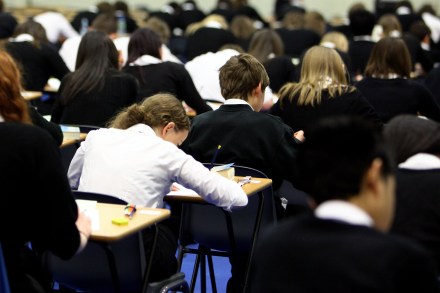
Why aren’t exams going ahead?

When Boris Johnson talked about trusting teachers, I suspected that the government must be desperate. Trust is not a word I have head much in my 25-year teaching career. I am no longer trusted to go into a GCSE exam hall to look at the paper that my class is sitting in case I somehow manage to undermine the integrity of the exam. But that was 2019. This morning Gavin Williamson confirmed that this year, it will come down to me and my colleagues in school. There will be no exam papers, no external markers, and certainly no algorithms. Before the pandemic we weren’t even trusted to mark coursework for fear that we gave too much help, now we have been left in charge of the whole process.

The SNP’s transphobia muddle

For a party so devoted to trans rights, it seems strange that the SNP is less than forthcoming over its new definition of transphobia that their National Executive Committee adopted in recent days. The mind boggles over what they may be hiding. Despite the twin pressures of Brexit and Covid-19, not to mention a key Scottish election three months away and the ongoing Alex Salmond affair, it seems that the party is prioritising the gender debate. As a trans person, even I am getting exasperated by this relentless focus.  Let’s be clear: transphobic hate crime exists but it is nowhere near as commonplace as the transgender lobby would like us to believe.

Does the SNP really want to copy Norway’s gender revolution?

Five years ago, in June 2016, Norway allowed anyone to change their legal gender. Legislative Decree 71 was everything that the gender identity brigade would like to introduce in the UK: no diagnosis, no medical reports, pure self-identification. The age limit was set at six years old, providing the child has at least one parent's consent. This matters to the UK. Self-identification may be off the table at Westminster but it remains a live issue at Holyrood where Nicola Sturgeon’s government seems determined to force it through.

Is the past being rewritten in LGBT+ history month?

Did you know that February is LGBT+ history month? If you have a 'progressive' employer you probably do. Banks, universities, local councils, NHS services and train operators are all getting on board. Rainbow flags are flying high above buildings across Britain. But do lesbian, gay, bisexual and trans people really need their own month to reflect on the past? Or is this more an occasion to virtue signal in the present? To be fair to the Bank of England, when it raised the rainbow flag on Threadneedle Street on 1 February, it was also commemorating Alan Turing. A war hero, who was gay, it is believed Turing took his own life after undergoing chemical castration following his 1952 conviction for 'gross indecency'.

Why does Innocent think this pensioner is guilty of ‘transphobia’?

The trans debate can be a nasty one. And when women (and it usually is women) have the courage to speak out, they face being shamed and silenced. Their crime apparently is 'transphobia'. But all too often, this word no longer means the hatred or fear of trans people like me. Instead, it refers to the simple act of disagreeing with an ideology that insists men and women are defined, not by their biology, but by feelings. Dame Jenni Murray, Professor Kathleen Stock, Joanna Cherry MP, Julie Bindel, and many other women have been hauled before a kangaroo court and been found guilty. But behind these high-profile cases, ordinary women face the same treatment. An army of (often anonymous) accounts police social media for wrong think.

Why sex matters when it comes to the census

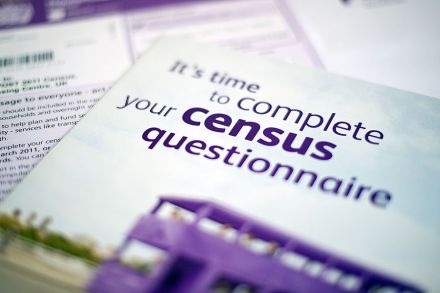
What sex are you? It's a simple question and one that most of those filling out this year's census will answer quickly before moving on. But for others, the decision to ask this – rather than allow people to state what gender they think they are – is one laced with controversy. This shouldn't be the case. After all, we have known that there are two sexes since the dawn of time, and we are quite capable of distinguishing them. These two sexes have different needs; and men and women also face different risks.  Only one will need cervical cancer screening, for instance.

Lockdown learning is no match for the joys of the classroom

Schools in January are usually full of life, but not this year. At the start of my day, I walk alone down silent corridors to an empty classroom. There are no children lined up outside; the bustle of school life is gone and the only voice I hear is my own. Welcome to lock down learning where my pupils are miles away at the far end of fibre optic cables. Teachers like me are doing our best to make it work but, although we are not teaching blind, our vision is so restricted that we might as well be looking at our classes down long cardboard tubes. We never did have eyes in the back of our head, but we had peripheral vision and we are missing it. It was from the corners of our eyes that we noticed the children who were confused or unmotivated or upset.

Spain’s transgender wars are turning nasty

Lidia Falcón O’Neill is a legendary figure in Spanish politics. Half a century ago, she stood up to Franco as head of a cell in the communist Unified Socialist Party of Catalonia. In 1974, this opposition led to her being brutally tortured: 'When she fainted they untied her and laid her on the ground. They woke her up with a bucket of water. … She stayed on the ground, wet, for hours, until they took her down to the cell. … On the sixth day, the torturers could not continue with the same sessions. They could no longer hang her on the wall because she was rapidly losing consciousness because of it. So, when she woke up, she kept getting punched and kicked while lying on the ground.

Biden’s trans rights agenda is bad news for women and girls

Joe Biden has wasted little time grabbing rights from women and girls across America. On day one, he signed an Executive Order on 'Preventing and Combating Discrimination on the Basis of Gender Identity or Sexual Orientation'. This is being hailed as a pivotal moment for transgender rights. But it's nothing of the sort.  The mention of 'Gender Identity' alone is enough to raise the alarm about the consequences of this proposal. Gender identity might be a popular concept right now, but it isn't even clear what it means. Put simply, it's a concept which refers to a person's individual experience of gender, which may or may not correspond with the sex assigned at birth.

Why Williamson’s u-turn won’t affect all GCSE students

The future became more uncertain for hundreds of thousands of youngsters this week when Gavin Williamson cancelled their GCSE exams. But pupils at some of Britain's top public schools were affected less than their contemporaries in state maintained schools. Why? Because what Williamson did not talk about when he cancelled exams were International GCSEs. Broadly equivalent to domestic exams, and offered by the same exam boards, they are marketed worldwide and, unlike GCSEs, look set to go ahead this summer. Britain's educational divide has always been fairly stark. And this decision could further widen that gap between rich and poor pupils. As a teacher, I was pleased to hear Williamson tell Parliament that he trusts us more than algorithms.

Closing schools was inevitable. But cancelling exams is a mistake

On Sunday morning, Boris Johnson told us that schools were safe but, tellingly, did not rule out further closures. By Monday evening he had shut every school in England to most pupils. By then, of course, many primary schools had opened for just one day. Children mingled – as they do – and went home not to return. But after those bubbles were mixed, fewer grandparents may be willing to look after them. When will they return? Johnson said not until half term, at least. But when policy can reverse so quickly in less than 36 hours, just about the only certainty is that it is far easier to close schools than it is it reopen them again.

Ofcom’s misguided new hate speech definition

We might be welcoming in a new year, but it is likely to be another in which we need to defend our right to express legitimate political opinions. From today Ofcom, the broadcasting regulator, has expanded its definition of hate speech to include: ‘All forms of expression which spread, incite, promote or justify hatred based on intolerance on the grounds of disability, ethnicity, social origin, gender, sex, gender reassignment, nationality, race, religion or belief, sexual orientation, colour, genetic features, language, political or any other opinion, membership of a national minority, property, birth or age.’ That is quite a list and provides potentially rich pickings for those who weaponise the taking of offence as a political tool.

2020 was the year the tide turned in the trans wars

2020 will, of course, be remembered as the year in which Covid-19 was unleashed on the world. But it is one in which another menace – gender identity ideology – was put firmly in its place, in the UK at least.  Perhaps the tipping point was the deranged response to JK Rowling’s essay on sex and gender, which she published back in June. For taking issue with 'language that calls female people ‘menstruators’ and ‘people with vulvas’,' Rowling suffered widespread and predictable condemnation.

What this academic gets wrong about trans rights in Britain

The Keira Bell judgment, which said that children are unlikely to be able to give informed consent for taking puberty-blocking drugs, 'puts trans people everywhere' at risk. That's the verdict of Grace Lavery, a professor of English, critical theory, and women’s studies at the University of California, Berkeley. From the other side of the Atlantic, Lavery described the case in an article for Foreign Policy as 'an unprecedented juridical attack on the LGBT community in the U.K.' It is, of course, nothing of the sort.  The High Court determined that children as young as 12 were highly unlikely to be competent to understand and weigh the long-term risks of receiving such radical treatment.

The damning verdict on puberty blocker treatment for trans children

If the Keira Bell judgment did not sufficiently expose the shortcomings of the Gender Identity Development Service (GIDS) – the only NHS clinic in England for children presenting with gender dysphoria – then another recent study published after that key ruling must surely now trigger a full-blown inquiry. The study followed the progress of 44 children referred by GIDS for puberty blockers when they were aged between 12 and 15. All except one – 98 per cent of the cohort – progressed to cross sex-hormones. The lead author was Dr Polly Carmichael, GIDS director. The research has yet to be peer reviewed, but let's be clear: this was a study of patients at GIDS, and the results were reported by the director of the clinic herself.

Should it be left to a teenager to fight back against gender ideology?

As we reflect on the Keira Bell case last week, spare a thought for another young person who is challenging an authority that has been bewitched by gender identity ideology.  A 14-year-old schoolgirl, known only as Miss B, believes sex is distinct from gender identity. Many others agree with her. But unlike those who have been silenced or learned to self-censor in what is so often a malicious and nasty debate, this teenager is not prepared to stay quiet.

Why Keira Bell’s victory matters

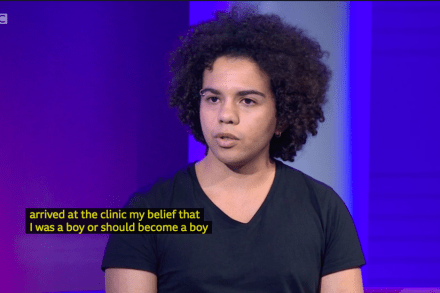
Keira Bell has won her case against the Tavistock and Portman NHS Foundation Trust. As a transgender person, I am delighted for her but I am also relieved for the thousands of children who are chasing the impossible dream that it is possible to change sex. Bell's victory is an important one for teenagers and pre-pubescent children who are not old enough to make decisions that will affect them for the rest of their lives. The High Court judgement made it clear that it is 'highly unlikely' that children aged 13 or under would be competent enough to give consent to the administration of puberty blockers. The judges went further and expressed doubt that children aged 14 and 15 could understand and weigh the long-term risks and consequences.

The misery continues for the Covid class of 2020

England might be coming out of lockdown – some of it at least – but there is little cheer for students. This week’s government mandated 'student travel window' will extinguish any vestiges of face-to-face teaching to allow students to Zoom out the term from parental homes. My son Barney is among the class of 2020, the group of students forking out high fees to be cooped up in their overpriced university accommodation, seeing few people apart from the flat mates they have been billeted with. November's lockdown has hit these students hard. Clubs and societies have been curtailed; Facebook groups and mailing lists have taken their place. Barney was not alone in deciding to head home before the end of term.

Ignore Stonewall: Britain is a tolerant country for trans people like me

Today marks Transgender Day of Remembrance (TDoR). Every year on 20 November, clusters of people gather to remember the hundreds of transgender people whose lives were cut short by violence in the preceding year. In 2020, like everything else, the candles, the readings and the list of names will be Zoomed across the aether. But who are these people? It's true that they were trans but overwhelmingly they were disadvantaged and living on the edge – often in prostitution – and mainly in the global south. It's a far cry from the experiences of many trans people living in the relative safety of Britain. Of the 350 people who died in the year to 30 September 2020, 82 per cent were from Latin America, including 152 from Brazil and 57 from Mexico.