David Butterfield

David Butterfield is professor of Latin at Ralston College, senior fellow at the Pharos Foundation, literary editor of the Critic and editor of Antigone.

10 commandments for the public house

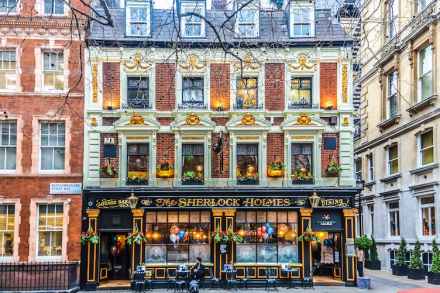
Good beer in good company. What could be better? But, as delightful and simple as that scenario is, it’s phenomenally easy to bugger up a good pub. There’s less agreement, however, about what the perfect pub should look like. Back in 1946, George Orwell set out in his classic article, The Moon Under Water, 10 essential features of his ideal pub: since he knew of nowhere that satisfied all of them, his Moon Under Water had to be a wonderful fiction. Some 70 years down the line, many pubs in search of perfection are fiddling with minute details or pointless frippery. For me, once the basics are sorted, it’s all a case of what not to do. So here are my 10 simple commandments to keep the perfect pub perfect. 1. Don’t be pretentious. If you serve good beer, well done.

Scafell Pike

Within a couple of miles of England’s deepest point is its highest. Towering a kilometre above the hidden depths of Wast Water looms the sublime massif of Scafell Pike. From here, the rooftop of England, the whole union reveals itself — Scotland, Wales and those glowering guardians of Northern Ireland, the Mountains of Mourne. Most visitors to Lakeland know Scafell. For the tramping tourist and charity rambler, lured by the thrill of being atop its 978m peak, it’s a must-see goal. Its prominent summit cairn, memorialising Cumbrians who fell in the Great War, is large enough for a cricket team to picnic on. The terrain is astoundingly alien: devoid of any greenery, it presents a surreal, Mars-like boulder-scape.

Labour is full of mugwumps – but Corbyn is not one of them

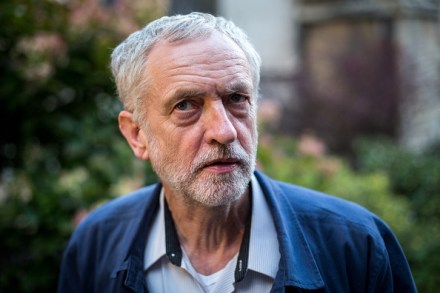
Trust Boris to dominate the headlines by reopening that most famous of books, Johnson’s Dictionary. Writing in the Sun, our effortlessly provocative Foreign Secretary swiped at Jeremy Corbyn with this colourful barb: ‘He may be a mutton-headed old mugwump, but he is probably harmless.’ Couched rather incongruously as the reflections of ‘the people’, this comment has left many laughing, but more still scratching their heads. In fact, there’s more to being a ‘mugwump’ than a throw-away jibe. The word comes from the original New Englanders, the Algonquians, for whom mugquomp meant ‘great chief’. It was a term of respect laden with connotations of nobility. But that presumably wasn't what Boris had in mind.

Like them or not, Theresa May’s grammar school plans will end the postcode lottery of education

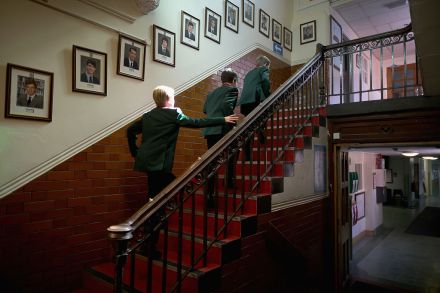
Grammar Schools. Now there’s a potent pair of words. Mention them, and genial conversation will instantly shift into awkward silence or seething torrents of passion. In either case, reasoned argument is in short supply. Yet now that Theresa May seems committed to overturning Labour’s ban on opening new grammar schools, discussion is vital. But instead of rehashing the same arguments in favour of academically selective schools, or raking over the same problems they can cause, it’s important instead to look carefully at the evidence about whether grammar schools really do promote ‘social mobility’. One of the major themes of anti-grammar salvos is that they don't. And to make this point, the crudest approach is typically taken.

The curious incident of Cambridge’s Latin graffiti

A weird one, this. Yesterday, a short walk away from me in Chesterton, Cambridge, an enigmatic threat appeared in three-foot-high letters on a new row of upmarket houses flanking the banks of the Cam. But these weren’t the usual slapdash daubings. No, the letters were lavishly painted across four houses by a ladder-wielding vigilante ten feet above the ground. The stunt has made national headlines, not so much for the content of the protest as for its medium – Latin. Well, it is and it isn’t Latin. It proclaims, Locus in domos loci populum! Purists will object that the Romans had to muddle through without the indulgent hyperbole of exclamation marks.

Overwhelmed by opinion? Here’s how to cope

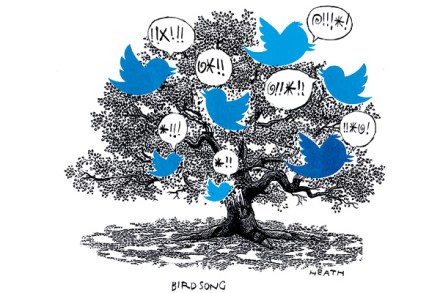
quot homines, tot sententiae: as many men, so many opinions. What seemed a universal human truth for the playwright Terence in 161 BC now finds itself, amidst the chaotic swirl of online news and opinion in AD 2017, drastically in need of adaptation: quot sentias, tot sententiae – there are only as many opinions as you experience. This should be a golden age for the exchange of opinion, for sharing diverse ideas through increasingly interconnected media. Yet, without filtering or curation, an unmanageable welter of report and comment has blurred the distinction between the two, bewildering even the most determined of readers. Strange as it is to say, the immutable importance of free speech is being lost in its curation-free expression.

Keep the change

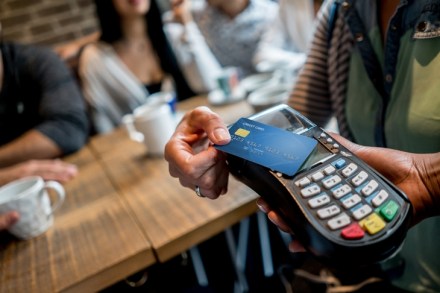
Can we do without cash? Since 2015, digital payments in the UK have outnumbered those in cash, and we are invited by the great and the good to cheer this on. The fully cashless era will be magnificently convenient, they say, with goods delivered directly to the door: no fumbling for change, just tap and go. Some London branches of several chains (Waitrose, Tossed, Doddle) don’t accept cash any more. Many others fast-track customers who can pay by contactless means. Businesses and banks want to abolish cash because they have near-pathological fears of the black market and tax avoidance. Yet we should worry about the death of cash, because physical money possesses worth far above its face value. Cash is the great leveller.

WH Smith has become a national embarrassment

There are few more iconic British brands than WH Smith, nor many more ubiquitous. 90% of people can reach a store within twenty minutes from their door, and 73% make at least one visit a year. For many, the name conjures up childhood memories of first encounters with classic literature, sumptuous atlases or a beguilingly niche magazine. But something is deeply wrong with this erstwhile national staple: it has become a travesty of trade, a grim parody of twenty-first century consumerism. In this age of mission statements, WH Smith’s goal is ‘to be Britain’s most popular high street stationer, bookseller and newsagent’. But popular is a slippery term. WH Smith has sacrificed customer satisfaction at the altar of high-margin products.