David Blackburn

Deferring deterrent

From our UK edition

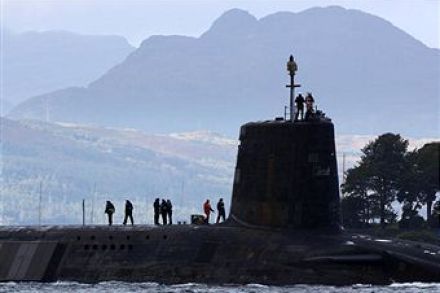
We’ve been here before: Hacker’s ‘Grand Design’, a scheme to save money by cancelling Trident. The BBC reports that the coalition plots a similar ruse – the renewal of Trident is understood to have been deferred until after the next election. This is the best of bad a situation. Britain has an independent nuclear deterrent, albeit nearing obsolescence. Trident’s renewal Is a point of contention for the coalition – with the Tories for and the Lib Dems against. Better to delay than squabble.

A Whitehall cabal has Fox by the short and curlies

From our UK edition

The Defence Select Committee delivers a familiar litany this morning. The Strategic Defence Review (a structural reform of Britain’s defence establishment) is being driven by savings not threat, consultation has been insufficient and cuts will be implemented at terrifying speed. The committee’s report concludes that the review will be to the detriment of Britain’s defence capabilities. Liam Fox’s summer battle with Downing Street has been overshadowed by IDS’ belligerence. In truth Fox has already lost. The National Security Council, the Treasury and the Cabinet Office have put him in a strait-jacket and hijacked his review.

A Tory-Liberal pact is possible if the coalition lasts the distance

From our UK edition

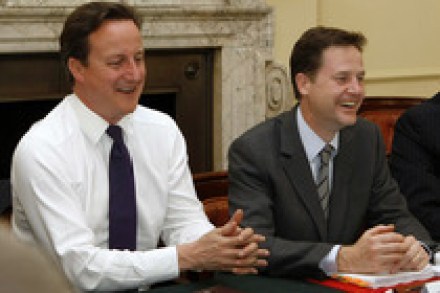
The outrider has returned to stables. Nick Boles MP, a one-time Cameroon confidante tipped for promotion, formally introduced the possibility of a Tory-Lib Dem electoral pact, it made a few cursory headlines and then David Cameron and Nick Clegg promptly denied any such intention. It had the appearance of the classic three-card trick. A formal alliance or non-aggression pact is highly unlikely unless the coalition survives to 2015. The government will collapse before then if enough Liberal Democrats believe its record is indefensible. However, if it doesn’t then the parties must defend their joint record and in doing so will offer a collaborative future. The alternative is absurd.

At last…

From our UK edition

…a minister has repudiated the Brownite axiom that spending is the sole indicator for healthy public services. Nick Herbert has said, unequivocally, that ‘cuts and good services are not mutually exclusive.’ Herbert, minister of state at the Home of Office, continued: ‘I don't think we can go on playing this numbers game and say that we can automatically assume that every additional police officer recruited is bound to help deal with crime because I think what matters is what's being done with those forces.’ Then he elaborated, mentioning the Independent Inspectorate of Constabulary’s opinion that the police can find £1bn in efficiency savings by cutting administrative duties.

The coalition’s inept EU referendum lock

From our UK edition

At least this government is honest. ‘There will be,’ Europe Minister David Lidington says, ‘no referendum on the transfer of competence or power from the UK to the EU during this Parliament’. The government will ensure that there are no more EU power transfer treaties; but, as Douglas Carswell, Tim Montgomerie, and Bill Cash all note, the Lisbon Treaty is self-ratifying. The EU has already picked the coalition’s lock and garnered new powers for itself – notably the extension of the EU arrest warrant. The EU could be an economic superblock with the muscle to influence the globe strategically and culturally. But its current political operation is unnecessary and deplorably un-democratic.

Avoiding confrontation with the heirs of Scargill

From our UK edition

The unions are bent on confrontation. The elephantine Bob Crow, finding unlikely inspiration from Malcolm X , has called for a 'campaign of civil disobedience'. Brendan Barber has described his hot-headed colleague's remarks as 'unhelpful', and so they are. The situation is complex: the public sector is a Leviathan but one that provides lucrative contracts for private firms specialising in defence, financial services, consultancy, health etc. Cuts have to be very carefully managed to avert discontent and disruption - as Francis Maude observed on the Today programme. Yet the government still relies solely on the refrain that these 'cuts are necessary'. It must offer more detailed arguments, and it has the capacity to do so. First, Osborne's solution to debt is more debt.

Benefit reform – one theatre in Cameron’s war

From our UK edition

The Observer has received letters revealing that George Osborne plans to deliver net savings of ‘at least £2.5bn’ from the Employment Support Allowance by limiting the amount of time people can spend claiming it. Here is Osborne’s letter to IDS, Cameron and Clegg: ‘Given the pressure on overall public spending in the coming period, we will need to continue developing further options to reform the benefits as part of the spending review process in order to deliver further savings, greater simplicity and stronger work incentives.

The government should return the unions’ fire

From our UK edition

The TUC is mustering in Manchester and its leaders are in bellicose mood. Brendan Barber has called for a general strike; Bob Crow, brimming with the satisfaction of having wrecked London’s transport earlier in the week, has called for his members to ‘stand and fight’ the government’s cuts. These statements have a ‘Me and my executive’ air to them, so ludicrous as to be beyond parody. But the message is rousing and clear. Not so the government’s – as Fraser argues today in his News of the World column. The government is caught in an intellectual cul-de-sac. Its sole refrain is that these cuts are Labour’s cuts and they are necessary. At the same time, the government defines the cuts debate in Labour’s terms.

Field caught between reality and fantasy

From our UK edition

Frank Field's been thinking. He will make his report on poverty next week and he hints at its contents in an extensive interview with the Times (£). He is convinced that there is more to social mobility than money and he has some brilliantly simple ideas to alleviate poverty. He advocates creating four or five terms in the school year to shorten the long summer holiday, which he argues disadvantages the poor. 'They have less help at home so they lose out even more in long holidays. They drop behind, they are not being read to or tutored or talked to in the same way as many middle-class children. They have often fallen behind by the beginning of the next school year.The school year is also out of kilter with mums working.

Battling for the budget rebate

From our UK edition

A plain speaking man, Janusz Lewandowksi. This week, the EU Budget Commissioner said, not without a clear note of pleasure, that 'the rebate for Britain has lost its original justification.' The EU veers between incompetence and arrogance. Baroness Ashton embodies the former, Lewandowski the latter. His statement encapsulated why a majority of Britons want out of this club into which they have never been allowed to enter. Put simply, it was hectoring and counter-factual. Mrs Thatcher negotiated the rebate to balance Britain's net contribution, which was excessive owing to Germany and France's disproportionate profit from the Common Agricultural Policy (the most glorious misnomer).

From the archives – Boris for Mayor

From our UK edition

Boris Johnson has announced his candidacy for a second term as London Mayor. Here is what he wrote for the Spectator on the campaign trail last time round. How, as Mayor, I would help our brave troops, The Spectator, 17 December 2007 Even if the story is exaggerated, the underlying psychology is convincing. It is reliably reported that last month a woman in her thirties was doing her daily laps of the pool in Leatherhead, Surrey, when she became aware of an obstacle. A section of the swimming-pool had been roped off to allow 15 wounded soldiers to receive the therapy needed for their rehabilitation. It is hard to know what went through the young woman’s mind, but she must have grasped that these disfigurements had been incurred in Iraq and Afghanistan.

A miracle! And a good idea

From our UK edition

I’m not sure if the sun will ever rise in the east again: Michael Howard has supported a Ken Clarke prison policy. The Justice Secretary has launched a pilot scheme at HMP Peterborough that uses private bond investment to fund inmate remedial programmes to cut re-offending. The Social Impacts Bond will provide £5million to produce £8million over the course of six years, assuming the scheme is a success. The situation required boldness. For once tabloid melodrama is accurate: reoffending is the scourge of our times and its incidence has risen steadily over the last decade. According to Dame Anne Owers, the former chief inspector of prisons, one cause is that remedial funding did not keep pace with the 27 percent increase in prison numbers between 1997-2007.

Burning the Koran

From our UK edition

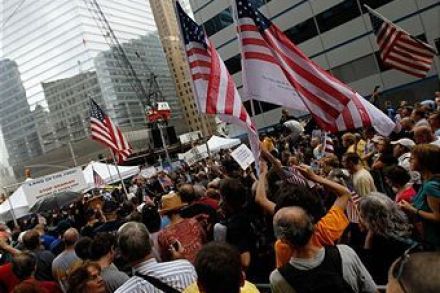
The US constitution cannot stop Pastor Terry Jones from burning 100 Korans to mark the 9th anniversary of 11 September, and neither should it – the right to free speech is absolute when within the law. But free speech comes with responsibilities. Just as it is unwise to build, with provocative intent, a mosque near the site of Ground Zero, so too for a Christian minister to burn the Koran as a publicity stunt. Such mindlessness is grossly offensive to the peace abiding majority, and it also furthers endanger US and Allied troops abroad and the population at home by inciting contemptible extremism. Common sense and the tenets of Christian faith aside, Jones should desist and be tolerant.

Ed Miliband makes a very obvious pass at Vince

From our UK edition

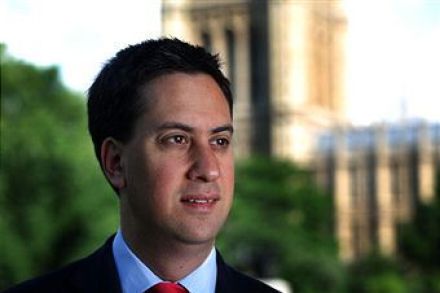
Not exactly on the ball are they? It took nearly six hours for a Labour leadership contender to try to resuscitate Vince Cable's graduate tax, which lapsed into seizure following reports that Lord Browne will recommend a tuition fee hike instead. Ed Miliband, in Mephistophelean mood, has appealed to Vince Cable, offering to replace tuition fees with a graduate tax. ‘You’re welcome to each other,’ will be the retort of most Tories. But Miliband’s pass is significant. The coalition agreement promised to wait for the Browne Review. But the agreement is no longer sacrosanct.

Vaz’s hand-grenade

From our UK edition

Lucy Manning reports that Keith Vaz’s Home Affairs Select Committee will convene an investigation into the phone tapping scandal. Hauling Yates up before his eminence was a sleight of hand, calling for a second inquiry is as obvious as Jordan. Labour is confident and Coulson is their target. However, the Home Affairs Committee is more likely to examine the police’s inept investigations than the inner workings of a tabloid newsroom. (And so, according to Vaz, it will transpire.) Coulson will remain in the clear unless the CPS brings a prosecution on the basis of Sean Hoare’s new evidence.

The Vice Chancellors scupper Vince

From our UK edition

Vince Cable won’t be slipping on his dancing shoes at this year’s Lib Dem conference. A draft of the Browne review into university funding is out today and apparently it does not mention a graduate contribution, Cable’s Lib-Dem friendly answer to tuition fees. The Times has caught wind of this rumour (£), which is also doing the rounds among higher education think-tanks and consultants. This is unsurprising. Neither David Willetts the universities minister, nor his predecessor Lord Mandelson, ever mentioned a graduate contribution until Cable went on manoeuvres because Lord Browne was not seriously considering such a measure.

A bill that deserves trimming

From our UK edition

The electoral reform bill has passed comfortably, by 328 votes to 269. Now comes the hard bit: this bill is going to be deservedly lacerated in committee. The bill drew opprobrium from all sides of the house throughout this afternoon’s long debate, notably from both wings of the Tory party. First, the government has coupled boundary reform to the alternative vote referendum. Peter Hain, Labour’s most articulate attack dog, unleashed his thesaurus and referred to the bill as a ‘smoke-screen for colossal gerrymandering’. He was speaking for his ardently hypocritical and opportunistic party. The government’s motives were not so cynical; it coupled the bill’s two aims to aid swift progress through the commons.

Coulson loosens the noose

From our UK edition

The New York Times has produced what last year’s Guardian phone-hacking campaign lacked: direct testimony against Andy Coulson. Sean Hoare and an unnamed former News of the Screws editor allege that the practice was widespread and that Coulson encouraged it. These new revelations have rightly forced the Met to re-consider the case. At present, the political furore surrounds the Met’s incompetence not just the allegations against Coulson. Bill Keller, executive editor of the NYT, has claimed categorically that the ‘police already have evidence that they have chosen not to pursue’.

Tonight’s the night

From our UK edition

There's no rest for the wicked. Conservative whips have spent a frantic summer urging Tory opponents of electoral reform to retreat from their opposition. According to Paul Goodman, the whips have been blunt: the government could collapse if its reform bill is defeated tonight. Their scaremongering seems to have had the desired effect. The Financial Times reports: ‘Members of that group told the FT they were likely to advocate not opposing the government now, but supporting amendments at a later stage on the timing and threshold of the referendum in future debates.’ The Mail carries a similar report, with David Davis anointing himself rebel-in-chief and stating that he hopes to ‘get the bill modified to take on board certain things’.