David Blackburn

Opportunistic Ed stuttering for an authentic voice

From our UK edition

The fightback begins here. To that end, Ed Miliband is being offered plenty of advice by the swords around his throne. The Mirror trails his speech, pleased that it will be honest about Labour’s failings and inaugurate Labour’s ‘golden generation’. Tom Harris hopes that Miliband will remember that New Labour was successful because it was the party of aspiration, not just the dispossessed. Steve Richards wants Miliband to reach for Middle England by talking with an authentic voice, a simple contrivance that worked miracles for Tony Blair. However, we can add schizophrenia to psychodrama among Miliband’s afflictions. He was the author of a manifesto he immediately disowned, whilst refusing to concede that he bore responsibility for defeat.

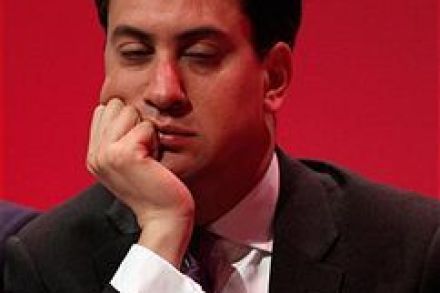
Miliband hampered by Labour’s ongoing vacuum

From our UK edition

Time is against Ed Miliband: there is a void where there should be a new shadow chancellor. The party leadership cannot refine its arguments ahead of next month's spending review, upon which the immediate success of Miliband's regime depends. A further problem is that all of Labour’s arguments are made in the past tense. The previous government’s economic record is defended with evangelical fervour; but each speaker is struck dumb when asked about specific future savings and plans. Alistair Darling closed his front-bench career this afternoon by saying, ‘The deficit is the result of the banking crisis – and the economic crisis that followed it. We had to take that action.

Oh brother, where art thou?

From our UK edition

All eyes have turned to the future Labour front bench, particularly the identity of George Osborne’s shadow. Ed Balls has made his most obvious pitch yet. In a piece for the Guardian, bluntly titled ‘Now let’s offer a real choice – and nail the Tory lie on cuts', he writes: ‘Being a united party is not enough. We must also win the argument. If we do not give people a positive reason to vote Labour, rather than just a temporary outlet for their protest, we will not persuade them to stick with us come the election.   First, on the economy – of course we will need tough choices to get the deficit down.

Delhi’s disaster indicts the Indian state

From our UK edition

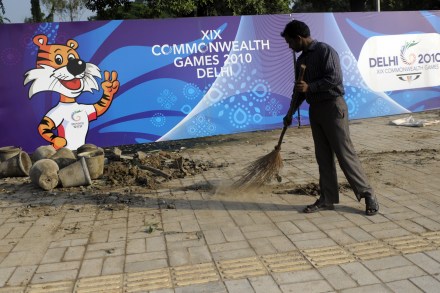
Spectacle counts in the emerging East. China confirmed its coming dominance with the spectacular Beijing Olympics. On the evidence of the Commonwealth Games village, India has the squalid air of an impoverished country ineptly governed. William Dalrymple, author on all things Indian, wrote a measured commentary for the Times (£) yesterday: "The Commonwealth Games was meant to be India’s coming-out party, a demonstration to the world that the old days of colonial domination and subsequent relegation to Third World status were finally over. Sadly, the Games have shown that the Old India is very much with us. This is a country, after all, where — alongside all the triumphs of technology and 8.

David Miliband preparing for defeat

From our UK edition

There are rumours swirling around Westminster, supposedly issuing from the elder Miliband’s camp, that David Miliband already knows he's lost. As we know, he has said he will serve loyally under Ed Miliband. But there has been enough reported bad blood between the brothers to suggest that defeat would leave him inconsolable.

Three quarters of voters side with Cable

From our UK edition

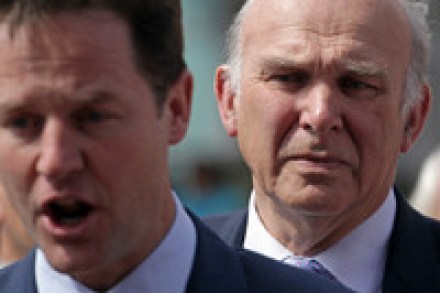
Politics Home has published an important poll, showing the staggering level of support for Vince Cable’s conference speech. The government will be pleased that its political attack on the financial services industry’s continued excess at time of austerity is cutting through; on the other hand, this could be seen as support for Cable’s emotive rhetoric. Worse still, the poll suggests that traditional Tory voters are the only group for whom Nick Clegg is more impressive than Cable. The business secretary has to be kept in government – the coalition can't afford to have a charismatic wreaking havoc from the backbenches. Support for Vince Cable conference speech Who are the impressive Liberal Democrat politicians?

Mili-monomania

From our UK edition

No doubt attempting to affect affability and languid charm, one of the Milibands has goaded his team into mastering a hybrid of semaphore and tic-tac to bring him early news of the leadership election result. It’s unclear which of the brothers has descended into total monomania, but it’s sobering to think he may have his finger on the button one day. The ballot closed yesterday, but idle speculation about the shadow cabinet has opened. The Miliband that loses is expected to be encouraged to run for shadow chancellor, though from what I hear Yvette Cooper or Ed Balls are the favourites for that prize.

Too many policemen chasing paper-clips

From our UK edition

Back in June, I asked how long the public would stomach David Cameron blaming Labour. Not long, was my answer - the government would have to form a narrative that suggested it was the ‘great reforming government’, not a symposium of partisan budget balancers. So far, it has failed to compel of cuts’ and public service reform’s necessity. Crime can now be added to the list. Theresa May has blamed Labour for HMIC’s findings into the police’s failure to arrest anti-social behaviour. ‘Labour achieved nothing,’ she said. Fair enough, but this was an opportunity to husband a narrative for public service reform. HMIC is in no doubt that the police have not done enough to combat anti-social behaviour.

A defeat for the Ulster Unionist modernisers is a worry for the DUP

From our UK edition

Tom Elliott won't match Arthur Wellesley's eminence, but the new leader of the Ulster Unionists joins Ulster’s long tradition of soldier politicians. Elliott thumped rival Basil McCrea by 68 percent to 32 percent of the vote. He has a mandate to weld a party that has grown dissolute through faction. It's a tall order: the May election arguably tolled the death knell for Unionism’s dominance of Northern Irish politics. To succeed, the UUP must broaden its base. Elliot is an unabashed Orangeman and traditionalist.

The police retreat from the streets

From our UK edition

Her Majesty’s Inspectorate of Constabulary has published a crushing verdict on the police’s handling of anti-social behaviour. It finds that the police simply aren’t sufficiently visible on the street, which concurs with the conclusion of an earlier report into value for money policing. There’s an old copper’s joke about holidays. ‘I’m going where there’s not a copper in sight.’ ‘Moss Side?’ comes the reply. HMIC’s central finding is that deprived areas are utterly benighted by constant antisocial behaviour, and the police have steadily withdrawn from these ghettos, thinking that tackling antisocial behaviour is 'not proper police work'. Fear of reprisal discourages public neighbourhood schemes.

Politicking with the defence of the realm: advantage Labour

From our UK edition

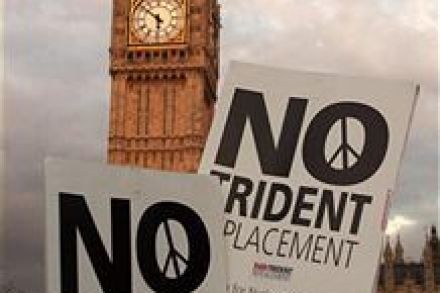
Is Trident’s renewal (either a like-for-like replacement or an alternative) within the scope of the Strategic Defence Review or not? The Lib Dem conference voted to include an alternative in the SDR. But, apparently, the cash-strapped coalition seeks to defer any decision (which will take renewal out of the review entirely). Earlier today, Lib Dem defence minister Nick Harvey intimated that he preferred deferral. As the video below suggests, Harvey’s objective is overwhelmingly political and couched in the language of opposition, not government: I don’t see this as a ‘hot potato’ for Labour.

Cable shows his true colours

From our UK edition

‘[Capitalism] takes no prisoners and it kills competition where it can’. ‘Markets are often irrational or rigged.’ A snob would describe those as the ravings of a chippy provincial university lecturer. In fact, they are the considered thoughts of Vince Cable, the business secretary, the very man tasked with selling Britain to international markets. Cable will address the Lib Dem conference later today, vowing to shine the ‘harsh light into the murky world corporate behaviour’. Limiting short-term speculation when linked to high pay is government policy, but Cable will go further than a spot of banker bashing. Much further.

‘It’s a bit of a riddle’

From our UK edition

Perhaps Donald Rumsfeld was right: the Coalition should not have gone for the 'hard slog' in Afghanistan (or Iraq). Hindsight suggests that Rumsfeld had foresight in his desire that a shock and awe campaign be followed by a light presence and eventual withdrawal - the blood baths that have ensued from intense deployment might have been avoided.  I hope the two times Secretary for Defence Secrte addresses those issues in his memoir, Known and Unknown, due to be published in January three months after Bush’s.

A tale of two statesmen and a wary industry

From our UK edition

The only readable part of Tony Blair’s Lawrentian romp of a memoir, is the epilogue. He explains why the state must be trimmed in the future and how globalisation is affecting global polities, and all expressed with languid charm and an air of self-deprecation which he has acquired on the road to riches. No wonder he’s the toast of Washington, the UN and Beijing – he’s the model of the Modern English Gentleman, a real pukka sahib. Gordon Brown, meanwhile, has travelled to the UN to attend a meeting on tackling poverty. After a decade of enduring Bono at his most self-righteous, poverty is not yet history. Aid agencies and campaigners, wary of aid fatigue, are asking what went wrong. It seems that humanity could not realise its expectations.

Clegg’s Liberal Moment

From our UK edition

Last year, Nick Clegg told the party faithful that Britain was about to embark on a ‘Liberal Moment’. He gave them some of that good old religion – civil liberties, the abolition of tuition fees, arresting tax evasion. A year on and it’s a case of plus ca change. The Lib Dem conference hums to the patter of tuition fees and tax evasion. Much is being made of the disquiet among the grass roots about spending cuts, but this was the party that opened last year’s conference with the promise of ‘savage cuts’ and Vince Cable produced a detailed dossier of savings. Spending cuts were inevitable then and are necessary now.

Alexander’s no apologist

From our UK edition

Nick Clegg opened last year’s Lib Dem conference with the promise of ‘savage cuts’. The party shuddered at the idea and they’re unnerved by the reality. Those savage cuts lour over what should have been a glorious conference for Clegg. Vince Cable stalks with insidious intent these days, so Clegg has called on Danny Alexander, of whom there is nothing of the Tory, to insulate him from internal criticism over economic policy. Alexander has given the Guardian a preview of his arguments. He’s unapologetic: the coalition has achieved more in 13 weeks than Labour managed in 13 years. A sovereign debt crisis has been averted by swift action, but there is no point in leaving a job half-done where economic stability is concerned.

Ashton’s latest ruse

From our UK edition

I've obtained this list of Baroness Ashton's proposed recommendations for the next wave of EU diplomatic appointments. CoffeeHousers' will notice there are no Brits on it.

Clegg: there is no future for the Lib Dems on the left

From our UK edition

Nick Clegg has opened the political season with a very singular statement: ‘There is no future for us as left-wing rivals to Labour. Clegg urges his internal critics to be patient: the future could be yellow if the coalition is maintained. It’s a gamble. Immediately, Clegg has alienated those who abandoned Labour for the Lib Dems and his explicit disavowal of ‘left-wing’ politics will have the social democratic wing of his party reaching for their hat and coats. But, Clegg has planted his colours on politics’ crowded centre ground, recasting his party’s identity as an economically liberal and socially liberal centrist movement.

Andrew Mitchell: the answer to global terrorism

From our UK edition

Al Shabaab and al Qeada are brothers in arms – Somalia is a hothouse for terror. Jonathan Evans, director general of MI5, has openly expressed his view that it is ‘just a matter of time’ until Somalia and the Yemen export terrorism to Britain’s streets. That striking statement contains one oversight: they do already. Umar Farouk Abdulmutallab, the Christmas Day bomber, was trained in the Yemen and two of the 7/7 bombers were Somali. How to eradicate this threat? The legacies of Iraq and financial retrenchment have made armed intervention an absolute last resort. Counter-terrorism is essential, but well targeted aid is the easiest remedy for chaos. In a speech yesterday, Andrew Mitchell described why aid should be directed to benighted regions.

Labour draws level with the Tories

From our UK edition

Leaderless Labour is neck and neck with the Tories for the first time in more than two years, according to the Reuters/IPSOS Mori monthly poll. This follows the trend that Pete observed a couple of days ago, and surely Anthony Wells’ prediction will come to pass: Labour will overtake the Tories. However, these grim figures are not terminal. Theoretically, this parliament has another four and half years to run. More than 60 percent of the population believe cuts are necessary, but 75 percent contest that retrenchment must come this fast. That's healthy scepticism rather than mass-revulsion. Providing the coalition holds, time is on its side. The longer Labour opposes measures that the majority recognise as necessary, the more credible the government becomes.