David Blackburn

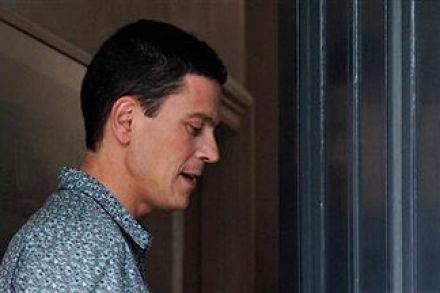
Boles: the coalition is David Miliband’s natural home

From our UK edition

Nick Boles is fast becoming ubiquitous. He wrote an article for this morning’s Guardian, urging Labour’s wounded Blairites to join the coalition, where ‘there is room for everyone inspired by the desire to transform the way that government works and give people more control over their lives.’ He writes: ‘If President Obama can keep Republican Robert Gates as secretary of state for defence, does Britain have to forfeit the remarkable talent of David Miliband? Can the coalition afford to do without the passionate expertise of Andrew Adonis as it completes his quest to connect Britain's great cities with high-speed rail?
Miliband versus Dave – round one

From our UK edition

Well, here it is. Ed Miliband will meet David Cameron for the first time at PMQs today. For all his determination and tactical sense, Miliband has his work cut out. Neither gave vintage speeches at the recent party conferences, but, in terms of presentation, Cameron’s easy wit trumps Miliband’s adenoidal drone. This will be Westminster's final act of posturing before next Wednesday’s spending review, a vanity soon to be forgotten. However, Labour has to fertilise its barren economic policy, and quickly. PMQs is the best opportunity to start.  Labour's strategy is clear: the government has made no plans for growth; in fact, their cuts are inimical to growth and squeeze hard-pressed middle earners.

The Postie’s twinkle

From our UK edition

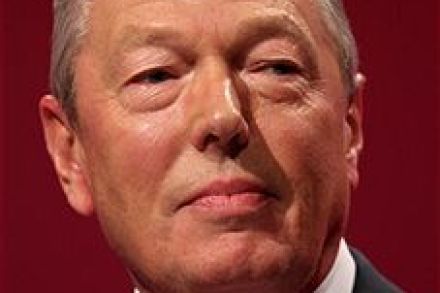
The Postman's eyes twinkled as he met George Osborne across the dispatch box for the first time this afternoon. With the air of an apologist who isn't remotely contrite, Alan Johnson told the House of his 'vast experience in this job' and gave the impression he was having a blast. This jolly masque hid an insubstantial performance. Johnson latched on to Chris Huhne's vow that he would not be 'lashed to the mast' of needless spending cuts - Johnson wondered if the deficit might not be eradicated within one parliament. Osborne said that it would. Then Johnson repeated the substance of his attacks of the weekend.

Cable and Clegg scrambling to repel errant MPs

From our UK edition

The Lib Dems have met the Browne report with a mixture of cordiality and outright antipathy. According to the Guardian, Greg Mulholland is the ring-leader of a band who will vote against a fee rise come what may. Lib Dem ministers are describing the Browne report as ‘unpalatable’ in its current form but recognise that fees must rise and are ‘keeping their powder dry’. The stumbling block is Browne’s recommendation that interest free loans be scrapped. This stark move was to be offset by raising the threshold and tapering interest rates to protect the disadvantaged. There are also concerns that the affluent will be able to pay off their debt quickly, whilst everyone else is lumbered with debts for 30 years.

An unlikely alliance against Murdoch

From our UK edition

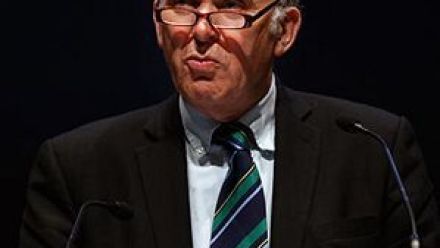
The Guardian, the Daily Telegraph, the Daily Mail, the Daily Mirror, Channel Four, British Telecom and the BBC have united in common cause: stop Rupert Murdoch. This has to be The Digger’s greatest achievement: not since Waterloo has more motley a coalition been scrambled to resist a ravening tyrant. The signatories have written a letter to Vince Cable, who is to adjudge if Murdoch’s proposed full ownership of BSkyB will endanger media plurality. In reality, this hostile alliance is about more than plurality; it is a battle for the control of the news in a digital future.

The scale of IDS’ and Gove’s challenge

From our UK edition

Yesterday was a day of weighty reports. At 700 pages, the Equality and Human Rights Commission’s ‘How Fair is Britain?’ won the thoroughness stakes. Aside from the usual findings that a disproportionate number of young black men are imprisoned and that the white working class is outperformed at school by Indian and Chinese migrants, it made some telling discoveries. The report found that a staggering 50 percent of Muslim men and nearly 75 percent of Muslim women are unemployed in certain regions. No clues as to where, though the reasons as to why should now be familiar: the figures correspond with the Centre for Policy Studies’ view that Britain has the highest rate of household worklessness in Europe.

A sustainable and permanent solution

From our UK edition

‘A sustainable and permanent solution’, that was Lord Browne’s refrain this morning. Browne has aimed to fill the £1bn university funding black hole with a system that doesn’t prejudice the disadvantaged or force universities to privatise. Browne recommends that the tuition fee cap goes, but insists the Treasury should collect a levy from universities that charge above £6,000: fees set at £9,000 will cede 50 percent of £1,000 above £6,000, which will rise to 75 percent for fees of £12,000. This tapered levy is designed to discourage institutions from charging US-style of £20,000.

Making the case for further tuition fees

From our UK edition

Ever the opportunist, Ed Miliband recognised that university funding could be the coalition’s first test of resolve. Opposing a tuition fee hike has given him the chance to serenade disgruntled Liberal Democrats and to discard New Labour’s sheen (which so incensed Alan Johnson, the minister who introduced the fee in such difficult circumstances). Miliband is determined to mould the Labour party in his image. Speaking on the Politics Show yesterday (16:20 in), he said that the party, Johnson included, will strive to deliver a graduate tax. After a summer’s procrastination, the government has run out of time. The substance of Lord Browne’s recommendations is in the public domain and it has caused disquiet on government benches.

Theresa May the target

From our UK edition

I wonder if Theresa May felt faintly apprehensive this morning. It must bad enough to awake and remember that you’re the Home Secretary, held responsible for every immigrant, every strike and every crime committed in Britain. Northern Ireland is more poisoned ministerial chalice, just. Now, she is being shadowed by Ed Balls, a ravening attack-dog liberated by the opposition. Balls has re-invented himself as a traditional Labour politician, casting himself as the champion of the working class. He says, accurately, that the poor are the victims of crime and the victims of unbridled immigration and social dislocation and his opposition will be ardently authoritarian. May will have to cut police numbers: Balls will attack her.

Lansley tries to reassure the doubters

From our UK edition

Andrew Lansley has been on the defensive today, calmly reassuring the political nation that GPs are content with his NHS commissioning reforms. A majority of GPs are not at all happy, according to a Com Res BBC poll. 57 percent are unwilling ‘personally to take on the extra responsibility of planning and buying healthcare’ for their local communities. There are a number of reasons for their wariness, but lack of skill and training is the predominant one. Lansley says that GPs favour the reforms in principle – measures that turn GPs into suzerains, able to improve outcomes by designing patient care to local and individual needs and also to take responsibility so that failures can be swiftly reversed.

Huhne and the universal benefit conundrum

From our UK edition

Chris Huhne has given an interview to the Telegraph. According to the front page report, the Energy Secretary has nothing to say about nuclear power, new wind farms or energy security; but rather a lot to say about economic and social policies that are strictly beyond his purview. Jeremy Hunt’s belief that child benefit should be limited across the board is dismissed because there are ‘limits to how much we can achieve through changes in the tax and benefits system’ – this week’s Spectator argues otherwise. Huhne also registers his profound cynicism for the marriage tax break – no surprises there and he has a point that austerity should not pass over matrimony.

How should Miliband respond to the child benefit reform?

From our UK edition

Daniel Finkelstein and Philip Collins’ email exchanges are always enlightening. This week, they discussed child benefit. Both think it has altered the markings on the playing field of politics. Ed Miliband is yet to respond: how should he? ‘From: Daniel Finkelstein To: Philip Collins If you were Ed Miliband, where would you go now on child benefit? First option: total opposition to the Government’s plan. You get to hoover up discontent but you don’t look much like a governing force, do you? And it seems hypocritical. Plus, you said you were going to support the Government on many cuts. If not this, then what? Second: you go with it. You look big, you look grown up, but lots won’t like it.

A cul-de-sac of Gordon Brown’s making

From our UK edition

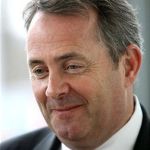
Earlier in the week, Liam Fox gaily described the Prime Minister as his ‘closest ally’ – a statement which aroused a little cynicism. But it seems that Fox was not exaggerating. According to the FT, Cameron now backs the navy’s grand blue-water strategy. Cameron’s about turn is striking: the last time the National Security Council convened he supported David Richards (he still does to an extent, pledging that army troop numbers will not be cut). The strategic arguments have not changed, which suggests that the politics has. Fox’s letter was one thing, the Clyde shipyards another.

More encouragement for George Osborne

From our UK edition

If there’s one thing the financial crisis has proved, then it’s that the heads of global financial institutions are fickle with their favour - for stimulus one minute and against it the next. Still, I suppose every little helps. Last night, Robert Zoellick, President of the World Bank spoke to Jeff Randall and gave George Osborne a resounding vote of confidence.

What to make of Cameron’s rejection of laissez faire?

From our UK edition

Pressure brings out the best in David Cameron and right now he’s coasting. He gave, as Pete and Fraser have said, a subdued speech. The content was there but his delivery was calm, except on two occasions when he spoke rather than read the autocue. He attempted to sell the Big Society (third time and no luckier). Then he said, with conviction, ‘I don’t believe in laissez faire.’ Those six words are pure Tory Reform Group, pure Iain Macleod, pure One Nation. He evoked that traditional form of Torysim with a firm description of how his government seeks to empower people as responsible groups not just free individuals.

A hard-headed case of <em>déjà vu</em>

From our UK edition

It was as if we’d been transported back a week – here was William Hague talking about ‘hard-headed foreign policy’, the very phrase that David Miliband had used before he swanned-off into the wilderness in a floral shirt. The details of the two speeches had much in common – an emphasis on free trade, a promise to garner new strategic and economic partnerships in South America and the Near East, balance in the Israeli and Palestinian dispute, global solutions to climate change and a promise to export human rights. Hague differed in not mentioning liberal interventionism and laying historical and partisan claim to free trade, arguing that the European Commission’s protectionist bent was ‘backward-looking and doomed to fail’.

Fox to the rescue

From our UK edition

The best form of defence is attack. Liam Fox distracted conference from the various rows that have afflcited it by castigating Labour’s abysmal record on defence. He was helped enormously by the terrorist outrage in Sanaa, the Yemen – a cowardly atrocity that reinforces his observation that ‘the country's finances are wrecked and the world is more dangerous than at any other time in recent memory.’ He recited the refrain that cuts are regrettable but necessary, before adding that, thanks to Labour, Britain has to fight on with less.

Scottish Tories won’t oppose AV

From our UK edition

Annabel Goldie, leader of the Scottish Conservatives, made an odd admission at a fringe event last night. Asked how she would campaign against AV next May, she disclosed that there wouldn’t be a concerted campaign because ‘people have already made-up their minds’. I’m told that David Mundell, Parliamentary Under-Secretary of State for Scotland, sat in impassive agreement while the audience raised its collective eyebrow. Conservatism hasn’t scaled Hadrian’s Wall for twenty years. Representation is thin because residual loathing for Thatcher and Major runs deep. Loud partisanship against AV may incite the hostile populace to vote for it out of spite. Discretion looks the better part of valour.

Gove re-emphasises his reform agenda

From our UK edition

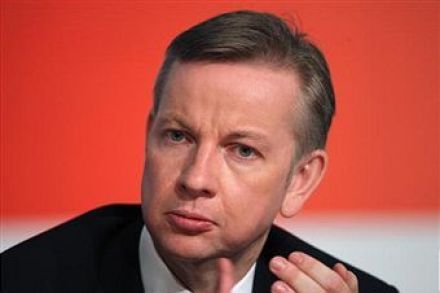
Michael Gove means business. His case is simple: standards have fallen; it is time to be radical. Under Labour, Britain fell from 4th to 14th for science, from 7th to 17th for literacy and from 8th to 24th for mathematics. With a fervour that was nothing short of zealous, Gove promised that the ‘injustice will end’. His ministerial career has had a difficult start - his message often lost under Ed Balls' righteous indignation. Having faltered, he is beginning to re-direct his rhetorical emphasis to more fertile ground. Where once he wanted to empower parents, he now wants to empower teachers - no doubt to attract recalcitrant teaching unions to his cause. Gove re-introduced his New Deal for Teachers.