David Blackburn

Paul Collier: money is not the sole consideration in immigration debate

From our UK edition

Tensions between Roma migrants and communities in Sheffield have risen this week, and the city’s most prominent MPs have voiced their concerns. Yesterday, Sebastian noted David Blunkett’s warning about the possibility of riots unless migrants change their behaviour. Today, Nick Clegg has echoed Blunkett by calling for migrants to moderate their ‘intimidating’ and ‘offensive’ ways. It is, of course, easier to say such things than to act on them; but it would be churlish not to accept that metropolitan Britain is beginning to talk more openly – and even honestly – about some of the deleterious social and cultural effects of immigration.
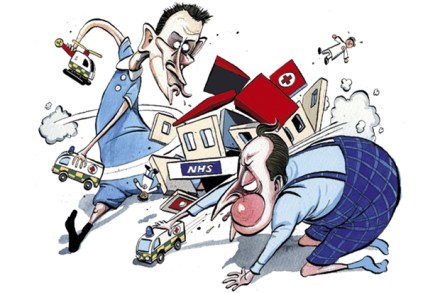
Sir Bruce Keogh denies that he is proposing two tier A&E

From our UK edition

Sir Bruce Keogh’s anticipated review into accident and emergency has been published today to a chorus of praise and boos. The Mail describes it as a ‘sticking plaster’. The Independent is cautious. The Guardian is critical. And the Telegraph and the Sun are more positive. Sir Bruce Keogh gave a masterly performance on the Today programme, which may go some way to calming fears in the press. He said that the current system, which was designed in the 70s for the 70s, is unsustainable. At the root of his analysis is the belief that the present system is inefficient because patients have to go to the NHS to receive attention, rather than the NHS reaching out to patients. So, in short, emergency care has to become more flexible and mobile.

While we wait for George Osborne, Grant Shapps takes to Buzzfeed to talk about energy policy

From our UK edition

The energy debate is in stasis. Everything, it seems, hangs on the contents of the Autumn Statement. EDF has announced a price rise; bills will go up by an average 3.9 per cent, which is considerably lower than the rest of the Big Six. Yet the company made clear that maintaining low prices will depend on George Osborne. A spokesman said: ‘If the Government makes bigger changes to the cost of its social and environmental schemes than EDF Energy has anticipated, the company pledges to pass these savings onto customers. However, if changes to social and environmental programmes are less than anticipated, the company may have to review its standard variable prices again.’ That statement is even more nebulous than it first seems.

David Cameron: Miliband’s Labour poses the same old danger

From our UK edition

David Cameron’s speech at the Lord Mayor’s banquet yesterday evening rehearsed some basic political arguments that will be honed between now and 2015. Cameron made a decent assault on Labour over the cost of living: ‘There are some people who seem to think that the way you reduce the cost of living in this country is for the state to spend more and more taxpayers’ money....At a time when family budgets are tight, it is really worth remembering that this spending comes out of the pockets of the same taxpayers whose living standards we want to see improve.’ The logical corollary of that statement is pretty obvious: smaller government and tax cuts are the solution to the cost of living crisis.

What can the international community do to restore law and order in the Philippines?

From our UK edition

Britain is to deploy one warship, the Type 45 destroyer HMS Daring, which is currently on station near Singapore, and RAF support aircraft, including one Boeing C17 transporter, to the Philippines. The US has deployed a carrier group. It will take HMS Daring 5 days or so to reach its destination. It will provide engineering equipment, first aid, water sanitising kits and the means to turn sea water into drinking water. Most reports from the disaster area warn of the threat of waterborne disaster, so HMS Daring’s supplies will be very welcome. The destroyer is also equipped with one Lynx helicopter, which will extend its operational reach inland. The RAF will be responsible for delivering £10 million worth of resources pledged by the Department for International Development.

Nadine Dorries apologises ‘fully and unreservedly’ over I’m A Celebrity earnings

From our UK edition

The parliamentary standards commissioner’s inquiry into Nadine Dorries’s appearance on I’m a Celebrity Get Me out of Here was evidently an eventful process. Here are the headlines from the report: 1). The standards committee, the cross-party panel of MPs which sanctions MPs after the standards commissioner has reported, ordered Dorries to apologise to the House of Commons for failing to declare earnings from the show. However, the commissioner said that Dorries's failure to register her shareholding interest in a media consultancy company called Averbrook until June 2013 was an 'inadvertent' oversight. 2). Dorries said that she had to undertake media work because she was facing bankruptcy.

Can we expect more social conservatism from the Tories?

From our UK edition

The Telegraph reports that the Relationships Alliance, which is to launch in the House of Commons, warns that the ‘disintegration of romantic, social and family relationships costs the average taxpayer around £1,500 a year’. Apparently this amounts to £50 billion a year. The story is of course familiar, even if the figures involved are new. Broken relationships can cause immense social and economic damage to the wider community. The Relationships Alliance, which is a union of charities, actions groups, politicians and individuals, has come into being to convince the government to adopt a national strategy to counter these costly ills. Relationships do break down, and some relationships should be dissolved.

David Cameron prepares for winter of discontent in A&E

From our UK edition

There are two important NHS stories in the papers today. First, the Times reports (£) that A&E departments are facing severe pressures because of historic staff shortages. The paper notes: ‘Half of all senior doctor posts go unfilled at accident and emergency departments, putting unsustainable pressure on life-or-death care. The College of Emergency Medicine (CEM) says that 383 of the 699 specialist registrar posts in A&E have been left vacant over the past three years, stretching emergency ward doctors beyond capacity and driving up waiting times. The shortfall in senior doctors deprives A&E departments of the ability to see 766,000 people each year, since the CEM points out that each registrar would have seen about 2,000 patients.

Chris Grayling gets a relatively easy ride over reoffending rates

From our UK edition

Theresa May accepted her Spectator Politician of the Year award with the quip: 'It used to be a joke that I lock them up and Ken Clarke lets them out, now they say I lock them up and Chris Grayling throws away the key.' The right wing press, as Ken Clarke is given to calling it, is much enamoured with Grayling and May. ConservativeHome’s Mark Wallace describes them as the ‘dynamic duo’, and writes a long appreciation of their ‘increasingly strong message on crime’. There is, of course, as Wallace concedes, more to governing than messages. The Mail on Sunday carries a small item about reoffending rates under the headline ‘scandal of prisoners who strike again’.

Anna Soubry’s attack on Nigel Farage was planned

From our UK edition

There’s a rumour doing the rounds that Anna Soubry’s comments on immigration during Thursday night’s edition of Question Time did not come as a surprise to Tory High Command. Apparently, Soubry refused to take direction from the party machine and made clear that she would say, more or less, what she said. Coalition has certainly bred independent-minded ministers. The Lib Dems pick and choose which government policy to support in public, so it’s not wholly surprising that Tories sometimes follow suit. But, tough immigration policy is a key part of the Tories’ grand strategy and Soubry’s open disregard for the party line was striking.

Jeremy Deller curates a fascinating and funny exhibition in Manchester

From our UK edition

All That Is Solid Melts Into Air is an art show largely without art (at Manchester Art Gallery until 19 January 2014, then touring). No matter: Jeremy Deller, the curator, has found some surprising knick-knacks to illustrate how the Industrial Revolution has influenced popular culture. For instance, he plays rediscovered factory songs on a gloriously lurid jukebox. They are similar to Negro spirituals; but, while spirituals inspired R&B, our industrial folk music has descendants in heavy metal and rock. Deller charts this lineage by displaying the family trees of Noddy Holder and Bryan Ferry, reaching back to the 1790s. Continuity through time is Deller’s chief preoccupation.

Come over here, Tom Stoppard

From our UK edition

‘I was mad with jealousy,’ said Gwyneth Williams, the controller of BBC Radio 4. ‘I am mad with jealousy,’ she corrected herself, and I believed her. We were discussing Tom Stoppard’s Darkside, a radio play written to celebrate the 40th anniversary of Pink Floyd’s album Dark Side of the Moon. The play, which was perhaps the radio event of the summer, aired on Radio 2. ‘Mad with jealousy,’ she repeated, in case I had missed the point. Williams has spent the year revitalising Radio 4’s arts coverage. Stoppard’s perfidy aside, she has had marked success.

Paul Dacre teaches the Guardian how to sell newspapers the old fashioned way

From our UK edition

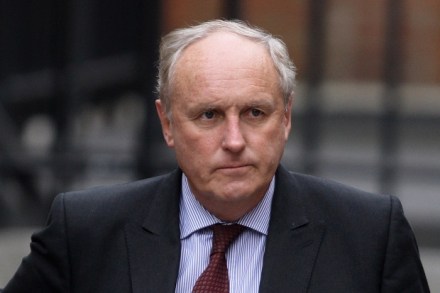
An old journalist told me that there was a time when people used to know the names of national newspaper editors. It's a mark of Fleet Street’s decline, he said, that Alan Rusbridger of the Guardian and Paul Dacre of the Mail are the only well known editors today. He added that Rusbridger is famous because he has made himself into a public figure; but people have heard of Dacre despite his being remarkably private. Neither of us could recall Dacre doing a broadcast interview or even writing an article. He’s an enigmatic beast. All of which makes Dacre’s appearance in this morning’s Guardian under the headline ‘Why is the left obsessed by the Daily Mail?’ rather interesting (he’s also written in this morning’s Mail).

Revised Royal Charter channels Charles I’s Royal Prerogative

From our UK edition

Here is the revised Royal Charter on press regulation agreed by the three parties. It replaces the draft published in March this year. It begins: NOW KNOW YE that We by Our Prerogative Royal and of Our especial grace It seems that Parliament would bring down 300 years of free expression using a principle that parliamentarians like Pym, Hampden, Haselrige, Holles, Strode and the rest fought a civil war to eradicate. And in case you didn't know: they won that war. Thank Heavens we English like irony! One can only hope that Her Majesty refuses to sign this document.

Have Edward Snowden and the Guardian started a ‘debate’?

From our UK edition

The Snowden files continue to dominate the news today. Vince Cable has said that the Guardian newspaper had provided a ‘considerable public service’ by publishing Edward Snowden’s leaked material. This contrasted with Nick Clegg’s effort on LBC Radio yesterday (above). Clegg said that it was important to have a debate about technology and privacy, before condemning the Guardian for releasing ‘technical’ material that would have interested 'those who want to harm us'. Rarely have the tensions running through the Liberal Democrats (a protest movement and an aspiring party of government) sounded more clearly in my ear. Our own Douglas Murray is rather more clear-minded than either of these august gentlemen.

Tony Hall’s digital vision for the future of the BBC

From our UK edition

listen to ‘Tony Hall on the future of the BBC’ on Audioboo Tony Hall, the Director General of the BBC, has just laid out his vision for the next 10 years of the BBC. He opened humbly, arguing that the culture of the BBC had to change in the wake of the Savile and pay-off scandals. The corporation had to serve the licence fee payer to justify the extraordinary privilege of public funding. The BBC must remember that it is publicly owned, he said. Warming to his theme, Hall said that managers had to remember that theirs was a 'creative job, an enabling job and an inspiring job', and that the corporation must celebrate creativity.

Must read: Jenny McCartney on Seamus Heaney and Ulster’s divide

From our UK edition

If you haven’t already done so, I urge you to read Jenny McCartney’s piece in this week’s issue of the magazine. Together with Christopher Fletcher’s personal appreciation of Seamus Heaney published here earlier this week, it is among the most original and thoughtful takes on the late Nobel Laureate’s life and work. It’s typical of Jenny’s ability to tease and test details, to coax them to a wider context. And, my, is she readable. The best place to start is at the beginning: ‘The one and only time I met Seamus Heaney, in 2007, he was making tea in the kitchen of his Dublin home when he asked — more modestly regretful than coy — ‘Did you have to do the poems at school?

Bookies following Philip Hensher’s Booker shortlist

From our UK edition

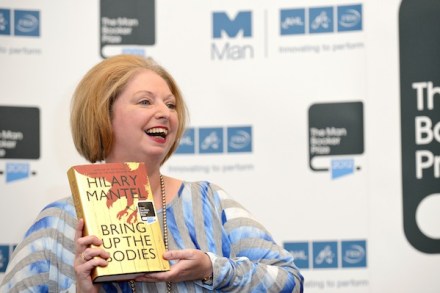
The Guardian notes that Ladbrokes and William Hill share Philip Hensher’s hunch for the Booker shortlist, which is to be unveiled next week. ‘Hunch’ isn’t the right word. Hensher wrote in these pages a fortnight ago: ‘The shortlist should comprise McCann, Tóibín, Mendelson, Crace, House and Catton. House’s novel is the one you ought to read, and Mendelson’s the one that everyone will read and love. The prize will go to Crace.’ For the record then, Hensher’s shortlist would be: TransAtlantic by Colum McCann, The Testament of Mary by Colm Tóibín, Almost English by Charlotte Mendelson, Harvest by Jim Crace, The Kills by Richard House and The Luminaries by Eleanor Catton, with the prize going to Crace.

My holiday from reading books is to read them as Caxton intended

From our UK edition

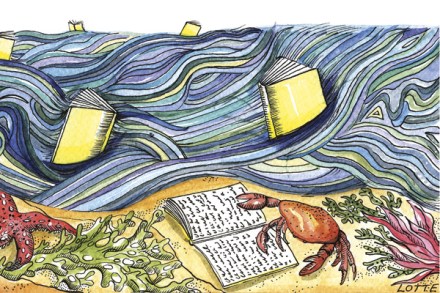
On hearing that Easy Jet had changed its hand luggage allowance, two questions struck me. First, was the airline in league with the luggage makers’ guild? Second, which paperbacks would replace the hardbacks I was going to take with me to the beach? Such considerations may strike you as ‘old world’, a bit last century. ‘Why not take your Kindle?’ you rightly ask. One answer is that I spend every waking hour reading words on a computer. Fire up the screen and get comfortable for a long read; well, I’m supposed to be doing just that rather than write this piece, which is little more than an excuse to fantasize about the holiday I’m about to take.

Final call for Propaganda: Power and Persuasion at the British Library

From our UK edition

For the first time in years, I thought of Tony Hancock. In the ‘Blood Donor’ episode of Hancock’s Half Hour, Hancock exits a doctors’ surgery singing the words ‘coughs and sneezes spread diseases, catch the germs in your handkerchief’ to the tune of Deutschland, Deutschland Ueber Alles. I have only seen this clip once or twice, but evidently it made a lasting impression because there it was, in my mind’s ear, on being confronted by a 1940s anti-flu poster at the British Library’s propaganda exhibition. Propaganda: Power and Persuasion features more persuasion than power. Goebbels and Uncle Sam are represented, but do not dominate. Indeed, the curators challenge the notion that propaganda is negative or a necessary evil when at war.