David Blackburn

Miliband’s New Generation draws the line under donor peers

From our UK edition

Patronage remains a strong statement of leadership, and an indication of a leader's competence. As James noted yesterday, Ed Miliband chose the occasion to play one of his few picture cards: Maurice Glassman’s accession into red ermine is a major PR coup for Labour in the battle to be ‘progressive’ and community-focused. But Miliband’s list is also noteworthy for those it excluded. The Times has the details (£): ‘He decided against handing seats in the House of Lords to Nigel Doughty and Sir Ronald Cohen — who have given more than £6 million to the party since 2005 — as well as Jon Mendelsohn, Labour’s fundraising chief.
Lord Young resigns

From our UK edition

Yet another GOAT fails to stay the course. Sky News reports that the gaffe-prone peer, Lord Young, has resigned, following his ill-considered comments about the 'so-called recession'. As the morning progressed, there was a growing sense of inevitability that he would resign. Once again, the government has been unable to steer a communications strategy through a brief and not very serious crisis: after all, Young was chatting idly to a journalist, not expounding government policy. I don't think his position was totally untenable: if Nick Clegg can hold forth on the legality of the Iraq war, why are the loose private opinions of an underling so unacceptable?

Full list of peerages

From our UK edition

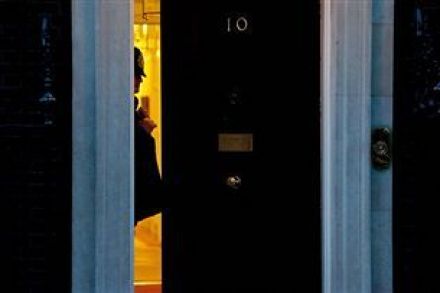
Number 10 has published the full list of new peerages. There are 27 new Conservative peers, including Sir Patrick Cormack, Richard Spring, Julian Fellowes, Howard Flight, Michael Grade and Patience Wheatcroft. The Lib Dems and the Labour party have acquired15 and 10 respectively. General Dannatt is also to be ennobled, but will sit on the crossbenches, confirming his break-up from the Tory machine. Expect his strident voice to be a constant feature of the debate growing from the troubled strategic defence review.

The transparency revolution gets under way

From our UK edition

The press has gone to town on the government’s spending spree; more than £80bn of central government expenditure, itemised in this imposing document published today by Francis Maude. The government will squirm at some findings, notably on redacted defence procurement contracts, Libyan oil agreements and the 194,000 payments made to individuals and private companies (Capita has been paid £3.3bn for outsourcing government work, and De Beers, the diamond cutters, received nearly £1,200 from the Business Department). Already the blame game has begun, with Labour and the coalition sparring from a distance.

You’ve never had it so good

From our UK edition

As Michael Gove said at the launch of the Conservative Party manifesto: “Britain in 2010 is a great place to live in many ways” (4:12 in on this video). Lord Young, The Spectator’s Peer of the Year, agrees: for many of us, we’ve never had it so good. He told the Telegraph: ‘For the vast majority of people in the country today, they have never had it so good ever since this recession - this so-called recession - started…Most people with a mortgage who were paying a lot of money each month, suddenly started paying very little each month. That could make three, four, five, six hundred pounds a month difference, free of tax. That is why the retail sales have kept very good all the way through.

Dave on the defensive

From our UK edition

There is no sign of the heir to Blair at the Commons Liaison Committee this afternoon; in fact, David Cameron has been possessed by the ghost of Gordon. So far the Prime Minister’s answers have been cumbersome and statistic-heavy; and his delivery has had the dexterity of a three-legged elephant. He will have expected cannons to the left of him, but to the right as well? If he imagined that Tory backbenchers would coo appreciatively he will have been sadly disabused. Andrew Tyrie, James Arbuthnot and Bernard Jenkin have eviscerated him over the conduct of the strategic defence review. They deplored the culture of leaks and counter-briefing and probed Cameron for his role in the process.

The declining years of biography

From our UK edition

It is more than 30 years since Mark Amory declared biography dead, when he published his edition of Evelyn Waugh’s letters. Despite the best efforts of Victoria Glendinning (notably on Trollope) and Claire Tomalin (on Pepys and many others) there has been no grand critical resurrection since, until this year and the announcement of the shortlist for the Costa Awards. Sarah Bakewell’s life of Montaigne has received the recognition of which Spectator reviewers Philip Hensher and David Sexton believed it worthy.

“Manhattan is a walker’s city”

From our UK edition

The Paris Review has surpassed itself yet again, with a brief memoir by photographer Paul McDonough. His photos and writing depict metropolitan life as it is predominantly lived: in a constant motion of coming and going. For McDonough, there is no such thing as still life. The actors in a city’s exterior space may or may not be aware that they are the centre of attention; but they are never sedentary. This realisation affected his art: "What turned me away from painting was a realization that the streets and parks of Boston provided me with subject matter that I could not conjure up in my studio. At that point, a blank canvas drew nothing but a blank stare.

The human stain

From our UK edition

‘Oh my human brothers let me tell you how it happened,’ begs SS officer Max Aue, the narrator at the beginning of Jonathan Littell’s Holocaust novel The Kindly Ones. It is a book about the nature of evil. Simply memorialising the Holocaust, Littell says, always through the mouth of Aue, has relegated the killers to sub-human status. Littell challenges the reader to empathise with the Nazis, because Europe’s most grotesque trauma was perpetrated by the most civilised of men. Aue is strikingly human. If nothing else he is a study in pretentiousness, with an adolescent impulse to impress.

Political memoirs galore – at last, a surprise

From our UK edition

So, you thought you knew Dubya? His memoir has leapt to the top of the sellers' charts (£) in the States and The Spectator is publishing a comprehensive review by Sir Christopher Meyer next week. But, judging by extracts in the Times’ serialisation, Bush's ghostwriter Christopher Michel (the former President’s premier speech writer) has done a spectacular job: turns out we didn’t know George Bush at all. Certainly, the embodiment of manifest destiny emerges from the text, as we expected it to – resolute in action, defiant in moral certitude and confidant that history will remember him at least. ‘Did you use water boarding?’ ‘Damn right we did’.

What sort of country do we want to be? A soft one

From our UK edition

Admiral Lord West’s intervention was most striking in its language. He promised that a ‘national humiliation on the scale of the loss of Singapore’ would ensue unless his advice was heeded. Writing in the Times (£), Sir Menzies Campbell notes West’s seething tone and concludes that his frustration was the product of a review of defence resources, not strategy. At no point, Campbell says, did the government ask ‘what sort of country do we want to be’ and plan accordingly. Campbell continues: ‘Is Britain ready now or likely to be ready to go to the aid, alone or with allies, of a nation that becomes the target of aggression, as we did in Sierra Leone and Kosovo?

Do women not like Jonathan Franzen?

From our UK edition

I haven’t read Jonathan Franzen’s Freedom, for lack of opportunity rather than lack of will. However, the loud critical response has not escaped me. How could it? The Corrections and Freedom have both been crowned with the thorns of being a ‘Great American Novel’; and he is the celebrated author of the moment, gracing the cover of Time Magazine and making regular though unseen appearances in the latest series of Gossip Girl no less. Critics are unanimous: Freedom is ‘very good in parts’ – a green-eyed euphemism for 'bloody brilliant'. But when it comes to Franzen himself, the man divides the sexes in America, vehemently so.

Britain’s threadbare defence establishment

From our UK edition

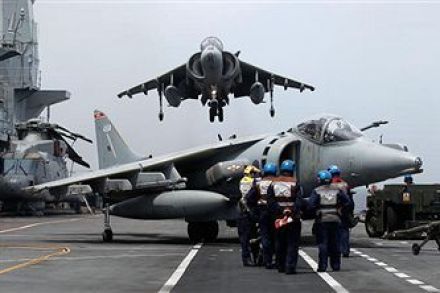
A mutiny is brewing. Several former admirals, led by Lord West, have written a seething letter to the Times (£), condemning the decision to decommission the Harrier and Ark Royal. Their argument is that the Harrier is versatile and cheap and that the Falklands are more vulnerable without it: ‘In respect of Afghanistan: Harrier could still use Kandahar runway if half of it were blocked by Taleban action; can use any make-shift landing site; has a response time of less than 10 minutes, as against 30; performs better in hot weather; requires fewer ground crew; and has better availability.

Michel Houellebecq wins the Prix Goncourt

From our UK edition

Ageing roué Michel Houellebecq, the Serge Gainsbourg of the literary world, has won France’s most prestigious literary prize for his latest novel, La Carte et le Territoire (The Map and the Territory). Not before time, his supporters will say. But, then again, Houellebecq has long polarised opinion, and Les Cartes et le Territoire - featuring a foul-smelling, alcoholic, atrociously dressed writer called Michel Houellebecq, who is murdered in brutal fashion - promises to entrench that reputation. He was interviewed by the Paris Review last month.

The vanity appointments

From our UK edition

If this is what bespoke PR produces, save your money. The Standard alleges that Number 10 has hired 26 ‘civil servants’. These latter-day Sir Humphreys include: a photographer, a stylist, a PR consultant to run the PM’s personal website, a diary keeper for Sam Cam and another addition to the Behavioural Insight Team at the Cabinet Office. Now, I like a bit of behavioural insight as much as the next man. But most, if not all, of these recruits have worked together in CCHQ for years: how much more insight can they glean in their new surroundings? Open up the field, many say, which poses another problem because it may transpire that these positions were not advertised.

Apocalypse soon

From our UK edition

Writing in the Irish Times, Morgan Kelly has denigrated the Irish government’s handling of the economy. Comparisons are often counter-factual – Irish politics is not divided along lines of left and right, and the Celtic Tiger was made of tissue paper. But, to English readers - servicing a colossal national debt with their punitive tax bills, facing crumbling house prices, waiting for the moment when mortgages become beyond the reach of all but the cash rich, and encumbered with billions in worthless global bank assets - it is a truly terrifying read. I urge CoffeeHousers’ to read the whole piece, but here is its essence: ‘By next year Ireland will have run out of cash, and the terms of a formal bailout will have to be agreed.

Gove the bully?

From our UK edition

There has been a telling development in the resistance against ‘free schools’ this morning. The Evening Standard reports that Brian Lloyd, the headmaster of a school in Bromley, claims he is being ‘bullied’ by Michael Gove into adopting academy status. In a matter of weeks then, Gove has morphed from ‘miserable pipsqueak’ into Judd Nelson in The Breakfast Club – an odd transformation even in caricature. But depicting Gove’s schools revolution as the agent of draconian central government is a cunning ploy by local education establishments.   However, test Lloyd’s case and the real picture emerges.

A lone voice of dissent

From our UK edition

There are few heretics before the Church of Ian McEwan, but Thomas Jones’ uses his review of Solar in the London Review of Books to make two points. Monomania is a feature of English writing – think motherhood to Mrs Bennett, hypochondria to Mr Wodehouse or climate change to James Delingpole. McEwan is unusual in that many of his protagonists are monomaniacs. Jones argues that this robs them of their humanity. Henry Perowne, the neurosurgeon in Saturday, is an extreme example. He perceives everything from the perspective of his profession.

A day of electoral positioning

From our UK edition

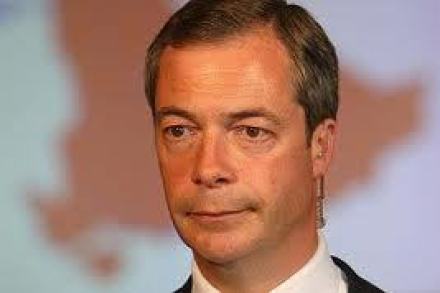
Away from turbulent priests and the welfare battle, there have been important changes to electoral politics today. The coalition partners will fight one another in Oldham East and Saddleworth. The seat is a three way marginal, which was number 83 on the Tories’ target list – precisely the sort of seat they’ll need to win in 2015. However, as James noted on Friday, the Liberal Democrats’ need is greater at the moment. Already, tongues are wagging that a pimpled Etonian is destined to journey north of the Watford Gap, safe in the knowledge that gallant defeat will ensure he is the next Prime Minister but three. Enter Nigel Farage, opportunistically.

Breaking dependency

From our UK edition

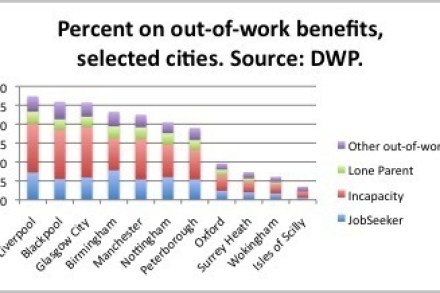
IDS has played the party politics of welfare reform adeptly. He has built a coalition beyond the government, convinced of the need for urgency and dynamic reform. Even Labour is on side, only criticising when valid and necessary. It has not proposed a comprehensive alternative because it is protecting its record in government - sensing, correctly, that it is vulnerable to its history. Douglas Alexander rallies to New Labour’s defence in the Independent on Sunday. Labour’s record on welfare was not uniformly baleful: Purnell, Hutton and Murphy did important work, on which IDS has drawn. But Alexander overlooks some inconvenient truths.