David Blackburn

Palin versus Romney

From our UK edition

The GOP is ambling towards the start of the 2012 nominations race. Two probable candidates are busy pitching their media tents. Sarah Palin is on a coast to coast tour, flogging her latest book; she has also been cheering on her daughter on Dancing with the Stars and she recently gutted a halibut on her Alaskan reality TV show. It’s all action and personality from the Mamma Grissly. By contrast, the cerebral Mitt Romney has agreed to appear on…Jay Leno’s Tonight Show. Leno makes Parky look almost vital. As one Democrat strategist observed: “On the hipness scale, this is far from Bristol Palin on ‘Dancing with the Stars.’ It’s more like Richard Nixon on ‘Laugh In’.


The government takes the fight to students

From our UK edition

The government’s response to the protest over tuition fee hikes has stiffened. Nick Clegg has written to Aaron Porter and David Cameron has penned an op-ed piece in the Standard today. They are united. The NUS should protest; debate is important. But that debate is moribund if the NUS deliberately misrepresent the government and mislead students. Cameron writes: ‘Of course these people have a right to protest. But I also believe they have a responsibility to know the full facts about what they're objecting to — and judging by the fury that's been unleashed, there are a lot of misconceptions flying around.’ It is vital that the Conservatives assist their embattled colleagues; the government must be unified.

Chinese burns

From our UK edition

The latest cache of Wikileaks has done America no end of good. The Saudis urged the US to bomb Iran – a sign that the Arab world can make common cause with the States and Israel. It has also emerged that North Korea has sold the Iranians long range rockets – Moscow, Berlin and Istanbul are all within the Ayatollah’s range. But the most important revelation is that China has tired of North Korea’s lunatic machinations, recognising that the rogue state is an impediment to global and regional security. China is also convinced that the country will not survive Kim Jung-il’s death and favours a union of the two Koreas, provided the new state is pro-Chinese (could it be anything but?).

Clegg fights back in tuition fees row

From our UK edition

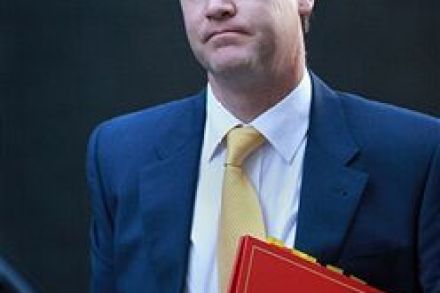
Nick Clegg has written a gloriously condescending letter to Aaron Porter, who hopes to recall Liberal Democrat MPs who vote in favour of tuition fees rises. Clegg emphasises that he was unable to deliver the tuition fee pledge in coalition, and therefore struck out to make university funding as fair as possible. After a wide consultation, it was found that the graduate contribution scheme is the fairest and most progressive outcome. He urges Porter to temper his language and not misrepresent the government’s position for political aims. ‘Grow up’ seems to be the unspoken request.

Osborne saves his glad tidings for another day

From our UK edition

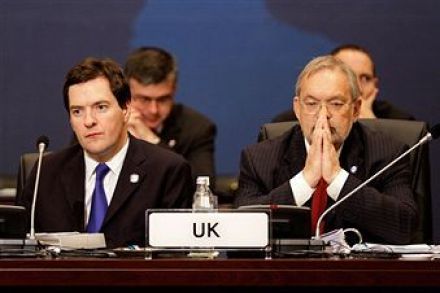
Courtesy of Paul Waugh and the Standard, the OBR projects there to be a £6bn budget surplus by 2015-16. There was no fanfare to herald this in George Osborne’s statement, which was a litany of dirge-like thanksgiving for catastrophe averted. The Treasury is now describing the figure as being 'within the margin of error’, which is fluent Sir Humphrey-speak. The Standard’s discovery is another example of the government deliberately hiding good economic news - in what Fraser terms Osborne's Paul Daniels Act. Now why, I wonder, would a self-confessed tactical obsessive, who just happens to be the Chancellor of the Exchequer, be doing that?

The coalition will not be able to reduce net migration <br />

From our UK edition

The FT’s Alex Barker has made an important discovery in the OBR’s report. The coalition’s immigration cap will make no impact on net migration. ‘The interim OBR’s June Budget estimates of trend growth estimates were based on an average net inward migration assumption of 140,000 per annum…. Since June, the Government has announced a limit of 21,700 for non-EU migrants coming into the UK under the skilled and highly skilled routes from April 2011, a reduction of 6,300 on 2009. At this stage, we judge that there is insufficient reason to change our average net migration assumption of 140,000 per year from 2010, which remains well below the net inflows of 198,000 seen in 2009.

Setting the scene for Osborne’s speech

From our UK edition

George Osborne will make a brief statement to the house this afternoon, responding to the Office for Budget Responsibility’s revised growth forecasts. Reuters reports: ‘As expected, the Office for Budget Responsibility raised its 2010 growth forecast to 1.8 percent from its 1.2 percent June forecast to factor in a surprisingly strong performance in the middle of the year.’ The upgrade fuels Osborne’s positive narrative: the coalition pulled Britain from the abyss and international confidence in Britain's economy is growing. These forecasts vindicate the government’s ‘cut with care’ strategy. Concrete savings are now being made and they enable the Chancellor to announce that public sector net borrowing will fall.

Lansley’s NHS revolution

From our UK edition

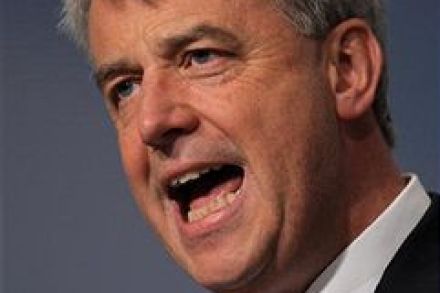
Round n in the transparency revolution: Andrew Lansley has welcomed the publication of the latest Dr Foster hospital list, detailing post-operative failures in NHS care. The Observer reports: 1) Almost 10,000 patients suffered an accidental puncture or laceration. 2) More than 2,000 had post-operative intestinal bleeding. 3) More than 13,000 mothers suffered an obstetric tear while giving birth. 4) Some 30,500 patients developed a blood clot. 5) 1,300 patients contracted blood poisoning after surgery. Despite record investment and targets for standards, the NHS still suffers setbacks in the mundane that have severe consequences - according to the report, several hospitals have 'dangerously high death rates'.

The Party’s Over

From our UK edition

This article was originally published on the Spectator’s Cappuccino Culture blog. It is republished here because it relates to last week’s episode of the gripping if smaltzy adaptation of William Boyd’s Any Human Heart, the story of one writer’s journey through the twentieth century. The second episode begins with the outbreak of the Second World War, the party interrupted. It airs at 9pm tonight on Channel Four. Without need of an occupation, a small band of the well-born lit up the 1920s with mischief and indolence. The last of their number, Teresa Jungman, died aged 102. Many of the dilettante Bright Young Things went on to ‘Great Things’ – William Walton composed, Cecil Beaton photographed and Rex Whistler painted.

Some early statistical vindication for IDS

From our UK edition

The Observer has news that will warm the government’s hearts. Ernst and Young have conducted a report that suggests 100,000 public sector jobs will be saved thanks to the savings made by welfare reform. The report’s other finding, a crucial one, is that the Treasury will be raking in £11bn by 2014-15. So then, a statistical vindication for IDS’ reforms, the economic side of them at least. It also gives the government some defensive hardware ahead of tomorrow’s Chancellor’s autumn statement. Not that it really needs it. On the back of Britain’s strong economic performance in the third quarter, the Office for Budget Responsibility is expected to raise its 2010 growth forecast from 1.2 percent to 1.7 percent.

Blair versus Hitchens

From our UK edition

Two gentle proselytisers debated in Toronto last night. The motion: ‘Religion is a force for good in the world’ was defeated by a margin of 68 percent to 32. The New Statesman has a complete transcript, but here a couple of quotations distilling the basic arguments. Hitchens: Once you assume a creator and a plan, it makes us objects, in a cruel experiment, whereby we are created sick, and commanded to be well. I'll repeat that. Created sick, and then ordered to be well. And over us, to supervise this, is installed a celestial dictatorship, a kind of divine North Korea. Greedy, exigent, greedy for uncritical phrase from dawn until dusk and swift to punish the original since with which it so tenderly gifted us in the very first place.

Too clever by half, Miliband pitches for the squeezed middle with the vacuous promise of change

From our UK edition

Ed Miliband has made an inauspicious start to his second political relaunch of the week. The Sun has dubbed him Buzz Lightweight, after he adopted the Pixar-inspired catchphrase ‘Beyond New Labour’ to describe his vision for the party. Miliband’s media presence is already wooden; migrating to plastic is hardly a promotion. Miliband and his elders have arrived at Labour’s national policy forum. In so far as it’s possible to determine what he stands for, Miliband is not aiming for the middle ground of British politics, as David Cameron and Tony Blair did. But he is courting the ‘squeezed middle’ with the promise of change. So far, that promise is more vacuous than profound – the new boss looks like the old boss.

The sound of broken glass

From our UK edition

What do Evelyn Waugh, Peter Cook and Chris Morris have in common? I would have said ‘irreverence’ and left it at that; but the social scientist Peter Wilkin has written a book on the subject, The Strange Case of Tory Anarchism. What do Evelyn Waugh, Peter Cook and Chris Morris have in common? I would have said ‘irreverence’ and left it at that; but the social scientist Peter Wilkin has written a book on the subject, The Strange Case of Tory Anarchism. It’s an arresting title, not least because it appears to be an oxymoron. But this is not so, according to Wilkin.

From the archives: The Royal Marriage Question

From our UK edition

Like father, like son. Prince William took his time to propose to Kate Middleton, almost as long as his father took to take the plunge in 1981. The press brayed on both occasions. Here’s what Auberon Waugh made of the Prince of Wales’ dithering over Diana. It was tragically prescient. The Royal marriage question, The Spectator, 10 January 1981. In the death of Princess Alice of Athlone at 97 last Saturday the Queen lost not only first cousin twice removed but also a great aunt by marriage. Under the circumstances, it might seem humane to allow a period of time to elapse for her to get over this double shock before petitioning her to turn her mind to the Royal Marriage Question.

Tory and Labour grandees unite against AV

From our UK edition

The NOtoAV campaign has unveiled its patrons. It’s an impressive list. Margaret Beckett is the President, supported by Blunkett, Falconer, Prescott, Reid and Emily Thornberry on one side and Ken Clarke, Micheal Gove, William Hague, Steve Norris and Baroness Warsi on the other. The squeeze is on. The YEStoAV campaign has Labour supporters, but they aren’t quite so august. Iain Martin reckons that the YES team are faced with a cross-party opposition that can get these diverse big beasts working together. Iain calls it a pincer movement on the Lib Dems. The strategy is to characterise electoral reform as aan exclusively sectional interest: Clegg’s fixation.

The strange case of Turkey, Islamic history and V.S. Naipaul

From our UK edition

Nobel laureate V.S. Naipaul has pulled out of the European Writers’ Parliament in Istanbul, following pressure from Turkish writers who felt ‘uneasy’ about comments he had made about Islam in 2001. Naipaul compared Islam to colonialism, arguing that both had had ‘a calamitous effect on converted peoples. To be converted you have to destroy your past, destroy your history. You have to stamp on it, you have to say 'my ancestral culture does not exist, it doesn't matter.’ Naipaul’s comments concern the factual context of Islam’s expansion between the 7th and 17th centuries, hence the comparison with colonialism.

Next year’s Booker judges

From our UK edition

The panel of judges for next year’s Booker Prize has been announced. It will be chaired by former chief-Spook Dame Stella Rimington. Rimington’s largely candid biography Open Secret gives a very privileged insight into the momentous events of the later 20th Century; and, apparently, her thrillers are a superior treat for a beach holiday too. Joining her are ex-MP Chris Mullin (of whose diaries more than enough has been said), the Telegraph’s literary editor Gaby Wood, and former Spectator Editor, writer and journalist Matthew d’Ancona. And, of course, Susan Hill, who needs no introduction to readers of the Spectator. That panel will, I think, produce a diverse longlist. Congratulations to all, and prepare for the slog.

Oh dear | 25 November 2010

From our UK edition

Howard Flight has always been an outspoken man. The new Conservative peer is reported to have said: ‘We're going to have a system where the middle classes are discouraged from breeding because it's jolly expensive. But for those on benefits, there is every incentive. Well, that's not very sensible.’ He may well be proved correct. But, plain-speaking and politics have never mixed, and especially not now. Following the Lord Young debacle, Downing Street has moved quickly to distance itself from Lord Flight’s comments. A grovelling apology won't be far away. UPDATE: The IFS did some very interesting work on the rising birthrate (15 percent) among what it termed 'low income households' under Labour.

The Lib Dems are in quiet turmoil over tuition fees

From our UK edition

A cruel north wind heralds the Lib Dem’s discontent. In public, the party has withstood criticism of its apparent u-turn on student finance, helped in part by the more puerile elements of the student protest. Ministers, from both wings of the party, have stressed that coalition necessitates compromise: tuition fees had to rise; therefore, the Lib Dems’ task in government was to protect the poorest, which they seemingly have. Backbenchers hedged their bets, saying that they were scrutinising the legislation before deciding how to vote.     But consternation has reigned in private. This morning, weeks of whispered disgruntlement broke into open tension.

Wednesday’s newly discovered poetry

From our UK edition

I never find the time to read poetry these days; and to enjoy and remember it, you have to read a lot. One of the many pleasures of sitting opposite the Spectator's literary editors is being given recommended reading, built on more than 50 years of professional experience between them. Yesterday, Clare Asquith recommended I read Shelley's The Mask of Anarchy, of which I'd heard but never read. Written in the aftermath of the Peterloo Massacre in 1819, it has been described by political thinkers such as Paul Foot and Richard Holmes as the greatest political poem ever written in English. Having now read it, they're not far wrong. It is savage in its contempt and virulent in its disgust.